Baseball Integrity Flash! Automated Ball and Strike Calls Are On The Fast Track

If they ever play Major League Baseball again—the sport is in the middle of a lock-out over the distribution of billions of dollars between owners and players, among other contested issues—it looks like games being ruined by bad pitch calls will soon be history.

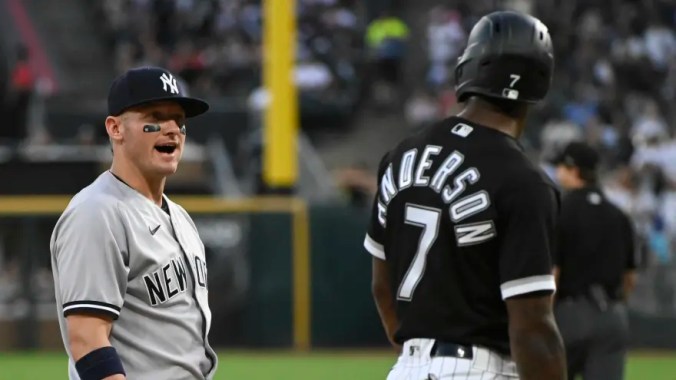
 MLB officials announced that computer umpires that use an automated system for determining ball and strike calls will now be employed in Triple-A baseball for the 2022 season. I had predicted that robo-umpires at home plate would arrive in five years, considering how resistant baseball is to change, but this puts the Automated Ball and Strike (ABS) system, which was used with success last season in some of the lower minor leagues,  just one level below the major leagues. Absent unforseen problems, this could mean that the days of batters being called out on strikes with the bases loaded in the bottom of the 9th by pitches six inches off home plate could end after the 2022 season.

This is a grand slam for integrity. Once games were universally televised and broadcasts could show exactly where a pitch crossed the plate (or didn’t), umpires’ mistakes, in some games with the worst umpires nearing 20% of all pitches, became intolerable. Replay systems already allow reversals of the most egregious calls on the bases, making far fewer games determined by “the human factor,” also known as “lousy umpiring.”

When there was no way to fix bad calls, it was fair to call human error “part of the game.” Now it’s just an unnecessary and annoying part of the game. There was no excuse for letting it continue.

I’m thrilled.

P.M. Ethics Dispatches, 1/11/2022

We have to keep baseball ethics alive even if baseball itself is in a state of suspension: the owner and players are, for the first time in decades, arguing about how to divide up their billions, everything from roster size to minimum salaries are on the table, and as of now, the two sides aren’t even talking with the season just a couple of months away. One of the issues to be settled is whether the National League will finally capitulate and adopt the designated hitter rule, which was accepted in the American League on this date in 1973, a day which many traditionalist fans then and now regard as an unforgivable scar on the integrity of the game. Baseball has always been celebrated for its equity and balance: as it was envisioned, every player on the field had to both hit and play defense. The DH, which is a batter who never uses a glove, also allowed the pitcher to be a defense-only specialist, never picking up a bat which, advocates of the new rule argued, was a result much to be wished, since the vast majority of hurlers are only slightly better at hitting the ball than your fat old uncle Curt who played semi-pro ball in his twenties. All these decades years later, the National League and its fans have stubbornly maintained that the DH was a vile, utilitarian gimmick spurred by non-ethical considerations, mainly greed. When the rule was adopted, American League attendance lagged behind the NL, which also was winning most of the All Star games, in part because that league had embraced black stars far more rapidly than “the junior league.” The DH, the theory went, would make games more exciting, with more offense, while eliminating all the .168 batters in the ninth spot in every line-up.

I had a letter published in Sports Illustrated in 1973 explaining why I opposed the DH as a Boston Red Sox fan. Since then, I have grudgingly come to accept the benefits of the rule: it gave the Sox David Ortiz, allowed Carl Yastrzemski to play a few more years, and let American League fans see such all-time greats as Hank Aaron at the plate after they could no longer play the field. It was a breach of the game’s integrity, but it worked.

1. At least that’s fixed. The Supreme Court issued a corrected transcript of the oral arguments in the Biden vaccine mandate case, and it now accurately records Justice Gorsuch as saying he believes the seasonal flu kills “hundreds…thousands of people every year.” The original version wrongly quoted him as saying hundreds of thousands, which allowed those desperately trying to defend the outrageously wrong assertions by Justice Sotomayor regarding the Wuhan virus to point to Gorsuch and claim, “See? Conservatives are just as bad!” Prime among these was the steadily deteriorating Elie Mystal at “The Nation,” who, typically for him, refused to accept the correction. Sotomayor is one of the all-time worst Supreme Court justices, though she will be valuable as a constant reminder of the perils of affirmative action. Her jurisprudence makes the much maligned Clarence Thomas look like Louis Brandeis by comparison. Continue reading

A “Bias Makes You Stupid” Case Study: Gil Hodges And The Hall Of Fame

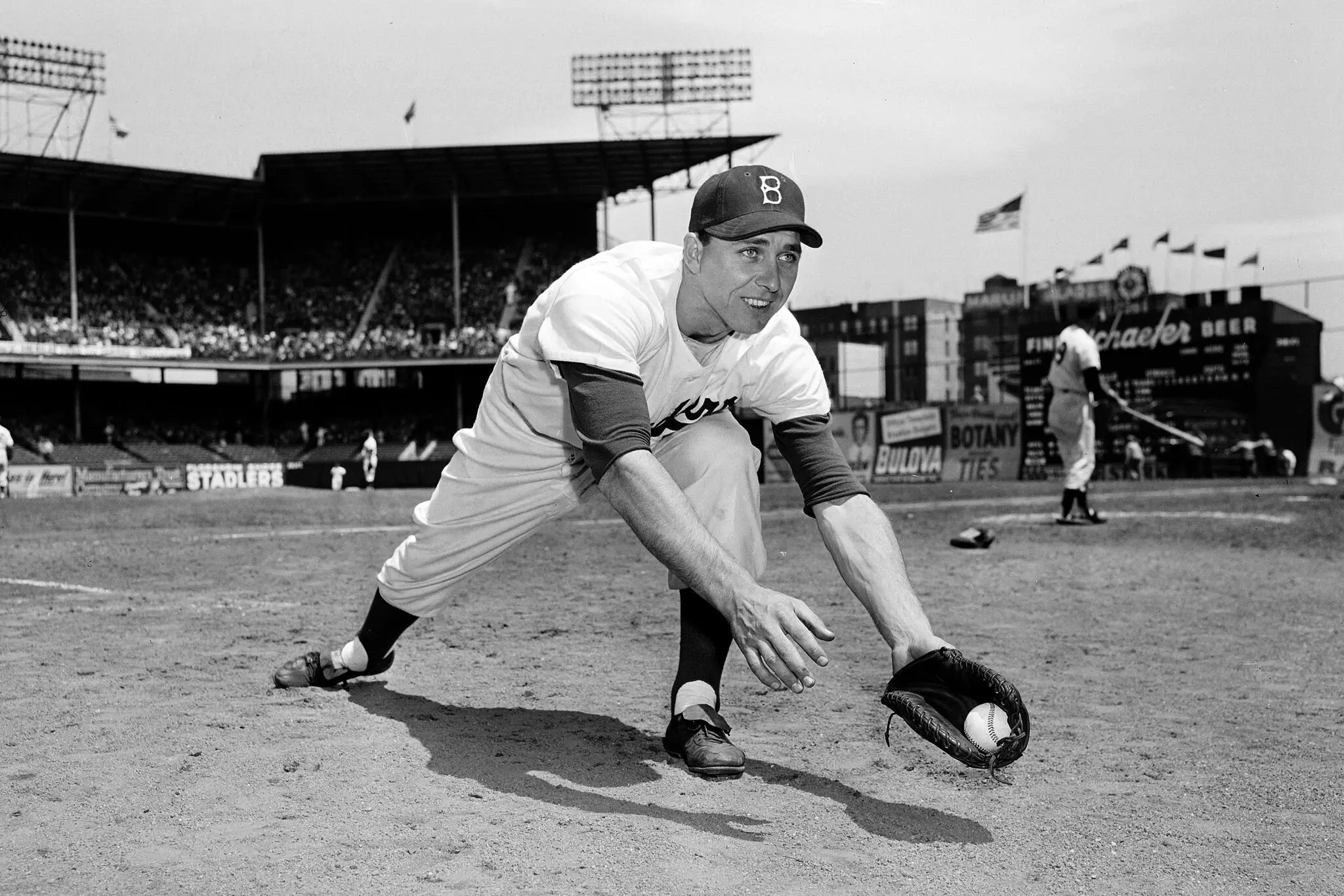
Hodges

Let’s get the easy part out of the way right off the bat: Gil Hodges, elected this week to the Major League Baseball Hall of Fame in Cooperstown, NY, was not a Hall of Fame caliber player, and it was as a player that he was selected. He was also not qualified to be voted into the Hall as a manager, though there is no question that Hodge’s single famous achievement as a manager, the upset World Series Championship attained by the 1969 Mets, played a large part in burnishing his reputation.

And yet the group of old ex-players and others that make up what used to be called the Hall of Fame’s Veteran’s Committee put Hodges, who died suddenly 50 years ago at the age of 48, voted to place a plaque honoring him among those of Lou Gehrig, George Sisler, Harmon Killebrew, Jeff Bagwell and other far superior first basemen in the game’s long history. (To be fair, Hodges isn’t the least qualified HOF member at that position; that distinction goes to Tony Perez.) The reason for Hodges’ ascension was bias, the positive variety for a change, and lots of it.

Continue reading

Ethics Tricks And Treats, 10/31/2021: Kendri Traps Himself, A Good Man Dies, And More “Let’s Go Brandon!” Follies [Corrected]

Trick or treat

Jerry Remy died over the weekend. Unless you’re a Red Sox fan, you may not have heard of Remy, but he was a Boston icon by the time he died at the age of 68. I was trying to come up with an ethics theme to justify writing a post about him: I can’t, in fairness. He was just a normal guy who got to live his dream, some would say: a Boston kid (Fall River, to be accurate) who grew up, like me, loving the home town team with all of its drama and disappointments, and was talented enough to play for it, after being traded by the Angels to the Sox in 1976. Then Remy became part of Sox lore, the frustrating parts, as his team battled the New York Yankees in their most repulsive incarnation for primacy in the late ’70s, always falling short. In the most famous and tragic of those near misses, Yankee shortstop Bucky Dent’s cheap home run became the decisive blow in a single play-off tie-breaker in 1978, making Dent a a Yankee immortal. Only moral luck prevented the hero of that historic game from being Remy. In the bottom of the 9th with the Red Sox trailing by one run, Remy hit a blast to right field that Yankee outfielder Lou Piniella lost in the sun. It landed in front of him and bounced to his left: Piniella threw his glove up in blind desperation, and the ball, somehow, landed in it. Lou later told Remy that he never saw it until it was in his grip. Had that ball gotten by him, Rick Burleson would have scored the tying run from first, and Remy would have had an easy triple. He might even have had an inside-the-park homer, winning the game, the division championship, and immortality for getting the biggest hit in Red Sox history.

Remy’s knees gave out eventually, like many second basemen before base runners were forbidden from breaking up potential double-plays with hard slides. He eventually became the Sox cable broadcast color man for 34 years, until he left the booth in August to battle lung cancer. Remy was warm, informative, candid, modest and funny, all while describing himself as a mediocre hitter who felt honored to play on a team with stars like Jim Rice and Carl Yastrzemski. He also kept doing his job, despite more than his share of tragedy and pain. His oldest son was a drug addict, and murdered his girlfriend in a steroid rage. He is serving life without parole in prison; Jerry and his wife took on shared custody of their infant granddaughter. Remy’s battle with lung cancer began in 2008; he kept fighting off multiple recurrences with operations, radiation and chemo, and it kept coming back. He battled depression as well, and spoke and wrote about the illness, inspiring and comforting many who shared that often crippling condition.

Jerry’s last appearance on a baseball field was, appropriately, when he threw out the ceremonial first pitch on October 4 for another one game play-off with the Yankees, who had ended the season tied with Boston, just as in 1978. I knew he was through: he looked pale and weak, but Remy beamed at the huge ovation he received from the Fenway Park crowd as he lobbed the ball to his frequent NESN broadcast partner and fellow member of that tragic 1978 team, Dennis Eckersley. This time, the Red Sox beat the Yankees.

Jerry Remy made a lot of people happy during his life, was respected and loved by those who knew him and worked with him, and kept fighting his way through what chaos threw at him, becoming a better, kinder, nicer human being in the process. That’s a pretty good legacy, better than many greater baseball players. I know he made me happy lots of times, and did so while he must have been suffering.

Good for you, Jerry. Good job at life. I’ll miss you, and so will everyone else. The more good, hard working, courageous human beings we have around, the better it is for everyone.

Continue reading

Ethics Dunce: Secretary Of Transportation (And Proud Dad!) Pete Buttigieg [Updated]

pete-buttigieg-chasten-

When I wrote in September about Boston Red Sox outfielder Alex Verdugo abusing his paternal leave privileges to abandon his team at a crucial time in its battle to make 2021 the play-offs, I expected a lot of heated criticism (I didn’t, though I did get a provocative counter argument that became a Comment of the Day.) I wrote in part,

The Boston Red Sox recently completed a disastrous collapse that dropped them from first place in the American League East to third. As they went into battle with the two teams now ahead of them, their hottest hitter, Alex Verdugo, vanished on a four game paternity leave. Shortly thereafter, another hot hitter, Hunter Renfroe, was lost for five days on bereavement leave after his father died of cancer. T’was not always thus: in the days before the Players’ Union bargained to add such mid-season leave as a new benefit, if a player’s wife was in labor or a loved one died, it was at the team’s discretion whether he would be permitted to leave the team. OK, I can appreciate the need for the benefit, but both players abused the right. These guys both earn millions of dollars a year. They both routinely talk about the team’s quest to win the World Series, yet when their team really needed them, they absented themselves for many days because they could. That’s a betrayal of the team, team mates, and fans.

By the force of pure moral luck, Verdugo’s indulgence did no damage in the end: the Sox made the play-offs and have prospered (so far, though they lost last night), in great part because of Verdugo’s clutch hitting upon his return. That doesn’t change my ethics verdict on his dereliction of duty however (which the player reminds me of every time he gets a hit now, because Verdugo makes a baby-rocking gesture to his team mates in the dugout.) Compared to the Biden administration’s Secretary of Transportation, Pete Buttigieg, however, Alex Verdugo is a model of dedication and responsibility.

Buttigieg and his husband Chasten adopted infant twins named Penelope and Joseph in August. The little bundles of joy arrived as product shortages and the supply chain problems had made themselves evident, a developing crisis that is worsening, and one that threatens the economy as well as businesses, jobs and the welfare of millions of Americans. It is also a situation squarely within the jurisdiction of the Transportation Department. Not since the airplane-executed terror attacks of September 11, 2001 has that agency had such a crucial task before it, nor have more Americans needed the performance of DOT to be diligent, timely, and effective.

Never mind! The Secretary of Transportation decided that this was still an appropriate time to take advantage of the Biden administration’s “family friendly” policies, and took two full months of paid leave while the supply chain problems multiplied and expanded. He wasn’t even online with his department during most of that time.

I apologize, Alex! Compared to Paternal Pete, you’re a self-sacrificing hero. I wish you were Secretary of Transportation.

Continue reading

Ray Fosse And A Lesson In How Ethics Evolve

People who don’t read the baseball-related posts here miss the point: sports in general and baseball in particular create ethical problems that clarify ethics in all fields. The story of former catcher and broadcaster Ray Fosse is a prime example.

Fosse, was an All-Star catcher, a multiple Gold Glove-winner, a two-time World Series champ, and a long-time broadcaster who died yesterday, of cancer at the age of 74. His claim on immortality is the famous play above, which ended the 1970 All-Star Game, back when baseball’s “Mid-Season Classic” was more than just a chummy parade of stars playing baseball with the intensity of an office picnic softball game.

In 1970, Fosse was in his first full big league season with the Cleveland Indians, and signaled that he could be one of the all-time greats at his position. He won a Gold Glove, received some MVP votes, and had a 23-game hitting streak from early June into early July (That’s a lot. especially for a catcher). Fosse made the All-Star team that year and had his rendezvous with destiny when, in the bottom of 12th inning of a tense, tie game, the Reds’ Pete Rose, famous for his hustle and trying to score the winning run from second base, was beaten by the throw home but smashed into Fosse at home plate, causing the catcher to drop the ball and winning the game for the National league. It was a thrilling play, one of the most memorable in the nearly 90 years history of the exhibition, but Rose separated and fractured Fosse’s shoulder. Fosse continued to play for the rest of the 1970 season but because doctors didn’t discover the injuries until the following season his body never healed properly. Fosse would suffer lingering effects from play for the rest of his life. He also was never as good a player again.

Rose was unapologetic, and most conceded that his tactic was a clean play. Fosse was blocking the plate, and the only way Rose could score was to reach home while making him drop the ball. The controversy was over whether it was ethical for Rose to risk injuring another player in an exhibition game. Had Rose epitomized a sporting ideal by playing hard to win—after all, he could have been hurt too—or had he engaged in poor sportsmanship?

Continue reading

A Déjà Vu Ethics Dunce: Pete Rose

Pete Rose

I confess that at this time of year, with the Boston Red Sox in the play-offs (and doing splendidly so far), my thoughts keep defaulting to baseball and baseball ethics. However, I couldn’t have resisted this inspiration in the dead of winter.

I was already considering writing about how Major League Baseball has now abandoned its former principled stand against gambling on the game to the point where its gambling industry partners are encouraging suckers to bet on game details like extra-base hits and runs-batted-in, and during games, using special bonus pay-offs—you know, like the casinos that give out free chips to get tourists hooked? How MLB is going to square this sudden embrace of professional gambling with the sport’s so-called “third rail” rule that demands a lifetime ban of any player, coach or manager who is caught betting on baseball games is anybody’s guess.

Pete Rose, the all-time career hits leader, is the most famous victim of the third rail, and he was also my very first Ethics Dunce. In January of 2004, Pete’s sleaziness helped launched The Ethics Scoreboard when I wrote,

Pete Rose now admits he bet on baseball (after ten years of lying about it) but says that his bets (always in favor of his team, never against it, he says) as manager of the Cincinnati Reds never effected his management decisions, and thus he did not harm the integrity of the game. He feels he should be let back into the game as a manager.

A couple of things, Pete:

1) Even if this were true, fans of the game cannot put their faith in the outcome of games when they know that those who help determine the outcome might be motivated by their wagers. This is the reason that we call “the appearance of impropriety” an ethical problem.

2) Presumably you did not bet on the Reds when a key player was sitting out, or when your starting pitcher wasn’t feeling good. Right? Or are we supposed to believe that you bet large amounts of money while already in debt to bookies in circumstances when you thought you would lose? So every time you didn’t bet on the Reds, you were sending information to the bookies, and it affected their odds on the game. Got it?

3) You say you never bet against the Reds. You used to say you never bet on baseball. You’re a liar. Why should anyone believe you now?

Pete continued to embarrass himself and baseball, leading to several posts on Ethics Alarms. My favorite Pete Post is this one, in which I wrote in part,

All of the above could be more concisely summarized by six words: Pete Rose is a stupid man. As comedian Ron White says, “You can’t fix stupid.” Manfred, in his letter telling Pete that he can forget about any future employment in baseball, noted more than once that Rose does not appear to understand the import and purpose of the rule he violated, which exists  to protect the integrity of the game. Indeed,  Pete Rose wouldn’t know what integrity was if it sat on his face.

“This final chapter (I hope) in the sad Rose gambling saga drives home a fact that is under-appreciated in the ethics world. Ethics is hard, and requires attention, critical thinking, and a modicum of intelligence. Ethics involves choosing among competing options in difficult situations, often under pressure; it involves recognizing when non-ethical considerations are threatening to overwhelm ethical principles; it involves being able to understand why an ethical society is preferable to a corrupt one, and the difference between rationalizations and ethical values.

When tying your shoes is a challenge, most of this is out of the question. Or to put it in Pete Rose terms, if you are seeking forgiveness for  placing bets on baseball when you knew that baseball bans anyone who does that, and can’t figure out that continuing to gamble on baseball isn’t going to help your case, the chances that you are going to be able to figure out whether a particular situation requires an application of the Rule of Universality or not are those of Frosty the Snowman bumpety-bump-bumping safely through Hell...”

As you have probably guessed by now, that was not “the final chapter.” A new chapter came out today. Pete, who is always playing some angle to make money off of his baseball exploits because he is perpetually broke, has launched a sports gambling podcast.

Continue reading

Friday Ethics Potpourri, 9/24/2021: On PBS, Boeing, A Political Hack Law Dean, And Caring

Lawn sign

Many thanks to reader and commenter Jeff for bringing that lawn sign to my attention. It’s available here. I wish I had thought of it; one of these days I’ll get around to making a “Bias Makes You Stupid” T-shirt as an Ethics Alarms accessory. I would never post such a sign on my lawn for the same reason I object to the virtue-signaling signs in my neighborhood: I didn’t ask to my neighbors’ political views thrust in my face, and I don’t inflict mine of them. However, if a someone living in a house on my cul-de-sac inflicted a “No human being is illegal” missive on their lawn where I had to look at it every day, the sign above would be going up as a response faster than you can say “Jack Robinson,” though I don’t know why anyone would say “Jack Robinson.”

1. Roger Angell on caring…It’s September, and the Boston Red Sox and New York Yankees start a three game series tonight with nine games left to the season. It could well determined which of the two teams will go on to the post-season, with a shot at the World Series. The encounter brings back a flood of memories, wonderful and horrible, about previous Sox-Yankee battles of note, including one from 1949, before I was born. I worked with a veteran lawyer at a D.C. association who was perpetually bitter about all things, and all because the Red Sox blew a pennant to New York that year by choking away the final two games of the season. For me, moments like this are reassuring and keep me feeling forever young: as I watch such games, I realize that I am doing and and feeling exactly what I was doing and feeling from the age of 12 on. Nothing has changed. Roger Angell, one of my favorite writers, eloquently described why this is important in his essay “Agincourt and After,” from his collection,”Five Seasons”:

“It is foolish and childish, on the face of it, to affiliate ourselves with anything so insignificant and patently contrived and commercially exploitive as a professional sports team, and the amused superiority and icy scorn that the non-fan directs at the sports nut (I know this look — I know it by heart) is understandable and almost unanswerable. Almost. What is left out of this calculation, it seems to me, is the business of caring — caring deeply and passionately, really caring — which is a capacity or an emotion that has almost gone out of our lives. And so it seems possible that we have come to a time when it no longer matters so much what the caring is about, how frail or foolish is the object of that concern, as long as the feeling itself can be saved. Naivete — the infantile and ignoble joy that sends a grown man or woman to dancing and shouting with joy in the middle of the night over the haphazardous flight of a distant ball — seems a small price to pay for such a gift.”

A small price indeed.

2. PBS may be a progressive propaganda organ, but the facts will out. A streaming service offers the channel’s documentaries for a pittance, and they are a reliable source of perspective and enlightenment. One that my wife and I watched this past week was about the development of the FDA and other federal agencies that protected the public and workers. When workers at manufacturing plants making leaded gasoline started dying of lead poisoning, the government scientists’ solution was to just ban the product. General Motors and Standard Oil fought back and overturned the ban, assuring Congress that they could make leaded gas safe to produce, and they did. This was a classic example of why we must not let scientists dictate public policy: leaded gasoline transformed transportation and benefited the public. The scientists’ approach was just to eliminate risk; they didn’t care about progress, the economy, jobs or anything else. Science needs to be one of many considerations, and when scientists have been co-opted by partisan bias, as they are now, this is more true than ever.

Continue reading

A Baseball Ethics Meets Legal Ethics Spectacular!

John_Henry_Wigmore_cph.3b34499

You can imagine how happy this ethics mash-up makes me.

In legal ethics, a perpetual controversy involved what a law yer should do when another lawyer inadvertently sends him or her confidential information intended for the adversary lawyer’s client, and the information is a smoking gun that could win the receiving lawyer’s case. In the old days, when this involved some clerk in a law firm sending a load of documents to the opposition by mistake, the rule was simple. It was called “the Wigmore Rule,” after the famous law professor, John Henry Wigmore (above) who coined the phrase, “You snooze, you lose.”

In brief, the convention was that if a lawyer was careless enough to let this happen, he or she was at fault, and the lawyer getting the confidential documents could use them to benefit his or her client. The advent of faxes, and later the internet, and after that metadata, however, through what was largely settled law and ethics into a tangle that has yet to be settled. Technology made such errors much more common and also easier to make, and the American Bar Association’s opinions on the matter bounced back and forth like ping-pong balls, first saying that a Golden Rule approach should apply, with lawyers sending the material back to the technologically-challenged lawyer without looking it over, then concluding that lawyers should know how to use essential technology (back to the Wigmore Rule!), until the newest technological developments made them sympathetic again to lawyers who don’t get confidential metadata out of their emails. Last I checked, the state bars still don’t agree, but many are drifting back to the Wigmore Rule once again…as they should.

Now, you might well ask, how does this relate to baseball ethics?

Continue reading

Comment Of The Day: “Post-Labor Day Ethics Laments, 9/7/21” (Item #1, The Baseball Player’s Long Paternity Leave)

alex-verdugo-girlfriend-2021-2-600x600

The Comment of the Day below is really two consecutive comments in the same thread, as Sarah B. argues that fathers are not only justified in leaving their jobs at critical times to be with their wives at childbirth and thereafter for as long as they deem necessary, but that this is the most ethical choice. My note prompting her response involved the case of Red Sox star Alex Verdugo, who left the team at a crucial time when the season hung in the balance, and stayed away for four days to be with his girlfriend and their new-born child: there is no indication that he provided anything but companionship and moral support.

(I just learned that he is not married to the mother (above). No, I don’t think that changes the ethics issue, though it raises others.)

I stated that this was a breach of his duty to the team, which he is paid handsomely to respect. I am quite certain that this is the correct ethical position, but my view represents the resolution of an ethics conflict, where two ethical principles oppose one another. I can’t say that how Sarah prioritizes these principles is wrong, only that I would prioritize them differently, and have in analogous situations.

Here is Sarah B’s Comment of the Day on #1 from the post, “Post-Labor Day Ethics Laments, 9/7/21.” I will have a few rebuttal points at the end…

***

“The priorities are linked, but still need to be ranked and four days is nothing. Heck, if my husband only got four days after the birth of our children, unless his absence from me would literally cause someone to die, I’d give him the choice of his job or his family. If we want men to step up and be good husbands and fathers (which would do amazing things for our society) we need to let them do that. Considering what a woman’s body goes through with the birth of a child and the incredible amount of healing she must do after the fact, four days barely lets a mom get home from the hospital (having had complication-free natural births has led to us getting to go home on day three at my hospital) and set up a good feeding schedule for the first kid (my best kid so far took two weeks before we got the bugs worked out enough for their health and mine). Subsequent kids require so much more because of the need to care for the older children too. The fact of being in high levels of pain for every action and dealing with incredible dizziness for days lead to a new mom being a literal danger to herself and the baby (not to mention any other kids) if left alone. According to my OBs, that condition is totally normal, even expected.

“Due to the danger, new moms are forbidden from lifting their own child or walking with the child in their arms in my hospital. My hospital also asks about the support a mother can expect for at least two weeks post baby before they will even let the child go home with the mother. Sure, a lot of us rely on other family members for that second (or third or fourth week), but the dad has to be there in the beginning if he wants to start himself off on a good foot of proper prioritization of responsibility. Most marriages I have seen where a dad does not give totally of himself for 1-2 weeks after a baby are at best strained. The mother needs support, and who is best able and most desired to give that support, but the father of the baby? If MLB cannot give new fathers a week away at minimum, they need to require that their players are celibate while on contract, so no babies come about. If a multimillion dollar contract is enough to abandon a wife and kid for at a time of great need, it should be enough to abandon sex for. Family is the primary responsibility, and all the more so at the birth of a baby.

Continue reading