Bill Buckner And Moral Luck [Updated]

Bill Buckner died today.

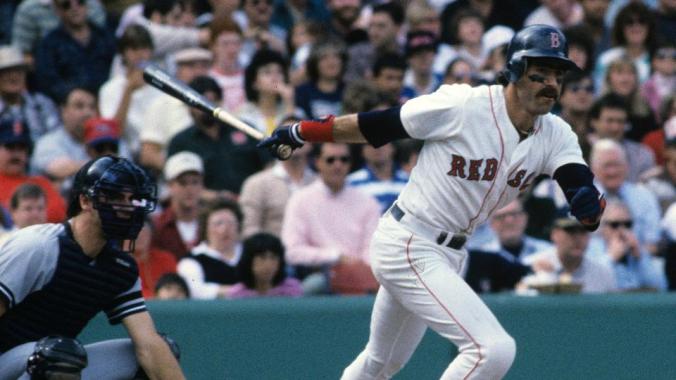
Even many non-baseball fans know his name. The first baseman gained cultural infamy in 1986, when Mookie Wilson hit a slow bouncer that found its way through Buckner’s legs, winning Game 6 of the World Series for the New York Mets after the Boston  Red Sox had appeared certain to finally win their first Word Series tittle since 1918. Buckner became an object of ridicule nationally and a scapegoat in Boston, which had reached its limit in close calls and near misses after dramatic final game  defeats in 1946, 1948, 1949, 1967, 1975 and 1978. (Game 6 wasn’t the final game in ’86: the Sox had to blow a three-run lead in Game 7 to lose that Series. Never mind: the surviving narrative was that it was still all Bill’s fault).

Knowledgeable and fair Red Sox fans—like me—never blamed Buckner, and condemned those who did. Indeed, Buckner’s late season offensive heroics probably got the Sox to the Series in the first place. Playing on fragile, oft-injured legs, he endured painful daily therapy to allow him to stay in the line-up, even though he was barely mobile. Boston manager John McNamara routinely replaced him in the late innings with defensive specialist Dave Stapleton. Continue reading →

Week-Opening Ethics Warm-Up, 5/20/2019: On Life Competence, Gender Math, Lying Stars, And Civil Rights Legislation That Isn’t As Good As It Pretends To Be

Ah, Monday…

1. Weekend Update: I am going to make a habit of flagging what I consider important issues from the weekends on Monday, since from late Friday to the end of Sunday these days, Ethics Alarms is populated by just a handful of stalwarts and tumbleweeds rolling down the deserted information super-highway. This time, I point your attention to…this.

2. Today’s baseball ethics note: Yesterday, the falling New York Mets lost their second straight game while getting less than three hits (that’s bad, for those sad members of you  who don’t follow baseball) in part because their recently acquired superstar, Robbie Cano, didn’t run hard to first base to try to avoid hitting into a double play. This, in turn, has placed the continued employment of Mets second year manager, Mickey Callaway, in jeopardy, as loafing players on losing teams always will. This is the Star Syndrome (or Rationalization #11, the King’s Pass) in operation: if Cano gets to do what lesser players would be fined, benched or released for doing, then the double standard threatens team unity and respect for the manager.

Cano’s excuse was that he thought there were two outs when there was really only one, because the scoreboard was wrong. A player is supposed to know the number of outs without having to check the scoreboard, but now photo evidence seems to show that the stadium scoreboard was correct, and showed only one out.

Oh-oh. Continue reading →

Property Rights, The Fan, The Baseball, And The Lesson [CORRECTED and UPDATED]

That’s Hydes in the middle. The little white round thing is the ball.

During an Angels-Tigers game in Detroit last week, California slugger Albert Pujols hit a solo home run that gave him  2,000 runs batted in for his career. This wasn’t just a round number. Only four batters in Major League History have knocked that many across the plate in their careers, three if you don’t count steroid cheat Alex Rodriguez, and you shouldn’t and I don’t. The three are Hank Aaron, Babe Ruth,  and now Pujols. It’s a big deal.

[I erroneously had Willie Mays and Barry Bonds (yechh) in the list. Thanks to Diego Garcia for the correction.]

A Detroit fan named Ely Hydes, a law student, got the ball in the stands. As is the usual practice in such situations where a ball represents a landmark achievement, and stadium  security asked him for the ball to present to the man who hit it. Hydes said no.  In an interview later with a Detroit radio station, he said that he hadn’t decided decided whether to give the ball to his brother, his father, or Pujols. The security staff offered money, and then, he said, got nasty with him, which he resented, and caused him to be more adamant about keeping the ball. Continue reading →

Ethics Quiz: The Cubs Fan Ban

(I have already made up my mind about this one, but I’m willing to be persuaded otherwise…hence the quiz.)

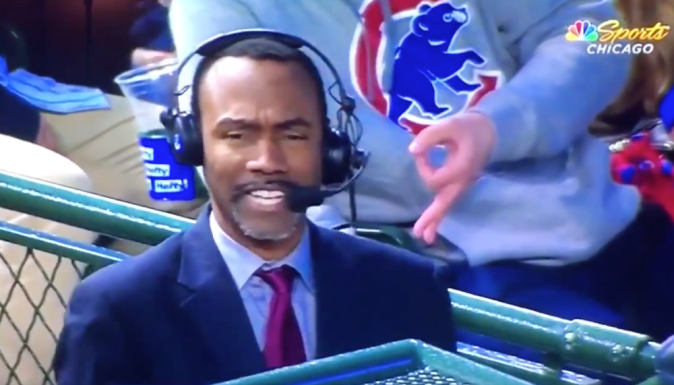
At the start of the bottom of the third inning of the May 7th Marlins-Cubs game, the NBC Sports Chicago broadcast went to analyst Doug Glanville for some “in the stands” commentary. Behind Glanville,  , a fan in a hoodie waved hello to the camera, flashed a peace sign, then made an upside-down OK hand gesture with his fingers.

Always looking for outrages and ways to hype racial tension, sharp-eyed activists flooded  the Cubs  with tweets like this:

@cubs @dan_bernstein What say you about this racist fan flashing a white power sign behind Mr. Glanville at tonight’s game? pic.twitter.com/zR7DqYWgQv

— Marc Lipkin (@Flipkin) May 8, 2019

Whether or not that gesture is “racist” is a matter of opinion, debate, and context. Annoyingly and self-consciously “woke” lawyer-NBC sports blogger Craig Calcaterra explains: Continue reading →

Ethics Hero: The Baltimore Orioles’ Trey Mancini

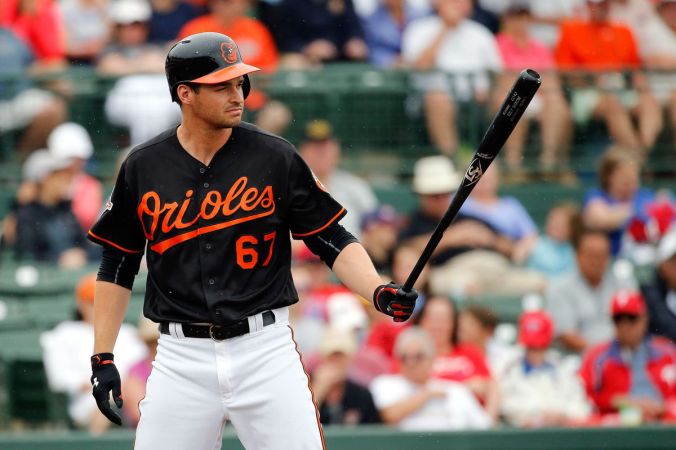
I just saw this. It defines  sportsmanship. In the bottom of the 11th inning in tonight’s Red Sox-Baltimore Orioles game at Camden Yards, in a 1-1 tie,  The Orioles’ Trey Mancini slugged what appeared to be game-winning home run to Camden Yards’ left center field.  But Boston centerfielder Jackie Bradley, Jr., the 2018 Gold Glove winner at the position, raced over to the wall, leaped, draped himself over the top, and  somehow, caught the ball to save the game for the Red Sox, at least temporarily.

Uusally when this kind of play occurs, the batter winces, or hold his head, or kicks a base.  Mancini, however, lifted his helmet high off his head as looked out to centerfield, saluting the man who took his homer away.

I’m sure it’s happened before, but I’ve seen thousands of baseball games, and I’ve never seen it, certainly not on a foiled game-winning hit.

I am now a Trey Mancini fan.

(The Red Sox won in the 12th, 2-1)

Ethical Quote Of The Month: Will Middlebrooks

“Don’t take one thing for granted. Not a single thing. Because when it’s gone it’s gone. Love and enjoy your teammates. You’re surrounded by some of the best players in the world and guess what, you’re one of them kid! Believe in your abilities day in and day out and never, ever let off the gas. Play this game like you know someone is coming for your job and today could be the last time you ever put on a big league uniform.”

—Former Boston Red Sox rookie sensation Will Middlebrooks, now retired, giving advice to current Red Sox rookie sensation Michael Chavis through an interview with Boston radio station WEEI’s Rob Bradford.

Although Middlebrooks’ sage advice was given in the context of playing Major League Baseball, it applies equally well to all passions, pursuits, opportunities, privileges, jobs, pleasures, honors, relationships, and  professions, as well as love, youth, and life in general. It is the present day Will Middlebrooks telling his younger self what he wishes he had understood before it was too late. Continue reading →

“Avengers: End Game” Ethics

I should begin by noting that there is no way I’m going to see this movie, unless I’m in the hospital, it’s on TV and my best alternatives are “Ellen” and Don Lemon.  I’m sick of CGI movies, sick of super-hero movies, and  have never been enamored of the genre since Christopher Reeve took Margot Kidder flying. As for this particular super-hero movie, the fact that it is 3-hours  is a minor problem, overwhelmed by the fact that I would have to watch the previous long Avengers movie, “Infinity War” to have a prayer of knowing what the hell’s going on.

However, many fans of such films are annoyed by the fact that “End Game” is so long yet has no intermission. They should be. One should be able to see the entertainment one has paid for without having to miss a chunk because nature calls. Movies don’t have intermissions any more, but that doesn’t mean there’s a good reason for them not to. Continue reading →

Ethics Dunce, “Racially-Charged Epithets” Division: NBC Baseball Writer Craig Calcaterra, And Anyone Who Agrees With Him

See above. Ick.  This is your brain on political correctness and convoluted social justice double standards. It’s not pretty.

Last week, Wednesday White Sox shortstop Tim Anderson was thrown out of a game and suspended after a fight broke out on the baseball field between his team and the Kansas City Royals. The cause doesn’t matter here, but the Royals pitcher, Brad Keller, threw at Anderson for being flamboyantly demonstrative after hitting a home run.

Anderson was also suspended by MLB, and it turned out that the reason for his punishment was that during the fight he called Keller a “weak-ass fucking nigger.”

Here is Anderson…

This is Keller.

Continue reading →

The Ozzie Albies Exension, Or “How DARE A Baseball Player Consider Anything Important Other Than Money?”

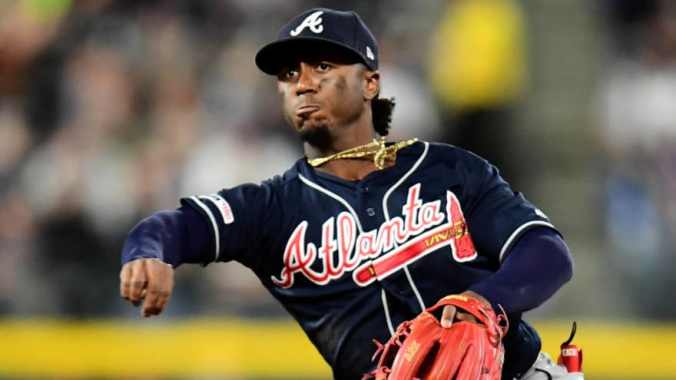
The Atlanta Braves announced a contract extension with second baseman Ozzie Albies guaranteeing the 22-year-old third year players a total of $35 million  from 2019 tp 2025. He’ll earn $1million apiece in 2019 and 2020, $3 million in 2021, $5MM in 2022, and $7MM annually from 2023 through 2025. The contract includes two  club options reportedly valued at $7million each; the first one comes with a $4 million buyout. If both are exercised, Albies will earn  $45 million over the next nine seasons .

Executives, players, stat-heads and scouts are all  condemning the Albies extension, alternately calling it a terrible deal for Albies, unethical exploitation by the team, and selfish betrayal by the player.

Here’s NBC Sports…

Front offices deciding, seemingly simultaneously, to stop spending on free agents in their 30’s stagnated the market. Then, because of the stagnated market they created, the owners get to collectively save billions of dollars in the coming years by nudging their young players into signing extensions well before their primes, before they have established leverage with which to negotiate. Free agency is then further stagnated because these players will be reaching it at 29 and 30, rather than 26. …In these young stars and potential stars signing away their arbitration-eligible seasons, they will fail to help set higher and higher bars at each step of the arbitration process.

Continue reading →

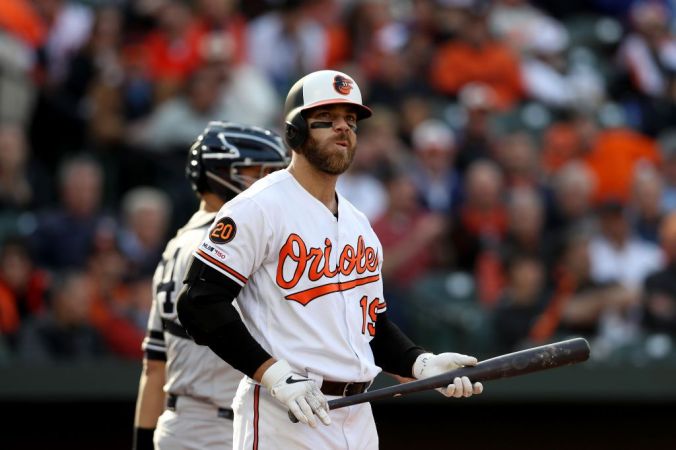
Dear Chris Davis: Do The Ethical Thing, Be An Ethics Hero. Quit.

Baltimore Orioles first baseman Chris Davis is making baseball history, and not in a good way. Once a fearsome slugger—Davis led the American League with 53 home runs in 2013, and hit 38 as recently as 2016—he has lost whatever it is that allows a baseball player to hit a ball thrown at him at up to 100 mph. Last season, at the advanced baseball age of 32 when most players, not all, but most, begin to decline, Davis fell off the metaphorical cliff.

His batting average was .168, the worst  in major league history for a regular, with  a  horrible .539 OPS (On base percentage plus slugging percentage), and a -2.5 WAR, meaning that the Orioles would have won 2.5 more games with a borderline major leaguer from the minors playing in his place. There were no injuries or other explanations for Davis’s sudden morph into an automatic out, and sometimes, not always, but sometimes, players bounce back a little bit after such a so-called “collapse” season.

It’s becoming increasingly clear that this won’t happen in Davis’s case. So far in 2019, Davis is 0-for-23 with 13 strikeouts this season and is hitless in 44 at-bats since last September 14. That’s within two outs of the record for consecutive hitless at-bats by a non-pitcher.

Want to know why baseball’s free agents over the age of 30 didn’t get the big long term contracts they expected this off-season?  Look no further than the Orioles’ predicament with Davis. They had to pay him 23 million dollars to be the worst player in baseball last season, when Baltimore lost 118 games. They are on the hook for the same amount this year, and three more seasons after that. Continue reading →