The Sixth Annual Ethics Alarms Awards: The Best of Ethics 2014

abstract door grand jury room

The Ethics Alarms Awards for the Best in Ethics 2014—sorry for the tardiness— are about 30% of the length of the Worst. Does this mean that the nation and the culture, not to mention the world, are doomed?

Not necessarily. I am well aware that most of the country is ethical, substantially fair and honest, diligent, and embodies ethical values in their every day dealings with you and me, and the world. We primarily hear, and to some extent, take note of, the corrupt, the irresponsible, the manipulative, the untrustworthy and the foolish. The Best Ethics list is smaller in part because only exemplary ethics gets publicity. I also should note that calling attention to unethical conduct and discussing it often does more to advance the mission of Ethics Alarms than confirming that right is right, though I sure wish there was more exemplary ethics to celebrate. Maybe the dearth of award winners here is my fault, and the result of my biases.

Boy, I hope so.

Here are the 2014 Ethics Alarms Awards for the Best in Ethics:

Most Important Ethical Act of the Year:

The Ferguson grand jury resisted public and media pressure to deliver a verdict of no indictment against police officer Darren Wilson, upholding the integrity of the justice system despite the injection of emotion, politics and race into a tragic incident where none of these belonged. Though the available evidence could never have supported a guilty verdict, it would have been easy and popular for the grand jury to make Wilson stand trial anyway, just as George Zimmerman did. Their reward has been to be attacked as fools and racists, but they did the right thing, when the wrong thing must have seemed very attractive.

Outstanding Ethical Leadership

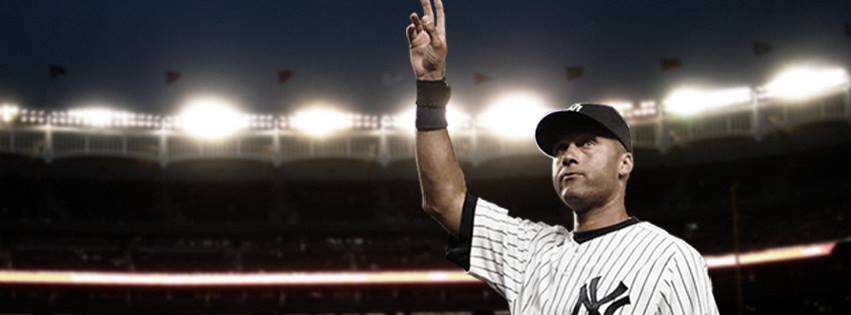
The New York Yankees. (Bear with me now.) The Yankees are the most famous team in professional sports in the biggest sports market in the world. They make money without even trying. Yet when the team had a bad year and missed the play-offs in 2013, it committed nearly a billion dollars to re-building the team, a move that only makes sense in the quest to win games, not to maximize profit. Thus they prominently chose loyalty, mission and sportsmanship over greed. (The Yankees still missed the play-offs in 2014, too.) Then all year long the team placed a spotlight on Derek Jeter, their retiring hero, whose career and character single-handedly refutes the cynicism of sports critics fed up with the lack of character displayed by the Armstrongs, the Rices, the ARods, the Belichicks, the Winstons, the Paternos, and so many, many others. Finally, when two New York City police officers were assassinated after Al Sharpton, and the “Hands Up!” protestors, with the city’s own mayor’s support, had vilified the profession as violent, racist and untrustworthy, who will pay for the fallen officers’ children to go to college? The New York Yankees’ Silver Shield Foundation.  Add charity, compassion, civic duty and gratitude to the list of ethics values the New Your baseball club modeled for us. I know it seems odd and even trivial to follow up last year’s winner in this category—the Pope— with a sports franchise, but to paraphrase Babe Ruth’s famous rejoinder when the Yankees balked at his salary demands in 1930, saying he wanted to be paid more than then-President Herbert Hoover (“I had a better year that Hoover!”), the Yankees has a better year than the Pope.

Outstanding Sportsmanship

Jose Altuve, Houston Astros secondbaseman and American League batting champ….the right way. He began the final day of the 2014 season hitting .340, three points ahead of the Tigers’ Victor Martinez. If Altuve didn’t play in Houston’s meaningless last game, Martinez would have to go 3-for-3 to pass him, giving the DH a narrow .3407 average compared with Altuve’s .3399. By playing, Altuve risked lowering his average, providing Martinez with a better chance of winning the batting championship. Many players in the past have sat out their final game or games to “back in” to the prize, rather than give the fans a chance to watch a head to head battle injecting some much-needed drama into the expiring season.  Altuve, however, gave Martinez his shot. He played the whole game, had two hits in his four at-bats, and won the American League batting title on the field, not on the bench, as Martinez went hitless. The conduct, simple as it was, embodied fairness, integrity, courage, respect for an opponent, and most of all, respect for the game.

Best Apology

JESSICA_URBINA

 The Level #1 apology, according to the Ethics Alarms Apology scale, issued by Sacred Heart Cathedral Prep in San Francisco.The school had cruelly and needless embarrassed graduating senior Jessica Urbina (above), rejecting her inclusion in the yearbook because she chose to be photographed in a tuxedo rather than a dress, as the school’s dress code, which had not been previously made clear, demanded. I wrote…

“The rule is sexist, archaic, unthinking, prejudicial, arbitrary, cruel and wrong. The best way to change a rule that is sexist, archaic, unthinking, prejudicial, arbitrary, cruel and wrong is to break it, and see if those in charge have the sense and compassion to do the right thing. The administrators of Sacred Heart Cathedral High School flunked. I doubt that Jessica was even trying to provoke a confrontation: like any normal student, she wanted her image in the most important piece of memorabilia of her high school years to accurately portray her as she was, not as some alien ideal dictated by the Catholic Church. There was nothing to be achieved by banning the photo.”

The school reversed itself with grace and compassion. The apology is long, but a more humble or complete one would be unachievable. It achieved an ethical end to an ugly episode. You can read it here. Runner up: Writer Henry Rollins lovely and wrenching apology for his initial reaction to Robin Williams’ suicide.

Hero of the Year

Michael DeBeyer.  De Beyer has decided to sell his restaurant, which he opened more than 15 years ago and is worth an estimated  $2 million, to pay for whatever medical treatments are necessary to save the life of Brittany Mathis, 19. Brittany works for De Beyer at his Kaiserhof Restaurant and Biergarten in Montgomery, Texas, and  learned, in December 2013, that she has a 1.5 inch brain tumor.  She couldn’t afford the operation to find out whether the tumor was benign or malignant, and didn’t have health insurance. “I couldn’t live with myself; I would never be happy just earning money from my restaurant knowing that she needs help,” Michael told local reporters.

That’s what makes ethics heroes; really, really loud ethics alarms, combined with courage and caring.

Parent of the Year

NBA Star Kevin Durant’s Mom.

Most Ethical Celebrity

Matthew McConaughey. In a field notably sparse on exemplary ethics by celebrities, the 2013 Oscar winner for Best Actor stands out for a speech that was inspirational, thoughtful, and rife with ethics wisdom. It is worth recalling. Here it is:

Thank you. Thank you, thank you, thank you, thank you to the Academy for this—all 6,000 members. Thank you to the other nominees. All these performances were impeccable in my opinion. I didn’t see a false note anywhere. I want to thank Jean-Marc Vallée, our director. Want to thank Jared Leto, Jennifer Garner, who I worked with daily.

There’s a few things, about three things to my account that I need each day. One of them is something to look up to, another is something to look forward to, and another is someone to chase. Now, first off, I want to thank God. ‘Cause that’s who I look up to. He has graced my life with opportunities that I know are not of my hand or any other human hand. He has shown me that it’s a scientific fact that gratitude reciprocates. In the words of the late Charlie Laughton, who said, “When you’ve got God, you got a friend. And that friend is you.”

To my family, that who and what I look forward to. To my father who, I know he’s up there right now with a big pot of gumbo. He’s got a lemon meringue pie over there. He’s probably in his underwear. And he’s got a cold can of Miller Lite and he’s dancing right now. To you, Dad, you taught me what it means to be a man. To my mother who’s here tonight, who taught me and my two older brothers… demanded that we respect ourselves. And what we in turn learned was that we were then better able to respect others. Thank you for that, Mama. To my wife, Camila, and my kids Levi, Vida and Mr. Stone, the courage and significance you give me every day I go out the door is unparalleled. You are the four people in my life that I want to make the most proud of me. Thank you.

And to my hero. That’s who I chase. Now when I was 15 years old, I had a very important person in my life come to me and say “who’s your hero?” And I said, “I don’t know, I gotta think about that. Give me a couple of weeks.” I come back two weeks later, this person comes up and says “who’s your hero?” I said, “I thought about it. You know who it is? It’s me in 10 years.” So I turned 25. Ten years later, that same person comes to me and says, “So, are you a hero?” And I was like, “not even close. No, no, no.” She said, “Why?” I said, “Because my hero’s me at 35.” So you see every day, every week, every month and every year of my life, my hero’s always 10 years away. I’m never gonna be my hero. I’m not gonna attain that. I know I’m not, and that’s just fine with me because that keeps me with somebody to keep on chasing.

So, to any of us, whatever those things are, whatever it is we look up to, whatever it is we look forward to, and whoever it is we’re chasing, to that I say, “Amen.” To that I say, “Alright, alright, alright.” To that I say “just keep living.” Thank you.

Most Principled Politician
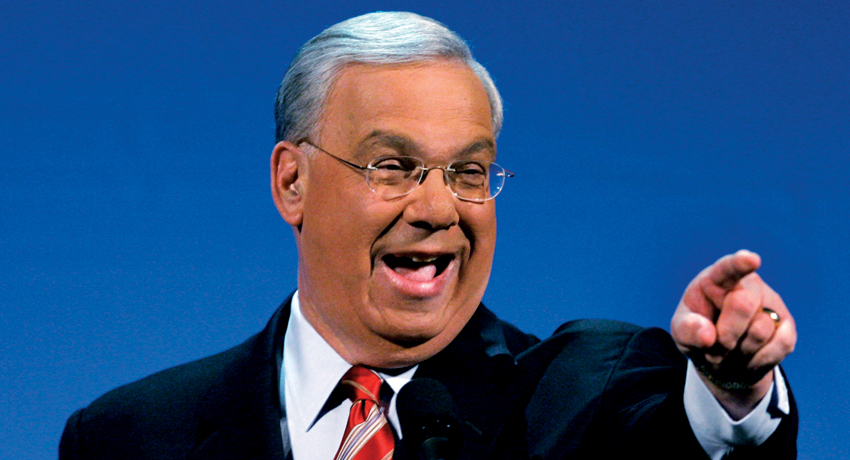
Thomas Menino

The late Thomas Menino, Boston’s beloved Democratic mayor for two decades (the longest in tenure in the city’s history), who retired last January and  died of cancer nine months later. Somehow I missed giving him the ethics send-off he deserved. Amazingly, he was the first Italian-American mayor in Boston’s history: the job has always been won by the city’s Irish machine. While mayors around the nation were embroiled in scandals and embarrassments, Menino undeniably improved the city, led it admirably in the aftermath of the Boston Marathon bombing in 2013, and left office with the admiration of conservatives as well as liberals despite being an aggressive agent of progressive policies.  His passion caused him to make some ethical missteps, such as joining other liberal mayors in telling Chick-Fil-A that it “wasn’t welcome” in Boston because of its owner’s anti-gay marriage sentiments. He joined Michael Bloomberg in creating Mayors Against Illegal Guns, and must share responsibility for some of the dubious tactics and misrepresentations of that organization. He also had a scandal or two involving political favors, but in 20 years, by my count, he had fewer than most Boston mayors had every year. In 2012, polls found that he had an approval rating over 80%, and left his position more popular than he entered it.  Boston is liberal, but it isn’t that liberal.

Most Ethical Company

Don’t ever let me do that again.

I just reviewed over a hundred posts about businesses and corporations from last year, and not one of them celebrated ethical conduct. The closest was, believe it or not, the Washington Redskins, for having the guts, orneriness and principles to stand against the forces of censorship and political correctness to refuse to change the name of their team and organization. It has been targeted as a symbolic scalp that race-baiters, grievance-hucksters and progressive bullies are determined to have hanging from their belts; the opponents of the team have recruited the U.S. government, and the pressure is tremendous. It would be so easy to change the name now, when support for the perpetually rotten team is at low ebb in Washington, D.C., but the principle is worth the battle. However, my gag reflex will not allow me to give this award to an NFL team, since by definition it must be engaged in so much else that is wrong.

So for a second straight year I’m going to send you to Ethisphere’s list of the most ethical companies in the world. Their criteria isn’t mine, but there’s got to be a genuinely ethical company of two on there somewhere. Let me know if you find it. Continue reading
The Absolute Worst Of The Terrible Arguments For Putting Barry Bonds In The Hall Of Fame

815-Baseball-Hall-of-Fame-CEvery year at this time, I issue commentary on the “steroid-users in the Major League Baseball Hall of Fame” controversy. I’m not going to disappoint you this year.

Today the Hall will announce who the baseball writers deemed worthy, and, as usual, the acknowledged steroid cheats with Hall of Fame statistics will be resoundingly rejected. I don’t feel like revisiting this subject in depth again right now: I have done so before, many times. However, yesterday I nearly drove off the road listing to MLB radio commentators Casey Stern and Jim Bowden, supposedly baseball experts, give their reasons for voting for the entire range of steroid cheats, from Barry Bonds and Mark McGwire to Roger Clemens and the despicable Alex Rodriquez.

Baseball’s Hall of Fame, alone among the sports Halls,  includes ethics in its criteria for entry: a player must exhibit sportsmanship, integrity and have been a credit to the game. The average sportswriter who votes for candidates is about as conversant in ethics as he is in Aramaic, leading to an endless debate involving every rationalization on the list and  analogies so terrible that they melt the brain.For example, I constantly hear and read that the evidence that Barry Bonds used steroids is “circumstantial” so it is unfair to tar him as a steroid user. Such commentators don’t know what circumstantial evidence is. Criminals can be justly convicted beyond a reasonable doubt by circumstantial evidence, which is also known as indirect evidence. Direct evidence, if believed, proves the existence of a particular fact.  Circumstantial evidence proves facts other than the particular fact  to be proved, but reason and experience indicates that the indirect evidence is so closely associated with the fact to be proved that the fact to be proved may be fairly inferred by existence of the circumstantial evidence. There is direct evidence that Bonds was a steroid-user, but the circumstantial evidence, as the well-researched book “Game of Shadows” showed, is so voluminous that it alone is decisive. Literally no one thinks Bonds is innocent of using steroids. [You can read my analysis of the case against Bonds here, here, and here.]

Stern and Bowden, however, claim that it is unfair to refuse the honor of Hall of Fame membership to suspected steroid users because it is inevitable that some players who used steroids and were never caught or suspected will make it into the Hall, if there aren’t such undetected cheat in the Hall already. Continue reading

Ethics Hero, Ghost Of Christmas Past Edition: Dwight Gooden

Dwight-Gooden

For me, Christmas triggers not only memories fond and bittersweet, but also regrets, realizations, and discovered clarity about where I have been and how I got where I am. This was really what Charles Dickens was expressing in “A Christmas Carol, and why it resonates even with the kinds of people who would be tempted to put a zombie Nativity on their front lawn.

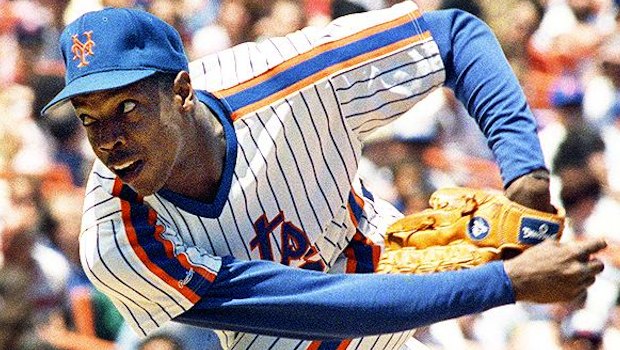
Last week, former New York Mets pitching ace Dwight Gooden, known in his prime as “Doctor K” (a “K” is a strikeout, and if you didn’t know that—wow) and eventually just “Doc,”penned a brave and inspiring piece for The Player’s Tribune, in which he addressed his younger self, warning the young, cocky kid with the world seemingly begging to be his playground and cheering section in 1984 about the traps and landmines lying in his path.

Gooden, for those of you who face life every day without the accumulated wisdom bestowed by the love of baseball, and who somehow live through cruel winter without the promise of Spring Training warming your nights, looked like he might become the greatest, coolest, most unhittable pitcher in baseball history when he arrived on the big league scene in ’84, winning 17 games with a deadly curve and a 98 mile per hour fastball at the tender age of 19. He became the youngest player ever to pitch in an All-Star Game that year (he struck out the side), and the next season, at 20, he won 24 games, lost only four, and led the National League with a miniscule 1.53 earned run average.

And he was never that good again. He began losing speed on his fastball the next year, and steadily declined thereafter. Eventually there were drug problems, alcoholism  and other embarrassments, and Doc Gooden, instead of being the lock for the Hall of Fame that he seemed at 20, was washed-up at 35, and an unofficial member of the Pantheon of Disappointing and Fallen Sports Heroes.

Today, as the former pitcher nears 50, Gooden is a dedicated father and grandfather to  his children and grandchildren. He is the president of Best of the Best Sports Management, where he works with his oldest son, Dwight Jr. and is also a spokesman for PinkTie.org , a Long Island-based charity dedicated to fighting breast cancer.

In his essay, titled, “Letter to my Younger Self,” Gooden is frank, uncompromising, wistful, self-critical, funny, and never indulges in self-pity. He ends it this way:

Drugs and alcohol are only a false sense of security. Neither thing will fill the void you feel. Unfortunately it might take you a few missed Christmas Days with your family to learn this.

You will want to try to fix your issues on your own. This is how you think a man handles his problems. It isn’t. Being a man is about reaching out for help when you need it. If your curveball isn’t working, you’ll know how to fix that. If the control on your pitches is off, you’ll know how to fix that. But you will face a lot of hardship because of your inability to realize that you can’t fix yourself.

Finally, please know this: I love you. It’s going to take you a long time and a lot of pain to realize this, but accepting it will go a long way towards healing. The journey will be trying, but it ends in a good place.

Keep getting those Ks,

You’re a hero after all, Doc.

Merry Christmas.

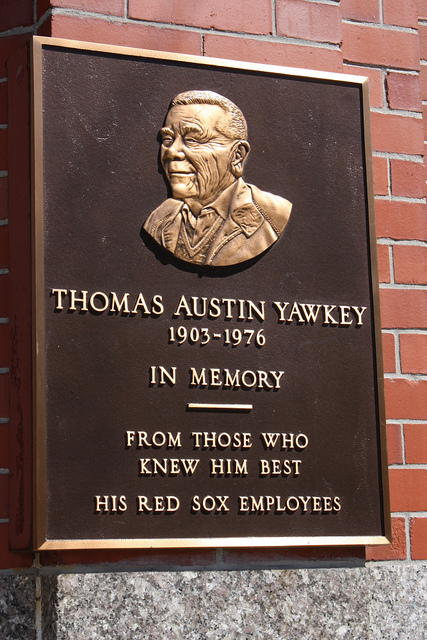
Ethics Alarms Encore: “Tom Yawkey’s Red Sox Racism, and How Not to Prove It”

Yawkey TributeEvery now and then a comment out of the blue reminds me of a post that I had forgotten. That was the case here. Reading it again for the first time in five years, I was struck by how the crux of the post is still relevant today (that crux has nothing to do with baseball), and indeed how the intervening five years have made what I thought was a bad trend a genuine political and cultural malady.

And the World Series is going on, and I feel badly about the Red Sox having such a miserable season. This post, which few read when it was first published as the blog was attracting (let’s see…) less than 200 views a day as opposed to nearly 4000 a day now, is a good one, and I enjoyed it.  That “self-professed ethicist” has his moments…. Continue reading

Ethics Dunce: Skechers

Do you know who the very first Ethics Dunce was? It was Pete Rose. This was in January of 2004, on the newly launched Ethics Scoreboard, and Pete had just admitted that he did indeed bet on baseball while managing the Cincinnati Reds, even though he had been loudly denying it (and smearing the reputation of Bart Giamatti, the baseball commissioner who banned him from baseball and entry into the Hall of Fame for it) for 10 years.

Now another decade has past, and Pete still doesn’t really get it. Helping him make money for not getting it is the “relaxed fit footwear” people, Skechers, with  jaw-dropping TV spot showing Pete in his own home (supposedly), padding down a hallway festooned with his many trophies, Silver Bats and other symbols of his days as “Charley Hustle,” as he revels in the comfort of his Skechers and the joys of being in “the hall.” Then his wife or girlfriend (with Pete, it’s hard to keep up…if she’s his wife now, then someone else is his girlfriend)) sticks her head out of a doorway and tells him, “Pete, you know you’re not supposed to be in the hall!”

HAR! What a hoot it is, being disgraced in your own sport for undermining its integrity! Pete has never quite comprehended what all the fuss is about—after all, his bets were always in favor of his team, never against it, and never affected his management decisions! He says. And why wouldn’t everyone believe him about that, just because he knowingly broke baseball’s biggest taboo (Pete can tell you Shoeless Joe’s batting average down to the 5th decimal: believe me, he knows all about the Black Sox), lied about it everywhere and often, and got himself thrown in jail for cheating on his taxes?

What would make anyone, in any company, think that an unapologetic lifetime sleaze like Pete Rose being associated with their product would make people run out and buy it? Continue reading

Matt Williams’ Blues: Consequentialism, Hindsight Bias, And Moral Luck

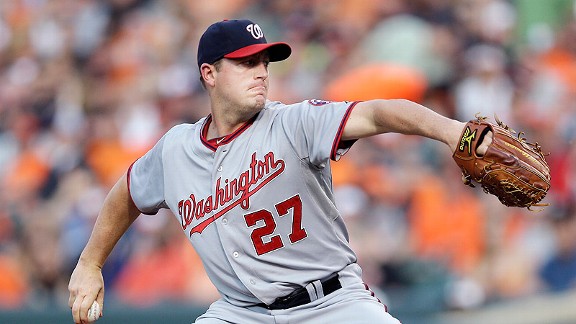
zimmermann

As I wrote last year about this time, the baseball play-offs make us unethical. Managers make decisions that either work or back-fire, and feed the toxic human tendency toward  consequentialism thusly: when they work, the decisions werecorrect; when they don’t, the manager was an idiot, and the choicee were obviously wrong. As with judging the ethics of an act, what happens after a baseball decision is made is irrelevant to whether it was a good decision when it was made.  This is almost impossible to keep firmly in mind. Our logic rebels at the idea that an ethical act can have horrendous consequences, or that the right tactical decision can result in defeat. But that’s life, as my father was fond of saying.

Hindsight bias further pushes us to confuse the making of a decision with its consequences. It is, not surprisingly, much easier to make a strong case that a decision was the wrong one after all the results are in. This, of course, is unfair to the decision-maker, who didn’t have the data the critics do when he or she acted. On the other hand, sometimes the reason the decision was the wrong one is that it was wrong, and the fact that the results were bad just support that verdict.

This morning, indeed since last night, Washington D.C. baseball fans and sportswriters have been wrestling this conundrum. The Washington Nationals, widely believed to be the strongest National League team in the post season, and quite possibly the favorites to win the World Series, find themselves down 0-2 in the best of five National League Division Series after a grueling, 18 inning loss to the San Francisco Giants, who didn’t even win their own division. The way the game went into extra innings will be debated for months if the Nats fail to rally and win the series. Nats starting pitcher Justin Zimmermann, who had pitched a no-hitter in his last outing, had been almost as good this time, pitching his team within one out of a 1-0 win that would have evened the series. He had dominated Giants hitters in every way, and had not shown any signs of weakening or, as they say in the game, “losing his stuff.” In the old days, that is, as recently as 20 years ago, a pitcher on a run like this would finish the game unless he had a stroke on the mound. Now, MLB managers are trained to be ready to go to their ninth inning specialist, the so-called closer, at any hint of trouble or even without it, and they almost always do.

As a reflex action, it makes no sense a lot of the time, other than “everybody does it.” A pitcher whom you know is pitching well is a known quantity, while a pitcher newly arrived to the game, whatever his skills, is not.  If the choice is between a starter who is not just doing OK but rather mowing down batters like Samson jaw-boning the Philistines, and bringing in a new arm, logic would dictate that the latter is the greater risk.

Nats manager Matt Williams acknowledged that Zimmerman was “in the zone” by not lifting him to begin the ninth, and was rewarded with two quick outs. When he walked his first batter of the game, however, on his magic 100th pitch (they count pitches now, and 100 is the number at which pitchers supposedly turn into pumpkins), and Williams lifted him, calling on closer Drew Storen. Continue reading

Of Black Lungs and Concussions: How Can An Ethical Person Be A Football Fan?

So now you know. And,,,?

So now you know. And…?

The worst thing about pro football is not its wife-beating, gun-toting, child-beating players, or that the league happily has been willing to ignore these little flaws while promoting such flawed men as heroes to America’s young. Nor is the worst thing about pro football the fact that one of its teams has a politically incorrect nickname. No, the worst thing about pro football is that it makes billions from inducing young men to cripple their cognition long before nature would even consider doing it to them, and corrupts its huge national audience by inducing it to not only cheer this process, but pay for it.

Sally Jenkins, in a frank, stark column for the Washington Post, compared the NFL to the coal industry of yore, when minors were dying of black lung and terrible working conditions, and the government had to step in:

Since the NFL insists on behaving like the coal industry circa 1969, the only solution to its problems is for Congress to step in and regulate the business of these 32 billionaire plunderers. This week, the Department of Veterans Affairs brain bank announced that 76 out of 79 deceased NFL players had chronic traumatic encephalopathy, a degenerative brain disease. The price for owning a team just went up. Jerry Jones, Bob Kraft, Dan Snyder, Steve Bisciotti and all the rest, if you want to enrich yourselves at the expense of the ravaged health of others, be prepared to pay for it. Your future is endless litigation and government interference.

The CTE thunderbolt follows closely on the league’s callous handling of domestic violence cases. A new raft of medical investigations and lawsuits say that CTE caused some of these devastating domestic explosions, such as Jovan Belcher’s 2013 murder-suicide. CTE leads to aggression, paranoia, impaired judgment and depression….Here’s the deal: Concussions are the black lung of the NFL. And the league knows it.

Sure it does, but my problem is, so do its fans. The nation needed coal, still needs it in fact, so regulating that industry was reasonable, imperative, and practical. The country doesn’t need to have a deadly sport to watch every Sunday (Thursday, Monday…). Once it could claim that it was innocent, that helmeted players were protected, and that the tragically crippled were aberrations. Not any more. Continue reading

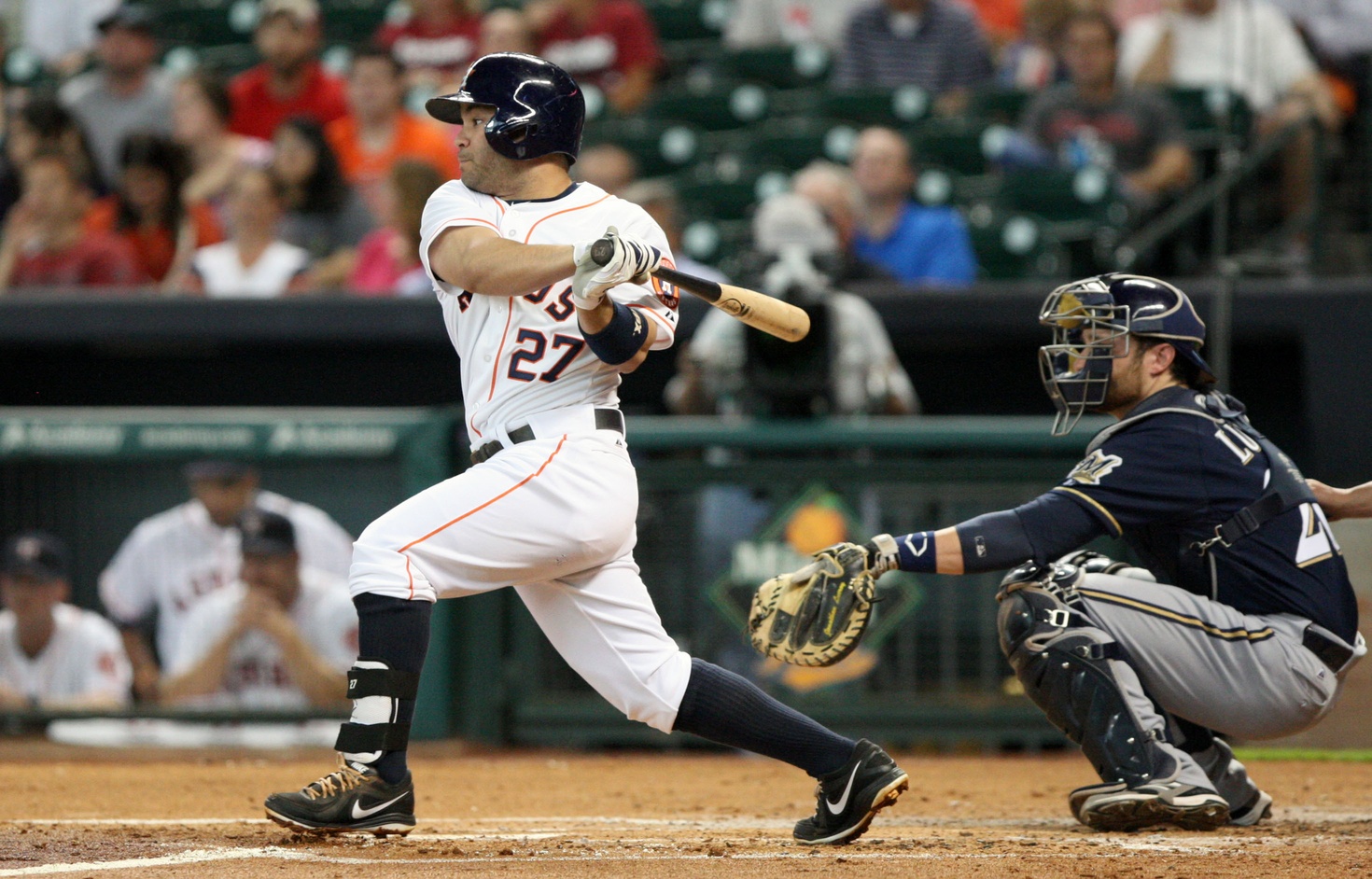
Ethics Hero: American League Batting Champion Jose Altuve

Altuve

There was another baseball Ethics Hero who emerged on the last day of the regular season yesterday. File it under “Sportsmanship.”

Houston Astros secondbaseman  Jose Altuve (at less than 5′ 5″, the shortest athlete in a major professional sport) began the day hitting .340, three points ahead of the Tigers’ Victor Martinez, who was at .337. Even with all the new stats and metrics showing that batting average alone is not the best measure of a baseball player’s offensive value, a league batting championship remains the most prestigious of individual titles, putting a player in the record books with the likes of Ty Cobb, Ted Williams, Rogers Hornsby, George Brett, Ichiro Suzuki and Tony Gwynn. It’s still a big deal. If Altuve didn’t play in Houston’s meaningless last game, Martinez would have to go 3-for-3 to pass him, giving the DH a narrow .3407 average compared with Altuve’s .3399. By playing, Altuve would risk lowering his average, providing Martinez with a better chance of passing him.

Many players in the past have sat out their final game or games to “back in” to the batting championship, rather than give the fans a chance to watch a head to head battle injecting some much-needed drama to the expiring season. ESPN blogger David Schoenfield recounts some of those episodes here.

Altuve, however, gave Martinez his shot. He played the whole game, had two hits in his four at-bats, and won the American League batting title the right way—on the field, not on the bench.  (Martinez was hitless in three at bats.)

The conduct, simple as it was, embodied fairness, integrity, courage, respect for an opponent, and most of all, respect for the game.

Sportsmanship lives.

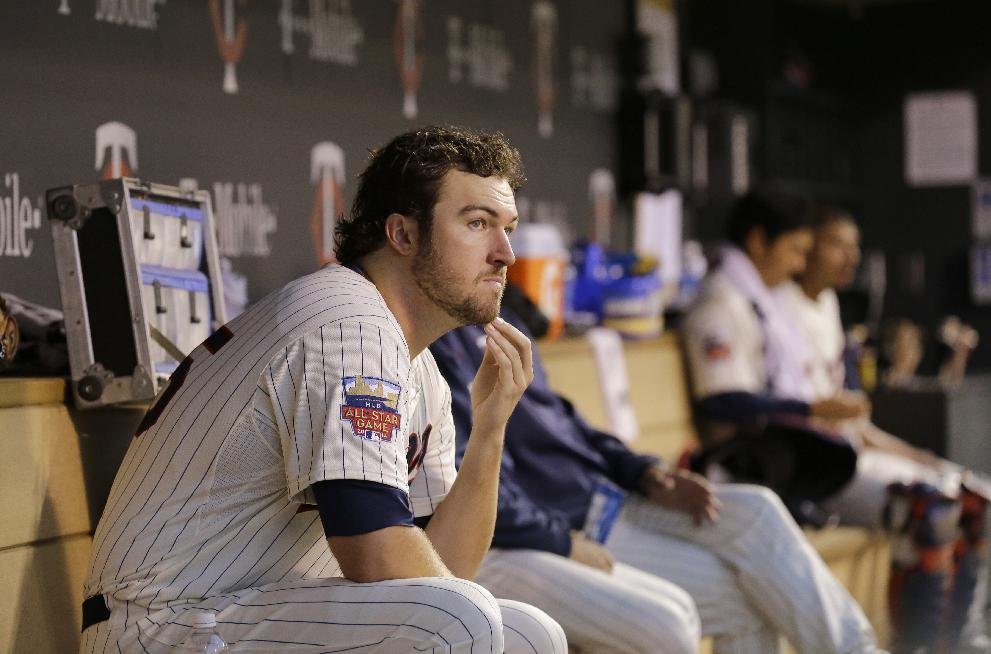
Ethics Hero: Minnesota Twins Pitcher Phil Hughes

Phil Hughes

This is the final day of the regular baseball season, and an appropriate time to salute a major league player who placed principle over cash….even if I disagree with him

Phil Hughes was a bargain pick-up during the off-season for the Twins, a failed pitching phenom for the Yankees widely viewed to be on a fast slope to oblivion. He surprised everyone with a wonderful season for the otherwise woeful Minnesota team this season, potentially setting the all-time strikeout-to-walk ratio record, and began his final start of the campaign needing to throw eight and a third innings to reach 210 and trigger a $500,000 bonus in his contract.He would have made it, too, pitching eight dominant innings against the Diamondbacks and allowing just one run.  Then there was a downpour, with Hughes needing one more out to get the  extra $500,000.

After more than an hour’s rain delay, the game was resumed, but as is the practice in baseball, Hughes did not return to pitch: too long a delay, his arm too cold, too much risk of injury, especially after throwing so many pitches.  Hughes accepted the bad luck without complaint or rancor, saying that “some things aren’t meant to be.” Continue reading

Ethics Hero: Derek Jeter

Jeter Farewell

Once upon a time, there were three young shortstops.

They arrived in the majors nearly at the same time, completely different in style and skills, but each carrying the promise of greatness. Nomar Garciaparra, with the Red Sox, was the flashy and charismatic one. Alex Rodriquez was the youngest, and held the most potential. Derek Jeter, of the New York Yankees, was a finished player from the moment he stepped on a major league field: poised, purposeful, and a winner.

While once it seemed certain that all three would meet at the Hall of Fame, it was not to be. Garciaparra won two batting titles, but his aggressive moves and spidery form made him injury prone. His reign as an elite shortstop ended prematurely, and so did his career. Rodriquez, as he matured, went from The Kid to A-Rod to A-Fraud, his reputation and life scarred by controversies, illegal steroids, lies and the habits of a sociopath. He sat out this season, at a time in his career when he had been expected (and paid) to be chasing the all-time home run record, with a humiliating suspension. He is the most unpopular player in baseball, and one of the most reviled of all time.

So then there was one shortstop, Jeter, and his life on and off the baseball field has been extraordinary enough to make up for the disappointments left us by his former shortstop colleagues. Last night, at the age of 40, he played his final home game at the position for the Yankees. His career statistics show no batting or home run titles, it is true, but shine brilliantly nonetheless: a .309 lifetime average, 3461 hits (3000 makes a player a lock for the Hall of Fame even if he doesn’t play the most difficult position on the field, as Jeter has ), just short of 2000 runs scored (10th all-time), twelve All-Star games, five Golden Gloves (as the American League’s best fielding shortstop), five Silver Sluggers (as the best hitter at his position), and most of all, seven World Series, five of them on World Champions.

Apart from the stats, awards and titles, Jeter was just as exemplary. He played in an era when it is impossible to hide as a celebrity: if you are a jerk, everyone will know it. He wasn’t a jerk. He was, in fact, the personification of the perfect sports hero. Jeter has been a leader and teacher by example to his team mates and his admirers, though his one-time friend, Rodriguez, would not absorb the lessons. He has had no personal drama, no tawdry sexual episodes, no bastard children. He was never arrested or suspected of using drugs, performance-enhancing or recreational. There were no DUI charges or petulant interviews. Derek Jeter never had to ask “Do you know who I am?” because he never acted as if he was special, because he made himself special by never acting that way, and because everyone did know who he was. In every way imaginable, from his public comportment to his ability to rise to the occasion under the pressure of a national audience, a rich contract and the hopes of millions, Derek Jeter has embodied the ideal of the athletic hero. Continue reading