Here’s Something A-Rod Is NOT Doing Wrong

The Don had his flaws, but he knew the difference between personal and professional.

The Don had his flaws, but he knew the difference between personal and professional.

Alex Rodriguez has done a lot of bad things, but everything he does isn’t wrong. Kudos to lawyer/baseball pundit Craig Calcaterra for flagging a typical bit of pundit idiocy.

Yesterday, the news was that Rodriguez, rather than accept his season-long suspension as a result of the arbitration panel’s final decision regarding the disciplinary action against him taken by Major League Baseball, is suing MLB, and the players union for not properly defending him. This involves allegations that the union’s late Executive Director, Michael Weiner (who perished last year of an inoperable brain tumor) failed in his duty to A-Rod, a member in good standing, though a slimy one.  This, to various sportswriters, broadcasters and bloggers, was the smoking gun proof that Alex’s heart is as black as a Mamba: how dare he impugn the character of a dead man, a beloved family man who died before his time? For example, here is  Yahoo Sports’ indignant Jeff Passon:

“Alex Rodriguez is a sad, desperate man, and sad, desperate men do sad, desperate things like blame their sad, desperate circumstances on a beloved, deceased man. Of the many layers of pathetic A-Rod has peeled back in trying to excuse his own wretched choices, never had he spoken ill of the dead, not until Monday when his failing defense found a new nadir.”

Rodriguez may well be a sad, desperate man as well as a certified rotter, but his treatment of Weiner is not one of his many transgressions. Continue reading

Our Incompetent Media, Making America Ignorant, Case # 58755

Mike Ferrin, making up Constitutional law as he goes along...

Sirius-XM’s Mike Ferrin, making up Constitutional law as he goes along…

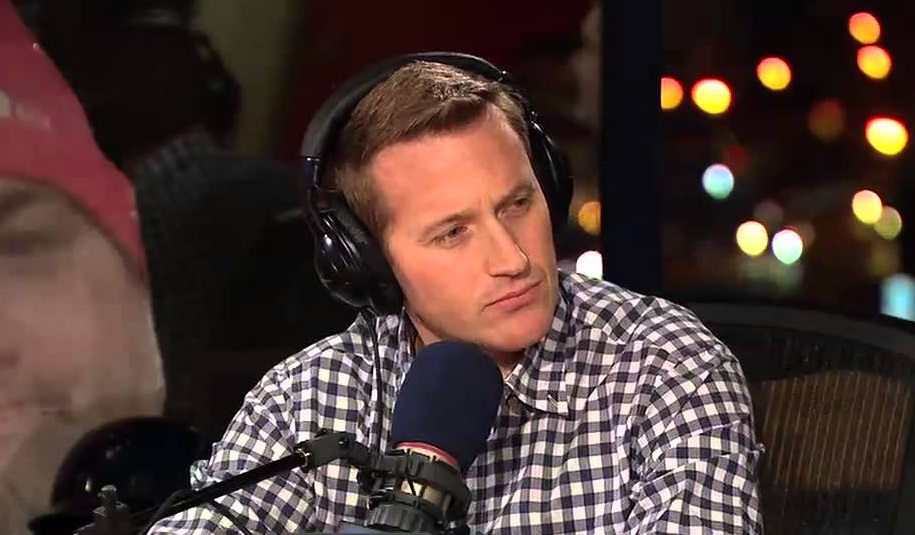
Driving along, minding my own business, on the way to picking up some cranberry juice and dishwasher detergent, I chanced to turn on channel 89 on Sirius-XM, where, by no special intent of mine, the baseball show “Power Alley,” with hosts Mike Ferrin and Jim Duquette (the latter a former and probably future big league general manager) was covering the A-Rod suspension story, currently the hottest scandal in sports.  Ferrin is a baseball commentator, and he was railing about the statement of a lawyer, quoted on the show, that it was Alex Rodriquez’s refusal to testify at his hearing before a union arbitrator that sealed his doom and resulted in his season long suspension by Major League Baseball being upheld.

“What about his Fifth Amendment rights?” Ferrin was saying. “I am very disturbed by this. Rodriguez doesn’t have to testify! He has every right to refuse! I find it very disturbing that we are being told that a man lost his livelihood because he asserted his rights as an American! It’s just wrong!”

At this point, my car is weaving all over the road as I try to find my cell phone to call the show (I had left it at home) and scream. The Fifth Amendment, which among other things protects citizens against compelled testimony against themselves under threat of government action, has nothing to do with Alex Rodriquez and his arbitration hearing—-Mike Ferrin, you incompetent, blathering fool. The Fifth Amendment does not apply to private proceedings, of which a labor grievance arbitration is one.  Continue reading

The Alex Rodriguez Suspension, Barry Bonds, And The Slippery Slope

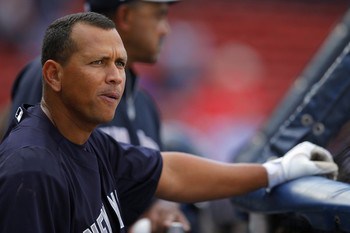
New York Yankees' Alex Rodriguez stretches before American League baseball game at Fenway Park in Boston

In a decision that further defines major league baseball’s cultural standards regarding performance enhancing drugs and the players who use them, New York Yankee Alex Rodriguez was suspended for the entire 2014 season and post-season by an arbitrator yesterday. Rodriguez, a long-time superstar who was once considered a lock to break baseball’s career home run record, and who is the highest paid player in the game, was suspended for illicit drug use without testing positive under the game’s union-negotiated testing system. He was, instead, suspended for a violation of the player’s Basic Agreement under baseball management’s right to police the game and do what is in its best interests.

The evidence that Rodriguez was a flagrant and long-time steroid abuser came from documents obtained from Biogenesis, a lab that developed drugs for athletes and others, as well as convincing testimony. Rodriguez had challenged the suspension in a grievance procedure after MLB handed down a 211 game suspension during the 2013 season. The arbitrator’s ruling, which is confidential, apparently concluded that the player not only cheated, but obstructed efforts to enforce baseball’s intensified anti-drug measures in the wake of the wide-spread use of PEDs in the 90’s and thereafter.

As expected, the result produced the usual complaints and rationalizations from the disturbingly large contingent of baseball fans and writers who remain obdurate regarding the offensiveness of steroid cheating, claiming that it was “a part of the game,” that the objections to it are inconsistent, and that baseball’s vilification of users is hypocritical. They had been practicing these and related arguments for months as they waited for the baseball Hall of Fame voting results announced last week, in which about 65% of the voters showed that they regarded steroid use as a disqualification for the honor, even when a player-user had excelled on the field. Rodriquez’s defeat deeply undermines the cause of the steroid defenders, and the likelihood that their argument will ever prevail. Continue reading

Ethics Dunce: ESPN Blogger David Schoenfield

...reason is emotion, and emotion is reason...

…reason is emotion, and emotion is reason…

Every year about this time, a large group of baseball writers, not to mention fans, expose their ethics and analytical deficiencies by making terrible arguments for admitting steroid-using stars of note into baseball’s Hall of Fame. The voting for the Hall is going on now, you see, and this year a bumper crop of candidates were either proven steroid users or reasonably suspected of being so.

Also every year at this time, I pick one of those ethically-challenged writers as an Ethics Dunce. This year, the winner is ESPN’s David Schoenfield, by virtue of a sentence near the end of a recent post in support of Frank Thomas and Edgar Martinez, neither of whom are on the Performance Enhancing Drug suspicion list, as Hall of Fame candidates. Schoenfield wrote,

“The PED disagreements are all about emotion (“Cheaters!”) versus reason (“It was part of the game in that era, we don’t know who did what, etc.”).

Talk about a big, fat, hanging curveball over the heart of the plate! Continue reading

The Fifth Annual Ethics Alarms Awards: The Best of Ethics 2013

Ethics Story 2013

I decided to start with the Best in Ethics this year, in contrast to other years, on the theory that it would get things off to a positive start in 2014. What it did, instead, was make me realize how negative Ethics Alarms was in 2013. Either there wasn’t much positive going on in ethics, or I wasn’t seeing it. My thanks to those of you who send me nominations for Ethics Heroes (and other stories); even when I don’t write about them, they are valuable. Please keep them coming. In the meantime, I pledge to try to keep the jaundice out of my eye in 2014. Things just can’t be as dire as they seemed last year.

Could they?

Here are the 2013 Ethics Alarms Awards for the Best in Ethics:

Most Important Ethical Act of the Year:

The U.S. Supreme Court declared the Defense of Marriage Act unconstitutional, paving the way for the universal legalization of gay marriage. Yes, it was a legal decision, but it was also based, as all such culturally important decisions are, on a societal recognition that what was once thought to be wrong and immoral was, in fact, not. This is ethics, an ongoing process of enlightenment and wisdom about what is right and wrong, and the U.S. Supreme Court did its part. Continue reading

Hall of Fame Ethics… Rock and Roll Hall of Fame,That Is

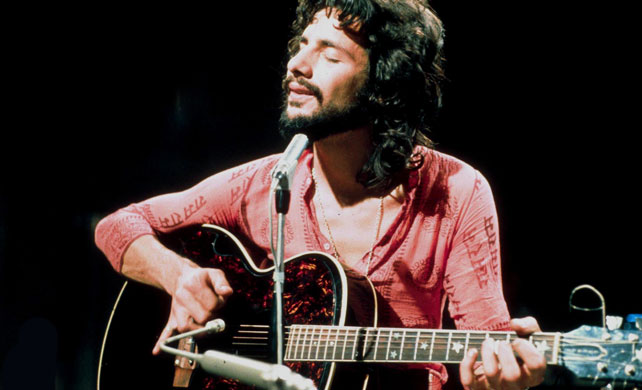
Cat Stevens

Conservative blogress Kathy Shaidle pleaded with voters not to enshrine Yusuf Islam, a.k.a Cat Stevens, into Cleveland’s Rock and Roll Hall of Fame, and then, when they added him anyway, expressed her disgust. Her objections were not based on music criticism (as would be justified with nominees like Yes), nor on Cat’s honor blocking more worthy nominees (like, say, The Zombies). She objects to Yusuf Islam on political and ethical grounds, complaining that during his activist days and perhaps even now, he qualified as a Muslim radical.

It doesn’t matter. Cat Stevens belongs in the Rock and Roll Hall of Fame because of his art, not his character. His character is irrelevant to the reach, influence and value of his art, as are his politics. The Rock and Roll Hall of Fame makes no pretense of making difficult measurements of an artist’s character, unlike the Major League Baseball Hall of Fame in Cooperstown, which has come up on Ethics Alarms frequently. Baseball players are cultural icons and societal heroes, whose symbolic exploits on the field of play evoke and inspire young people as well as the rest of us, embodying positive traits like courage, perseverance, fortitude, sacrifice, team play, loyalty, honor, fairness and honesty. As derided as it is by sportswriters and jaded fans who would like to see both the baseball Hall and its rosters filled with enabled and highly paid cheaters, felons, thugs, miscreants, deadbeat dads, and worse—like those of professional football and basketball—the character clause holds baseball players, at least those who want to be remembered as great ones, to a higher standard. And that higher standard is relevant to the game they play and our appreciation of it.

The character of artists, however, are simply accompanying trivia to the artist’s contributions to society. If there was a character clause in the Crooner’s Hall of Fame, Frank Sinatra and Bing Crosby might be barred from entry, meaning that it would then be the Imitators of Frank Sinatra and Bing Crosby Hall of Fame. For entrance to the Classical Composers Hall of Fame, Mozart and Wagner (and a lot more) would need to buy a ticket. Don’t get me started on the Novelist’s Hall of Fame, or the Hall of Fame for American Playwrights. Beautiful, transcendent, moving and immortal works have issued from ugly, warped, cruel and diseased minds, and it has always been thus, in Rock and Roll as well as every other art form. Picking on Cat Stevens, among all the others, smacks of anti-Muslim bigotry to me. Sure, I hated Cat’s politics; I hated John Lennon’s politics too.

It’s the art, and only the art, that matters.

______________________________

Sources: PJ Media 1, 2

Ethics Hero: Major League Baseball

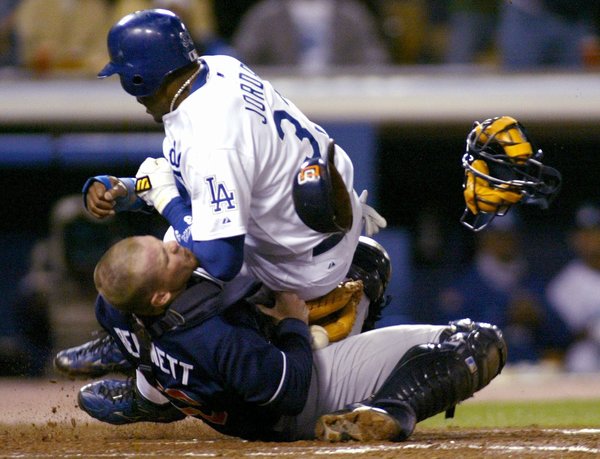
homeplate collisionsAt least one major league sport cares about its players’ health more than it does about highlight films.

Today Major League Baseball announced that it will be banning collisions at home plate, one of the most exciting plays in baseball, and one of the most dangerous. The violent and unpredictable convergence of large human bodies created when runner and ball arrive at home plate nearly simultaneously as a catcher positions his body to receive a throw while blocking access to the plate have decided games and championships, but wrecked careers and, quite possibly, brains. Football’s frightening record of player dementia prompted baseball to check its records, and there was tell-tale evidence that concussions take their toll on ex-catchers as well.

Last season, for the first time, baseball required players suffering concussions to stay on a special disabled list until they were cleared to play after a head examination. The new ban represents more progress.

The rules change will probably take this form, according to ESPN: Continue reading

World Series Ethics: He Tipped His Cap

What would Ted Williams have done? We know the answer to THAT question...

What would Ted Williams have done? We know the answer to THAT question…

The Boston Red Sox won the World Series last night, making me happy. Something else happened too.

Some background is in order. The great Ted Williams used to give Boston baseball fans the biggest hat tip in baseball as they cheered him after a home run. This was when he was first known as “the Kid’ and indeed was one, as his Hall of Fame trajectory was obvious from the moment he stepped on a major league field in 1939 at the tender age of 19. Gradually but rapidly, a vicious local press and some ugly incidents in response to a few jackasses in the stands caused the Kid to sour on the admission-paying mortals who booed him when he struck out, and he decided to ignore their cheers, refusing to extend the traditional courtesy of a hat tip to the fans as he rounded the bases after a home run—which, since he was Ted Williams, happened frequently. Williams  spent his whole career in the city of Boston playing before those fans who offended him in his twenties, but right up to and after his final home run, which he hit, famously, in his last at bat, the Red Sox fans got no hat tip from Ted. He rounded the bases the final time as they cheered themselves hoarse, and never looked up or acknowledged their praise. Screw ’em.

That was Red Sox pitcher John Lackey’s attitude toward the current generation of Fenway fans, for similar reasons. He had been signed to a rich, long-term contract in 2010 to be a Red Sox mound ace, but arrived in Boston with his arm deteriorating and his abilities diminished. 2010 was a disappointing season for Lackey and 2011 was worse, as he pitched in pain for a team that was short of hurlers. The 2011 Red Sox became infamous for their late-season collapse and underachieving starting pitchers, and no one on that team was jeered on the field or savaged in the call-in sports shows like John Lackey. He missed the entire next Red Sox season recovering from arm surgery after the 2011 collapse, and thus missed the 2012 debacle that was even worse. In 2013, however, Lackey returned with a renewed right arm, a fit body and a fierce determination to finally live up to the big contract. He did, too. He pitched well all season, and became a key factor in the Boston charge to the World Series, as they rose from last place in their division in 2012 to first.

In 2013, Lackey received nothing but cheers from the surprised and grateful Boston fans. Nevertheless, he adamantly maintained the Kid’s attitude—“Screw ’em”—all season long. As he walked into to the Red Sox dugout after being relieved in another fine pitching performance and the Boston fans saluted him, Lackey refused to reciprocate with the traditional hat tip, all season long and through the play-offs. The fans were fickle hypocrites, and their loyalty conditional. They booed him when he was valiantly pitching hurt and embarrassed in 2011, and he wasn’t going to forget it. They were going to get snubbed like they deserved, and that was the way it was going to be.

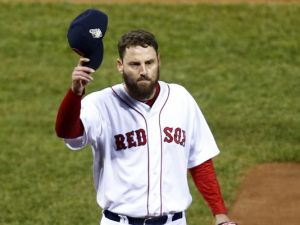
Last night the Boston Red Sox won their third World Series in the last ten years. It was the first time the home team fans had been able to witness the deciding game since 1918 (as the Fox announcers informed the presumably senile audience over and over and over again), and John Lackey was the pitching star for the home town team. The night was a love fest for Boston baseball fans, as they cheered every move of their frequently star-crossed and quirky team, and no Red Sox player was cheered more loudly than John Lackey, as he walked off the field for the final time in 2013 in the 7th inning, with his team safely ahead by five runs. They stood and applauded and chanted his name, as he moved deliberately to the Boston dugout, head down, grim, just like Ted on that gray day in 1960 when he hit homer number 521.

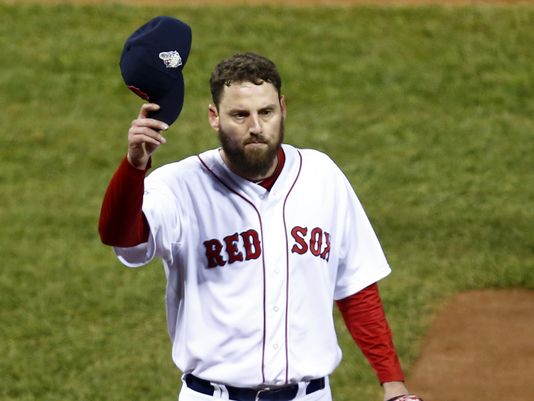
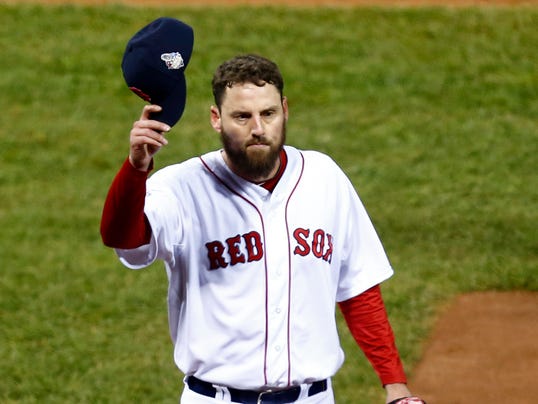
Then he tipped his cap.

It was a small thing, the smallest really, only a gesture and for most players, most of the time, an automatic one…except that it symbolized the ethical virtues of grace, forgiveness, gratitude, humility and fairness. This memorable, wonderful night for the Boston Red Sox and the grand old city it represents—my home town– was no time to let bitterness and resentment prevail. Unlike Ted Williams (who wouldn’t make his peace with Boston fans until years later, when he returned as an opposition manager), John Lackey found the strength and decency to let it go.

It was, as I said, a small thing. But it took character, and it was the right thing to do.

______________________________
Graphic: USA Today

Ethics Quote Of The Week: Sportswriter Joe Posnanski

Picked off first, Kolton Wong curses the fates...

Picked off first, Kolten Wong curses the fates…

Just as baseball’s post season was starting, I wrote a post about how U.S. society’s flawed use of consequentialism to judge merit, wisdom and ethics is encouraged by our sporting events. The example I used was an old one, from the 1968 World Series, which I consider to be a classic and extreme example. This morning, the great sports essayist Joe Posnanski addressed the same issue, focusing on an event in last night’s weird World Series game, which ended like none other in post season history. With two outs and the potential tying run at the plate, Boston relief pitcher Koji Uehara picked off St.Louis pinch-runner Kolten Wong to end the game and stop the Cardinals’ most dangerous sluggers from batting with a chance to tie or win the game. Posnanski marvels at how what he considers a foolish decision to station the first baseman near the base for a pick-off throw had good results, and how hard it is for us to focus on process rather than results. He is, of course, talking about the appeal of consequentialism, and the way baseball encourages it. I beat him to it by almost a month, but Posnanski amplifies the point nicely. Here’s Joe: Continue reading

Ethics Hero: Umpire Jim Joyce…Again

Obstruction play

Last night, a close and exciting Game #3 of the baseball’s World Series ended in the most unsatisfying manner possible, especially for Boston Red Sox fans. The winning run in the bottom of the ninth inning scored because of an obstruction call at third base, made by umpire Jim Joyce, giving the victory in a tense battle to the St. Louis Cardinals. Although fans saw baserunner Allen Craig tagged out at home for the final out of the frame, sending the game into extra-innings, or so they thought, Boston third baseman Will Middlebrooks was ruled to have obstructed Craig from getting up and scoring from third on an errant throw, though both runner and fielder were caught in a tangle after a collision at third due to no fault of their own. The relevant rule says that if in the umpire’s judgement a fielder, regardless of fault or intent, impedes a runner trying to reach the next base, and that the umpire also concludes that the runner would have reached the base safely without the fielder’s impediment, then the runner will be awarded the base. This meant that Craig was awarded home plate, his team was awarded the winning run, and the game was over.

The obstruction was clear and undeniable, but in many sports, such a technical call would never be permitted to decide a crucial or championship game, and even in baseball, there are umpires who might not have the courage to make such an unpopular call. Rules, however, are rules, and a sport that suspends or alters its rules for entertainment value lacks integrity.

Baseball was fortunate to have an umpire at third base who has proved his integrity before, veteran Jim Joyce. Millions of Boston fans hate him ( though not quite as much as they hated umpire Larry Burnett, whose failure to make an interference call in Boston’s favor cost the Red Sox Game #3 of the 1975 Series) this morning, but the game they care about so passionately, in my view, has never looked better.

_____________________

Pointer: Craig Calcaterra

Facts: NBC Sports