Manny Post Script: The Signature of a Jerk

Manny Ramirez, the now-retired ex-baseball slugger, provoked the predictable responses from the media and fellow players in the wake of his sudden retirement after being notified that he would be the first major league player to face a 100 game suspension for failing a mandated PED test (that’s “performance enhancing drugs” for all of you who don’t know who Barry Bonds is), because no player had ever been caught TWICE before.

Everyone was in agreement that this meant: Continue reading

Manny Ramirez’s Perfect Exit

The most unethical baseball player since the Black Sox

From  Major League Baseball:

“Major League Baseball recently notified Manny Ramirez of an issue under Major League Baseball’s Joint Drug Prevention and Treatment Program. Rather than continue with the process under the Program, Ramirez has informed MLB that he is retiring as an active player. If Ramirez seeks reinstatement in the future, the process under the Drug Program will be completed. MLB will not have any further comment on this matter.”

Perfect. Perfect.

Manny Ramirez was an impressively talented baseball player with discipline of an untrained Irish Setter, and the selfishness of a six-year-old. Throughout his career, he was a textbook example of the management fallacy known as the star principle, in which an extremely talented individual is allowed to break the rules and defy an organization’s culture in direct proportion to his perceived value. Continue reading

Baseball Season Opener Special: The Little League Baseball Ethics Challenge

The Bad News Bears never had to face a problem like THIS...

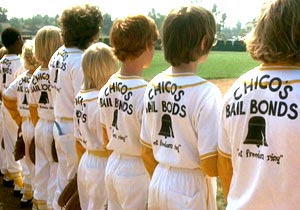
The baseball season began March 31, with most teams, including my beloved Boston Red Sox, starting play on April 1. To salute this landmark, which annually signifies the date on which my mood changes from irritable to gay, I am presenting my favorite baseball related ethics post, from 2005. It is still a story with many difficult ethical dilemmas, one that explores the proper application of rules,  ethics, sportsmanship, the importance of winning, balancing the welfare of a team with the needs of the individual, and more. Here is “the Little League Baseball Ethics Challenge.”

Play Ball! Continue reading

The Ethics of Nailing Barry Bonds

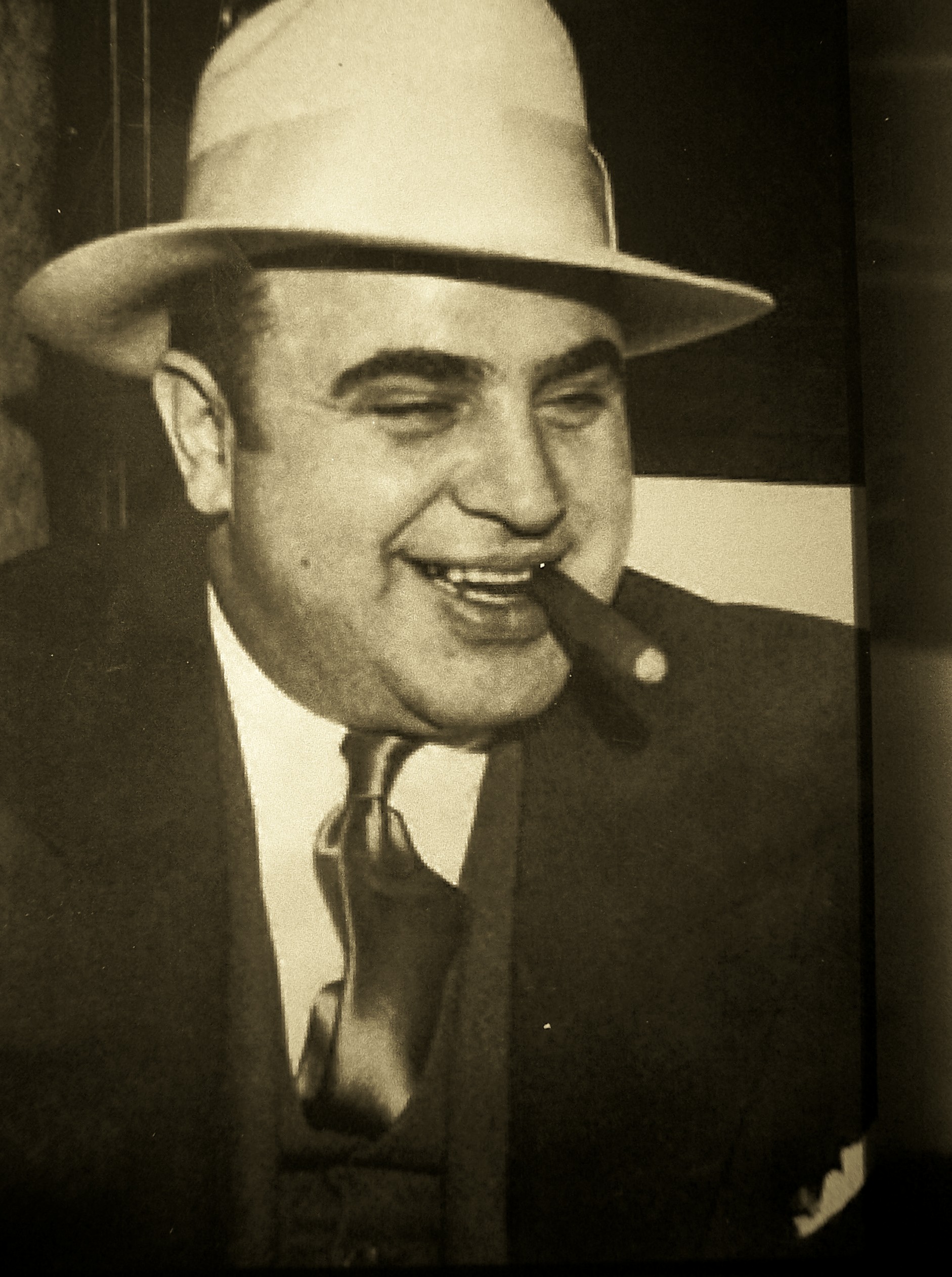
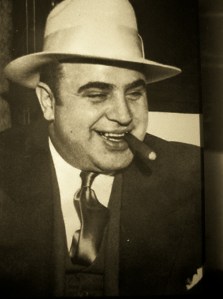
Is Barry Bonds getting the Al Capone treatment? Should we care?

Baseball’s all-time home run king Barry Bonds is finally on trial for perjury and obstruction of justice relating to his 2003 testimony before a grand jury that he never knowingly used steroids. It looks like he may get convicted too, even though the one man who could harm him most, his trainer and childhood pal Greg Anderson, once again has refused to testify and is in jail for contempt of court. (Many—including me— believe that Anderson has a promise of a pay-off from Bonds.)

Essentially everyone who isn’t actively trying to protect Bonds, completely ignorant of the facts of his career, or mentally handicapped knows he was lying and knew it at the time of the grand jury hearings. Barry has been both lucky and relentlessly dishonest, however, seemingly happy to spend the millions he made while cheating and permanently damaging his sport, and pleased with himself for retiring in possession of baseball’s most prestigious home run records, the most homers in a single season, and the most homers in a career.  That Bonds achieved these, and several of his Most Valuable Player awards, while enhanced with the surreptitiously induced body chemistry of a Bulgarian weight-lifter in the 1972 Olympics doesn’t seem to faze him at all. Meanwhile, critics are dredging up the old rationalizations to defend Bonds, none of which apply to his current fix. Continue reading

Ethics Uber-Dunce: Jose Canseco

Jose Canseco...or is it his twin?

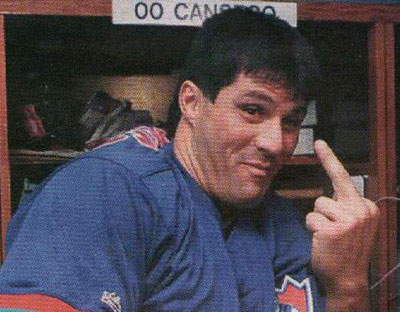
Mere Ethics Dunce is an inadequate title for former baseball slugger Jose Canseco, somehow. He has dabbled in extortion and assault, but his real contribution to making the world worse was serving as a one-man steroid epidemic, using the performance-enhancing, testicle shrinking drugs himself to win an American League  Most Valuable Player award, then making sure that as many players as possible on the various teams he played with used them too. Continue reading

Ethics Hero: Tampa Bay Rays Manager Joe Maddon

Joe Maddon, fulfilling his duty to confront racist jerks

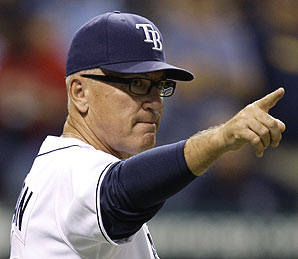
During a Sunday Spring Training game at Charlotte Sports Park in Florida, Tampa Bay Rays  manager Joe Maddon heard a fan berating Rays centerfielder B.J. Upton with a racial insult. Maddon summoned stadium security and had the fan thrown out of the park.

This may have happened before, but I can’t recall a similar incident. Racist catcalls and epithets are rarer at baseball games than they once were; they are far from gone. Baseball players have to endure a certain amount of abuse, true, but not this kind. Heaping racist insults on an athlete from the safety of the stands is cowardly as well as uncivil, and the First Amendment doesn’t extend to “fighting words” in a private venue.  Every manager, coach, usher and spectator should follow Madden’s lead.

The fan, by the way, denies Maddon’s account. Since baseball managers are not in the habit of ejecting fans for nothing, I find the denial less than credible.

Most Unethical Bobblehead EVER

The vile bobblehead

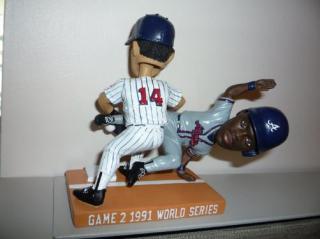
In Game two of the 1991 World Series between the Minnesota Twins and the Altanta Braves, Brave outfielder Ron Gant singled and rounded the bag, drawing a throw to first base. He appeared to beat the throw to the bag, but the Twins’ jumbo first baseman, Kent Hrbek,  wrapped his arm around Gant’s leg and lifted him off the base as he applied the tag. First base umpire Drew Coble managed to completely miss Hrbek’s illegal tactic, and called Gant out to end the inning. The Twins went on to win that game by one run, and in one of the closest Series of all time, also won the World Championship, 4 games to 3.

Hrbek’s muscling of Gant off of first base has been widely regarded as one of the most egregious examples of cheating by a player in baseball’s 130 year history. So, to commemorate the 20th anniversary of the Minnesota World Series triumph, the Twins will hold a special “1991 World Series Champs Reunion Weekend” promotion featuring members of the 1991 team at the August 5 game, and the first 10,000 fans through the gates will receive a free Kent Hrbek/Ron Gant bobblehead, depicting the infamous play. Continue reading

The Dilemma of the Legless High School Pitcher

Seemingly an inspirational movie in the making, Anthony Burruto is a student at Dr. Phillips High School in Orlando, Florida. He has been playing baseball since he was 8 years old, despite the inconvenience of having both of his legs amputated when he was an infant. He plays the game on prosthetic legs that are all he has ever known, and does it well as a pitcher who can throw a mean curve and a fastball that has been clocked at 80 mph. This is Anthony’s sophomore year, and his goal was to play on Dr. Phillips High varsity baseball team this spring.

After two days of try-outs, Coach Mike Bradley cut him. Anthony’s metal legs, adept as he was at using them, made him too slow off the pitching mound when he had to field a bunt, said the coach, and teams would take advantage of his inability to jump off the mound quickly.

Sorry, kid.  Continue reading

Ethics Hero:Wake Forest Baseball Coach Tom Walter

Kevin Jordan and his kidney donor

Athletic team coaches habitually refer to their teams as “families”, but in the inspiring case of Wake Forest baseball coach Tom Walter, he meant it. When he found out that one of his players, freshman Kevin Jordan, was in serious peril because of failing kidneys, and that the student’s family couldn’t supply a safe match for a life-saving transplant, Morgan gave the young man one of his own.

You can read about Walter’s gift at Baseball America here and on Ethics Bob here.

Ethics Hero: Gil Meche

[ Finally reduced to hunt-and-pecking blog posts from an Arlington, VA. Starbucks as the result of a still-ongoing power outage at the Marshall home-office, I apologize for an uncharacteristically quiet day.]

All Kansas City pitcher Gil Meche needed to do to collect $12 million in 2011 was to show up, do his best to pitch—which his ailing right arm would no longer permit him to do—and cash the checks. But despite having an iron-clad contract (the last in a long-term deal he signed as a free agent), Meche decided to retire, thus ending the contract and forfeiting the money. Continue reading