The Real Meaning of Manny Being Manny

The only surprising aspect of the news yesterday that former baseball slugger-savant Manny Ramirez had been arrested for allegedly slugging his wife—the one alleging being said wife—is that any baseball fans were surprised. If anything was written in the Book of Fate, it was that this man, so completely lacking in respect for basic ethical values, was destined for trouble with the law.

While he was playing, of course, Manny’s uncivilized and cheerful contempt for basic rules and principles of right and wrong were tolerated by his employers, amused sportswriters and evoked cheers from fans. He was a great, great hitter, you see: who cares if he was habitually rude, unprofessional, slovenly, careless, disloyal, disrespectful and above all, selfish to his core? Look! He’s having fun! Isn’t that charming? Stop harping on little details, like hustling, sportsmanship, or being honest. Let Manny be Manny! Continue reading


Ethics Hero Emeritus: Baltimore Orioles Pitching Great Mike Flanagan,1951-2011

Mike Flanagan, for more than three decades an ace pitcher, coach, executive and broadcaster with the Baltimore Orioles, died of a self-inflicted shotgun blast this week. It is obvious from listening to his devastated colleagues, former teammates and friends that he was genuinely loved and respected, and one reason was his overwhelming decency and strong ethical compass. Many members of the Orioles family recalled how Flanagan was known for taking young players aside and schooling them on how to represent the team with dignity, honor, fair play, hard work, and integrity.

In his lovely column today remembering Flanagan and his values, Washington Post sportswriter Tom Boswell recounts how the ex-pitcher once explained why he wouldn’t cheat. Many sportswriters and former player have offered the argument, during the continuing ethical debate over the culpability of players using steroids, that it is only natural that an athlete, any athlete, would cheat to prolong his career. Flanagan showed why they are wrong, and why we should never excuse unethical conduct on the grounds that “anybody would do it.”

Boswell: Continue reading

Ethical Quote of the Week: Angels Pitcher Jered Weaver

Is enough ever enough?

“How much more do you need? Could have got more, whatever. Who cares? If $85 million is not enough to take care of my family and generations to come, then I’m pretty stupid.”

—Los Angeles Angels pitching ace Jered Weaver,after signing a 5 year, $85 million contract to stay with Angels.

Weaver hardly signed for chicken feed, but his statement should be heeded by greedy athletes and corporate executives alike. After next year, he probably could have demanded another two or three million dollars a year or more from the highest bidder for his services, in exchange for leaving a team and a city where he is appreciated and comfortable, putting additional pressure on himself, and using funds that otherwise could pay the salaries of many lower paid club workers who might end up with no jobs at all. Continue reading

A Batboy Sells Out His Heroes

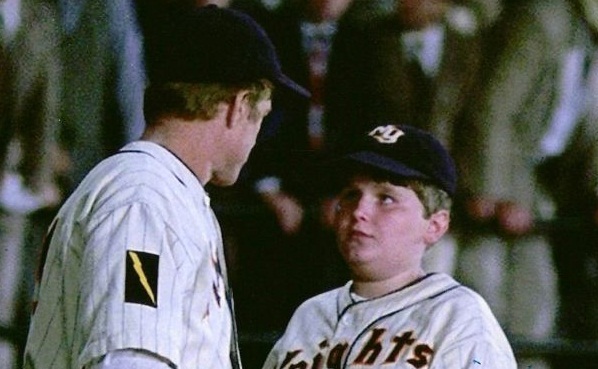
Don't trust him, Roy...he's doing research for a book!

Luis Castillo became a batboy for the New York Yankees at the age of 15, and for eight baseball seasons shared the clubhouse with his hometown heroes. Now he’s cashing in, having written a tell-all memoir of his experiences  that dishes on Derek Jeter, Alex Rodriguez, Roger Clemens and others, all of whom trusted him to be fair, respectful, and discreet.

The recurrent theme from the media’s commentators, which I heard repeated on CNN this morning as it hosted Castillo in his book-hawking efforts (in this case he told an embarrassing anecdote about Yankee catcher Jose Posada) is that “Castillo is able to divulge Yankee secrets in his new memoir because he was part of the last group of batboys who did not have to sign confidentiality agreements.”

This is accurate, but wrong. It is also typical of what passed today as journalistic ethics. Continue reading

Do Nicer People Earn Less Money? Of Course They Do. And That’s the Way it Should be.

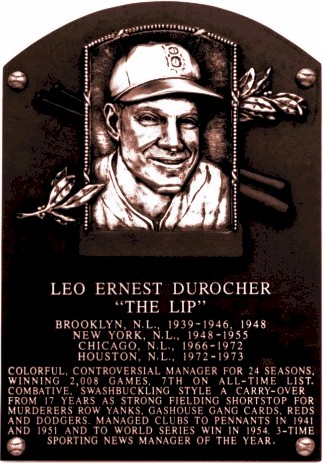
Leo Durocher figured out that "nice guys finish last" 60 years ago, and he never went to college. Now three academics, after extensive research, have "discovered" the same thing. Ah, scholarship!

A study by Cornell professor Beth A. Livingston,  Timothy A. Judge of the University of Notre Dame and Charlice Hurst of the University of Western Ontario study used survey data to examine “agreeableness” and found that disagreeable men made 18%, or $9,772 annually, more in salary than those who are more accommodating. The salary disparity was  less among women, with disagreeable females making 5% or $1,828, more than those who are easier to get along with. Does this shock you? It shouldn’t.

As is depressingly often the case, the academics who come up with such crack-brain studies—I read this one, and will want that wasted hour back when I’m on my death-bed so I can watch one last re-run of “Magnum, P.I.”—have so little experience with the working world and the reality of non-academic cultures that they don’t even comprehend their own research and draw absurd conclusions from it.

“The problem is, many managers often don’t realize they reward disagreeableness,” Livingston told the Wall Street Journal. “You can say this is what you value as a company, but your compensation system may not really reflect that, especially if you leave compensation decisions to individual managers.”

Oh brother. Continue reading

Would Dennis Rodman Qualify for the Baseball Hall of Fame?

Dennis Rodman, out of uniform

Of course not. Dennis Rodman didn’t play baseball. He was a pro basketball player, and as of yesterday, an inductee into the NBA Hall of Fame for his exploits on a basketball court. There is no question that he is eminently qualified for admission to the NBA Hall of Fame, because the NBA Hall of Fame doesn’t care if players are thugs, drunks, scofflaws, deadbeat dads and couldn’t define sportsmanship with a dictionary as long as they can shoot, score, pass, dribble and block shots.

The Major League Baseball Hall of Fame at Cooperstown, however, requires that its members demonstrate “integrity, sportsmanship, (and) character,” in addition to outstanding achievements and a remarkable career record.  Because of the steroid era that has rendered a whole generation of players suspect for cheating, an expanding number of baseball greats face being excluded from the Hall because cheating by using substances that are illegal and banned in the sport while implicitly deceiving the public about the use is, by any rational definition, a material breach of integrity and sportsmanship.  The natural reaction by many sportswriters, as in other fields when reasonable standards are routinely violated, is to attack the standards. Why should a sport care about matters like integrity and character? Isn’t it the performance that counts, and winning? Continue reading

Welcome to Carlos Zambrano’s Ethics Fun House!

Carlos Zambrano, bludgeoning his career into submission

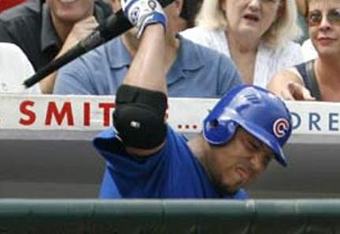
Carlos Zambrano is the supposed pitching ace of the Chicago Cubs, though after signing a monster multi-year contract for millions, he has shown himself to be inconsistent, over-rated, and nuts. Yesterday the flamboyant hurler gave up five home runs, seemingly attempted to bisect the Braves’ Chipper Jones with a fast ball, and got ejected from the game. Then the ethics fun started:

Ethics Fun #1: Carlos cleaned out his locker, told a Cubs trainer that he was retiring, and left the premises before the game was over. A Major League ethics whiff. Continue reading

Ethics Quiz: Is Bunting to Break Up a No-Hitter Unethical?

I want to get this on the record for all time, because the controversy comes up almost ever baseball season. it came up again yesterday.

In Sunday’s baseball game between the Detroit Tigers and Los Angeles Angels, Tiger pitcher Justin Verlander was six outs from joining Bob Feller, Sandy Koufax, and Nolan Ryan as the only pitchers since 1900 with three or more no-hitters in their careers. But the Angels’ Erick Aybar tried to end the no-hitter with a bunt single leading off the eighth against Verlander. He got it, too, except that the home town scorer attempted to preserve Verlander’s historic bid by charging an error instead. (Unethical. But I digress.) Continue reading

An Ethics Lesson From the All-Star Game

It really is one of the most enduring sports deja vus—every year, sportswriters and fans engage in thousands upon thousands of words of complaint regarding baseball’s annual All-Star Game, the 2011 edition of which will occur tomorrow night in Phoenix. This year was no exception, and as is always the case, no consensus or conclusions were reached, except that everyone agrees that the game is mishandled, mismanaged, unfair and illogical in every possible way.

I have been thinking of the game’s plight as an ethics case study that proves a core truth: you can’t do the right thing if you don’t know your objectives, stakeholders, and how to prioritize them. In the All-Star Game as it has evolved, there are competing interests and stakeholders with no clear agreement regarding which takes priority over the other. It is literally impossible to do be fair: somebody always will be disadvantaged, and because there is no single objective either, utilitarian balancing doesn’t work.

It was not always this way. When the All-Star game was first conceived in 1935, it was intended to raise money for the players’ pension fund, the players then being generally paid little more than grocery clerks.  Since the game had to draw as much of a paying crowd as possible to make money, the rosters and starting line-ups were constructed to include the biggest stars and most popular players. It didn’t matter whether Babe Ruth was off to a great start or not: it wouldn’t be an All-Star Game without him in the starting line-up, so he was the right-fielder. Managers picked the team that they thought would both be the “starriest” and that would give them the best chance to win the game. Continue reading

Ethics Hero: Derek Jeter

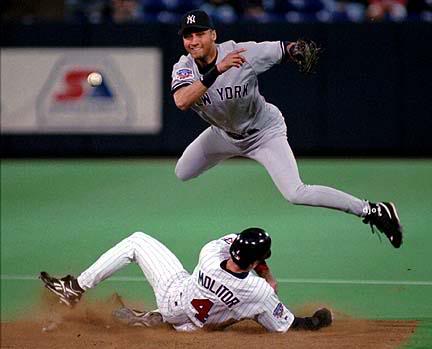
Roger Clemens is now on trial facing perjury charges. Barry Bonds has been convicted of obstruction of justice. Pacman Jones has just been arrested again; Tiger Woods hasn’t won a golf tournament since he was exposed as a serial adulterer. Through the travails and embarrassments of all of these and many more tarnished athletes who were once looked upon as cultural heroes, Yankee shortstop Derek Jeter has remained a constant— a team player, a clutch player, and an undeniably great player who has maintained his integrity and high values of competition and sportsmanship, never betraying the trust of his fans, his city, his team, or his game.

Yesterday Jeter reached 3000 hits, the watermark of the greatest of the greats, becoming the only lifetime New York Yankee to do so. He achieved the magic number with the flair only special players can muster, rising to a grand occasion like Ted Williams, hitting a home run in his final at bat, or Cal Ripken, marking  his passing of Lou Gehrig’s “iron man” record for consecutive games with a homer. Yesterday, Jeter passed 3000 in a rush, going 5 for 5 with the hit # 3000 being, yes, a round-tripper. Continue reading