The Fish Rots From The Head Down: Censorship Is Catching On!

A “Nation of Assholes” nurtured by boorish conduct emanating from the White House is certainly bad, but a Nation of Censors is infinitely worse. Woke World, now in charge of one and a half of the three branches of government, is increasingly enthusiastic about the concept of stifling the communication of inconvenient or unwelcome facts. And, as the top goes, so rots what lies beneath.

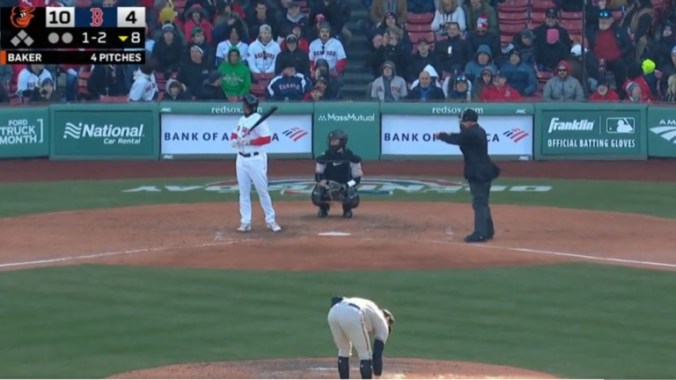
The Baltimore Orioles management didn’t like the fact that play-by-play announcer Kevin Brown told a TV audience before a televised game with the Tampa Bay Rays how badly the team had done in its games against the Rays in their home stadium over the years. Indeed, the O’s, now the surprise leaders in the American League East after many seasons of abject failure, had fared exactly as Brown described. But Facts Don’t Matter, so he was mysteriously pulled off Orioles broadcasts as punishment, even though the statistics Brown cited came from the team own PR department’s pregame notes, and were accompanied by screen graphic prepared in advance.

Continue reading

Me, Baseball, And Eddie Bressoud: I Missed An Opportunity To Let Someone Who Had A Positive Influence On My Life Know, And I Botched It. Now It’s Too Late…

Not long before he died, Mickey Mantle, who had spent his baseball playing days as a fearful, bitter, anti-social drunk with low self-esteem, had an epiphany when a man, with tears in his eyes, shook his hand and told him how much Mantle had meant to him growing up. Mantle was astonished that what he had done on the baseball field affected anyone so deeply, and said that from that point on, he no longer felt his life had no meaning or worth.

There are people and subjects that have influenced the course of my life, my interests, choices and beliefs far more than any school I have attended or any pursuit I have engaged in to make money: Presidential history, for which I have Robert Ripley to thank (but that’s another story); theater and performing, for which I credit Mr. Gilbert and Mr. Sullivan; Greek Mythology, a gift from my mother; rules for living, the specialty of my dad; and, last but far from least, baseball and the Boston Red Sox.

Eddie Bressoud died a week ago, at 91. He is primarily responsible for making me a lifetime baseball fan, with all the excitement, entertainment and wisdom that roller-coaster experience has supplied.

In the winter of 1962, I was reading the Herald sports pages and read about the Red Sox trading their much-reviled shortstop, Don Buddin, to the new expansion Colt .45s for Bressoud, who had been their first pick in the expansion draft. I hadn’t followed the Red Sox closely before that, though all of my friends were big baseball fans like most normal kids in Boston, Mass. You know me: I don’t follow crowds, I avoid them. I don’t know whether it was Eddie’s name or what that intrigued me, but I watched Opening Day specifically to see the new guy play.

I learned that he was called “Steady Eddie;” that he had a Masters degree and was a teacher; I saw that he was always in motion on the field, talking to other players, pointing, intense, an obvious field leader. Bressoud got a hit and started a 14-game hitting streak, sucking me in to watching or listening to all those games to see how long he could keep it up. I was hooked: I didn’t miss a game for 8 years.

Bressoud wore #1, and backed up every catcher’s throw to the pitcher with men on base, a fundamental move coaches teach by few major league shortstops continue. Eddie had a Fenway stroke, a strange, chopping, 2/3 swing that was perfect for knocking balls off of or over “the Green Monster” in left. He also had a knack for clutch hits and doing the little things that helped score runs, like moving runners to the next base even when grounding out. Eddie hit safely in the first 20 games in 1964, setting a Red Sox record for a beginning of a season.. When the team was behind in the 9th, which was often in those days,it seemed like he never failed to get on base somehow. 

Bressoud was unusually articulate and smart: he was a teacher in the off-season, and always made it clear that his passion was education. I was the only fan I knew who was so enamored of Bressoud: Carl Yastrzemski was the rising superstar on those bad teams before the Boston miracle pennant of 1967, though the Sox manager and coaches sang Bressoud’s praises for playing the game ‘the right way” and being both intense and productive. My loyalty was a family joke long after Eddie had left the game. All three of his seasons as the regular shortstop were excellent, and he was was named to the All-Star team in 1964. He was the only position player who didn’t get into the game. I was crushed.

The next season, new manager Billy Herman took away Bressoud’s starting job before Spring Training, and then traded him to the Mets, I listened to their games on the radio so I could keep up with how Eddie was doing. He was a valuable part-timer for the Mets for two years, and was acquired by the Cardinals in 1967.  His last MLB appearance was, ironically, against the Red Sox in Fenway Park, when he ran onto the field as a defensive replacement for St. Louis in the 1967 World Series. The Boston fans gave him a nice ovation.

Baseball has given me too much pleasure and perspective to recount in the decades since Eddie retired, and I apply the lessons I have learned from the game regularly in everything I do. I designed a baseball trivia game and launched a company to promote it, leading me to my first marketing job. Baseball has given me lifetime friends, and experiences I will never forget. It allowed me to cope with personable disappointments and failures, and to not to be overly impressed with the occasional success. It taught me much about critical thinking and bias (thank-you, Bill James!), character, leadership, ordering priorities, recognizing corruption, and culture.

Continue reading

Apparently It’s Racist For Gov. DeSantis To Prefer Baseball To Basketball…Wow, That Desperate To Smear DeSantis Already?

I am having increasing difficulty figuring out what progressives and Democrats are trying to convey when they all a politician “racist.” As far as I can tell the current definition amounts to “Republican.”

DeSantis was recently asked by a CBN interviewer about his love of baseball, which he extolled as a “meritocratic” game because athletes of different sizes and skill levels can perform at a competitive level professionally, unlike basketball.”I think that there’s kind of a place for everybody in a baseball team if you’re willing to work hard, if you’re willing to practice… I kind of thought it was always a very democratic game, a very meritocratic game.” He added, “Whereas I kind of viewed basketball as like ‘these guys are just freaks of nature.’ They’re just incredible athletes. In baseball, you know, you have some guys that might not necessarily be the best athletes, but maybe they’ve got you know that slider that nobody can hit, or they have the skills that allow them to compete at the highest level.”

I would take issue with DeSantis’s suggestion that basketball players are superior athletes to baseball players: as Bob Costas memorably replied to a similar claim by another sportscaster, check out Michael Jordan’s record when he tried to play in the minor leagues, where he never got higher than AA and washed out after a single (pathetic) season.

But never mind: the main thrust of his comments is irrefutable and true. The average height of an NBA player is nearly 6-feet-7-inches, nearly a foot taller than the average American man. Players under six feet are extremely rare. Major League Baseball players, in contrast, average about 6-feet-1-inch tall, with some superstars well under that level, like Houston’s Jose Altuve and the Dodgers’ Mookie Betts. There are some freaks in the mix (2022 MVP Aaron Judge, for example) but unlike in the NBA, they are an exception, not the rule.

Continue reading

Ethics Quiz: Ethics Hero Or Insecure Spoilsport?

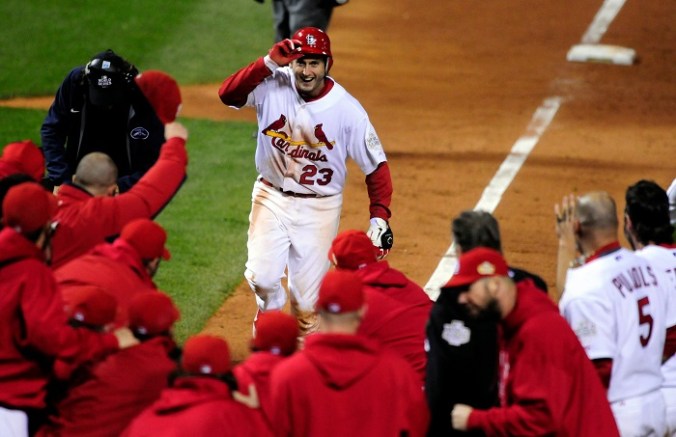
Former MLB player David Freese was voted by St. Louis Cardinals fans into the team’s Hall of Fame. To everyone’s surprise, he declined the honor.

“This is something that I have given an extreme amount of thought to, humbly, even before the voting process began,” Freese said in a statement. “I am aware of the impact I had helping the team bring great memories to the city I grew up in, including the 11th championship. I feel strongly about my decision and understand how people might feel about this. I get it. I’ll wear it. Thank you for always being there for me, and I am excited to be around the Cardinals as we move forward.”

He also said that he did not feel “deserving” of the honor. “I look at who I was during my tenure, and that weighs heavily on me,” said Freese, who recived the most votes of any former Cardinals player for induction in online balloting. “The Cardinals and the entire city have always had my back in every way. I’m forever grateful to be part of such an amazing organization and fan base then, now and in the future,” he said. “I’m especially sorry to the fans that took the time to cast their votes. Cardinal Nation is basically the reason why I’ve unfortunately waited so long for this decision and made it more of a headache for so many people.”

Perhaps you will not be surprised to learn that Freese has battled clinical depression his entire life, and is a recovering alcoholic.

Continue reading

Observations On Washington Nationals “Pride Night”

That’s a photo from last night’s Pride celebration at Nationals Park in Washington, D.C., as Nancy Pelosi threw the ceremonial first pitch. Many conservative wags are enjoying themselves, like “Not the Bee,” which mocked, “The Washington National’s baseball team hosted a Pride Night …of course, they had some buffoonish drag queen show up to toss the first pitch. Oh, wait- I’m being told it’s Nancy Pelosi…Fives of people applauded wildly…”

Observations:

Continue reading

Fairness, Justice, And Baseball No-Hitters

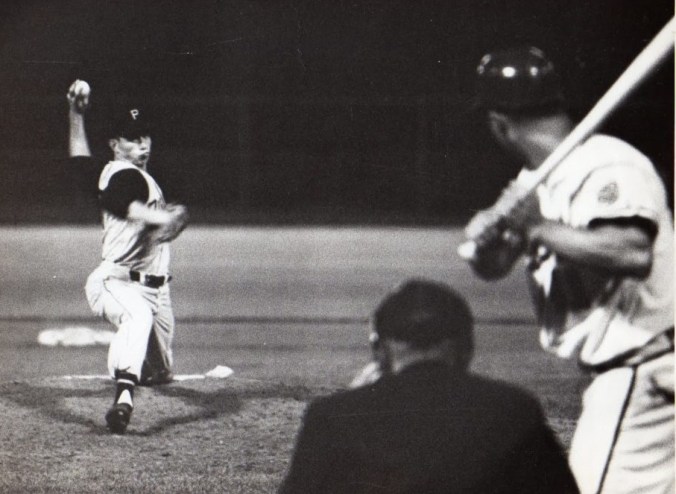
That’s Harvey Haddix about to throw a pitch above. The photo is from one of the most famous baseball games ever played: on May 26, 1959, Haddix, then a starting pitcher for the Pittsburgh Pirates pitched a perfect game—that’s no runs, hits, walks or errors, with nobody on the other team reaching base) for 12 innings against the Milwaukee Braves. It was the greatest pitching performance of all time, but because the Pirates didn’t score a run either, Haddix had to keep pitching into the 13th inning, where he lost the perfect game, the shutout and the game itself. As a result, he wasn’t even given credit for a no-hitter, which is normally when a pitcher throws nine-innings of hitless ball. That really bothered me as a kid; it made no sense.

In baseball, a no-hitter, with a perfect game being the ultimate no-hitter, has always been considered one of pinnacles of single game performance by a baseball player. A pitcher who throws one gets his name in the Hall of Fame; it’s a distinction that accents an entire career. Only the greatest pitchers throw more than one in a career; some of the very greatest, like Lefty Grove, Grover Cleveland Alexander, and Roger Clemens, never get one. (Cy Young, Nolan Ryan and Sandy Koufax, however, tossed three or more each. Johnny Vander Meer tossed two no-hitter in consecutive starts!) So being credited with a no-hitter is important; it matters.

Imagine then what it would feel like to be credited with pitching a major league no-hitter (or have your father or grandfather credited with one) and have it taken away. That’s what happened in 1991. Up until then, there had been no specific definition of no-hitter except the obvious, common sense one used by sportswriters, players, fans and baseball historians: a no-hitter was a baseball game that ended with one team having failed to get a hit. One of my favorite Commissioners of Baseball, however, Fay Vincent, the last one who wasn’t a toady for the baseball team owners (Vincent was fired for being independent, which up until then was the definition of his job), decided that the definition of no-hitter was too loose, among some other statistical anomalies. He put together a commission, and, with his influence, they redefined a no -hitter as a game that ended with one team getting no hits in at least nine innings.

Continue reading

Ethics Dunce: College Baseball Coach Rodney Velardi

I don’t know about you, but nothing quite clears my ethics palate after a day of pondering the FBI’s corruption and people posing for happy selfies at Auschwitz like a nice baseball cheating scandal.

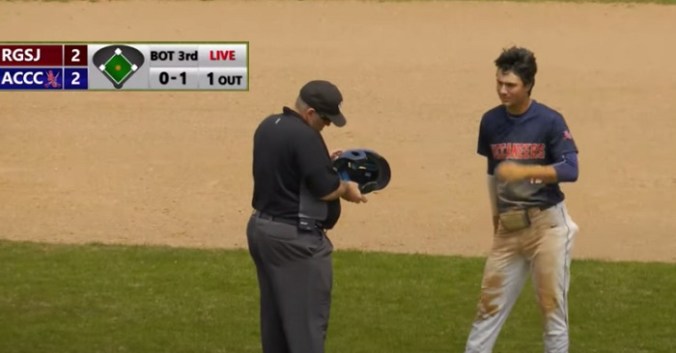
Rowan College Gloucester County was playing Atlantic Cape Community College (New Jersey) in a baseball game when the Rowan first baseman noticed little voices coming out of an Atlantic Cape baserunner’s helmet. He notified the umpire, who checked the helmet: sure enough, there was an electronic listening device inside. After a search, a device was found on a second player too. The assumption is that someone was stealing catcher’s signs from the stands, and using an electronic device to alert Atlantic Cape batters what pitches were coming.

Continue reading

Ethics Heroes: The L.A. Dodgers Management

Ethics Heroes have been far and few between so far this year, but this one is not only an easy call, it’s from the world of Major League Baseball.

Andrew Toles played 96 games as a member of the Dodgers from 2016 to 2018. The speedy outfielder did well in limited playing time, but he did not report to spring training in 2019 and was subsequently diagnosed with bi-polar disorder and schizophrenia. A year later, Toles was arrested and charged with trespassing after he was found sleeping behind a FedEx building at Key West International Airport. He has been in and out of mental health hospitals ever since. But the Dodgers signed the now 30-year-old Toles to a contract in March, and revealed that the team has signed him to a contract every year since the 2019 season so he would be eligible for the organization’s health insurance.  

Nice.

_______________

Source: Sports Illustrated

Jim Palmer Endorses The King’s Pass

Jim Palmer, Hall of Fame pitcher, sometimes serves as the color man on Orioles broadcasts. He’s pretty good at it too, especially when he is analyzing the pitching. During yesterday’s Red Sox-O’s game, which I had to watch on the Orioles network because the Red Sox feed was blacked out, Palmer was talking about Sox slugger Rafael Devers becoming the first batter in MLB history to b called because he wasn’t ready for the pitch under the new pitch clock rules. His gaffe undermined a burgeoning Sox comeback rally in the 8th inning.

“It kind of left an empty feeling, and I’m not even for the Red Sox, “Palmer said. “I mean, you’re in the stands, you paid all that money, and your best hitter is called out because he’s looking at the pitcher a second or two too late. I understand why we’re doing it, but boy, it was disappointing.”

Essentially what Palmer was arguing for, though while not having his most articulate moment, was Rationalization #11, the King’s Pass, also known as “The Star Syndrome.” It makes sense that Jim would favor the Star Syndrome, where a team’s best players get away with misconduct that get third-string catchers released, since he was undoubtedly the beneficiary of it during his long and successful career. But it’s unethical thinking like that that causes NBA refs to hold back on fouls on star players in close games (and why I don’t watch the NBA any more). A few months ago, I heard another baseball “expert” say that umpires shouldn’t call batters out on close checked swings to end a one-run game. That’s advocating a system when rules are enforced differently depending on when they are violated, at the discretion of the umpire. Such a system resembles Calvinball, and such a sport has no integrity. Palmer also seemed to be suggesting that Devers should get a break because he’s a star, but an ordinary hitter should not.

Continue reading

Giving The Devil His Due: It’s Time For Baseball Say “Sorry” And “Thanks” To That Bastard, Charles O. Finley

Charles Oscar Finley (February 22, 1918 – February 19, 1996), better known as Charlie O. Finley, was easily one of the worst owners of a major league baseball team in history, and that’s saying something, because it is a repellent batch. He probably falls just below #1, Charles Comiskey, the greedy and abusive owner of the 1919 Chicago “Black Sox” largely responsible for his players deciding to take bribes and throw the World Series. (See “Eight Men Out,” one of the ten best baseball movies).

Finley was an insurance mogul who purchased the Kansas City Athletics and eventually moved the team to Oakland, creating a territorial conflict with the San Francisco Giants that violated MLB rules, but he was allowed to do it because Finley threatened to cause havoc with a lawsuit that challenged the game’s immunity from antitrust laws.

That wasn’t the first time Finley was obnoxious and detructive, and it was far from the last. A loud, toxic narcissist, he tried to be the focus of attention on his teams, especially in Oakland, where a crop of talented young stars (Reggie Jackson, Ricky Henderson, Sal Bando, Bert Campaneris, Catfish Hunter, Vida Blue, Rollie Fingers and more) made his team one of the great baseball dynasties. Finley underpaid them and treated all of his players like servants; his abuse was a catalyst for the power of the Players Union and the eventual institution of free agency. Dick Williams, his Hall of Fame manager, quit after a World Series, saying that he would rather leave baseball itself than work for a bastard like Finley.

Continue reading