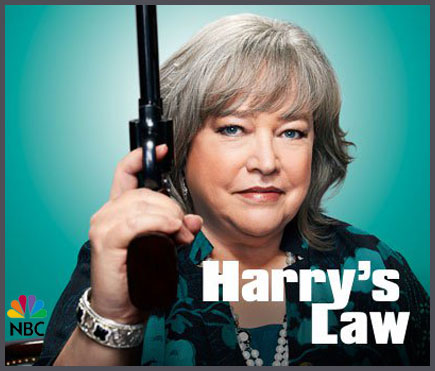
As I have noted before, TV has one of its more ethically-sophisticated legal dramas to date in CBS’s “The Good Wife.” Oh, the lawyers (and their investigators) are frequently unethical, all right, but the show has seldom represented unethical conduct as ethical, or implied that it would be defensible if it came to the attention of the bar. In contrast, the new NBC Kathy Bates drama “Harry’s Law” has already ticketed itself for the Dumb Lawyer TV Show Hall of Shame, grossly misleading its audience about what constitutes a lawyer’s ethical duties. (Other recent admittees to the Hall: James Woods’ “Shark,” the Kathleen Quinlan drama “Family Law,” Steven Bochco’s embarrassing “Raising the Bar,”and every legal show created by David Kelley.) Continue reading

betrayal
It’s About Time! Dept.: Charlie Sheen, Ethics Uber-Dunce, Gets What He Deserves
Up until yesterday, the message CBS and Warner Bros. had been sending to the culture by its handling of the ongoing Charlie Sheen embarrassment was this: you can break laws, try to strangle your wife, publicly betray multiple spouses, neglect your children, dive drunk, use illegal drugs, generally behave like a spoiled, anti-social ass without showing any remorse or contrition, and corporations will still pay you a million dollars a week and tell America you are a terrific guy as long as you keep making them big profits. Continue reading
Unethically Leaked Unethical Manuscript Shows That Sarah Palin Is Unethical
The Anchorage Daily News has obtained a leaked (read: stolen) manuscript of an unpublished book detailing a close former aide to Sarah Palin’s discovery of the Republican star’s many character flaws. Among other items, the book suggests that she knowingly violated federal election laws.
Now what? Let’s run down the ethical docket: Continue reading
Ethics Night on “American Idol,” As An Ethics Hero Is Born
“American Idol’s” group portion of its winnowing process always is the most fascinating chapter of its yearly saga, as the singing competition briefly shifts into full reality show mode. I’ve never been convinced that it was a fair method to judge aspiring singers who were competing as solo acts, as it frequently results in superior vocalists being dumped because they couldn’t sing harmony, learn choreography and lyrics under pressure, or play well with others. I know you have to get that mass of ambition and ego reduced to 24 people somehow, but group day is the equivalent of throwing darts at a dartboard.
It makes for great ethics scenarios, though. The format guarantees it, as the contestants have to form groups of four or five in a cruel process reminiscent of choosing sides for pick-up baseball games, guaranteeing that some people will end up feeling like the fat kid who always gets chosen last, if at all.
Last night there were several featured ethics dramas, with the judges, as they have been all season, being less than consistent in their responses to them. Continue reading
Ethics Dunce: Huffington Post Blogger Mike Elk
Correction—make that fired Huffington Post blogger Mike Elk, and here’s why: Elk, a 24-year-old freelance labor journalist, used his press credentials to get labor union demonstrators unauthorized access to a Mortgage Bankers Association event, where they protested and disrupted the proceedings. He gave his credentials to one of the union organizers. Continue reading
Boseman v. Jarrell: A Gay Mother Tries to Use Legal Discrimination To Her Advantage
Julia Boseman and Melissa Jarrell were domestic partners in Wilmington, North Carolina, and always wanted to raise a child together. In May of 2000, they decided to make their dream a reality, and began the process of having a baby. They decided that Melissa would do the child-bearing, but Julia would be equally involved in the process in every other respect. They chose an anonymous sperm donor together after researching and discussing various options. They jointly attended the medical session necessary to conceive their child and to administer proper prenatal care. Julia read to the gestating child in Melissa’s womb and played music for him; she also cared for Melissa during her pregnancy and was present at the birth. Melissa and Julia jointly chose their son’s first name, and agreed that he should have a hyphenated last name composed of their surnames. In every way, they behaved publicly and privately as the parents of the child, introducing him into their respective extended families.
But North Carolina refuses to recognize same-sex marriages, so in the eyes of the state, Julia was not legally a parent. To remedy this obstacle, she sought and received a court order adopting the child without severing her partner’s legally recognized parental rights. Officially, their child now had two, same-sex parents. Then the couple split acrimoniously, with the acrimony greatly magnified when Melissa sought to limit Julia’s contact with her son.
Julia sued, arguing that she was the child’s parent as much as Melissa. Continue reading
A Missing Dollar, a Jackpot, and Seven Lousy Friends (UPDATED)
Gordon Gekko was full of it. Greed isn’t good, and the Hacienda Hills Country Club lottery ticket affair proves it. It is also an example of when the legal resolution of a controversy is very complicated, but the ethical verdict is a cinch.
For nine years, 72 year-old Jeanette French was part of the group of retirement community residents and employees at the Villages’ Hacienda Hills Country Club that pooled money each week to buy Florida lottery tickets, each putting in a dollar. She didn’t make it to the Golf Shop where the group met one lottery day, but that French didn’t think that was a problem: the established practice was that another member of the group would put in a dollar for the missing member, who would pay him or her back the next day. The day that Jeannette had other commitments, her group bought what turned out to be the winning ticket, to the tune of $16 million in the Florida lottery.
Yippee! Jeanette’s seven good friends, however, now argue that she has no right to a share of the winnings, because nobody put in that dollar for her. Continue reading
Hero, Villain or Hypocrite: The Dilemma of the Undercover Dog-Fighter
The limits of absolutism and the drawbacks of utilitarianism both come under scrutiny in assessing the strange saga of Terry Mills, whom the ASPCA recently appointed as its Animal Fighting Specialist.
Beyond question, this is a job he is uniquely qualified to hold. In 2008, Mills worked for the FBI’s domestic-terrorism task force, and went under-cover for more than a year to expose and break up a national dog-fighting ring. His efforts resulted in many arrests, and the rescue of more than 500 animals. Accomplishing all of this, however, required Mills to become part of the culture he was attacking. He trained and fought his own dogs, engaging in the very cruelty he was working to prevent. Continue reading
Lindsay Lohan Has Privacy Rights Too
Lindsay Lohan brings enough problems on herself. She doesn’t need unethical professionals to make her life even more chaotic by violating her privacy rights. Continue reading
Omnibus Spending Bill Ethics
One silver lining in the despicable, 2000 page omnibus spending bill unveiled by Senate Democrats is that Republicans also have their grubby fingerprints all over it, so even though the bill lumps together a huge and expensive mess of pet Democratic projects, the richly deserved attacks on the monstrosity cannot be easily derided as “partisan.” Another is that it should put to bed forever the revolting slander that the Tea Party movement was motivated by racism when it proclaimed that it wanted its country back. If there was ever a democratic institution that demonstrated utter contempt for the public, its legitimate and fervently expressed concerns, and the obligation of responsible government, the 2010 Lame Duck Congress is it. Continue reading


