
The Ethics of “No-Body” Murder Prosecutions.

Oh! THERE's the body!!!

Texas lawyer Robert Guest has opined that a Texas jury would have convicted Casey Anthony in a heartbeat, and cites as proof the February conviction of Charles Stobaugh in Denton County. He was accused of killing his  estranged wife, though no body has ever been found at all.

Maybe.  There are a lot of differences in the circumstances of the two cases, not the least is that finding a badly decomposed body with a piece of electrical tape across her mouth has a big advantage over never finding any body at all: at least you are certain that the victim is dead.  Stobuagh, like Anthony, engaged in a pattern of lies and strange statements; for example, he suggested that his wife, who suddenly vanished and stopped using her bank account, credit cards and cell phone, was “playing a prank.”  He also began seeing a new girl friend more or less the moment his wife vanished. I’d say the biggest difference is the presumption of a motive: husbands killing their wives, especially their estranged wives, is a common and well-recognized form of homicide, with a motive that any married person immediately understands. A mother killing her young child, in contrast, is very unusual, and the presumption is that no mother would do it. The Anthony prosecution was more difficult than the prosecution of Stobuagh, even with Caylee’s body. Continue reading

Ethics Heroes: The Casey Anthony Jury

America saved Casey Anthony, and we should be glad it did.

A Florida jury pronounced Casey Anthony not guilty of murder, aggravated child abuse or aggravated manslaughter in connection with the 2008 death of her two-year-old daughter, Caylee. It did find that she had lied to investigators and police, which was well-established during the trial.

Did she murder her daughter, as the prosecution claimed? Oh, sure she did; I don’t think any of the jury members will be asking Anthony to babysit for their kids any time soon. But the case against her was circumstantial. She was proven to be a liar, irresponsible, feckless, self-centered, deluded and callous, and the prosecution’s theory made a lot more sense that the defense’s alternative scenario. Still, there was not enough evidence to find Casey Anthony guilty of murder beyond a reasonable doubt. That’s the standard, not “it’s almost certain that she did it.” Despite all the media pundits who said it would be a slam-dunk conviction, despite all the community sentiment to make the party girl mother pay with her life for killing her child, the evidence to meet the intentionally tough standard of American justice just wasn’t there.

Already, reporters and commentators are comparing the verdict to the O.J. Simpson trial. Wrong. Continue reading

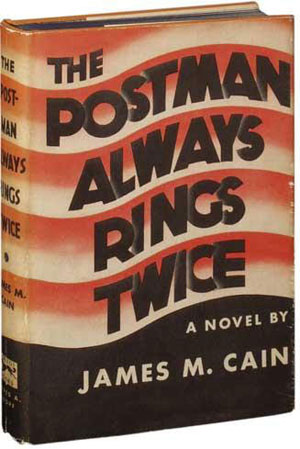
Strauss-Kahn and His Accuser, Victims of The Postman

The accuser of Dominique Strauss-Kahn, the former IMF head who has been devastated by her sensational rape charge, now admits that parts of her original account of the incident and an earlier accusation of rape she made to seek asylum in the U.S. were false.

The Altantic’s Megan McArdle sums up the Ethics Train Wreck thusly:

“There are two possibilities here, neither of them good:

1) A woman with an unsavory past, who has done desperate things to get out of terrible economic conditions, was raped by a prominent figure, and he’s going to get away with it because of her history.
2) A serial cad had consensual sex with a chambermaid, and she attempted to destroy him with a false rape allegation for personal gain. And because of the presumption that women don’t lie about rape, she has succeeded in destroying him . . . though not so much in the personal gain part. To quote Ray Donovan, ‘Where do I go to get my reputation back?'” Continue reading

In Search of Accountability, Fairness, Justice and a Champion: the Unending Persecution of Anthony Graves

Job would pity Anthony Graves

Governments and other bureaucracies are capable of unimaginable callousness, stupidity, and wrongful conduct, allowing individual fools to multiply their power to harm exponentially, and then to see an inhuman computer-driven monstrosity run amuck as everyone denies responsibility. You could not devise a better example of this process than what Texas is doing to Anthony Graves.

He is an innocent man convicted of murder in 1994 who was released last October after spending 18 years in prison, condemned to death. He had been convicted with fabricated evidence and coached testimony employed against him by former Burleson County District Attorney Charles Siberia, and a state investigation got a Texas judge to set Graves free. But the maw of Texas bureaucracy wasn’t through ruining his life. Continue reading

Comment of the Day: “Finis: The New Black Panthers Voter Intimidation Affair”

Michael, who also just made a “Comment of the Day”-worthy point regarding the recent post about schools banning homemade lunches for students (you can read it here), makes an important point about reports that dismiss allegations of government misconduct as “unsupported.” There is an obvious parallel with the public’s misinterpretation of verdicts finding the likes of O.J. Simpson (who did kill his wife and Ron Goldman) and Barry Bonds (who did lie to a Federal Grand Jury) “innocent” because the government prosecutors did not meet their burden of proof “beyond a reasonable doubt.” Here is Michael’s Comment of the Day on the post, Finis: The New Black Panthers Voter Intimidation Affair: Continue reading

The Training Myth and Connick v. Johnson

The U.S. Supreme Court is deliberating on the issue of whether a District Attorney’s office can be held liable when individual prosecutors commit serious misconduct, on the grounds that the government breached its duty to train its prosecutors and ensure their competence. The case is Connick v. Thompson, and it began when it was discovered that a New Orleans man had been sent to Death Row for 18 years for a crime he hadn’t committed. John Thompson was innocent, and a lab report proving that the blood found at the crime scene belonged to someone else would have proven it. Prosecutors withheld the evidence from the defense attorneys.

When Thompson was freed he was understandably angry, but the options for redress when the criminal justice system ruins your life are severely and unjustly limited. In 1976, the Supreme Court decided in Imbler v. Pachtman that prosecutors have absolute immunity from lawsuits, even when there is genuine, malicious and illegal conduct. The Court acknowledged that its ruling “does leave the genuinely wronged defendant without civil redress against a prosecutor whose malicious or dishonest action deprives him of liberty,” but declared the alternative was worse: making prosecutors timid and fearful of making a mistake that could leave them penniless. The Court suggested that professional discipline would be enough to keep prosecutors honest, but that hasn’t been the case: a USA Today study found that even in egregious cases of prosecutorial misconduct, attorneys who put innocent people in jail almost never had to endure any punishment at all. Thompson sued the District Attorney’s Office on a theory of negligent training, and won 14 million dollars from a sympathetic jury. Now the Supreme Court is deciding whether such suit can stand in light of the ruling in Pachtman.

It should, but the theory behind the lawsuit is a myth, and I suspect that everyone knows it. Continue reading

The Ethics of Compensating the Unjustly Imprisoned

The New York Times last week published the stories of two men, in different states, who were recently freed from prison after it was proven that they were wrongly convicted. Michael A. Green spent 27 years in a Texas penitentiary for a rape he didn’t commit. Thomas Lee Goldstein was locked up 24 years ago for a murder committed by someone else.

The lives of both men have been destroyed, obviously. The important question now is, who is accountable? What is owed to a human being who has been robbed of what should have been the best and most productive years of his life, and who owes it?

Both men will be getting some compensation from the state governments involved, though obviously no amount of money could make them whole: what would you accept in exchange for spending the years from 35 to 60 in a maximum security prison? Goldstein settled a lawsuit for nearly eight million dollars; Green is mulling an offer of $2.2 million from Texas, and may decide to sue to get more. 2.2 million dollars for 27 years in prison…let’s see, that works out to less than $81, 500 a year. Should he take the deal? I would not accept 2.2 million dollars to spend one year in jail, much less 27. Continue reading

When the Police Lie to Convict the Guilty

Gene Weingarten, the Washington Post columnist, wrote about his recent experience as a juror. It was a trial of a man accused of selling $10 of heroin to an undercover officer. Weingarten professed to be annoyed that such a small amount would justify an arrest and trial; he’s just wrong about that. Dealing a dangerous prohibited drug is still dealing, no matter what the amount. I know this is the kind of case that gets the legalize-drugs-so-we don’t-put-so-many-people-in-jail crowd all self-righteous, but “a smidgen of heroin dealing” still supports a destructive social problem, and law abiding citizens don’t deal even a little smack.

That’s not really the issue here, however.

Weingarten was convinced that the defendant was guilty beyond a reasonable doubt. He was also convinced that the police were lying. Continue reading