Bias Check: Update

pcgraphpng.php

Responding to my recent post on trying to identify one’s own political biases and the 39 questions that everyone agreed left much to be desired in dividing liberal from conservative, an old friend from both law school and the stage has suggested another resource to try. He is a professor of telecommunications at a prestigious Midwest university, and pointed me to a site called The Political Compass. It has a more nuanced set of questions, and multiple choice answers that will place you on a Left-Right (economic)/ Authoritarian-Libertarian (social) grid.

The site is clearly British, and obviously hasn’t been tended for a while: it looks like it was set prior to the 2012 election. I have other problems with it, not the least of which that it places Barack Obama in the Right/Authoritarian quadrant. The site charts past political leaders, and it looks to me like the President is the ideological clone of…Margaret Thatcher. I’d say it needs some tweaking.

I haven’t taken the test again to check, but how the program scores the distinction between agreeing or disagreeing and strongly agreeing or disagreeing  intrigues me; in my case, which I chose was a toss-up. (Update: I just took the test again with all “strongly’s” checked. The result was virtually the same—a tad more left and libertarian. That’s my first test result above. )

As you will see if you take the test, some of the questions are phrased to create a false choice, like.. If economic globalisation is inevitable, it should primarily serve humanity rather than the interests of trans-national corporations,  and All authority should be questioned, and Taxpayers should not be expected to prop up any theatres or museums that cannot survive on a commercial basis.
Continue reading

Bias Check

Confirmation bias

Detecting and overcoming one’s own biases is one of the most important features of being ethical. “Bias makes you stupid,” after all, and stupidity can make you unethical. As the author of an ethics blog, this is of special concern to me, as I am constantly making choices that bias could seriously affect. Some of those choices include what issues and events have ethics components, which are most important to publicize, how should the ethical issues be analyzed, what conclusions are fair and reasonable, even how long a particular post should be, what authorities and references should be included, and what style—scholarly? humorous? bemused? indignant? outraged?—will best illustrate a point.

As regular readers here know, I can be harsh, often too harsh, when a commenter dismisses my commentary as partisan or ideologically motivated. First of all, it isn’t, and I resent the accusation. Second, it’s a cheap shot, essentially attacking my motives, objectivity and integrity rather than presenting substantive arguments. Third, it is a simpleminded approach to the world in general, and democracy in particular, and life, presuming that “there are two kinds of people,” and one type is always wrong, while the other type is always right. There is nobody I agree with all the time, and I am far from alone in that trait. People who agree with the same people all the time are not really thinking. They are just taking the easy route of picking sides, and letting others think for them.

Obviously, my approach to controversies, problems and ethical analysis are influenced by thousands of factors, including my parents,  my upbringing,  where I have lived,  teachers, friends, and family members, experiences, books, plays, movies and popular culture, interests  and passions (like leadership, American history, and baseball), what I’m good or successful at and I’m not, and so much else. These are not biases: once such influences mold your way of looking at the world and passing through life, they are, in fact, who you are. I’m comfortable with who I am. I just don’t want biases making me me stupider than I am.

Thus I am always interested in trying to identify where I stand on a the ideological scale. Some of my conservative friends think I’m liberal; all of my liberal friends think I’m conservative. Two sides again: I am confident that it is their place on the scale that leads to those perceptions. Today I encountered another test that supposedly divides liberals and conservatives sharply.  It comes from political scientist and philosopher James Burnham’s  1964 book “The Suicide of the West.” Burnham was one of those radical leftists who did a complete reversal in middle age and became an influential conservative theorist. You are asked to agree or disagree with these 39 statements, and the result reveals your ideological bent.

Here are the questions: Continue reading

Comment of the Day: “Ethics Alarms Encore: ‘Aesop’s Unethical and Misleading Fable: The North Wind and the Sun”

AESOPSFABLNever let it be said that we aren’t eclectic on Ethics Alarms! Today’s Comment of the Day is a thoughtful response to my objections to Aesop’s “The North Wind and the Sun,” a 2011 post that I republished this week in fascination over how it continues to draw traffic. The thread here and on the original has touched on many diverse topics, including theology; commenter Rich (in CT), however, just submitted the most interesting analysis yet.

Here is his Comment of the Day on the post, Ethics Alarms Encore: “Aesop’s Unethical and Misleading Fable: The North Wind and the Sun:

”The comparison of God and Satan in Job to the Sun and Wind is an apt comparison, because the fable relies on “divine privilege”. An exercise of divine privilege should not be taken as an example of behavior that non-divine entities should emulate. Rather, they are external parameters that set up a hypothetical environment to illustrate the lesson of the story.

I specifically say “lesson”, because the objective of the story need not be a superficial “moral”. The “moral” that was selected here was a lazy plot device by an author who attempted to pigeon-hole the fable into his limited definition of a fable. While the particular moral in the version you share is useless, the fable perhaps might better illustrate both the use of strategic thinking and well as illustrate the role of moral luck in one’s success. A more apt “moral”, if any, might be to be clever, but acknowledge the limit of cleverness.

Ethical behavior never takes place in a vacuum, but must balance certain principles with the current circumstances. In the fable, an arbitrary task is selected, and the two actors use the tools at their disposal to attempt to achieve the task. The wind has two tools: blow hard or soft; the sun has analogous tools: beat hard or soft. Given the task, arbitrarily set up as a competition, only one had tools that could creatively solve the task.

The tale here thus illustrates a few important principles that are of value to a child; creative use of ones tools can lead to success, and that not everyone has a every tool available. A non-lazy author might use the fable to teach the value of cooperation, pooling a group’s tools to complete a task.

The particular task is irrelevant, and is set up as an exercise of divine privilege. Mere mortals have no right to manipulate the weather, but the fable’s embodiment of the solar rays and moving air manipulate these elements in an ethically neutral manner. The selection of a mere mortal as a target of task, might be to lead the reader indirectly, through empathy, to the conclusion that some circumstances are arbitrary and beyond one’s control. The objective might be to teach humility, that one is never entirely responsible for one’s success, no matter how clever one might be.

I thus agree that the particular version of the fable shared is unethical. This is, however, the result of a lazy author. The premise, if used wisely, is ethically neutral; Aesop, or some other interpreter, could use the premise of the story to teach a valuable lesson if so desired.


Ethics Quote Of The Week: Gary Sinise

gary-sinise

“With all due respect, what the hell are you talking about?”

—Actor and Wounded Warrior ally Gary Senise, in an open letter responding to Howard Dean’s statement that the audience for “American Sniper” consisted of “angry people.”

Good question. What are the vicious and anti-military critics of Clint Eastwood’s box-office busting bio-pic about Navy Seal Chris Kyle talking about?

I saw the film yesterday. It’s not pro-war, pro-Iraq invasion, or political in any way. The various critics of the film out themselves as hateful and so biased against combat, the military and, I don’t know—life? Reality?—that they can’t even keep their minds open a crack for a thought-provoking piece of popular art. Dean had said, turning his review (I’ll bet anything that he hasn’t seen the film) into a gratuitous attack on tea party supporters:

“There’s a lot of anger in this country, and the people who go see this movie are people who are very angry. And this guy basically says ‘I’m going to fight on your side.’ … I bet you if you looked at a cross-section of the Tea Party and the people who go to see this movie, there’s a lot of intersection.”

In the same forum–his weekly HBO conservative-bashing fest–Bill Maher called Kyle a “psychopath patriot” (there is nothing whatsoever in the film that supports that diagnosis). Seth Rogen compared “American Sniper” to a Nazi propaganda film. Michael Moore used the film–which he couldn’t possibly have seen–to make the ridiculous observation that snipers were “cowards.” Kyle, the most effective sniper in U.S. military history, was wounded repeatedly and awarded two Silver Stars and five Bronze stars. For him to be smeared as a coward by the likes of Michael Moore is grotesque.

The film, among other things, shows just what kind of horror our service men and women endured in Iraq, how they suffered (and suffer still), what it did to them and their families, and accords them well-deserved compassion and respect. How sad, bitter and rotten inside someone must be to resent that. As I watched the film, it occurred to me that this was probably exactly what John Wayne wanted “The Green Berets” to be during Vietnam, but had neither the discipline to avoid agitprop and sentimentality, nor Clint’s directing skills to pull it off.

After expressing his disgust at Dean’s outburst in a tweet, the stage and screen star, whose foundation works to help and recognize the soldiers and veterans he calls our “defenders,” wrote,

To Howard Dean,

I saw American Sniper and would not consider myself to be an angry person. You certainly have a right to make stupid blanket statements, suggesting that all people who see this film are angry, but how is that helpful sir? Do you also suggest that everyone at Warner Brothers is angry because they released the film? That Clint Eastwood, Jason Hall, Bradley Cooper, Sienna Miller and the rest of the cast and crew are angry because they made the film? Chris Kyle’s story deserved to be told. It tells a story of the stress that multiple deployments have on one military family, a family representative of thousands of military families. It helps to communicate the toll that the war on terror has taken on our defenders. Defenders and families who need our support. I will admit that perhaps somewhere among the masses of people who are going to see the film there may be a few that might have some anger or have been angry at some point in their lives, but, with all due respect, what the hell are you talking about?

My guess is that Dean is talking about his own estrangement from basic American values, its history, and its essential role in the world, including all the sacrifices, risks and difficult choices that role demands. He’s the angry one.

 

Ethics Alarms Encore: “Aesop’s Unethical and Misleading Fable: The North Wind and the Sun”

north-wind-and-the-sun-story-oil-painting

[ I vowed that the next time I got a comment on this post, I would publish it again. It hails from four years ago, when  Ethics Alarms got a quarter of the traffic it gets now. I confess that I wrote it on a whim, having been talking with my wife about how Aesop’s Fables were joining Mother Goose stories,  Edward Lear limericks and American folks song in the Discarded Bin of our culture and then stumbling upon a fable I had either never read before or forgotten about.  To my surprise the post attracted intense criticism from fans of the story—I even had to ban a commenter who got hysterical about it—and the post joined a very eclectic group of early essays here that get considerable and consistent readership every week. Apparently there are a lot of Sun-worshipers out there. Anyway, since you probably missed it the first time, here it is.]

Today, by happenstance, I heard an Aesop’s Fable that I had never encountered before recited on the radio. Like all Aesop’s Fables, at least in its modern re-telling, this one had a moral attached , and is also a statement of ethical values. Unlike most of the fables, however, it doesn’t make its case. It is, in fact, an intellectually dishonest, indeed an unethical, fable.

It is called “The North Wind and the Sun,” and in most sources reads like this:

“The North Wind and the Sun disputed as to which was the most powerful, and agreed that he should be declared the victor who could first strip a wayfaring man of his clothes. The North Wind first tried his power and blew with all his might, but the keener his blasts, the closer the Traveler wrapped his cloak around him, until at last, resigning all hope of victory, the Wind called upon the Sun to see what he could do. The Sun suddenly shone out with all his warmth. The Traveler no sooner felt his genial rays than he took off one garment after another, and at last, fairly overcome with heat, undressed and bathed in a stream that lay in his path.”

The moral of the fable is variously stated as “Persuasion is better than Force” , or “Gentleness and kind persuasion win where force and bluster fail.”

The fable proves neither. In reality, it is a vivid example of dishonest argument, using euphemisms and false characterizations to “prove” a proposition that an advocate is biased toward from the outset. Continue reading

And Now, How A RIGHT Wing “Watchdog” Views The World…

PRinc_rm_photo_of_jaundiced_eye

In commenting on today’s early post about Mediaite inexplicably neglecting to mention that the “ethics watchdog”now accusing Rep. Louis Gohmert of skimming off his campaign funds is in fact part of the Media Matters left-wing hit squad, commenter Steve-O-in-NJ observed…

“As has been pointed out many, many times on this site both by yourself and others, most Americans have some shade of partisan goggles on that makes it harder to see ethical violations by those they are sympathetic to and easier to see them by those they are not. It doesn’t help that there are any number of partisan dyes (racism, sexism, patriotism) we can release to further cloud the waters we swim in with these goggles on. Eventually there’s so much dye in the water and the lenses become so tinted that everyone forgets what clear water actually looks like.”

Truer words were never uttered. To prove Steve’s point from the other side of the political spectrum, I present Newsbusters, which holds a higher level of esteem from me than CREW by being transparent about its skewed perspective: the site, part of arch conservative Brent Bozell’s empire, acknowledges that it exists to show liberal bias in the news media, and Lord knows, there is plenty to show. Unfortunately, Newsbusters is addicted to the same silly routine its counterpart Media Matters employs, the “X spent this much time on this story but only this much time on this story that exposes the rank incompetence and corruption of a politician/program/party we hate” bit. The complaint has legitimacy when the news media is deliberately burying an important development and hiding facts from the public, as the mainstream media has done with the IRS scandal and attempted to do with Jonathan Gruber’s revelations, or as Fox did with results of the Congressional investigation of Benghazi. More often, however, the real complaint is “Why don’t the biased news sources adopt our biases instead of their biases?”

Today brings a classic example on Newsbusters: Continue reading

Ah, Mediaite? CREW Is NOT An “Ethics Watchdog Group,” It’s A Partisan Media Matters Hit Group

See, Congressman, it works this way: if you were a Democrat, CREW would ignore your junket to London, and so would Mediaite. Fox News, however, would be all over your ass...

See, Congressman, it works this way: if you were a Democrat, CREW would ignore your junket to London, and so would Mediaite. Fox News, however, would be all over your ass…

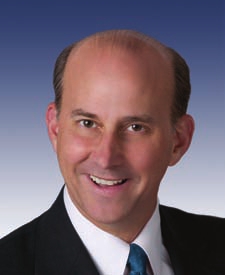
Did Rep. Louis Gohmert (R-Tx)*, one of the prominent conservatives in the Republican-led Congress, misuse over $6,000 in campaign funds on a speaking trip to London? Maybe; it sounds like one of those typical gray election law controversies, and one of the lesser ones, except that Gohmert is on a lot of partisan hit lists. If he did misuse the funds, I’d want to see him fined, or whatever the violation warrants, and chastened too.

That’s not my concern right now, though. What interests me is that the alleged misuse of funds was flagged by Citizens For Responsibility and Ethics in Washington, and in reporting it, Mediaite said, in a story headlined, Ethics Watchdog Accuses Gohmert of Misusing Campaign Funds:

“An ethics watchdog group has filed a complaint against Rep. Louie Gohmert, accusing the Texas Republican of misusing campaign funds to foot the bill for a trip to England that included a 5-star hotel and a $200-plus taxi ride.The complaint, filed by Citizens for Responsibility and Ethics in Washington (CREW), was addressed to the staff director and chief counsel of the Office of Congressional Ethics and demands an investigation into whether Gohmert violated House rules by using campaign money for a trip that seemingly had nothing to do with his campaign.”

CREW, as I have repeatedly pointed out for years, is no “ethics watchdog.”  Continue reading

.5 Cheers For The Justice Department Deciding To Be No More Biased, Divisive And Unethical Regarding Michael Brown’s Shooting Than It Already Has Been

one cheer

The Justice Department has reportedly decided not to bring civil rights violations charges against former Ferguson police officer Darren Wilson in the death of Michael Brown. This is not exactly a surprise, since there was no justification, based on known evidence, for opening an investigation in the first place. Still, the decision does show that there are unethical depths to which Eric Holder’s race-obsessed, partisan and untrustworthy regime won’t sink to.

It was obvious to all objective observers that the original announcement, in the wake of the grand jury’s decision not to indict Wilson, that the Justice Department was investigating possible civil rights violations was pure race identification politics at its worst. The Justice Department is supposed to be non partisan. It is supposed to build trust in the system, not undermine it. It is supposed to be objective and fair, and not prejudge or take sides until the facts are known. Never mind: all of that and more was thrown aside, openly and with fanfare, in the Ferguson Ethics Train Wreck.

Holder met with Brown’s parents. He consulted openly with Al Sharpton, who was, and is, claiming that Brown was gunned down for being black. Holder’s department sent representatives to Brown’s funeral. Holder’s decision to investigate whether to seek a civil rights violation indictment was interpreted as a statement that the Ferguson grand jury that refused to prosecute Wilson was itself racially biased, though the evidence released proved that was not the case. The investigation sent a cynical, divisive message that a black President and a black Attorney General were going to stand with “their” people, and the conclusions of a “mostly white” grand jury be damned. The decision seemed to validate, as it was fully intended to, the protests, the anger, the riots, and the “Hands Up! Don’t Shoot!” lie.

However, as we knew, and know, and as Holder’s attorneys knew, the evidence was never there, and never was going to be there. Thus Justice is finally doing the right thing, after intentionally doing the wrong thing to show beyond any shadow of a doubt what side they are on, as an agency of all the people that is pledged to only be on one side, that of blind and color blind justice. Instead, Holder’s minions chose to subject Wilson, and by extension his profession, the police, months of injustice to demonstrate politically useful solidarity with Brown’s parents, who accused their country of racism before the United Nations, and Al Sharpton, whose bar for proving racism is set low enough to call the Academy Awards bigoted for not nominating the actors he would nominate. It was not willing, apparently, to go so far as to hold a trial in which the United States would be thoroughly embarrassed, because it had nothing to prosecute on.

Yes, I’ll compliment Holder and the Justice Department for doing the right thing that they made necessary by months of unethical conduct. Good for them. They were not as unprofessional and atrocious as they might have been.

With this Justice Department, that qualifies as progress.

An Amazing Case Study On How Bias Makes Us Stupid

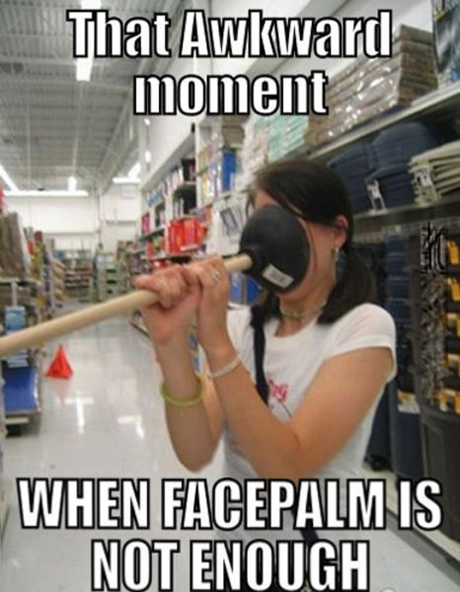
when-facepalmnot-enoughBias makes you stupid. It interferes with our objective judgment, makes us unreasonable and unfair, leads to poor decisions and the loss of the respect of others. Seldom will one see a more striking example than the current post on The Daily Kos, the unhinged far left website, by earnest, progressive, biased and struck-stupid commentator Mark E. Anderson.

Republican Gov. Scott Walker of Wisconsin is a potential Republican presidential contender who is hated by progressives with an unseemly passion for his successful vanquishing of public employee unions in a traditionally liberal state. He never graduated from college: he left the University of Marquette in his senior year to take advantage of a business opportunity, and never looked back. Good for him.

In a recent interview, addressing his lack of bachelors degree, Walker said,

“I’ve got a master’s degree in taking on the big government special interests, and I think that is worth more than anything else that anybody can point to.”

Continue reading

Whose Ethics Alarms Are Ringing Over “Truthy”?

Colbert

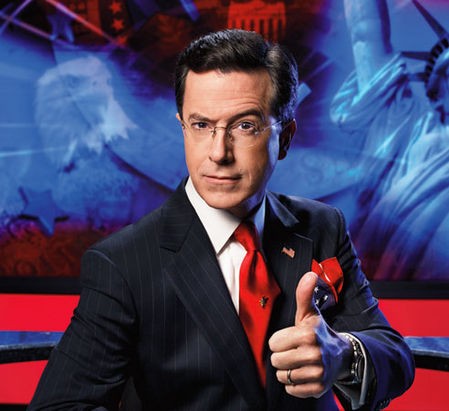
Sad but true; the NSF spent a million dollars of a project named after a Stephen Colbert gag. But that’s not the worst part…

It certainly seems that most of the ringing over Truthy, the disturbing University of Indiana internet speech monitoring project funded by the National Science Foundation, is occurring in the brains of conservatives. Does that mean that one is a biased right-winger to think that the government has no business deciding what is “misuse” or “abuse” of social media—social media meaning “the communication of opinions, statements and ideas over the web”?

I don’t think so. I think it means that a troubling number of progressives, including a large constituency in the Obama administration, are convinced that the only way for their ideology to prevail is to marginalize opinions they don’t like as “hate speech,” restrict the First Amendment by demonizing opponents, and engaging in de facto censorship though harassment. Being opposed to that doesn’t make anyone right wing. It means that they reject the unethical theory that the ends justify the means, which at this point in our history seems to be flourishing primarily on the Left.

Did you miss the news about Truthy when it first provoked a flurry of news reports last fall, almost exclusively from conservative media? That’s because the mainstream media—surprise!—saw nothing at all alarming or even newsworthy about a government-funded project to “study how memes spread on social media,” to identify what it considers “false and misleading ideas,” with a major focus on political activity online,  to “detect political smears, astroturfing, misinformation, and other social pollution” —in other words—mine—-to track down opinions and assertions on the internet that argue against Obama administration policies, progressive movements and the agendas of liberal-biased researchers.

When the conservative news service Washington Free Beacon blew the whistle on this under the radar and misbegotten project—a project that could only scratch the surface of being ethical if it was absolutely non-partisan and neutral in all respects, which in 21st century U.S. academia is impossible—the reaction at the University tells us everything we need to know. Continue reading