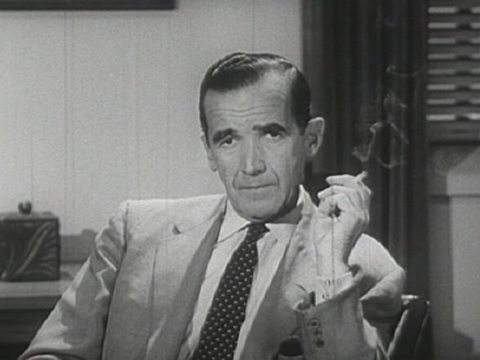
At last report, rolling in his grave…
I believe that the field of journalism ethics has been negated, as the news media now routinely ignores the most obvious conflicts of interest, and make no effort to avoid them, address them, or disclose them.
Case #1: Taking orders from Hamas
Hamas has published media guidelines instructing Gazans to always refer to the dead as “innocent civilians” and to never post pictures of armed Palestinians on social media. Hamas has prevented foreign reporters from leaving the area, and it is easy to see how foriegn journalists would conclude that the best way to ensure their safety is to avoid angering their “hosts.” Seemingly mindful of these concerns, the New York Times’ reporting on the Gaza conflict from Israel depicts tanks, soldiers, and attack helicopters, while virtually all images from Gaza are of dead children, weeping parents, bloody civilians, ruined buildings, overflowing hospitals, or similar images of pain, carnage and anguish. As Noah Pollack noted in the Weekly Standard website, a Times photo essay today contains these images:
“…three of Gaza civilians in distress; one of a smoke plume rising over Gaza; and three of the IDF, including tanks and attack helicopters. The message is simple and clear: the IDF is attacking Gaza and harming Palestinian civilians. There are no images of Israelis under rocket attack, no images of grieving Israeli families and damaged Israeli buildings, no images of Hamas fighters or rocket attacks on Israel, no images of the RPG’s and machine guns recovered from attempted Hamas tunnel infiltrations into Israel.”
Is this just naked anti-Israel bias, or is the Times simply trying to report the story without getting its reporters’ into further peril? I’ll be charitable and presume the latter: fine. But that defines a clear conflict of interest that mars the objectivity of the Times’ reporting, and the paper has an ethical obligation, under its own guidelines, to disclose it in every report where it might be relevant.
It has not. Continue reading

 Ethics Alarms