This is one of those periods in which there are so many juicy ethics stories that I am falling far behind. Here are three that are worthy of longer treatment that I can’t allow to get lost in the crowd: Continue reading
bigotry
Ethics Dunces: The Journalism Education Association and the National Scholastic Press Association
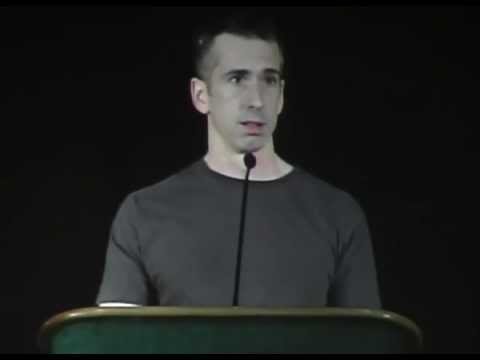
Now some of you will wonder, when a speaker addressing a national conference of high school journalists on the topic of anti-bullying measures starts a hateful rant against the Bible, religion, and any students in the audience who believe in either, why the speaker wouldn’t be the designated dunce. The speaker in this sorry case, however, was Dan Savage. Savage is a talented writer, a gay rights advocate, and a gifted humorist; he is also a very angry, self-righteous, arrogant gay man with a tendency to be unapologetically vicious. While it is true that angry, “take-no-prisoner” activists have their uses on the road to social change, lecturing about the evils of bullying is not one of them, because these people are themselves prone to bullying. No, the ethics dunces are the organizations that inflict such individuals on young, idealistic student journalists who didn’t travel to a conference to have a speaker call them “pansy-assed.”
That’s what the Journalism Education Association and the National Scholastic Press Association did when they irresponsibly invited Dan Savage to speak to the students, about 100 of whom walked out as Savage launched into an angry, but thoroughly Savage-like diatribe against Christians and Christianity. Continue reading
T-shirt Ethics and Bigotry In Lexington, Kentucky
Hands On Originals is a T-shirt company in Lexington, Kentucky that is now under fire for refusing the business of the Gay and Lesbian Services Organization, which organizes Lexington’s annual gay pride festival every June. The organization wanted to print up some T-shirts, and the company told them to take their business somewhere else. The reason: the T-shirt company is a “Christian organization”, and the owners don’t want to assist in promoting a message that goes against their religious beliefs.
The Gay and Lesbian Services Organization filed a complaint, and now there will be an investigation to decide whether this violates Lexington’s Fairness Act, which protects people and organizations from discrimination based on sexual orientation or gender identity. Lexington’s mayor has weighed in against Hands On, and boycotts against the company and the closely related company Wildcat Wearhouse have been threatened. Meanwhile the attorney for the Alliance Defense Fund, which is representing the T-shirt company, argues that “No business owner should be forced to violate his conscience simply because someone demands it. The Constitution absolutely supports the rights of business owners to decline a request to support a message that conflicts with their deeply held convictions.”
I am not going to comment on the legal and constitutional issues, but the ethical issue is clear. Should society respect the choice of a business to refuse to provide products or services to groups, individuals or causes it opposes or objects to on moral or religious grounds? Continue reading
Lawrence O’Donnell and the Missing Religious Bigotry Ethics Alarm at MSNBC
Really?
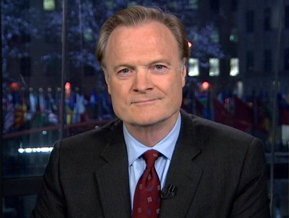
Is this really how it is going to be? Are the media protectors of President Obama really going to stoop to anti-Mormon bigotry to attack Mitt Romney? First New York Times columnist Charles M. Blow writes disparagingly about the Mormon “magic underpants” with nary a peep of protest or discipline from his bosses at the New York Times, and now MSNBC host Lawrence O’Donnell spews out this last night as Romney’s three primary wins were being tallied:
“Mormonism was created by a guy in upstate New York in 1830 when he got caught having sex with the maid and explained to his wife that God told him to do it. Forty-eight wives later, Joseph Smith’s lifestyle was completely sanctified in the religion he invented to go with it. Which Mitt Romney says he believes.” Continue reading
Social Science, Group Research and Bigotry: The Most Slippery Slope
Decades ago, Arthur Jensen became a target of critics and a pariah in his field by publishing a controversial study that indicated that differences in racial performance on intelligence tests probably had a genetic component. He was, and is, called a racist, though Jensen has continued to produce respected research. Since the publication of the 1969 Harvard Educational Review article that made him infamous, Jensen has won the prestigious Kistler Prize in 2003 for original contributions to the understanding of the connection between the human genome and human society.
The problem with Jensen’s research results, whatever the legitimacy of the data and his methods, was this: What do you do with it? Like other studies that show women, as a group, with less aptitude for the sciences, or those that show superior traits in other races and ethnic groups, this information just serves as a catalyst for bigotry. Whatever the trends within a large group may be, they tells us nothing about any individual in that group. Yet the existence of a study creates a natural tendency to apply the claimed group characteristics to every group member. Most people think like that, always have and always will. This is similar to the problem with stereotypes. Many, perhaps most, stereotypes have some truth in them. I was raised in a Greek family, and Greeks are reputed to be clannish, cheap, bigoted, and gifted in the kitchen. Well, that would describe a large proportion of my relatives, too, but not all of them. My Aunt Bea is fanatically liberal. My Mom couldn’t cook a lick. All right, they all were cheap, but the point is that it would be foolish and unfair to assume what any of them would be like without knowing them.
Knowledge is an absolute good, but perversely, some knowledge also guarantees abuse, and thus results in more bad than good. Jensen’s study, as far as I can see, has no good use in a democracy where every individual has the right to be assessed according to his or her conduct and character. Nor do any studies that “prove” character or ability differences in broadly defined groups.
This is all a prelude to my conclusion that the now widely publicized National Academy of Science study that has this conclusion-— “Higher social class predicts increased unethical behavior”—is just throwing gasoline on a fire, and has no useful or benign purpose at all. Continue reading
Comment of the Day: “Charles M. Blow’s Anti-Mormon Tweet, Chapter 2…”
Michael, who is now the Ethics Alarms all-time leader in the Comment of the Day category, scores another with a thought-provoking post inspired by the New York Times’ stunning disinterest in its columnist tweeting a religious slur about Mitt Romney. I’ll have some added reflections at the end. Here is his Comment of the Day on “Charles M. Blow’s Anti-Mormon Tweet, Chapter 2…”:
“I remember an article about this when I was in college. In analyzing how the news media treated different races, they came up with the PC Hierarchy. Anyone higher on the hierarchy can criticize or be insensitive to anyone below them. If there is a conflict between two groups, the one higher on the PC scale is assumed to be right”
PC Hierarchy of Races… Continue reading
Charles M. Blow’s Bigoted Anti-Mormon Tweet, Chapter 2: Ironies, Regrets, and Hypocrisy on the Left
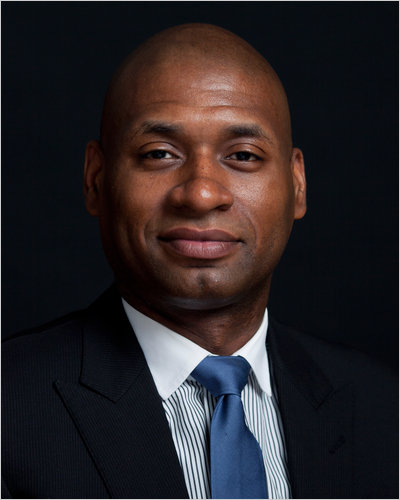
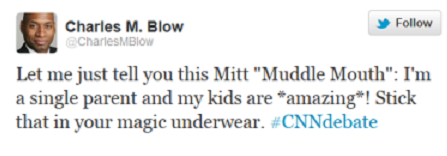
Charles M. Blow, the New York Times columnist who sent his followers an uncivil, unprofessional and bigoted tweet regarding Mitt Romney and his faith during Wednesday’s debate [“Let me just tell you this Mitt ‘Muddle Mouth’: I’m a single parent and my kids are *amazing*! Stick that in your magic underwear.”] issued a fascinating…something...today in response to criticism, which did not come from the supposedly bigotry-sensitive left. He tweeted:
“Btw, the comment I made about Mormonism during Wed.’s debate was inappropriate, and I regret it. I’m willing to admit that with no caveats.”
It is fascinating to me that this is being called an apology by Blow’s supporters and conservative critics alike. If it is an apology, and that is open to dispute, I’d like someone to explain to me how Blow can use “regret” as a stand-in for “I apologize,” and yet the same commentators who are interpreting the word that way have insisted that President Obama’s repeated use of “regret”to refer to past U.S. foreign policy actions was not the equivalent of apologizing, and have in fact stated that this interpretation by conservative critics is “a lie.”
Among those who have defended the President in this way, I believe, is Charles M. Blow. Continue reading
Ethics Dunce: NY Times Columnist Charles M. Blow, and the Times, If It Doesn’t Do Something About Him
Behold the above tweet from last night, appearing on the Twitter feed of Charles M. Blow, a regular New York Times op-ed columnist. And note:
- This is supposed to be a respected and respectable journalist of the preeminent U.S. newspaper, and he is sending gutter-level messages via social media, plus
- …his tweet immediately descends to crude name-calling (“Muddle-Mouth”) aimed at a Republican presidential candidate, and
- …goes lower still, making first a crude reference to underwear, and
- …making the reference a religious slur as well. Continue reading
Ethics Quote of the Week: Chris Matthews
“Loyalty is the heart of Pat’s being. He is loyal to country, to church, to neighborhood to heritage. To Pat, the world can never be better than the one he grew up in as a young boy. Blessed Sacrament Church and Grade School, Gonzaga High School, Georgetown University. No country will ever be better than the United States of America of the early 1950s. It’s his deep loyalty to preserving that reality and all its cultural and ethnic aspects that has been his primal purpose and is what has gotten him into trouble. Not just now but over the years.”
—MSNBC talking head Chris Matthews, in his wistful on-air tribute to Pat Buchanan, who was fired from his long-time role as the left-wing network’s token hard-right conservative.

"Pat, I may disagree with what you say, but I will defend to the death your right to say it...on some other network."
Matthews’ quote helps explain why loyalty is the most corrupting of the ethical virtues. Loyalty is important and admirable, but when it is divorced from the other values, it can lead to rigidity, stubbornness, and corruption. When a person, organization or cause no longer embodies the qualities that justified the loyalty in the first place, loyalty can undermine ethical conduct as strongly as any vice.
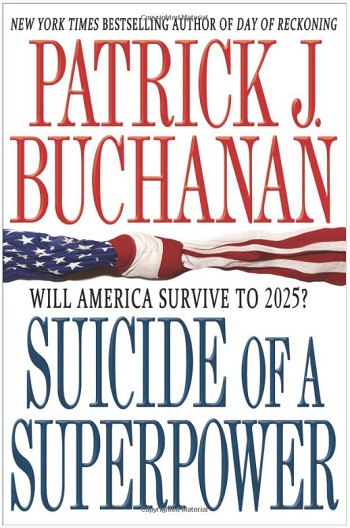
The right is attempting to frame Buchanan’s dismissal as part of a conspiracy to silence conservative voices. I never understood why Pat was on MSNBC anyway, unless it was to have a particularly Jurassic conservative around to make MSNBC’s extreme liberal bias look reasonable by comparison. It was Buchanan’s latest book, “Suicide of a Superpower: Will America Survive 2025?,” that finally triggered his ouster. I haven’t read it, but I’ve heard Buchanan on this topic sufficiently already. He may not be a racist, xenophobe, homophobe and anti-Semite, but his confusion of the need to hold on to American cultural values, with which I agree, with the need to keep America as white, Christian, heterosexual and Anglo-Saxon as possible is hard to distinguish from racism, homophobia, xenophobia and anti-Semitism. If I were running a news network, I wouldn’t employ him. Continue reading
The “Your Right To Engage in Ignorant and Dangerous Speech Doesn’t Mean It Isn’t Unethical For Me To Help It Be As Loud As Possible” Dept.: ABC Full Circle and WordPress

Defending free speech doesn't mean you have to put dangerous speech where it will do the most damage...like 100 feet tall in Times Square.
As the New Year dawns, we see two companies in the communications business, and two situations raising the question, is it ethical or unethical to allow someone to use your product or service to broadcast harmful speech?
They took different paths, and both are being criticized. One company is ethical, the other is not.
The ethical company is WordPress.
A few days ago it took down one of its sites, Bare Naked Islam, after The Council on American-Islamic Relations (CAIR) complained that the site promoted violence against Muslims, which it surely did. When Muslims placed comments on the site, Bare Naked Islam published the IP and e-mail addresses of the commenters and suggested reprisals. Nonetheless, because it was CAIR’s complaint that triggered the removal, WordPress was criticized mightily in the conservative blogosphere for doing a Comedy Central—censoring legitimate free speech out of fear of Muslim violence. There is a very large distinction, however, between abandoning free speech in response to threats, as Comedy Central did in the infamous “South Park” incident, and responding responsibly to a legitimate complaint. Continue reading