1. Here’s a useful definition…that I formulated while reading another issue of the increasingly and inexcusably anti-Trump propaganda obsessed New York Book Review section. This past weekend’s addition was more obvious than usual. “Democracy at Risk!” (Not by an opposition party setting out to topple a Presidency with the assistance of the news media—no no no! The risk justifies the opposition party doing this!) “Is Donald Trump a Fascist?” Hey, what’s Bob Woodward reading, just to pick a celebrity out of a hat? (The interview highlights the lack of self-awareness among the Trump-haters: Bernstein points out how intolerance and hate destroyed Richard Nixon as the Times allows and promotes hate in its war against the current President.) There’s an essay about…white nationalism! A Times reporter has written a book that pronounces the United States as “DOOMED!” And here’s Andrew Sullivan extolling an American revisionism exercise while referring to the current “spasm” of authoritarianism, and Doris Kearns, my old presidential power prof in college, with a new book about her faves, Lincoln, Teddy, FDR, and LBJ. These were great leaders.
The definition:Authoritarianism is when a President you don’t like exerts strong leadership within his powers to accomplish policy goals you disagree with. When a President you do like stretches and exceeds his Constitutional powers to achieve policy goals you approve of, that’s not authoritarianism. That’s great leadership.
As an aside, Andrew Sullivan tells us in his review that “the 2008 Heller decision rejecting a D.C. handgun ban is quite obviously bonkers.” All righty then! I guess that settles it!
2. Speaking of Bonkers: Emmys Ethics. Michael Che appeared in a pretaped bit in which he handed out “reparation Emmys” to black performers who supposedly were overlooked by the voting academy. These included Jaleel White (Urkel on“Family Matters”), Marla Gibbs (nominated five times for her role as Florence on “The Jeffersons”), Tichina Arnold (“Martin,” “Everybody Hates Chris”) and Kadeem Hardison (“A Different World”). Continue reading →
Another perspective on the question of how the personal and professional misconduct of artists should affect our regard for their art comes from Curmie, a drama teacher, director and blogger who has as deep credentials for this topic as anyone.
Back in graduate school, I worked as a teaching assistant to a brilliant professor, Ron Willis, in his Introduction to Theatre class. Seitz’s commentary intersects with two of the concepts Ron highlighted in his course. The first of those is what Ron called para-aesthetics: those elements which affect an audience’s reception of an aesthetic event without being the aesthetic event.
These can be entirely coincidental (it’s pouring rain) or created specifically by the production company (the poster). The company many have had some, but not complete, control over the influence (there’s insufficient parking, in part because of another event in the area). The para-aesthetic influence could apply to the entire audience (the leading actor is a big star, the auditorium is freezing) or to an individual (the leading actor is your best friend, the person next to you thinks that showers are for other people, you’ve had a couple glasses of wine before the show).
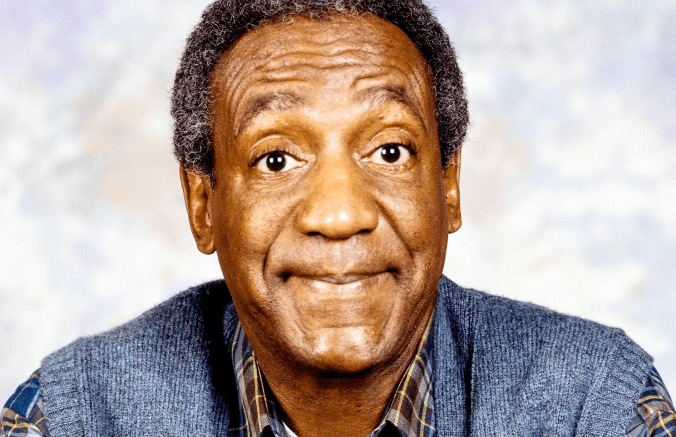
The fact that a Bill Cosby’s off-camera life has been considerably short of exemplary matters in a para-aesthetic way. But each individual spectator will respond differently to each impulse. That leading actor—my best friend—is someone else’s ex. Facebook tells me that a year and a day ago I saw a play in London with a young movie star in the title role. His presence mattered to me not a bit, but there were dozens if not hundreds of his fans in the house: people who were there specifically to see him. That play was an adaptation of a script I adore and indeed directed a few years ago. The fact that the play as presented bore little if any resemblance to the original bothered me a lot; those who didn’t know the 19th-century version were far more able to accept the 21st-century revision on its own terms. Continue reading →
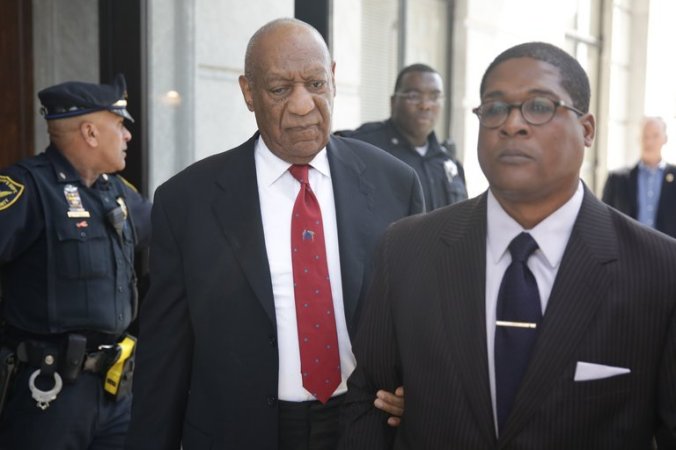
A jury found Bill Cosby guilty Thursday of drugging and sexually assaulting a woman at his home near here 14 years ago, capping the downfall of one of the world’s best-known entertainers, and offering a measure of satisfaction to the dozens of women who for years have accused him of similar assaults against them.
On the second day of its deliberations at the Montgomery County Courthouse in this town northwest of Philadelphia, the jury returned to convict Mr. Cosby of three counts of aggravated indecent assault against Andrea Constand, at the time a Temple University employee he had mentored.
The three counts — penetration with lack of consent, penetration while unconscious and penetration after administering an intoxicant — are felonies, each punishable by up to 10 years in state prison, though the sentences could be served concurrently.
Observations:
1 Good. Cosby should be serving hard time for rape. This verdict won’t accomplish that, and he has the resources to keep the matter tied up in appeals, maybe even forcing a new trial. Never mind: the verdict itself is satisfying punishment for a true ethics villain.
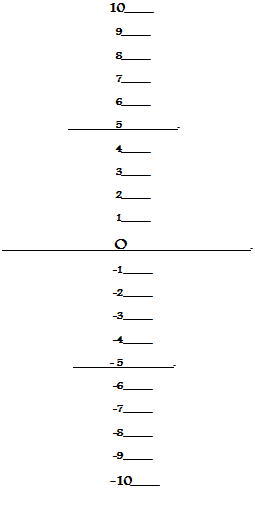
2. The verdict overcame the Cognitive Dissonance Scale, and that’s no mean feat. The jury deserves a lot of credit. Here, for the umpteenth time, is the scale:
Celebrities—or the characters they are identified with— are typically so high on the scale ( think of Bill/Cliff Huxtable as a plus 100) that even the evidence of a crime can’t pull them down sufficiently for jurors to be able to resolve the dissonance when they are thinking, “But he’s a great man and a wonderful person! How could he do these things?” The dissonance creates automatic reasonable doubt, all by itself, at least with enough jurors to ensure a mistrial, as in Cosby’s first trial. Hence O.J. Errol Flynn was acquitted of statutory rape. Robert Blake (“Baretta”) was acquitted of murdering his wife. Bill Cosby figured to have an unusually strong celebrity shield, but several factors overcame it:
the amount of evidence against him.
the fact that what he did represented such a betrayal of his public image
the judge allowing, in the re-trial, other victims to testify
the series of previously admired show business figures who have been exposed as predators and sexual abusers since the Harvey Weinstein Ethics Train Wreck pulled out of the station, and
the fact that Cosby peak celebrity was decades ago.
If the trial had occurred at the time of “The Cosby Show,” I wonder if any evidence could have convinced a jury to convict him. Continue reading →
(I’m in a good mood because this happened last night…)
1. Incompetent elected officials of the month…From Reason:
On Tuesday, the Senate Judiciary and Commerce, Science, and Transportation committees grilled Facebook CEO Mark Zuckerberg about the company’s insufficient efforts to protect users’ personal data…
Sen. Roy Blunt, (R–Mo.) … didn’t seem to understand that Facebook lacks a means of accessing information from other apps unless users specifically opt in…. Sen. Roger Wicker (R–Miss.) needed a lot of clarification on how Facebook Messenger interacts with cellular service. Zuckerberg had to carefully explain to Sen. Brian Schatz (D–Hawaii) that WhatsApp is encrypted, and Facebook can’t read, let alone monetize, the information people exchange using that service. Zuckerberg had to explain to multiple senators, including Sen. Dean Heller (R–Nev.), that Facebook doesn’t technically sell its data: The ad companies don’t get to see the raw information. Sen. Patrick Leahy (D–Vt.) brought along a poster on which his office had printed out images of various Facebook pages. Leahy asked whether these were Russian propaganda groups. “Senator, are you asking about those specifically?” Zuckerberg asked. He of course had no way of knowing what was going on with those specific pages, just from looking at pictures of them….Sen. Amy Klobuchar (D–Minn.) offered this metaphor: “the way I explain it to my constituents is that if someone breaks into my apartment with a crowbar and takes my stuff, it’s just like if the manager gave them the keys.” But …Facebook didn’t willfully assist in a crime. …Sen. Debbie Fischer (R–Neb.) didn’t understand, at a fundamental level, that if you’re using Facebook, you have agreed to let Facebook know a lot of information about you. Sen. Lindsey Graham (R–S.C.) asked whether Facebook had any major competitors. …
This is a theme of regulation, rules and laws in the cyber age: the officials responsible for regulating the uses and abuses of technology don’t use the technology involved, don’t understand it, aren’t willing to take the time to learn, and are apparently not even aware of how irresponsible and incompetent this is, how stupid and lazy it makes them look, and how it undermines the public trust.
2. But don’t worry…In his testimony, Zuckerberg said that Facebook was working on a way to ban “hate speech.” I can’t wait to see what the left-wing crypto-fascists who run the Big Tech giants consider “hate speech.” Actually, we have some pretty good clues. Facebook silenced pro-Trump video-bloggers “Diamond and Silk,” deeming their political content “unsafe to the community.” Continue reading →
1. “The Rifleman” and “Fix the problem.” I recently was interviewed by a graduate student in organizational leadership and ethics. One thing we discussed was how popular culture in America once dedicated itself to teaching ethical values and ethics problem-solving, especially in shows aimed at young audiences. This is not so true any more; indeed, popular culture models unethical conduct at least as often today.
I told my interviewer about recently watching an episode of “The Rifleman,” the early ’60s TV Western about a single father raising his young son while being called upon to use his skill with a rifle to fight for civilization in the harsh frontier. In the episode, hero Lucas McCain (played by the under-rated Chuck Connors) had to deal with an old friend, now an infamous outlaw, who had come to town. (The ethical conflict between personal loyalty and an individual’s duty to society was a frequent theme in Westerns.) Lucas was a part-time deputy, and at the climax of the episode, his friend-gone-bad is prepared to ride out of town to escape arrest for his latest crime. Lucas tells him not to leave, and that if he tries to escape, Lucas will have to let his custom-made rifle settle the matter, as usual. (Peace-loving Lucas somehow managed to kill over a hundred men during the run of the series.) Smirking, his friend (Richard Anderson, later known as the genius behind “The Six Million Dollar Man”), says that he knows his old friend is bluffing. For Lucas owes him a lifetime debt: he once saved “The Rifleman’s” life. You’re a good man and a fair man, the villain says. “You won’t shoot me. I know you.” Then he mounts his horse , and with a smiling glance back at “The Rifleman,” who is seemingly paralyzed by the ethical conflict, starts to depart. Now his back is all Lucas has to shoot at, doubling the dilemma. You never shoot a man in the back, an ethical principle that the two officers who killed Stephon Clark somehow missed. We see McCain look at his deadly rifle, then again at the receding horseman. Then, suddenly, he hurls his rifle, knocking his friend off his horse. The stunned man is arrested by the sheriff, and says, lamely, as he’s led away. “I knew you wouldn’t shoot me.”
I love this episode. It teaches that we have to seek the best solution available when we face ethics conflicts, and that this often requires rejecting the binary option presented to us, and finding a way to fix the problem.
Of course, it helped that Chuck Connors used to play for the Dodgers, and could hurl that rifle with the accuracy of Sandy Koufax.
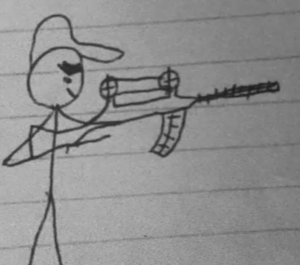
2. Here we go again! Now that anti-gun hysteria is again “in,” thanks to the cynical use of some Parkland students to carry the anti-Second Amendment message without having to accept the accountability adults do when they make ignorant, dishonest, and illogical arguments in public, teachers and school administrators are back to chilling free speech and expression by abusing their students with absurd “no-tolerance” enforcement. At North Carolina’s Roseboro-Salemburg Middle School, for example, a 13-year-old boy in the seventh grade was suspended for two days for drawing a stick figure holding a gun.
I drew pictures like this—well, I was little better at it—well into my teens. It’s a picture. It isn’t a threat. It isn’t anything sinister, except to hysterics and fanatics without a sense of perspective or proportion—you know, the kind of people who shouldn’t be trusted to mold young minds. “Due to everything happening in the nation, we’re just being extra vigilant about all issues of safety,” said Sampson County Schools’ Superintendent Eric Bracy, an idiot. How does punishing a boy for a drawing make anyone safer? It makes all of us less safe, by pushing us one step closer to government censorship of speech and thought.
Then we have Zach Cassidento, a high school senior at Amity High Regional School in Connecticut who was suspended and arrested —arrested!—for posting a picture of his birthday gift, an Airsoft gun, on Snapchat. He was not charged, but was suspended for a day from school….for posting, outside of school, on his personal account, the picture of an entirely legal toy gun (It shoots plastic pellets: my son has several of them).
The people who do this kind of thing to children in violation of their rights as Americans are the same people who cheer on David Hogg while signing factually and legally ridiculous petitions. They should not be permitted to teach, and this kind of conduct ought to be punished.
Where is the ACLU? For the organization not to attack these abuses is an abdication of the organization’s mission. Continue reading →
As Bill Cosby’s latest trial gets underway, “the Cos” and his lawyers contend that the presiding judge should recuse himself because the judge’s wife is an advocate for sexual assault victims. Judge Steven O’Neill’s wife, Deborah O’Neill, is a social worker on a University of Pennsylvania special staff that advocates for students who are alleged victims of sexual assault. According to the motion for the judge to recuse, she has donated money to a victims advocacy group that plans an anti-Cosby rally outside the courthouse during Cosby’s trial.
Your Ethics Alarms Ethics Quiz of the Day:
Should the political activities, public statements or occupation of a spouse be considered a sufficient conflict of interest to mandate judge’s recusal?
The Walter Cronkite School of Journalism and Mass Communication has boarded the Harvey Weinstein Ethics Train Wreck.
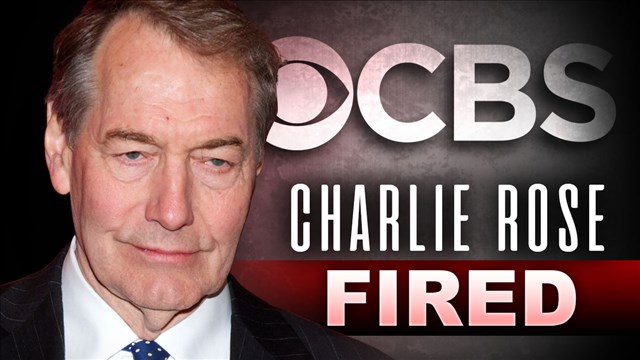
Is the body of Charlie Rose’s work as a journalist less impressive, valuable, expert, enlightening and professional because we have learned that he is an abusive, sexist, gross, harassing pig? Of course not.
We give the award each year based on the knowledge we have of a recipient at that time. When new information about a recipient surfaces, the question we ask is not whether the award would be given again with a new set of facts, but whether the transgressions are so egregious that they demand nothing less than a reversal of history.
I believe Mr. Rose’s actions of sexual misconduct reported by The Washington Post and other media outlets, which are largely unrefuted, rise to that level. The damage caused by Mr. Rose’s actions extends far beyond the news organizations for which he worked. The actions victimized young women much like those who make up the overwhelming majority of Cronkite students – young women who deserve to enter workplaces that reward them for their hard work, intelligence and creativity and where they do not have to fear for their safety or dignity. In rescinding this award, we hope to send an unequivocal message that what Mr. Rose did is unacceptable, and that such behavior – far too common in not just media companies but many organizations – must stop.
So now you know why. The school, and its dean, and everyone else involved in this decision, is craven, hell-bent on virtue-signalling, bereft of integrity, hypocritical, and intellectually dishonest. The school has never withdrawn an award or honor: are we really supposed to believe that there is an established procedure for considering whether or not one should be revoked in an instance of “new information” that has nothing whatsoever to do with the reason the honor was bestowed? Rose’s shame hardly did any lasting harm to the news organizations he worked for beyond the inconvenience of replacing him. He discriminated against women? Being the biggest cheese in William Paley’s all-male news room, Walter Cronkite’s treatment of women during the “Mad Men” error probably wouldn’t pass muster today, though I can’t picture Uncle Walter parading naked in front of female colleagues. (Fortunately I can’t picture Charlie doing that either). If Walter’s Juanita Broaddrick, reading about the slap-down of Rose, comes out with a credible accusation against the icon, will the Arizona State-based institution change its name to the Dan Rather sch…no, it can’t do that.Continue reading →
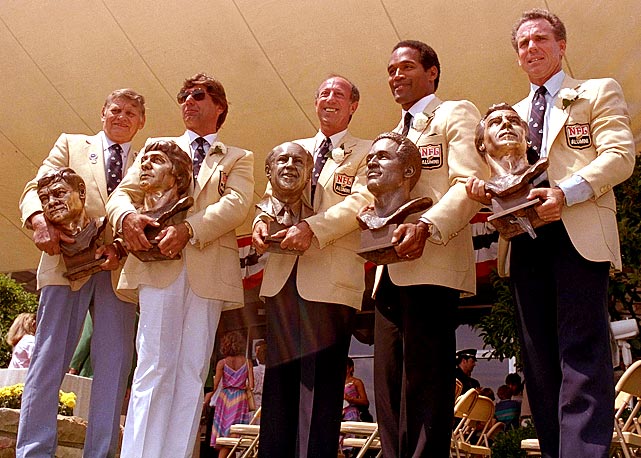
The Pro Football Hall of Fame invites every Hall of Famer to its annual enshrinement ceremony When asked whether O.J. Simpson, the acquitted double-killer and the newly paroled convicted burglar/kidnapper who was enshrined in 1985, will be invited to the next ceremony, the Hall of Fame told ESPN, “All Hall of Famers are invited to attend the annual enshrinement.”
This is the Bill Cosby bust story in reverse. Like Cosby, O.J.’s honor was earned before his character issues were known, and in Simpson’s case, before he embarked on an avocation as as a knife murderer. The honor was based entirely on what Simpson did on the football field, and nothing he can do subsequently can change that record, which was and is deserving of recognition. It would be a different question (though, I believe, demanding the same result) if Simpson were a member of baseball’s Hall of Fame, which has a character requirement. Not pro football. O.J. is the only murderer, but felons abound. One of the greatest running backs ever, Jim Brown, repeatedly beta up his girl friends, and that was before he was enshrined.
Has Simpson embarrassed his league, his sport and the Hall? Sure he has. Is he a pariah in the NFL? Boy, I hope so. But no Hall of Fame should try to constantly re-qualify its members once they are admitted. What standards would justify de-busting? Universities like Princeton and Yale are doing too much of this kind of thing already. O.J. Simpson was a great football player. As the song says, they can’t take that away from him. Nor should they.
However, Simpson, being treated ethically by the Hall, should show his gratitude and respect it by never darkening its door again.
1. On the same New York Times front page (June 21) that announced the Georgia 6 result, surrounded by Times’ agenda-advancing stories with slanted headlines (climate change, North Korea, the Obamacare overhaul, the “divided GOP,” and Michael Flynn) was the kind of story that once made the Times’ reputation. It was headlined, “Haven for Recovery Becomes A Relapse Capitol,” Will this story be discussed today by the Sunday talking-head shows? Of course not. The implications of it are not friendly to progressive mythology.
The story explains how Delray Beach, Florida has become a Mecca for drug addicts and a bonanza for treatment centers and “sober houses,” group living facilities for addicts. Some quotes will provide a sense of the report, but you should read it all:
Unlike other places in the United States that have been clobbered by the opioid crisis, most of the young people who overdose in Delray Beach are not from here. They are visitors, mostly from the Northeast and Midwest, and they come for opioid addiction treatment and recovery help to a town that has long been hailed as a lifeline for substance abusers. But what many of these addicts find here today is a crippled and dangerous system, fueled in the past three years by insurance fraud, abuse, minimal oversight and lax laws. The result in Palm Beach County has been the rapid proliferation of troubled treatment centers, labs and group homes where unknowing addicts, exploited for insurance money, fall deeper into addiction.
…
Hundreds of sober homes — some reputable, many of them fraud mills and flop houses for drug users — sprawl across Delray Beach and several surrounding cities. No one knows exactly how many exist because they do not require certification, only city approval if they want to house more than three unrelated people. Hoping for a fresh start, thousands of young addicts from outside Florida wind up here in places that benefit from relapse rather than the recovery they advertise.
…
…the proliferation of fraudulent sober homes was in part also the result of two well-intentioned federal laws. First came a 2008 law that gave addicts more generous insurance benefits; then the Affordable Care Act, which permits adults under 26 to use their parents’ insurance, requires insurance companies to cover people with pre-existing conditions and allows for multiple drug relapses.
The result was a whole new category of young addicts with access to insurance benefits. This gave rise to a new class of abusive operator, as painstakingly chronicled in The Palm Beach Post: the corrupt sober house owner. Many drug treatment centers — which also treated inpatients — started paying sober-home owners “bonuses” from insurance money and fees for referring outpatients to their centers while they underwent therapy, according to law enforcement, a grand jury report and court records.
…
Sober homes, which are not covered by insurance, can get thousands of dollars a month for each recovering addict, in large part from treatment providers, law enforcement and city officials said. Much of it goes into the owners’ pockets. But it is also used to pay rent so patients can live free and to provide perks that lure patients from other sober houses: manicures, mopeds, gym memberships and, worst of all, drugs. Relapses are welcome because they restart the benefits clock.
To increase profits, many treatment centers and labs overbill insurance companies for unnecessary tests, including of urine, blood and DNA. Some have billed insurance companies thousands of dollars for a urine test screen. Patients often unnecessarily undergo multiple urine tests a week.
Ah, glorious compassion! So those of us who managed to not break laws and cripple ourselves while doing so get to pay for not only the self-inflicted problems of those who did, but also get to enrich the scam-artists who live off of their addictions, protected by compassionate, expensive insurance guarantees that require no personal responsibility or accountability. Meanwhile, “federal disability and housing anti-discrimination laws offer strong protections to recovering addicts who live in them.”
This is the better “treatment” alternative to the “war on drugs” that the compassionate people harangued us about for decades. Continue reading →
1. It looks like Bill Cosby is going to be acquitted, and probably rightly so, though probably for the wrong reason: bias. The jury is deadlocked, and I’d bet my head that one or more hold-outs just can’t accept the fact that that nice Cliff Huxtable would do those horrible things unless the victim consented somehow. Cheat on his wife. maybe. But not that.
Celebrity defendants whose public images are benign begin criminal trials with automatic unreasonable doubt built-in; this is part of the reason O.J. and Robert Blake (“Baretta”) avoided murder convictions. Celebrities with less sterling reputations are not so fortunate: had Bill Cosby been the one who shot a woman he barely knew at his home under strange circumstances, he would have probably been acquitted. Unfortunately for Phil Spector, the pop record producer had a well-established reputation for being nuts. The reasons Cosby can be acquitted for just reasons is that the victim is on record calling and chatting with him dozens of times after she was drugged and sexually assaulted, and because only one of the 50 or so Cosby victims was allowed to testify to show a pattern of behavior. The standard of proven guilt beyond a reasonable doubt is intentionally difficult to meet. There is no doubt whatsoever in my mind that Cosby is guilty, and his eventual acquittal won’t change my certainty. Nonetheless, those attacking the verdict and the jurors will be wrong, just as they were with O.J. and Casey Anthony.
2. One more thing regarding Cosby: yesterday I heard a CNN anchor who was about to interview another Cosby victim describe the woman as someone who has accused Bill Cosby of “inappropriate conduct.” The host caught herself, sort of, by adding, after a pause, “to say the least.” The woman claimed she had been raped. Even the anchor couldn’t bring herself to attach to dear, funny, sweet Cos such a heinous crime, so she engaged in craven equivocation. “Inappropriate conduct”? Belching at the dinner table is inappropriate conduct. Drugging trusting young women and raping them is entirely different.
This is CNN.
I regard a broadcast news journalist stating that Bill Cosby has been accused of “inappropriate conduct” misleading, incompetent, and fake news. Continue reading →

 Ethics Alarms