Encore: From “The Law vs Ethics Files: The July 24, 1983 Pine Tar Incident, When Baseball Chose Ethics Over Law, And Was 100% Wrong

Several things led me to re-posting this Ethics Alarms entry from 2017.

First of all, the MLB network showed a documentary on the career of George Brett today, and scene above, with Brett erupting in fury at the umpire’s call voiding his clutch, 9th inning home run, is one of the classic recorded moments in baseball history. There was also a recent baseball ethics event that had reminded me of Brett’s meltdown: Yankees manager Aaron Boone was thrown out of a game because a fan behind the Yankees dugout yelled an insult at the home plate umpire, and the umpire ejected Boone thinking the comments came from him.. When Boone vigorously protested that he hadn’t said anything and that it was the fan,Umpire Hunter Wendelstedt said, “I don’t care who said it. You’re gone!”

Wait, what? How can he not care if he’s punishing the wrong guy?

“What do you mean you don’t care?” Boone screamed rushing onto the field a la Brett. “I did not say a word. It was up above our dugout. Bullshit! Bullshit! I didn’t say anything. I did not say anything, Hunter. I did not say a fucking thing!” This erudite exchange was picked up by the field mics.

There was another baseball ethics development this week as well, one involving baseball lore and another controversial home run. On June 9, 1946, Ted Williams hit a ball that traveled a reported 502 feet, the longest he ever hit, and one of the longest anyone has hit. The seat was was painted red in 1984 (I’ve sat in it!), and many players have opined over the years that the story and the seat are hogwash, a lie. This report, assembling new data about the controversy, arrives at an amazing conclusion: the home run probably traveled farther than 502 feet.

But I digress. Here, lightly edited and updated, is the ethics analysis of the famous pine tar game and its aftermath:

***

 I have come to believe that the lesson learned from  the pine tar incident is increasingly the wrong one, and the consequences of this extend well beyond baseball.

On July 24, 1983, the Kansas City Royals were battling the New York Yankees at Yankee Stadium. With  two outs and a runner on first in the top of the ninth inning,  Royals third baseman George Brett hit a two-run home run off  Yankee closer  Goose Gossage to give his team a 5-4 lead.  Yankee manager Billy Martin, however, had been waiting like a spider for this moment.

Long ago, he had noticed that perennial batting champ Brett used a bat that had pine tar (used to allow a batter to grip the bat better) on the handle beyond what the rules allowed. MLB Rule 1.10(c) states: “The bat handle, for not more than 18 inches from the end, may be covered or treated with any material or substance to improve the grip. Any such material or substance, which extends past the 18-inch limitation, shall cause the bat to be removed from the game.” At the time, such a hit was defined in the rules as an illegally batted ball, and the penalty for hitting “an illegally batted ball” was that the batter was to be declared out, under the explicit terms of the then-existing provisions of Rule 6.06.

That made Brett’s bat illegal, and any hit made using the bat an out. But Billy Martin, being diabolical as well as a ruthless competitor, didn’t want the bat to cause just any out. He had waited for a hit that would make the difference between victory or defeat for his team, and finally, at long last, this was it. Martin came out of the dugout carrying a rule book, and arguing that the home run shouldn’t count.  After examining the rules and the bat, home-plate umpire Tim McLelland ruled that Brett used indeed used excessive pine tar and called him out, overturning the home run and ending the game.

Brett’s resulting charge from the dugout (above) is video for the ages. Continue reading
From The Law vs Ethics Files: The July 24, 1983 Pine Tar Incident, When Baseball Chose Ethics Over Law, And Was 100% Wrong

I have written on this topic before, but this is the famous incident’s anniversary, and I have come to believe that the lesson learned from  the pine tar incident is increasingly the wrong one, and the consequences of this extend well beyond baseball.

On July 24, 1983, the Kansas City Royals were battling the New York Yankees at Yankee Stadium. With  two outs and a runner on first in the top of the ninth inning,  Royals third baseman George Brett hit a two-run home run off  Yankee closer  Goose Gossage to give his team a 5-4 lead.  Yankee manager Billy Martin, however, had been waiting like a spider for this moment.

Long ago, he had noticed that perennial batting champ Brett used a bat that had pine tar (used to allow a batter to grip the bat better) on the handle beyond what the rules allowed. MLB Rule 1.10(c) stated: “The bat handle, for not more than 18 inches from the end, may be covered or treated with any material or substance to improve the grip. Any such material or substance, which extends past the 18-inch limitation, shall cause the bat to be removed from the game.” At the time, such a hit was defined in the rules as an illegally batted ball, and the penalty for hitting “an illegally batted ball” was that the batter was to be declared out, under the explicit terms of the then-existing provisions of Rule 6.06.

That made Brett’s bat illegal, and any hit made using the bat an out. But Billy Martin didn’t want the bat to cause just any out. He had waited for a hit that would make the difference between victory or defeat for his team, and finally, at long last, this was it. Martin came out of the dugout carrying a rule book, and arguing that the home run shouldn’t count.  After examining the rules and the bat, home-plate umpire Tim McLelland ruled that Brett used indeed used excessive pine tar and called him out, overturning the home run and ending the game.

Brett’s resulting charge from the dugout (above) is video for the ages. Continue reading
Baseball Ethics: Revealed At Last! Extraordinary Cheating By The 1975 California Angels

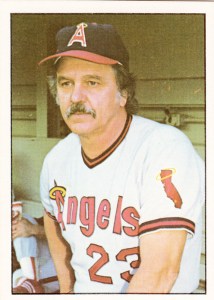
Dick Williams, cheat...but a successful and creative cheat, you have to admit.

Dick Williams, cheat…but a successful and creative cheat, you have to admit.

Yesterday on the New England Sports Network broadcast of the Red Sox-Yankees game, Sox color man Jerry Remy was discussing how some teams doctor their home fields for tactical advantages. The Yankee Stadium infield grass, for example, is kept long, slowing down ground balls so the infielders have a better chance of getting to them before they scoot into the outfield for hits. The current Yankees team hitting, such as it is, tends to be fly ball oriented. Jerry expounded on how teams that bunted a lot would sometimes have groundskeepers slant the dirt around the foul lines toward fair territory. “In 1975, when I played for the Angels,” he said, “our home baselines were like gutters. A bunted ball almost couldn’t roll foul.” Such customization is considered fair gamesmanship, because the rules don’t specify ground conditions in sufficient detail.

Then Remy revealed an example of  baseball cheating in the extreme. Also n 1975, Remy said, during his rookie year with the California Angels, manager Dick Williams realized that speed on the bases was one of his few assets on a weak roster. (The ’75 Angels would finish  last in the AL West with a 72-89 record) Remy, Tommy Harper, Mickey Rivers and Dave Collins were all accomplished base-stealers, so Williams had groundskeepers move second base six inches closer to first base, thus shortening the distance a base-runner attempting to steal second would have to cover.

“It was that way all year,” Remy said. “Nobody ever noticed.” Continue reading

Ethics Quiz: Honoring The Dead and Deadly Team Mate

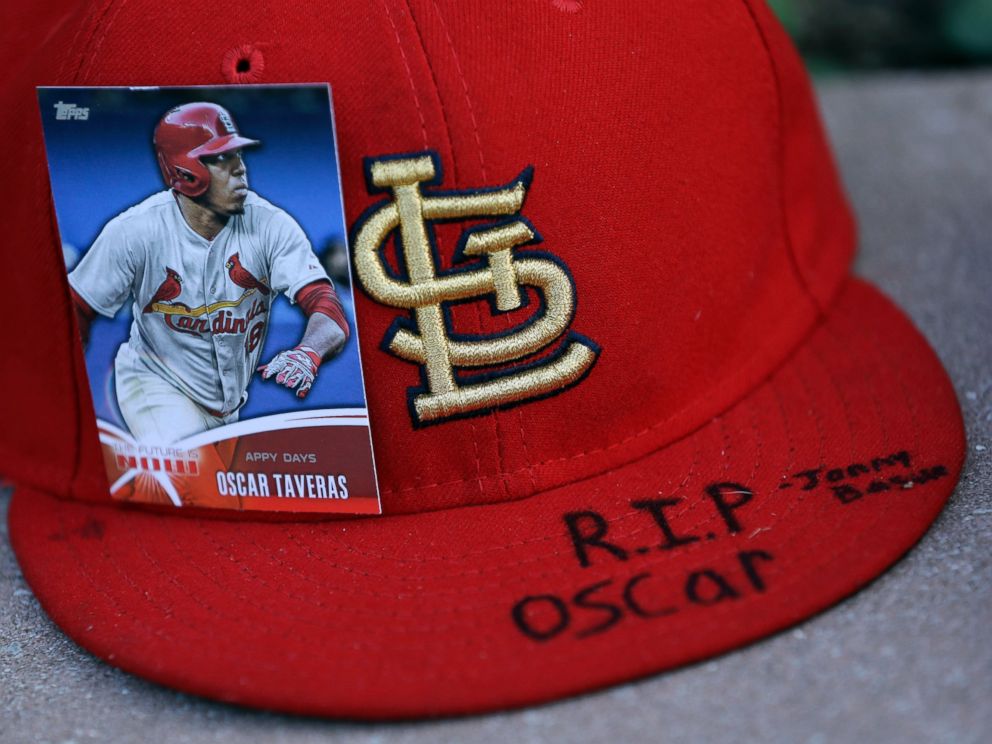
Taveras

When they take the field in Spring Training and for the rest of the 2015 baseball season, the St. Louis Cardinals will be wearing a memorial patch reading “OT” in honor of outfielder Oscar Taveras, the 22-year-old budding star outfielder who died in a car crash in his native Dominican Republic last October. Such mourning patches have become common since 1972, when the Pittsburgh Pirates moved beyond the traditional black armband to a personalized patch following the tragic death of the team’s Hall of Fame outfielder Roberto Clemente in a plane crash, as he was flying humanitarian aid to Nicaragua.

Taveras, however, unlike Clemente, died in an act of reckless stupidity that took not only his own life but that of his 18-year-old girlfriend, Edilia Arvelo, as well. Toxicology tests showed that his blood alcohol level was five times the legal limit before the crash. situation is more complex because toxicology tests showed that his blood alcohol level at the time of his death was five times the legal limit. Moreover, Taveras’, also was killed in the crash. If Taveras had lived and Arvelo alone had died, he would have been prosecuted for manslaughter.

And thus your first Ethics Alarms Baseball Ethics Quiz of 2015 is this:

Is it ethical for the Cardinals to publicly honor Taveras with a uniform patch?

Continue reading

LaBron, Steinbrenner, and Warped Sports Ethics

Sports ennoble us through the  symbolic exploits of latter-day mythic heroes, who use their amazing skills and talents to exemplify courage, grace under adversity, loyalty, accountability, sacrifice, and, of course, sportsmanship.

Or so they say.

Sometimes it works out that way, but just as often an extraordinary athlete like LeBron James will choose to use his prominence to promote less attractive character traits, like greed, vanity, disloyalty, cruelty and boorishness. For some reason, the mega-millions LeBron was going to receive for fleeing Cleveland as an NBA free agent was not sufficient booty: the basketball star felt that “branding” required that he tease as many cities and franchises as possible, rub Cleveland’s loss in the faces of his previously worshipful fans in that city, and then announce his final choice of new employers in an ESPN TV special that embarrassed his sport and his species. James is not alone, of course; he has lots of company among college and professional athletes whose preening and selfishness make it impossible to use their names and “role model” in the same sentence.

But for the use of sport to warp ethical priorities, nothing quite matches the nauseating accolades being heaped on the late George Steinbrenner, whose ownership of  the New York Yankees was a decades-long advertisement for the principle that the end justifies the means, and as long as you win, nothing else really matters. Continue reading

Pine Tar Redux: the Pole Vaulter, the Bracelet, and Technicalities

Sports Illustrated is crying foul over the story of a female high school pole vaulter whose jump in the final event had apparently won the meet and the league championship for her team  until the opposing coach called a rules infraction:  she was wearing a friendship bracelet, which was prohibited, and according to the rule book, grounds for disqualification.

SI says this is bad sportsmanship. Nonsense. Enforcing the rules of a sport cannot be poor sportsmanship. The objective is to win within the rules. A team that wins without following the rules cannot claim that “good sportsmanship” requires that the rules be ignored for its benefit. Continue reading