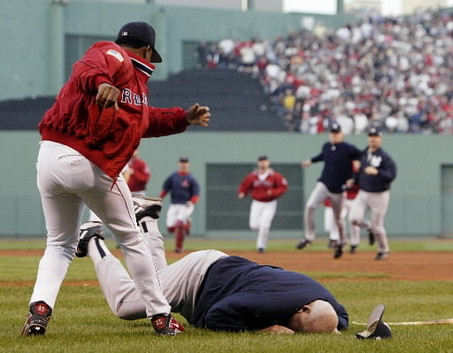
Valentining Bobby Valentine, Victim of Three Biases

MLB: Boston Red Sox at Toronto Blue Jays

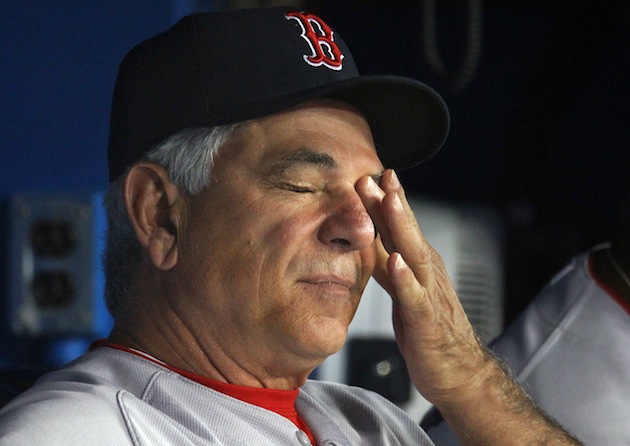
Hindsight bias is bad, confirmation bias is worse, and naked bias is the worst of all. 2012 Red Sox manager Bobby Valentine was the victim of all three with a vengeance during that disastrous Boston baseball season, and is still. I have been tempted to write about Bobby’s plight since last August, when the Red Sox management threw in the towel on the season and the long knives really came out in the Boston press corps. Now Valentine has been gone for six months, half the team has been replaced, and spring is dawning, yet hardly a day passes in which one of these ink-strained wretches  doesn’t take a pot-shot at the deposed manager, leaving the absolutely false impression that he could have done anything to forestall or mitigate the cataclysm that befell the Red Sox in 2012. Continue reading

“Walking Dead” Ethics: The Worst Leader Ever

Follow this leader at your peril...

Follow this leader at your peril…

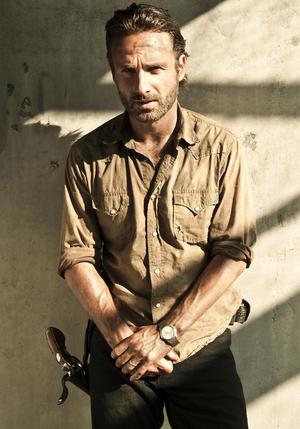
The Walking Dead’s” resolution of the ethical dilemma facing Rick Grimes—give up a member of his group to be tortured by a deranged sadist, on the basis of a dubious promise by said deranged sadist not to attack Rick’s group with a superior force if he receives the sacrificed member as his torture-toy, or resolve to fight said superior force despite the likelihood of defeat—was consistent with what we know of Rick as a leader from past episodes. He is hopeless. With this crucial decision, however, he forged new ground in fecklessness, stupidity and incompetence even for him:

  • He made the wrong decision, deciding to turn over the sword-weilding Machonne as the Governor demanded;
  • He did not tell his group what his decision was;
  • He confided in the most untrustworthy member of the group, the cynical, homicidal Merle, because Rick knew he would have no compunction with executing such a twisted choice;
  • After doing so, Rick changed his mind, but not before Merle, being certain that Rick couldn’t follow through on his decision, went ahead and subdued Machonne on his own and began transporting her back to the Governor’s lair for the trade.

In the end, Machonne wasn’t handed over to the Governor, and Merle ended up dead, but that’s irrelevant here. “The Walking Dead,’ in addition to being a handy primer on how ethics evolves when civilization collapses and zombies outnumber human beings, is a tutorial on leadership do’s and don’ts. Sheriff Rick, who has been the leader of the central band of survivors from the start, is the George Constanza of leadership: to be successful, do the opposite of what Rick would do. Continue reading

Ethics Quote of the Week: Prof. Glenn Reynolds

“A 20-year-old lunatic stole some guns and killed people. Who’s to blame? According to a lot of our supposedly rational and tolerant opinion leaders, it’s . . . the NRA, a civil-rights organization whose only crime was to oppose laws banning guns. (Ironically, it wasn’t even successful in Connecticut, which has some of the strictest gun laws in the nation.) The hatred was intense. One Rhode Island professor issued a call — later deleted — for NRA head Wayne LaPierre’s “head on a stick.” People like author Joyce Carol Oates and actress Marg Helgenberger wished for NRA members to be shot. So did Texas Democratic Party official John Cobarruvias, who also called the NRA a ‘terrorist organization,’ and Texas Republican congressman Louis Gohmert a “terror baby.” Nor were reporters, who are supposed to be neutral, much better. As The Atlantic’s Jeffrey Goldberg commented, ‘Reporters on my Twitter feed seem to hate the NRA more than anything else, ever. ‘Calling people murderers and wishing them to be shot sits oddly with claims to be against violence. The NRA — like the ACLU, the National Association of Criminal Defense Lawyers or Planned Parenthood — exists to advocate policies its members want. It’s free speech. The group-hate directed at the NRA is ugly and says ugly things about those consumed by it.”

—- University of Tennessee law professor (and conservative blogging icon) Glenn Reynolds, in a USA Today op-ed piece called “Reflections on Newtown.”

Stop the NRAI’m tempted to go further than Prof. Reynolds and suggest that this also says ugly things about what the extended recession has done to our culture, which once was characterized by the initiative, determination and innovation to solve problems, but now increasingly resorts to the useless strategy of  pointing fingers. The tradition of picking out convenient public scapegoats to blame and demonize in response to complex societal problems is a long-running historical phenomenon around the world, but it seems to me that the United States has never before embraced it with the fervor we are seeing now.

Unethical Website of the Month: Third Tier Reality

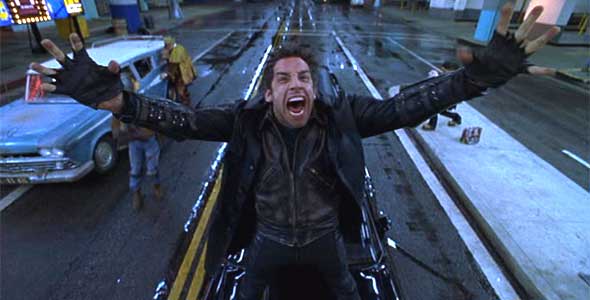
Mr. Furious, of the Mystery Men

Third Tier Reality is one of many blogs recently founded by disappointed law graduates who somehow labored under the misconception that a law school degree guaranteed that they would get 6 figure offers from big law firms and then live the life of Denny Crane until they could retire to a Caribbean island at the age of 55. A depressing number of these deluded souls managed to get themselves in hock up to their eyeballs, and when the recession hit and law firms cut back, felt first, like fools, second, angry and desperate, and third, that it was everyone else’s fault. Thus was born the “law school scam” conspiracy theory. Third Tier Reality, like the others of its breed, maintains that law schools intentionally misled scores of trusting students to pay their obscenely high tuitions,  knowing that they were pumping out more lawyers than the legal market would bear.

To the extent that the site tries to educate would-be law students that there is no guaranteed gravy-train at the end of three years of law school, the website is, at worst, harmless. “My goal is to inform potential law school students and applicants of the ugly realities of attending law school,” he writes. His message: Do not seek a law degree unless…

“(1) YOU GET INTO A TOP 8 LAW SCHOOL; (2) YOU GET A FULL-TUITION SCHOLARSHIP TO ATTEND; (3) YOU HAVE EMPLOYMENT AS AN ATTORNEY SECURED THROUGH A RELATIVE OR CLOSE FRIEND; OR (4) YOU ARE FULLY AWARE BEFOREHAND THAT YOUR HUGE INVESTMENT IN TIME, ENERGY, AND MONEY DOES NOT, IN ANY WAY, GUARANTEE A JOB AS AN ATTORNEY OR IN THE LEGAL INDUSTRY.”

That’s all good advice, though it presumes that more people get law degrees under the delusion alluded to in (4) than I believe is true. Nobody ever told me that a law degree guaranteed a high-paying job as an attorney, and if we understood that decades ago when law was booming, I don’t see where the confusion set in. I worked in the administration of Georgetown Law Center, and that school never made such a representation. In addition, Third Tier Reality goes further, as its brethren blogs do, to insist that a law degree from less than a “First Tier” school is actually an impediment in the job market. I hate to kick this particular hornets nest again, but this is a self-serving rationalization for failure. Continue reading

The Weeping Bus Monitor: A Half-Million Dollars For Incompetence

Karen Klein is the 68- year-old bus monitor who is the unwilling star of a viral video (below) showing her being insulted and mocked by 12-year-olds on a school bus.

Continue reading

Don’t Blame Nixon

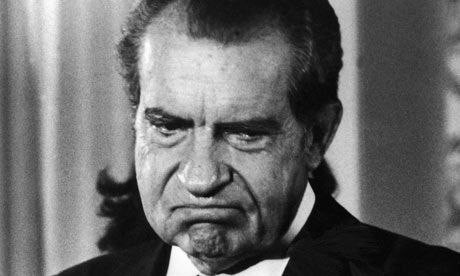
They can’t lay this one off on you, Dick.

I know it is much the vogue in Washington these days for leaders to blame previous leaders for persistent problems rather than to accept accountability and responsibility for not successfully solving them. Trendy though this attitude may be, however, Washington Post columnist Kathleen Parker’s column assigning fault for the U.S. public’s growing and frightening distrust of government institutions to Richard Nixon and the Watergate scandal shows its folly. It flies in the face of history and fairness, and lets literally thousands of subsequent leaders, elected officials, journalists, pundits and assorted knaves and hypocrites off scot-free.

Parker writes,

“Beyond the obvious, Nixon and the Watergate episode did great, perhaps irreparable, harm to the American spirit. A generation already traumatized by a war that ended up killing 58,000 of its brothers, boyfriends, husbands and fathers lost any remaining innocence, as well as trust in authority and faith in governmental institutions. The flag our forefathers raised on the moral high ground looked suddenly shabby and soiled. When even the president of the United States was willing to burglarize the American people, there was no one left to trust”

Oh, nonsense. The Watergate scandal, by the end, was one of the American system’s finest hours. The system worked, and worked on live television for all to see. A brave judge, John Sirica, showed integrity and grit in refusing to cave in to Presidential intimidation, ordering Nixon to turn over the tapes that ultimately proved his guilt. Senators and House members of both parties handled a complex inquiry diligently and well, with ethics heroes emerging on the Republican side, in individuals like Sen. Howard Baker, and the Democratic side, with the inspiring Senator Sam Irwin and others. When Nixon decided to fire the Special Prosecutor, Archibald Cox, who was getting too close to the truth, his own Cabinet member, Attorney General Eliot Richardson, resigned rather than do Nixon’s dirty work. Ultimately, Republicans and Democrats alike on the House Judiciary Committee voted for impeachment, forcing Nixon to resign. Yes, Tricky Dick was unethical and untrustworthy, but Americans had known that—and called him Tricky Dick— for decades. Then as now, too many Americans decided that “policies” trumped character, so they elected a man whose flawed values and integrity was a matter of public record—twice. Nonetheless, when he and his minions violated the law and threatened the principles of democracy, the vital institutions of the House, the Senate, the judiciary and the press showed their strength and virtue. Nixon was corrupt, not the Presidency, not the government. Continue reading

The Corruption Problem

“Maybe, just maybe, the legislative and judicial systems have been corrupted, by, dare I say it, corporations?”

—Ethics Alarms commenter and OWS warrior Jeff Field, in his comment regarding the weekend post, The Marianne Gingrich Ethics Train Wreck

I don’t know how Jeff reaches the conclusion that the judicial system has been corrupted by corporations. Judges, unlike legislators, do not grow rich as a result of their inside knowledge and corporate connections. Judges, unlike revolving-door Congressional staffers and lawyers, do not generally come from corporate backgrounds. The fact that a judicial decision benefits the interests of some corporations, and many do not, does not mean that the decision was not just or was influenced by more than persuasive legal arguments. Those who believe that begin with the biased and untenable position that any decision that benefits a corporation must be, by definition, wrong.

So let me put that dubious assertion aside as the result of excessive reformer’s zeal and crusader’s license, and deal with the general proposition that corporations corrupt the legislative system, and society generally. Well, sure they do, but the statement is misleading, and, I would argue, meaningless because it places disproportional importance on the corrupting influence of this one, admittedly important, societal force.

Yes, corporations can be corrupting influences. So can government, and the lure of public office. The news media is a corrupting influence on the legislature, and upon society generally. Religion corrupts; as does popular culture, with its celebration of empty celebrity, glamor and wealth. Non-profits and charities are corrupted by their tunnel vision of specific worthy objectives to the neglect of others; the civil rights movement corrupts, as does feminism and all other advocacy efforts, which often, if not usually, succumb to an “ends justify the means” ethic, which is unethical. Indeed, freedom corrupts, as does dependence. Cynicism corrupts, and corrupts with a vengeance. Ignorance corrupts; so does the belief, however well-supported, that one knows it all. Ideological certitude and inflexibility corrupts.

Education, and the cost of it, corrupts. Sports, both professional and collegiate, corrupt people, students, and institutions. Science corrupts; technology corrupts. Heaven knows, the internet corrupts. Leisure and success; triumph and defeat; wealth and poverty, love and hate, desperation, patriotism; kindness, loyalty, sex, lust; intellectual superiority, beauty, physical prowess, passion. Talent corrupts. Kindness and sympathy too.

Self-righteousness. Fear. Worry. Envy. Stupidity. Zealotry.

And, as we all know, power and the love of money.

All of these and more corrupt human beings and the institutions, organizations and governments that they make up. If individuals are corruptible, something will corrupt them, as sure as the sun rises and the quinces ripen. To focus upon any one of the limitless and abundant sources of corruption and to say, “This, above all, is the cause of our problems” is naive and unfair. By all means, we must seek ways to limit the opportunities for corruption and the damage it can do, but we must also recognize that the ability to corrupt does not mean that something or someone does not or cannot contribute much good to society as well. Heroes can corrupt, as we saw in the tragedy of Joe Paterno, but we need heroes. Leaders can corrupt, and often do, but we still need leaders.

Ultimately,  the best way to stop people and things from corrupting us is to understand what corruption is and how easy it is to be corrupted. Our inoculation is ethics, understanding right and wrong and how to recognize both, and learning to recognize when we are biased, conflicted, or being guided by non-ethical or unethical motivations. Shifting the blame for corruption away from ourselves is comforting, but intimately counter-productive. We have the power to resist corruption, just as it is within out power to select public servants who are not likely to be corrupted. It is our responsibility to do so.
 

The Great American Hindsight Hero

Mark Wahlberg, awash in delusions of competence

Actor Mark Wahlberg has already apologized, but it’s too late: he has ascended into the Valhalla of Ethics Alarms icons, and henceforth those who repeat his offense will be referred to here, and undoubtedly elsewhere, as having “done a Wahlberg” or perhaps, for simplicity’s sake, “wahlberged.”

The act of proclaiming, after a disaster or misfortune, how an individual involved could have prevented the situation has always been infuriating. My father’s favorite term for the practice was “Monday morning quarterbacking,” and he despised it. Psychologists identify the roots of the phenomenon as hindsight bias, but it’s more pernicious than that. What Mark Wahlberg did, however, is worse still: not only second-guessing those involved, but announcing that he personally would have saved the day if he had been there. Mix Monday morning quarterbacking and hindsight bias, blend in a distorted belief in one’s own ability to handle difficult situations that caused others to fail, add the eagerness to blame someone and make them feel as guilty and incompetent as possible, and add dashes of arrogance, lack of empathy and unfairness, and you have it: a perfect Wahlberg soufflé! Continue reading

Terry Francona, Accountability, and Moral Luck

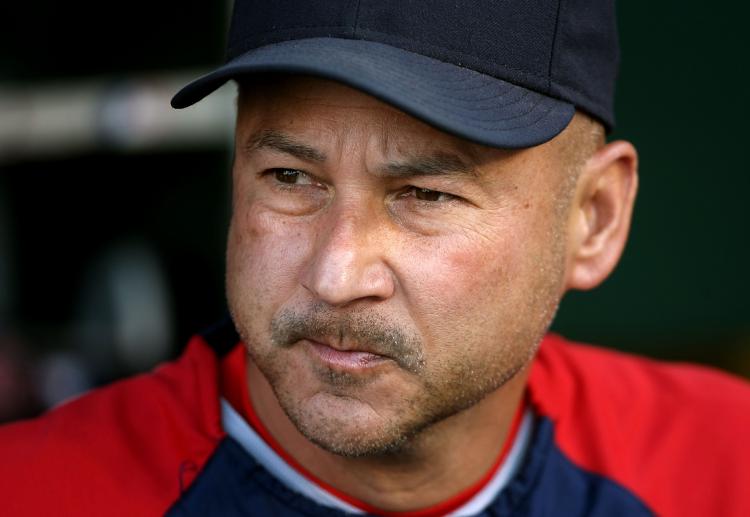
Good job, Terry. 'Bye.

Barack Obama, and indeed all leaders, current and future, have reason to heed the results of meeting to be held today between the ownership of the Boston Red Sox and the traumatized team’s manager of eight years, Terry Francona. Francona will learn whether his tenure—he is beyond question the most successful manager in the team’s century-plus existence—will end as a consequence of his squad’s historic and inexplicable collapse, robbing it of the play-off spot that seemed guaranteed less than a month ago. Continue reading

Major League Baseball, Forgivability, and List Ethics

Unforgivable?*

Bleacher Reports is an enjoyable sports website, and it gives opportunities to aspiring writers and bloggers, some of whom are quite talented.  In addition to typical opinion pieces and reporting, the site has a fondness for lists, often trivial to the extreme, like “The 50 Ugliest Athletes of All Time.” The titles are all misnomers, because there is almost never any criteria given for the choices or their relative ranking. An accurate title would be, “The Fifty Athletes I Think Are The Ugliest.”  And of course, who cares? (Don Mossi, by the way, was the ugliest athlete ever, no matter what anybody says.)

A recent list, however did bother me. It is called “The Fifty Most Unforgivable Acts in Baseball History,“ and much of the problem with it lies in the title itself. If you are going to write about history, there is a duty perform diligent research, even for a silly online list. Misrepresentations online have a large probability of misleading people.  The title is a misrepresentation, like “The 50 Ugliest Athletes,” but unlike that list, there is some harm done. The list isn’t close to complete; it isn’t consistent; it isn’t well-researched. I’d bet that the author, Robert Knapel, wrote it off the top of his head.  Anyone who looked at the list and assumed, as the author represents, that these are truly the low points—“the dark side,” as the author puts it—of major league baseball would be seriously misinformed.

There are unequivocally, probably universally recognized incidents and events that are infinitely worse that most of the items on the list.  Just a  few samples: Continue reading