I’m not going to make a habit of it, but today I’m doing a second short form post. First, I’m backed up, thanks to losing a day; second, There was no warm-up for this date, since I posted yesterday’s overview this afternoon; third, I’m not feeling so hot, after all the tests, anxiety, and no sleep at all.
1. Hospital items.
- What’s the ethical way to handle people like this? My night nurse, whom I saw a LOT of and who was terrific, saw me watching “Jurassic Park III” on the hospital room TV and commented that she loved dinosaurs. Then she said that it must have been hard for the people living in caves to survive with all the raptors running around, and that it was a good thing the Great Flood killed the dinos off.
In the past, I have tried to explain—nicely—that this kind of fake natural history is nonsense and impossible in too many ways to count, discussed the timeline and the fossil record, and tried to bring them into something approaching enlightenment. This has never done any good at all if my audience was over 30, and usually just made them angry and convinced that I’m the idiot as well as a pagan.
Yet ignorance is a social disease, especially this particular variety. I don’t think it’s responsible or kind to enable the spread of misinformation.
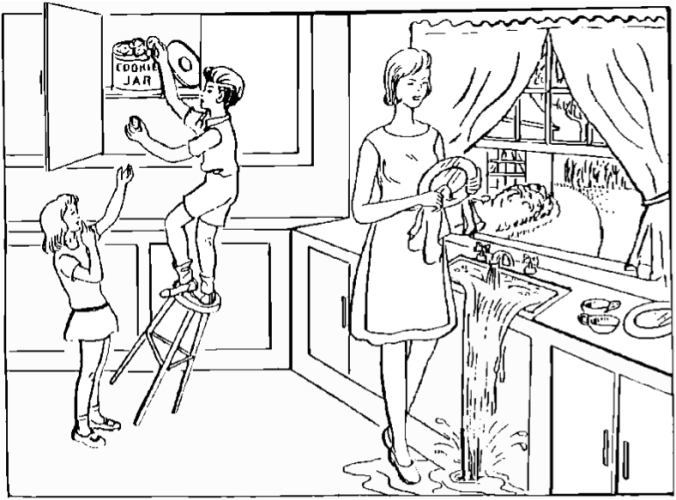
- That picture above is part of the NIH stroke protocol, which I now know by heart having been subjected to it several times. When was it drawn, 1958?
Could it be more gender stereotyped?
- About half the hospital personnel under 35 had unpronounceable foreign names, recalling this article which I read last week, Once upon a time, immigrants coming to the U.S. wanted to have American-sounding names. It signaled a desire to commit to the culture, just like learning the language and adopting American values. My mother’s bothers and sister had Greek first names, but outside the home the family used the Anglicized versions of them. My mother was Helena, and called herself Eleanor.
This was, culturally, a much healthier tradition than what we have now—unifying, respectful, responsible. I see ostentatiously foreign-sounding names as defiant, and signaling a determination to avoid assimilation, to enjoy the rights and privileges here, without fully committing to them. I definitely regard any problems and inconvenience resulting from keeping the names Ngongsa or Ijeoma entirely self-inflicted. Continue reading →
 Ethics Alarms