Morning Ethics Warm-Up: 8/2/17

Gooooood morning!

(I don’t know about you, but it’s always a good morning for me when the Boston Red Sox win the most exciting game of the baseball season so far with a three-run homer in the bottom of the ninth after what should have been the last out reached first because  a swinging strike three went through the catcher for a passed ball….)

1. Yesterday, the gang at HLN were laughing and guffawing over the fact that someone sent e-mails purporting to be from Anthony Scaramucci to various White House officials and fooled the recipients into responding. Such publicity is what hoaxers dream about. This is why we have despicable fake news sites like “The News Nerd” and others. This is why Facebook feels it needs a special task force to search out and destroy false representations. CNN and other news media also treated the e-mails as significant news—more newsworthy, for example, than the Pakistani crooks the Democratic party had handling sensitive e-mails and other data. Why is this news, other than the fact that the “bad guys” were fooled, in the warped perspective of “resistance” journalists? More to the point, why is it funny? Why is the news media encouraging hoaxes by rewarding them with the notoriety they crave, so they can puff up their little pigeon chests and say, “See? I matter!”

The reports attempted to bootstrap the story by explaining that fake e-mails are how cyber-predators can get access to e-mail accounts. Those phishing episodes, however, involve the credulous recipients clicking on links in the message, which did not occur here. That’s what Hillary Clinton and John Podesta did. I don’t recall HLN chortling about that, however.

2. I’m still waiting for the news media’s apology to Sarah Palin. The news from UK socialized medicine today:

“Obese people will be routinely refused operations across the NHS, health service bosses have warned, after one authority said it would limit procedures on an unprecedented scale.Hospital leaders in North Yorkshire said that patients with a body mass index (BMI) of 30 or above – as well as smokers – will be barred from most surgery for up to a year amid increasingly desperate measures to plug a funding black hole. The restrictions will apply to standard hip and knee operations. The decision, described by the Royal College of Surgeons as the “most severe the modern NHS has ever seen”, led to warnings that other trusts will soon be forced to follow suit and rationing will become the norm if the current funding crisis continues.”

Continue reading

Morning Ethics Warm-Up: 7/21/17

Good Morning!

1. There was one of those moments in a Major League Baseball game yesterday that teaches life lessons in character, and ethics for anyone who is paying attention.

The Boston Red Sox were playing the Toronto Blue Jays in an afternoon game at Fenway Park. Boston led 3-1 in the second inning, but the Red Sox pitcher,  veteran Doug Fister, was struggling with an uncharacteristic control lapse: he walked his third batter in the inning, and also had given up a couple of hard-hit balls that suggested that a gaggle of runs and a blown lead were inevitable. Then, mirabile dictu, Fister caught a break. The next Toronto batter swung mightily and lofted an easy, lazy pop-up to the infield. If there had been one out rather than two, it would have been called an automatic out under the Infield Fly Rule. Everyone, including Fister, who is fighting to preserve his spot on the Sox roster as well as his flagging career, breathed a sigh of relief. The Toronto batter slammed his bat to the ground. Settling under a pop-up not any more difficult than those he had successfully caught as a Little Leaguer was Red Sox utility man Brock Holt, a second baseman this day. He is much admired for his versatility, energy and reliability. Holt is also trying to revive his career after a frightening, season-long battle with vertigo, as well as to show the team that he can fill a yawning void at third base.

Holt dropped the ball. It bounced off his glove, as the Toronto baserunners were charging around the bases at the crack of the bat, since there were already two outs. Two of them scored, and later two more after Fister surrendered hits in te lengthened inning, making the bounty bestowed by Holt’s muff four runs. Fister was soon out of the game, and was charged with his team’s eventual two-run loss by an 8-6 score. (Today’s headline in Boston: “Doug Fister’s Future As Starter Uncertain After Loss To Jays”).

Yet Fister never shot an angry glance at Holt. He’s played the game; he knows how mistakes and random bad luck can turn everything around in an instant. He probably has dropped a similar ball in a crucial situation: I know I’ve done it, at second base, losing a company soft-ball game. Holt trotted to the dugout, got supportive pats on the back and fanny from his team mates, and played the rest of the game with his head high and his skills on display. There is no doubt that he felt terribly about the play, but Holt  didn’t hide under a rock, rend his garments, or make a big display of anger and frustration to signal to the hometown crowd—which didn’t boo or jeer him at any point in the game.

That’s life, as my father used to say, and this is how ethical people handle life. Disaster strikes out of a confluence of factors (a very bright sun undoubtedly helped Holt miss the ball, but professional ballplayers learn to cope with the sun) and all we can do, if we are competent at life as well as fair, responsible and brave, is to accept responsibility, not make excuses, and not allow such events to diminish or destroy us. Both Fister and Holt displayed the character necessary to do that. Neither blamed the other, and no one blamed them. Tomorrow is another day.

Play Ball!

2. Professional troll Ann Coulter is having a public spat with Delta Airlines that reflects badly on both of them. Continue reading

Morning Ethics Warm-Up: 7/9/17

GOOD MORNING!

1. The Pope gave an interview saying, in Italian of course, that the United States of America, which he offensively grouped with Russia, China, North Korea and Syria, have “a distorted vision of the world.”

The Pope, who has spent the bulk of his adult life seeing the world through the narrowly focused lense of the Catholic Church, and who hails from a South American leftist state, thinks that the United States has a distorted view of the world. Wow. Besides the stunning hubris of this pronouncement, the Pope is engaging in an abuse of position and influence, and a remarkably short-sighted one. If he wants to exercise any influence at all over citizens of the world who have not been indoctrinate since childhood to regard him as a godly sage by virtue of a secret political vote by a bunch of superannuated Cardinals, he has to earn credibility by the evident quality of the statements he makes. Later on, in the same interview, the Pope made it clear that his  undistorted vision of the world involves endorsing open borders.

I think the Pope has a distorted view of the trustworthiness of celibate men who have access to young boys, so I really couldn’t care less what he thinks about U.S. policies when he can’t objectively and responsibly process the terrible realities in his own organization.

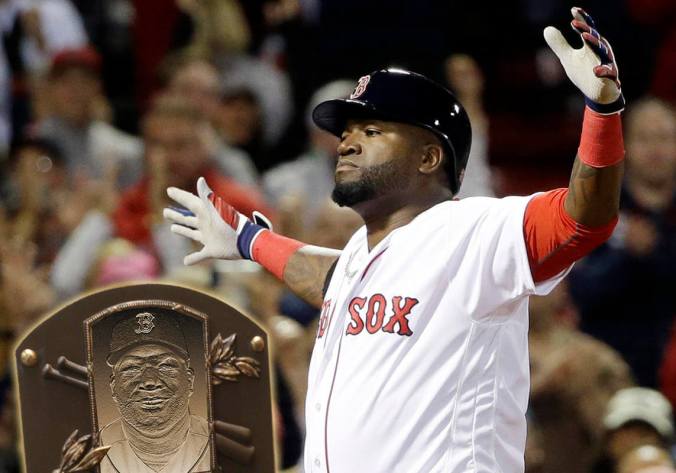
2. I’ve been reading and  listening to sportswriters since I was ten, and I have to say that I have little respect for the critical thinking skills of most of them. I was gobsmacked by an example of why this morning, as Steve Buckley, a long-time baseball reporter for the Hub’s #2 paper The Boston Herald, opined in a virtue-signaling mess of a column that “War heroes, not David Ortiz, deserve streets named after them.” David Ortiz, in case you live in a fallout shelter, is the recently retired iconic slugger of the Boston Red Sox. The team recently retired his number, and in a related honor, the city of Boston re-named a small street near the park after him. It had earlier named one of the many bridges in the city after him.

“We should reserve the streets, the corners, the squares, the playgrounds, to remember the men and women who died serving our country.” Buckley writes. Why? He never really gives a reason, he just tells us that this is the way it should be.  Why are the veterans who die in military service more honor-worthy than those who risked their lives but survived? Since when are society’s only real heroes military heroes? Is he a time-traveler from Ancient Sparta? Do contributions to society during peacetime or on the home front matter less to a community than what happens on a foreign battlefield?

What about fallen police officers and fire fighters? Not worth a street name? Philanthropists, inventors and innovators who made life better for all, launched businesses, created jobs, helped families and neighborhood thrive—these don’t warrant a little bit of  local immortality?  David Ortiz made millions of people happy. In a racially divided city, Ortiz, a black man, became the face of Boston sports, at least for those who were nauseated by Tom Brady’s smug countenance.  That was as important as his clutch home runs. Trivializing Ortiz’s contributions to Boston (the relationship of Bostonians to their infuriating baseball team is too complex to explain quickly to anyone who hasn’t been part of it) is trivializing the importance of entertainment and popular culture, which is nothing short of ignorant, especially in the United States. In the District of Columbia, a school is named after Duke Ellington. Good. In Los Angeles, for decades until California leftists finally removed it, a major airport was named after John Wayne. Excellent. And in Boston, the largest tunnel is named after Ted Williams, but maybe Buckley thinks that’s OK because Williams was a combat flier in two wars. (Pssst! Ted’s tunnel isn’t bearing his name because he crash-landed that jet, Steve!)

As a society and a species, we have a duty to remember those who have contributed to the culture we enjoy. There aren’t enough streets, schools, bridges and parks to honor them all, but they all deserve to be honored. Continue reading

From “The Ethics Incompleteness Principle” Files: Anomalies And The Boston Red Sox Uniform Number Retirement Standards

The Ethics Incompleteness Principle argues that no rule works in all circumstances, so you have to be alert to when making exceptions is appropriate. The concept is illustrated by how the Boston Red Sox retire uniform numbers.

I will explain…

Major League Baseball teams retire the uniform numbers of players who they want to honor in perpetuity. The number is displayed somewhere in the ballpark, and no player on that team can ever wear it again.

Doing this requires standards, however, or else the honor becomes diluted and the retired numbers include those that seem increasingly strange and arbitrary as time goes by. The New York Yankees have retired so many uniform numbers that no single digit will ever again grace the back of a Yankee star. Moreover, several of the individuals who sanctified those numbers include players who never were and never will be called “great,” like Bernie Williams, who led the league in exactly one category, once, in his entire career, and whose Similarity Score index contains all very good but not great outfielders, the most similar being Paul O’Neil, a former Yankee star whose uniform is not retired. Another retired Yankee uniform number is that of Roger Maris, who only played for the Yankees for six years, many of them unremarkable. Having one’s uniform retired in the Bronx along with those of Babe, Lou, Mickey and Joe appears to mean “Somebody in charge really liked him.”

Well, at least that’s a standard that is easy to maintain.

The Boston Red Sox, in contrast, were not going to have a retired uniform glut. The franchise established an iron set of criteria for the honor, with three prongs:

1. The player must be an inarguable Red Sox great who played at least 10 years with the team.

2. The player must be an elected member of the Baseball Hall of Fame in Cooperstown.

3. The player must retire as a member of the Red Sox.

Today the Red Sox are retiring the number of David Ortiz, who retired himself at the end of last season. While he might well be voted into the Hall of Fame, he may not, for complex and controversial reasons. The Red Sox, who could reasonably argue that Ortiz has been the most popular and important player in the team’s history (though Ted Williams was the best) rightly concluded that to delegate to the  Hall of Fame voters the determination of whether Ortiz’s #34 would be retired with lesser Boston heroes made no sense. Thus his uniform number will momentarily obliterate that second prong, which had already been waived once. In that case, the beneficiary was Johnny Pesky, a classic anomaly and line-blurrer. Continue reading

Ethics Quiz: The Boston Red Sox And “Hate Speech”

SHHHHHHHH!

I don’t know why it is that the Boston Red Sox are leading all of baseball in ethics controversies, but here’s the story:

The Red Sox have been playing the Orioles the last four days, in a series marked by rancor arising from an incident last week that has metastasized into an exchange of words, accusations and attempted beanballs.  After the first game in this series,  Orioles’ outfielder Adam Jones claimed that he had heard racial epithets from the stands, and a bag of peanuts had been thrown at him.  Boston  and the Red Sox in particular have a dubious racial history (the team was the last in baseball ito have a black player), so this immediately became a big story, with the Sox, MLB, the city, and even the governor expressing horror, regret, and outrage. No fan or Orioles player has stepped  forward to substantiate Jones’ accusations. I don’t doubt him, but that is relevant, because in the entire episode as it unfolded, conclusive evidence has been deemed unnecessary. Accusations alone confer guilt. In the next game, Fenway gave Jones a long standing ovation on his first trip to the plate, saying, in essence, “We’re sorry you were treated this way, and we reject that disgusting conduct.” Good. That is the Fenway Park I know.

Then it was reported that another fan who was in the crowd at Fenway  the next night has been banned for life by the Red Sox. Team president Sam Kennedy said that the fan received the lifetime ban for using a racial slur to to describe a Kenyan woman who sang the National Anthem before the game, in a conversation with another fan.

Calvin Hennick, a Boston resident bringing his son to his first Red Sox game as a present for his sixth birthday, wrote on Facebook and confirmed to the Associated Press  that a  fan sitting near him used “nigger” when referring to the National  Anthem singer that night. Hennick asked the man to repeat what he had said, and when he did,Hennick summoned security. The Fenway security ejected the offending fan, who denied using a racial slur….you know, like Giles Corey denied being a witch.

Kennedy thanked Hennick, who is white, for coming forward. Says NBC baseball writer Craig Calcaterra, who once was a lawyer and presumably understood basic principles of justice, process, and fairness, “Kudos to the Red Sox for acting so swiftly.”

The Red Sox acted swiftly, all right.

Your Ethics Alarms Ethics Quiz of the Day is this...

Is it fair, proportionate, reasonable and just to ban a baseball spectator for life under these circumstances?

Continue reading

Baseball’s Childish Ethics: An Embarrassing Case Study

It is often said that baseball is a child’s game, but that doesn’t excuse professional baseball players holding on to childish traditions regarding the “right way to play the game” that are not right, frequently dangerous, and mind-numbingly stupid to boot.

Last week, beginning a weekend series in Baltimore, the Boston Red Sox were enmeshed in a close game., losing 2-0, with time running out. With the Orioles batting and Manny Machado (Non-baseball fans: he is the very young, very large, very talented O’s third-baseman, a joy to watch and already a super-star) on first, Sox shortstop Xander Bogaerts fielded a slowly bouncing ground ball and flipped a weak throw to Dustin Pedroia (Non-baseball fans: he is the small, cocky, excellent Sox second baseman, the best fielder at his position in 2016, a former MVP, and the acknowledged leader of the team now that David Ortiz has retired). Pedroia caught the ball in a first baseman’s stretch, awkwardly, just in time to force out Machado: a double play was out of the question. Machado, however, came into the base hard, sliding late, and barreling right over the bag with his spikes raised. (It looks on the tape as if one foot was elevated  when it hit the base.) Machado’s momentum took him into Pedroia, knocking him down and spiking him, as well as injuring his knee and ankle. Machado appeared to try to catch the Sox player after he passed over the base.

There was no question that Machado was out, but the Red Sox manager argued that the slide was illegal: since last year, runners are not allowed to try to break up double plays by intentionally sliding at opposing fielders. Late slides, slides not intended to allow the runner to get to second base, and sliding past teh base to upend the second baseman or shortstop will be called as obstruction, and the batter is then called out to complete the double play. The umpires disagreed with Farrell, and that is still being debated; it’s not relevant here. Pedroia, meanwhile, was led off the field, obviously injured.

After the game, Red Sox TV analysts and former players Jim Rice (Sox Hall of Fame Sox slugger) and Steve Lyons (an opinionated jackass) chuckled about what was coming. Ancient baseball tradition required, they explained, that the Red Sox “protect their player” who was injured by a careless, inept, or intentionally illegal slide. This meant, they explained, that a Red Sox pitcher in the next game was obligated to hit Machado with a pitch in retaliation. “He knows it!” said Rice. “He’ll be expecting it.” Lyons nodded and laughed. (Full disclosure: I hated Steve Lyons as a player, and I loathe him as an analyst.)

This is indeed an “unwritten law” of baseball, and one of the most unethical. I have seen it countless times, and the result is often fights and injuries, as well as suspensions for the pitcher’s involved and outright beanball wars. The theory is that you can’t let a team “intimidate” you, so a message must be sent. The message is “tit for tat” or “Mob Ethics”: you hurt one of ours, we hurt one of yours. Sometimes the situation requires a pitch directed at other team’s star player, when that team’s scrub injures the pitcher’s team’s star. In this case, the target was an easy call, for Machado was both the miscreant and is also the Orioles best player. Continue reading

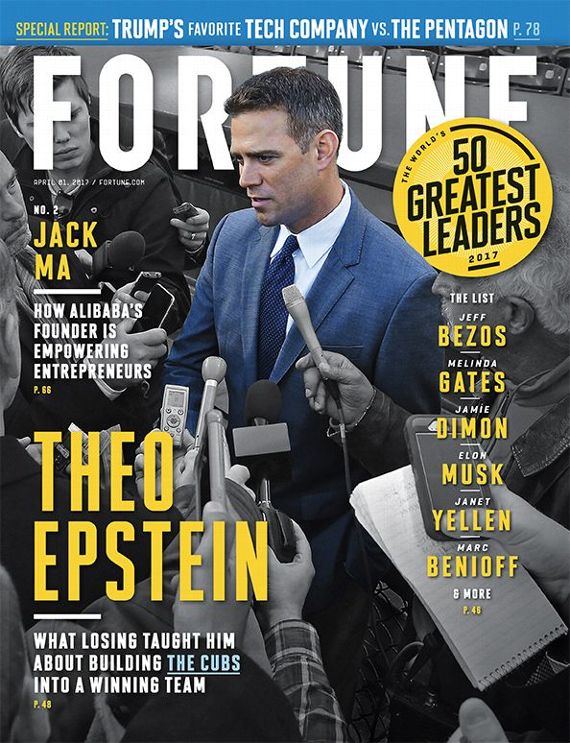
Ethics Quote Of The Month: Chicago Cubs President Theo Epstein

“That is ridiculous. The whole thing is patently ridiculous. It’s baseball–a pastime involving a lot of chance. If [Ben] Zobrist’s ball is three inches farther off the line, I’m on the hot seat for a failed five-year plan.”

—-Theo Epstein, president of the Major League Baseball’s 2016 World Champion Chicago Cubs, upon learning that Fortune Magazine had chosen him #1 among “The World’s Greatest Leaders” in a click-bait list released last week.

Thank-you, Theo, for explaining moral luck and the perils of consequentialism to the public. When it came down to the final innings of Game 7 in last year’s World Series, it looked for a while like Cubs manager Joe Maddon was about to blow the chance to win an elusive title after over a century of frustration by keeping his clearly gassed closer on the game. That his risky decision didn’t make Maddon a goat for the ages and Epstein one more name in the long list of Cubs saviors was pure moral luck—the element of chance that often distinguished heroes from villains. winners from losers and geniuses from fools in the public’s mind—and gross consequentialism, judging decisions by their uncontrollable results rather than their objectively judged wisdom and ethics at the time they were made.

If the Cleveland Indians had won that crucial game in extra-inning, no matter how, Epstein might have made Fortune’s list (I doubt it), but he would have been nowhere near the top. Continue reading

The Wrenching Problem Of David Ortiz, The Human Slippery Slope

papi_fame

Ethics conflicts force us to choose when multiple ethical principles and values point to diametrically opposed resolutions.  Often, a solution can be found where the unethical aspects of the resolution can be mitigated, but not this one. It is a tale of an ethics conflict without a satisfactory resolution.

I didn’t want to write this post. I considered waiting five years to write it, when the issue will be unavoidable and a decision mandatory. Today, however, is the day on which all of Boston, New England, and most of baseball will be honoring Red Sox designated hitter David Ortiz, who will be playing his finale regular season game after a 20 years career.  His 2016 season is quite possibly the best year any professional baseball player has had as his final one; it is definitely the best season any batter has had at the age of 40 or more. Ortiz is an icon and a hero in Boston, for good reason. Ortiz was instrumental in breaking his team’s infamous 86-year long “curse” that saw it come close to winning the World Series again and again, only to fail in various dramatic or humiliating ways. He was a leader and an offensive centerpiece of three World Champion teams in 2004, 2007, and 2013. Most notably, his record as a clutch hitter, both in the regular season and the post season is unmatched. You can bring yourself up to speed on Ortiz’s career and his importance to the Red Sox, which means his importance to the city and its culture, for nowhere in America takes baseball as seriously as Beantown, here.

That’s only half the story for Ortiz. Much of his impact on the team, the town and the game has come from his remarkable personality, a unique mixture of intensity, charm, intelligence, generosity, pride and charisma. After the 2013 terrorist bombing of the Boston Marathon, which shook the city as much as any event since the Boston Massacre, Ortiz made himself the symbol of Boston’s anger and defiance with an emotional speech at Fenway Park. Then he put an exclamation point on his defiance by leading the Red Sox, a last place team the year before, to another World Series title.

Performance-based arguments against electing Ortiz to baseball’s Hall of Fame are, at this point, untenable. Entering his final game, Ortiz had 541 home runs, (17th all-time), 1,768 RBI, (22nd), and 632 doubles, (10th).  He is only the third player in history to have more than 500 home runs and 600 doubles.  He ranks among the greatest post season hitters in baseball history with 17 home runs, 60 RBI and 21 doubles. His postseason average is .295 with an on base percentage of .409, a slugging percentage of .553 and a .962 OPS (the sum of the two.) Most great players did worse in the post season than during the regular season, for the obvious reason: the competition was better. Ortiz was better, which informs regarding his character and dedication.

The one lingering argument against admitting Ortiz to the ranks of Ruth, Williams, Aaron, Mays, Cobb, Hornsby, Griffey and the rest is that he has spent most of his career as a designated hitter, the American League’s 1973 invention, much reviled by National League fans and baseball traditionalists, designed to allow real batters relive fans from watching pitchers make fools of themselves at the plate. This makes him “half a player,” the argument goes. No designated hitter has ever been elected to the Hall, so that argument has prevailed so far. It was always a weak one—how did being lousy fielders like so many Hall of Fame sluggers make them greater players than one who never hurt his team at all with his glove? Now that a designated hitter has shown himself to be in the elite ranks of all the greatest batters, the argument sounds more like hysterical anti-DH bias than ever.

I should also note, before getting to the main point of this post, that I love Ortiz. I am a lifetime Red Sox fan, Boston born, bred and marinated, and Big Papi is special. He is one of the most interesting and admirable sports figures of my lifetime, and what he has meant to my city and my favorite sport is beyond quantifying. Few great athletes demonstrate persuasively that they are also great and admirable human beings. Ortiz is one of them.

Nonetheless, it is crucial that David Ortiz not be elected to the Hall of Fame when he becomes eligible five years from now, and that he never be admitted. On the matter of assessing the fitness for baseball honors of those who defiled the game by inflating their statistics, changing the outcome of games and harming players who abided by the rules, David Ortiz is a human slippery slope. Ortiz deserves to be in the Hall based on all admission criteria, including character and sportsmanship, but his admission will open the doors wide for players who are unfit, polluting the Hall of Fame and baseball’s values forever.

It’s not worth the trade off. This is the ethics conflict: one cannot be fair and just to “Big Papi” without doing widespread harm to the sport, and I would argue, the entire culture. Continue reading

Well, THAT Question’s Answered: No Parting Gifts For A-Rod

No-GiftI wrote in an earlier Ethics Quiz that the retirement of Yankee Cheat and Head Creep Alex Rodriguez tomorrow would put the Boston Red Sox in a difficult position tonight. Should they honor him, as the Yankees will honor Red Sox star David Ortiz in his final appearance in Yankees Stadium? Or should they  eschew any recognition, since the Boston fans hate Alex’s guts?

Apparently, as often is the case, the problem was not as difficult as my ethical alarms were telling me. The Sox won’t even give A-Rod a cupcake. There will be no recognition of his career, other than the symphony of boos that will rain down on him from the Fenway Faithful every single time he comes to bat.

Good.

Ethics Quiz: Boston’s A-Rod Dilemma

newsday-AROD

This is a really, really hard one.

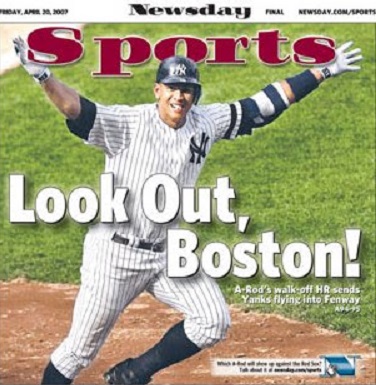
Over the weekend, as reported here, Yankee superstar/pariah/cheating jerk for the ages Alex Rodriguez announced that he would “retire” after next Friday night’s game. He’s not really retiring, of course. Like almost everything involving A-Rod, lies and cover-ups reign. Since the Yankees were going to have to pay the rest of his contract to the tune of 27 million bucks either way, they told Alex that they could release him, thus ending his career on a sour note, or allow him to pretend to make the decision to leave the game himself, which would be better PR for all concerned.

However, the announcement presents a problem for the Boston Red Sox. A-Rod’s next-to-last game is Thursday night in Fenway Park, and a player with Rodriguez’s astounding career on-field achievements would typically warrant an on-field salute, like the Sox gave Yankee icon Derek Jeter when he retired. The problem is that Red Sox fans don’t like or respect A-Rod, and they shouldn’t. No baseball fan should. He disgraced the game with his drug use and lies; was an unsportsmanlike presence for most of his career, and will not reach the Hall of Fame despite one of the best careers ever unless the Hall junks all of its character requirements.

Yet reciprocity raises its ethical head. David Ortiz, the beloved Red Sox slugger, is also retiring after this season, and the Yankees have planned to give him a big send-off when Big Papi plays his last game in Yankee stadium. How can the Red Sox snub A-Rod, and expect the Yankees to honor their hero? If the Red Sox do hold a ceremony for Rodriquez, will Sox fans use it as an opportunity to heap well-deserved abuse on Alex one last time? If Sox fans fill Fenway with boos, will Yankee fans reciprocate by ruining Ortiz’s moment in New York? (I would give my guess on this, but it might expose a long-held bias against Yankee fans.)

Your Ethics Alarms Ethics Quiz of the Day:

What is the most ethical way to handle this awful situation?

Continue reading