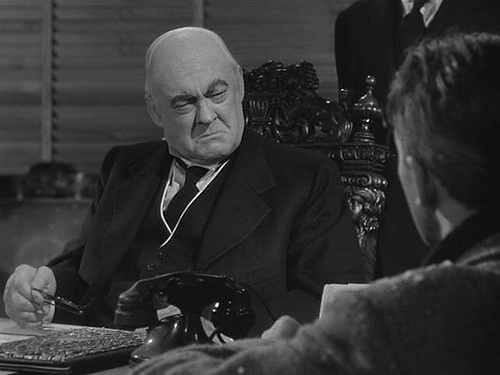
Unethical Manager Writes Advice Columnist For Affirmation, Gets Head Handed To Him.

mr-potter

Well and rightly done, Allison Green!

Allison Green, a management advice blogger, received this jaw-dropping question from a relative of Mr Potter:

I manage a team, and part of their jobs is to provide customer support over the phone. …One employee asked to come in two hours after the start time due to her college graduation ceremony being that same day (she was taking night classes part-time in order to earn her degree). I was unable to grant her request because she was the employee with the lowest seniority and we need coverage for that day….I told this team member that she could not start two hours late and that she would have to skip the ceremony. An hour later, she handed me her work ID and a list of all the times she had worked late/come in early/worked overtime for each and every one of her coworkers. Then she quit on the spot.

I’m a bit upset because she was my best employee by far. Her work was excellent, she never missed a day of work in the six years she worked here, and she was my go-to person for weekends and holidays.

…I want to reach out and tell her that quitting without notice because she didn’t get her way isn’t exactly professional. I only want to do this because she was an otherwise great employee, and I don’t want her to derail her career by doing this again and thinking it is okay. She was raised in a few dozen different foster homes and has no living family. She was homeless for a bit after she turned 18 and besides us she doesn’t have anyone in her life that has ever had professional employment. This is the only job she has had. Since she’s never had anyone to teach her professional norms, I want to help her so she doesn’t make the same mistake again. What do you think is the best way for me to do this?

He also said that on one occasion he had granted a similar request “because they had concert tickets that they had already paid for, but this was a special circumstance because there was cost involved.”

!!!!!

Before showing you Allison’s response, here’s mine: Continue reading

The Amazing Saga Of Big Papi And Maverick Schutte: This One Has Everything, Folks: Baseball! The Bambino! Courage! Kindness! Compassion! Heroics! Moral Luck! Hubris! Consequentialism! And Dammit, I’m Crying Again

Let’s see if I can through this to the Ethics Quiz portion without shorting out my laptop.

Maverick Schutte, a 6-year-old from Cheyenne, Wyoming, has required over 30 surgeries, including five open chest procedures,  to treat a heart condition.He still must be hooked up to a ventilator most of each day to allow oxygen to reach his lungs, and more surgery will be needed, as he is in constant danger of heart failure.

The child’s greatest joy is baseball, and he has adopted his father’s team, the Boston Red Sox, as his passion. The Children’s Miracle Network put the family in touch with former Red Sox player Kevin Millar, now an MLB host and broadcaster, and Millar contacted Red Sox slugger David Ortiz, Maverick’s favorite, after the family explained that Maverick was in the hospital again and needed a morale boost. With Millar, Ortiz made a video for Maverick, ending with Ortiz promising to hit a home run that night, just for him. I didn’t believe it when I heard the story, but it was true. “Stay positive, keep the faith, and I’m going to hit a home run for you (Friday night),” Ortiz says in the video. “Remember that.”

Your Ethics Alarms Ethics Quiz for today before, as Paul Harvey would say, you learn “the rest of the story”…

Was it ethical for Ortiz to make such a promise to Maverick?

Continue reading

KABOOM! ESPN Achieves A New Low In Unethical Journalism: Misinforming The Public Out Of Spite

If you told me ESPN COULD make my head explode, I wouldn't have believed you...

If you told me ESPN COULD make my head explode, I wouldn’t have believed you…

ESPN has been foundering in a sea of ethical ignorance for some time now, but this was shocking even for them.

In a petty exercise to express its disdain and and anger at dismissed baseball commentator Curt Schilling, the sports network excised an entire section of its documentary on the legendary 2004 American League Championship play-offs when it was shown last night prior to the scheduled Red Sox-Yankee game. I cannot think of a single example of unethical journalism by a major outlet so blatant and so offensive.

Let’s go back a bit. Schilling is an outspoken religious conservative, active on social media. He was suspended from his baseball game broadcasting duties last season after comparing Islamic radicals to Nazis in a Twitter post—not all that unreasonable, actually, but if ESPN has a policy against its employees making controversial political statements on social media, and apparently it does, Schilling was asking for trouble.

Indeed, Curt has nothing if not integrity when it comes to expressing himself, and he could not resist commenting on the transgender bathroom controversy, re-tweeting a particularly ugly meme on the issue:

transgender bathroom tweet

ESPN fired Curt. He had earlier in the year opined in a radio interview that “If I’m gonna believe, and I don’t have any reason not to believe, that she gave classified information on hundreds if not thousands of emails on a public server after what happened to General Petraeus, she should buried under a jail somewhere.” Allowing for hyperbole, that’s a perfectly legitimate position to take, but again, if ESPN doesn’t want Curt, who it was paying a million bucks or so, to take shots at someone it believed its audience members were fond of,  it can instruct its employees accordingly. It expressed its objections to Schilling, and he tweeted the meme anyway. Continue reading

Ethics Hero: Boston Red Sox Pitcher Steven Wright

beaning

On Sunday, Boston Red Sox knuckleballer Steven Wright hit Toronto first baseman Chris Colabello square in the helmet, and not with his usual floating trick pitch, but with an 87 mph fastball, making a frightening sound and causing  Colabello to collapse on the field.  After being checked out by the team trainer and allowing the replay of his life that flashed before his eyes to wind up, Wright’s beanee took first base and remained in the game.

Wright appeared visibly upset on the mound,and apologized to Colabello when he made his way to first.

The next morning, Colabello found an expensive bottle of liquor in his locker, a present from Wright. He was surprised. “He went above and beyond in my eyes,” the player with the sore head said. “It was pretty obvious there was no intent [to throw a beanball]. You could see by his reaction.” Continue reading

The Manager, The Hot Reporter, Conflicts and Professionalism

moranfarrell

It’s nice of my favorite baseball team to supply me with ethics stories, don’t you think? This one has management ethics, relationship ethics, journalism ethics, sexual harassment and professionalism.

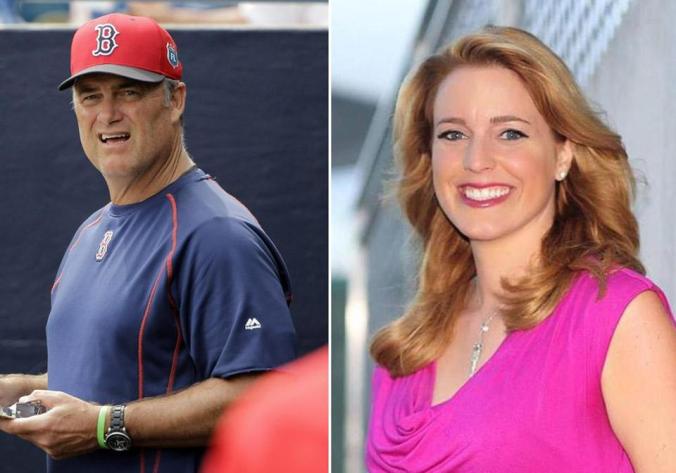
The Boston Globe reported last week that Boston Red Sox manager John  Farrell and Comcast SportsNet New England reporter Jessica Moran, who covered the team,  were romantically involved. Moran promptly resigned. This quickly degenerated into the usual ethically muddled discussion by members of the public who watch George Stephanopoulos interview Hillary Clinton and see nothing amiss, and have been so badly taught the ethics basics that they couldn’t identify a conflict of interest if they tripped on one, and members of the news media, who, if anything, are worse.  Among the questions being floated, and their somehow elusive answers…

These are consenting adults. Why aren’t they free to have a relationship?

Because they are professionals, with special duties to their constituencies and stakeholders, and the relationship between a reporter and her subject undermines independence, loyalty, trust and competence.

Why is it always the woman the one who has to lose her job?

It isn’t. The journalist has to lose her job, because the journalist breached the basic ethics of the profession. The baseball manager’s conduct is wrong,  but comparatively tangential to his duties at worst. It is still seriously unethical, however, and undermines team culture and the status of other women who have duties involving the team.  Farrell, by dating Moran, was sending a message to his players and other team personnel that these women are legitimate targets for sexual courtship rather than workplace colleagues.  The relationship may have constituted third party sexual harassment, making other women feel as if team leadership had sent the message that they weren’t to be taken seriously as professionals.

Why is everyone making a big deal about this? She’s a beautiful young woman, covering a team of men. Isn’t this to be expected? Continue reading

Fan Ethics Guidance From A Red Sox Fan To Washington Nationals Fans (And Others): Booing Your Manager Is Unethical

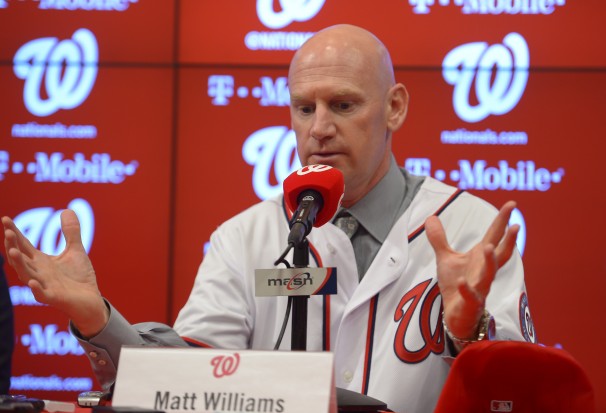
Matt WilliamsOn September 9, following his press conference in the aftermath of a horrible and devastating loss to the New York Mets, the Washington Nationals manager (the reigning Manager of the Year from 2014!), was vigorously booed by a group of fans (the rich ones) in the next-door Presidents Club dining room, who banged on the press conference room’s glass walls. The team was pronounced a shoo-in to the World Series, you see, before the season started, and that loss made it clear, if it wasn’t already, that the Nats probably weren’t even going to make the play-offs.

No doubt about it: Matt Williams, the team’s calm, amiable, incompetent manager, is part of the problem, but he was just as bad last year, just much luckier. (See: moral luck; consequentialism) He was hired with no managerial experience at all, just the experience of being a (pretty good) major league player for quite a while, and the truth is that managing a baseball team requires judgment, tactical expertise, courage, flexibility, facility with statistics and leadership, as well as experience. Williams isn’t bereft in all of these areas, but enough of them to make consistent success as a manager unlikely. Because the boo-attack occurred in front of the press corps and came from the season ticket types rather than the bleachers and beer crowd (“You’re a BUM!!!”), it immediately became a big story in Washington. Today, one of those angry fans wrote an explanation and alleged justification of his actions in the Washington Post.

He wrote in part:

“So, after staying till the bitter end of the latest heartbreaking loss, and after watching Williams wrap up another tedious Q&A filled with a series of cliched answers, a group of mid-30s fans who have been cheering this team from Day 1 had seen enough. A defiant Williams exited the podium, and we booed … we booed hard. It felt good. It felt like Williams needed to hear it — and it felt like the Nats brass needed to, as well…We’ll always support this team, but on a night like that night, sometimes enough is enough. When it takes 54 excruciating pitches to get three outs in a season-killing seventh-inning meltdown, and when the manager has pushed all the wrong buttons since last October, there’s not much else a fan can do…but boo.”

This fatuous non-wisdom comes from Rudy Gersten, an executive director at a public policy organization, and presumably he speaks for his similarly jeering friends, “an ethics and compliance lawyer, an IT project manager, [and ]a construction senior project manager.” Continue reading

Ethics Dunces: Boston Red Sox Players

owens pole

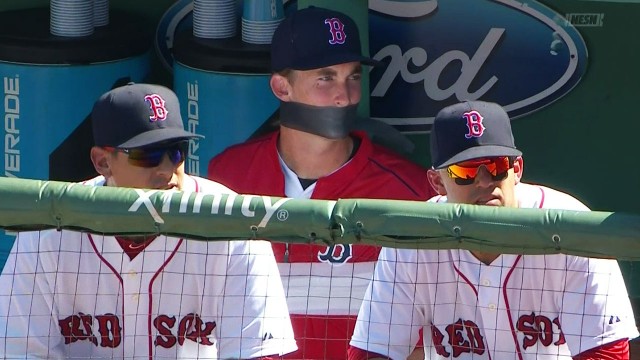
Yesterday, while watching the Boston Red Sox game on NESN as I always do EVEN WHEN THE TEAM STINKS, like this year, because no summer soldier I, team broadcasters Don Orsillo and Jerry Remy pointed out that Sox rookie Henry Owens was watching the game while being taped to a pole, with his mouth taped shut as well.

This is old-fashioned baseball rookie hazing, as Remy explained (also opining that he thought it was stupid when he played and is stupid now). The theory is that this makes rookies part of the team, builds cohesion and spirit, and yada yada yada, all the same phony rationalizations that jerks have used to excuse hazing cruelty and sadism in fraternities, the military, cults and sports teams for eons. The Owens stunt was relatively mild (and mercifully short), but the practice of hazing is still institutionalized bullying, uncivilized, and, as Remy said, stupid.

Sports team players are home town heroes, and role models too. How many kids will be humiliated, tortured, injured or even killed because the Boston Red Sox thought it was funny to immobilize a 6’6″ rookie pitcher by taping him to a pole on live TV, thus teaching him that no matter how  good he may be at pitching (and Owens is going to be really good), he’s at the bottom of the pecking order until he “earns” decent treatment and respect. “In my experience, the guys who really liked hazing the rookies were the players who couldn’t play,” noted Jerry, a Sox regular in the Eighties.  They were sadistic bullies, in other words, making up for their own inadequacies by abusing others.

You can say that Owens consented, and that’s like arguing that Monica consented when the President of the United States wanted her to emulate a Bourbon Street hooker. Owens could refuse, and be regarded as a bad team mate, leading to a year or more of cut shoelaces, shredded uniforms, insulting messages on his locker and worse “jokes.” Or he could quit baseball and sell Slurpees rather than make a gazillion dollars. He had to submit, and had to smile about it.

So he did.

Even baseball players need to be better at ethics chess than this, and calculate the likely consequences of their conduct. Hazing is unethical, and glamorizing, modeling and trivializing it on TV is irresponsible.

And stupid.

More All-Star Vote Cheating: A Lesson In How Corruption Spreads

KC-Royals-logo

Using computer technology to exceed the voting limitations of Major League Baseballs (sloppy, naive, badly-conceived) on-line voting rules to elect the American and National League All-Star teams, some Kansas City hackers managed to flood the virtual ballot box with enough votes to elect four Royals players to the squad (after a brief, frightening period when it looked like they would elect eight). Two of the starting Royal All-Stars, shortstop Alcides Escobar and catcher Salvador Perez, are clearly bogus victors who owe their slots and bonus provisions to the cheating ways of a couple of computer savvy fans—or, perhaps, a couple of assholes who distorted the vote, weakened the team, lessened the quality of the game and forced deserving players off the team because they could, to puff up their little pigeon chests with hacker pride.

Every year, MLB hold a supplemental election to let the fans choose among five candidates in each league who have impressive records but haven’t made the All-Star squad. That one is online only, and unlike the main vote, there are no limits to voting. With typical sensitivity (I don’t think the MLB’s leadership could define what cheating is with a gun at their heads), the brass ignored the obvious fact that someone in Kansas City was making a travesty out of the process, and paved the way for him/them/it to do it again. Sure enough, the one Royal on the list of candidates for the final slot, 3rd baseman Mike Moustakas, is leading the early returns. There are already six Royals on the team, not counting the manager, Ned Yost. Of course, MLB could have avoided this obvious problem by leaving Royals off the American League’s final five. Naaaa. That would make sense. Continue reading

A Lesson In Moral Luck And Consequentialism

car-key

If I accomplish nothing more through Ethics Alarms than to cure some intelligent readers of the seductive fallacy of consequentialism and the insideous influences of moral luck, then the long, aimless trail of squandered opportunities, under-achievement, diffuse focus, quixotic quests, Pyrrhic victories and lost causes I call my life will not have been entirely in vain.

Last week I was again in the throes of consequentialism hate. The Boston Red Sox, in the midst of a terrible start to their season, brought up minor league prospect Eduardo Rodriguez for a spot start. He was spectacular, allowing no runs and looking like the team ace Boston has been searching for all season. Immediately after the game, articles popped up in the baseball media excoriating the team for not bringing him up from the minor leagues long before. It was obvious back in Spring Training, said unnamed scouts, that he should be with the big club. It was negligence and stupidity, said other pundits, that it had taken this long to promote him. Strangely, there had been no published arguments to this effect before his impressive debut. And would any of these “I could have told you so” pieces have been written if Rodriguez had been bombed out of the game in the early innings, as literally any starting pitcher may be in a given game?

No. That’s the marvel of hindsight bias, the human tendency to presume that what could have been known should have been known after it is known.  Consequentialism is its more destructive cousin. These same analysts will conclude that the decision to bring up the pitcher was a brilliant one, if tardy, because he performed well. If he had done badly, the decision would have been, in all likelihood, decreed ” a mistake.” This was the fallacy that Jeb Bush was recently pilloried for not embracing regarding his brother’s decision to invade Iraq.

And moral luck? That’s the phenomenon that makes hypocrites and fools of us all, pointing us to the suffocating arms of Dame Consequentialism. If two decision-makers take exactly the same course in exactly equivalent circumstances, the one who is the beneficiary of good fortune—moral luck—will be hailed as a genius. The unlucky soul whose identical plans are derailed by unpredictable misfortune will be handed the mantle of an incompetent failure.

Situations where reasonable decisions and actions are declared “mistakes,” or, as is more germane here, “unethical” according to how uncontrollable events and contingencies occur subsequent to the conduct itself are legion. I am always looking for the counter example, where wrongful conduct has a good result, and is there for forgiven, ignored, or even praised. Well, I found one, and it just happened to me.

I had an important though brief client meeting scheduled this morning, and I had managed to forget the exact time. It was either at 10:45 or 11:00, and I had to be on time, because he was on a tight schedule. My wife was annoyed at me for my scheduling, since she had to use the car to get to a long scheduled appointment of her own at noon and my meeting was 30 minutes away. To make things worse, I couldn’t reach my meeting partner to determine the right time ( a postponement was impossible). To complete the fiasco, I misplaced the car keys, delaying my departure until after 10:30. I was informed, as I left the house with my newly discovered keys (never mind where they were; it is too embarrassing), that if I didn’t have the car back by 11:45, I was dead.

I assumed I would be dead. Continue reading

Ethics Alarms Encore: “Tom Yawkey’s Red Sox Racism, and How Not to Prove It”

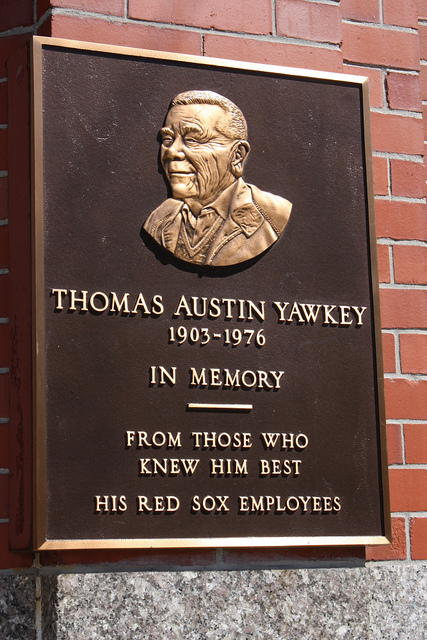
Yawkey TributeEvery now and then a comment out of the blue reminds me of a post that I had forgotten. That was the case here. Reading it again for the first time in five years, I was struck by how the crux of the post is still relevant today (that crux has nothing to do with baseball), and indeed how the intervening five years have made what I thought was a bad trend a genuine political and cultural malady.

And the World Series is going on, and I feel badly about the Red Sox having such a miserable season. This post, which few read when it was first published as the blog was attracting (let’s see…) less than 200 views a day as opposed to nearly 4000 a day now, is a good one, and I enjoyed it.  That “self-professed ethicist” has his moments…. Continue reading