Morning Ethics Warm-Up, 6/10/19: On Chaos, Pots, Bigotry, Hate Speech And Proving the Obvious.

GOOD MORNING!

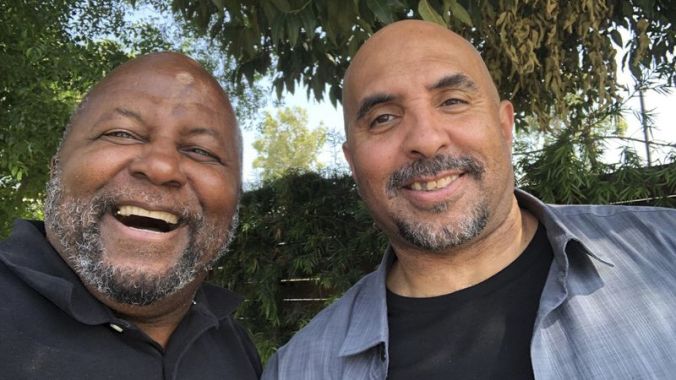
And hang in there, David.

1. Ethics and Mortality.  My first harsh experience with the random cruelty of life came in 1967, when Red Sox slugger Tony Conigliaro, young, handsome, dating Hollywood starlets, playing for his hometown team and already a local idol while looking like a cinch to have a glorious Hall of Fame career, was hit in the face by an errant fastball thrown by Angels pitcher Jack Hamilton. That moment violently changed the course of Tony C’s  life, which ended with him in a semi-conscious state at the age of 45 after suffering a catastrophic heart attack seven years earlier that left him brain-damaged and disabled. I get choked up every time I think about Tony, but his tragedy taught me hard lessons. Don’t be smug; don’t get cocky. Do all the good you can and make the most of your life as quickly as you can, because random disaster can strike at any time.

I’m not sure that I needed to have that lesson refreshed, especially since it was also a cornerstone of my father’s philosophy that included refusing to worry about what he could not control. Nevertheless, last night came the news that David Ortiz, Red Sox Nation’s beloved “Big Papi,” had been shot in the back in his home town of Santo Domingo.  The assailant was apparently a motorcycle-riding thief (whom bystanders mobbed and held for the police—don’t you love it when that happens?). So far the news on David is promising, but the bullet pierced his stomach and damaged his liver, gall bladder and colon.

Prior to the attack, it would have been difficult to imagine anyone with a better life than Ortiz. He was still young, rich, with a thriving and stable family, recognized everywhere, and universally admired and loved as a symbol of unity and community. Ortiz’s biggest problem, he said in an interview last year, was deciding among the many attractive options  open to him in baseball, business, philanthropy, broadcasting and entertainment.

Well, he’s got bigger problems now.

I just saw an internet poll in which only 54% of the responders knew who David Ortiz is. I wonder how many know about Tony Conigliaro.

I’m depressed now.

2. When trying to defeat Kettle, running Pot may not be the ideal choice. One of the most common mantras of the Trump Deranged is that the President lies so much. One would think, would one not, that this theme would make it incumbent upon those trying to defeat the incumbent to keep their own public lies, hypocrisies and misrepresentations to a minimum. This, apparently, they cannot do.

For a while there the New York Times appeared to have chosen Senator Kamala Harris as its favored candidate for the Democratic Party’s nomination, but the paper shows signs of  concluding, as any objective observer should by now, that she is a loser. Harris also does not have a friendly relationship with facts, as a recent Times “factcheck” of her recent statements on the stump demonstrated.

They didn’t find that any recent contentious substantive statement by Harris were true. They did find that three statements were “misleading” and one was an “exaggeration” (when the Times purported to list all of Trump’s mendacities, fudges, fantasies, exaggerations and misleading statements were referred to as “lies”), but this one they didn’t bother to spin: Harris had tweeted,

“Members of our military have already given so much. Raiding money from their pensions to fund the President’s wasteful vanity project is outrageous. Our service members deserve better.”

This is false, sayeth the Times:

“To build his border wall without the approval of Congress, Mr. Trump will draw from an account for military construction projects, a Treasury Department forfeiture fund and a Pentagon drug interdiction program. He has not announced plans to “raid” military pensions.”

To be fair, most of the Democratic field has been lying at a prodigious rate.

3.  Shut up, RBG. Justice Ruth Bader Ginsburg’s  remarks at a judges conference in New York last week included praise for rookie Justice Kavanaugh for hiring only women for his team of law clerks.  “Justice Kavanaugh made history by bringing on board an all-female law clerk crew. Thanks to his selections, the Court has this Term, for the first time ever, more women than men serving as law clerks,” she said.

Wow, that’s excellent progress, since we all know that men are toxic, rape-prone, violent,  sex-obsessed blights on humanity, as, in fact, Kavanaugh was accused of being at his confirmation by Justice Ginsburg’s fervent supporters. Kavanaugh’s hiring choices appear to have been grandstanding and pandering to the admirers of RBG who called him a sexual predator.  Ginsburg’s comments are bigoted. Why is having women rather than men as clerks intrinsically  wonderful?

4. Again: Progressives neither understand nor support the First Amendment. At last week’ s California Democratic Party Convention, Resolution 19-05.94 read as follows…

WHEREAS, Protecting First Amendment rights is critical, but is also limited to exclude hate speech using the concept that offending statements first should be viewed through the lens of the party experiencing the hate, and that Jews, LatinX, African-American, Asian Pacific Islander, Muslims, Disabilities and LGBTI communities can be targets of oppression and hate speech for a variety of reasons.

It is fair to say that we have been sufficiently warned that progressives believe that only they are qualified to define “hate speech,” which includes, for example , “Make America Great Again” and “The Triumph of the Will,” as well as, to generalize, any speech they find inconvenient.  Such an exception in the First Amendment would permit the Left to muzzle dissent and opposition using the iron boot of the law…which is exactly what they seem to want to do.

Serious question: How can anyone in their right mind trust these people?

5. Just musing here...but is it ethical to spend scarce research funds to prove what is, or should be, obvious? I know, I know: lots of conventional wisdom is wrong, so many things that “everybody knows” turn out to be false when researchers look closely. Still—does the fact that dog-owners get more exercise than those without dogs really need independent confirmation? If I don’t take my Jack Russell Terrier, Rugby, out for a good 45 minute walk, he will do everything short of pulling a gun on me to exact his revenge. (My previous Jack, Dickens, did pull a gun on me once. I’m not kidding.)

Another recent study revealed the shocking conclusion that people who are attractive and conventionally good-looking have an automatic advantage in all aspects of social interaction over those who are not attractive or disfigured. Is there anyone on Earth who doesn’t know that? Beautiful people know it, and rely on it. Ugly people know it because they experience the bias every day.


An Unjust “Three Strikes” Sentence Is Cancelled…After 23 Years

Ken Oliver (R) with his father, post-release.

The theory behind “three strikes” laws is that it  restrains habitual law breakers by upping the risks every time they engaged in their favorite pastime. It makes criminal culpability cumulative: three smaller crimes add up to the same punishment as one big one. These laws first arrived in the 90s, under President Clinton. I remember my reaction at the time was 1) maybe it will work as deterrenceand really reduce crime and 2) if a twice-convicted criminal knows that the third “strike” will send him away for a long time and commits a felony anyway, that’s his choice, and nobody should feel sorry for him.  I admit that I still have vestiges of this rationale lurking in my brain; it’s the Baretta Principle, from the TV show that made Robert Blake a star before he had his wife killed: “Don’t do the crime if you can’t do the time.”

Ironically, Blake did do the crime and never had to do the time, but then, he was a star. His career hasn’t been going so well, though.

There is some evidence that “three strikes” laws work. Some states, like California, have recorded dramatic drops in  crime rates since the enactment the measure.  In a 2011 report, Los Angeles reported crime had decreased by half since 1994, when its “habitual felon’ statute went into effect. Data from other studies suggests that this is an illusion. Continue reading

Happy Saturday Ethics Warm-Up, 4/27/19: Conniff, Cohen, California, And Co-opting A Classic

Weekends, unfortunately, are only a rumor when you run a business out of your home…but I’m still HAPPY!

1. “To Kill A Mockingbird” ethics. I asked an old friend and talented director to give me her review of the controversial “To Kill A Mockingbird” on Broadway (previously discussed here, and here…). What I was most interested in was whether the new version (by “The West Wing” auteur and liberal political advocate Adam Sorkin) actually meets the contractual requirement insisted upon by Harper Lee’s estate, that “the Play shall not derogate or depart in any manner from the spirit of the Novel nor alter its characters.”  Well, I knew it would not be; Sorkin and the producer held out for being able to make a “woke” “Mockingbird” reflecting “current sensibilities,” and Lee’s greedy relatives wanted the money more than they cared about what Harper Lee might have wanted, like preserving the integrity of her novel.

Sure enough, my friend reported that the play was full of anachronisms and felt nothing like a story set in a small Southern town in the 1930’s. Most jarring of all, she said, was the oft repeated message that the racially prejudiced individuals in the town were “bad people.” This is the exact opposite of what Atticus Finch tells his daughter in the novel.

2. The GDP. Today the New York Times had the good and unexpected GDP news on its front page, so I’ll retract yesterday’s criticism  of the Times for burying that important news, and evidence of some Trump success. Instapundit pulled out this LA Times article  from 2017. It begins, Continue reading

Morning Ethics Warm-Up, 4/15/2019: Patriots Day! Jackie Robinson Day!

Good morning!

It’s funny: over at Ann Althouse’s blog, she’s complaining about how there’s nothing to write about. From an ethics perspective, I am finding too much to write about, especially since, unlike Ann, I still have to work for a living.

1. Quick: what does Patriots Day commemorate (and no, it’s not Tom Brady)? My home state of Massachusetts, Connecticut, Maine (which was once part of the Bay State), and Wisconsin observe the holiday, which honors the twin battles of Lexington and Concord, the confrontations with the British (on April 19, 1775, the day after “The Midnight Ride of Paul Revere”) that launched the Revolutionary War. I visited both battlefields more times than I could count when I was living in Arlington, Mass., right next to Lexington. That battlefield, what’s left of it, is in the middle of busy streets on all sides; it’s hard to imagine the scene as described in the song above from “1776.” Concord’s battlefield, in contrast, is almost exactly as it was in 1775.

All the publicity, even in Boston, about today will be dominated by the running of the Boston Marathon, but attention should be paid to the inspiring story of how ragtag groups of volunteers faced off against the trained soldiers of the most powerful country on Earth, sending the message that this rebellion would not be so easy to put down.  49 Colonists died, 39 were wounded, and five were unaccounted for. The British lost 73, while 174 were wounded,and 26 were missing.

2. It’s also Jackie Robinson Day. In every MLB game today, every player will wear Jackie’s number 42. The best way to honor Jackie for the rest of us is to tell his story to someone who doesn’t know who Jackie Robinson was, and it is shocking how many such people there are. The film “42” does an excellent job of dramatizing how Jackie broke the color barrier in baseball, simultaneously weakening segregation everywhere. The Ethics Alarms post about Robinson is here. Continue reading

One More Time…Ethics Dunce: California, And Its “Jumbo” Culture

Has any state…heck, has any 10-year-old’s tree house club…had as many terrible ideas as California? No wonder its presidential vote single-handedly gave the popular vote to Hillary. And the United States is supposed to allow itself to be the dog wagged by this Bizarro World ethics culture?

The latest: Under a bill now heading through the California State Legislature, millions of criminal Californians who have misdemeanor or lower-level felony records would have their criminal records officially sealed from public view once they completed prison or jail sentences. I’m shocked to read that the legislation would not apply to people convicted of committing  murder or rape. Well, give the Golden State time.

We are told with a sniff and a tear that in the United States, a record showing a criminal conviction or even an arrest that does not lead to a conviction can make it difficult for someone to find a jobs, rent an apartment or obtain professional license. Well, that’s because conduct has consequences, and in particular breaking trust has consequences. Society is based on mutual trust. Committing criminal acts raises reasonable doubts in society as to whether an individual can be trusted to–let’s see, handle money for an employer, follow rules, meet financial obligations or serve in a professional capacity, the primary requirement of which is trustworthiness.

Simply because someone has been in jail doesn’t mean they have become more trustworthy. Why would it? So under California’s brilliant scheme, a bank could hire a convicted embezzler as a bank teller. A law school could hire a convicted bank-robber as a law pro—oops. Sorry. My alma mater already did that. But at least it had the opportunity to know what it was doing.

This is kindergarten easy: if I am going to trust someone with my business or my property, I have a right to know who that person is, and if he or she has a record of warranting trust. The fact that convicted criminals have a tough time doesn’t mean I should be put at risk. They committed the crime, why are the citizens who haven’t broken any laws being forced to take risks they don’t want to take? Continue reading

The Mistake That Has No Remedy

Craig Coley was in prison for 37 years with no chance of parole. He was innocent, but it took technology that wasn’t available when he was convicted to prove it. Coley was released in 2017, when DNA evidence showed that the justice system had punished the wrong man, and his conviction was finally overturned. Coley was 32 when he was first arrested for the double murder of his girlfriend and her son in 1978, 34 for when he was convicted and sentenced to life imprisonment. He’s 71 now.

How does society compensate someone for a mistake like that?

Last month, the city of Simi Valley, California, the city that took half of Chris Coley’s life away from him., announced that it had reached a $21 million settlement with its victim. That’s something, I guess. After his release, Mr. Coley was pardoned by Gov. Jerry Brown—yes, I think that was appropriate— and awarded $1.95 million by the California Victims Compensation Board, a sumptuous $140 for each day he spent in prison. Then he sued.

In a statement announcing the settlement, Simi Valley’s city manager, Eric Levitt said in part, “While no amount of money can make up for what happened to Mr. Coley, settling this case is the right thing to do for Mr. Coley and our community. Then he said that the city had decided to settle the case because “the monetary cost of going to trial would be astronomical.” So it was not because the settlement was “the right thing to do,” but because it was prudent and cheapest way out of their self-made predicament.

I sometimes wonder in officials read these things before they are released. Levitt also said the police department was still pursuing leads in the deaths of Coley’s former girlfriend  and her son. Good luck with that. Maybe O.J. can help out. Continue reading

Ethics Quote Of The Week: California Attorney Benjamin Pavone

“The ruling’s succubustic adoption of the defense position, and resulting validation of the defendant’s pseudohermaphroditic misconduct, prompt one to entertain reverse peristalsis unto its four corners.”

—-Attorney Benjamin Pavone’s most spectacular of several ethically (and rhetorically) dubious statements in his appellate brief for the plaintiff in the case of Martinez v. Stratton.

This was one of those cases where the winner actually loses. The plaintiff was awarded about $8,000 in damages while most of his claims were rejected. The trial court also denied plaintiff’s petition for approximately $150,000 in attorney fees. The plaintiff then appealed the denial of his fee petition. In both the notice of appeal and the briefing, plaintiff’s counsel engaged in the kinds of rhetoric regarding the trial judge that are frowned upon, to say the least.  Plaintiff’s Counsel called the female judge’s order “disgraceful,” accused her of “intentional” error motivated by political bias, and condemned her “mindless antipathy” toward his client.

The new California rules have a version of ABA Model Rule 8.2 that states

“A lawyer shall not make a statement of fact that the lawyer knows to be false or with reckless disregard as to its truth or falsity concerning the qualifications or
integrity of a judge or judicial officer, or of a candidate for election or appointment to judicial office.”
Attorney Pavone would have been skating dangerously close to it, if not for the fact that his conduct occurred before the new Rules went into effect. Never mind: he appeared to nick a number of the old rules as well; at least the appeals court thought so, since it referred Pavone to the bar for possible discipline. (It also rejected the appeal.) The old version of California ethics rules in California’s Business and Professions Code section 6068 stated that it is the duty of an attorney to “maintain the respect due to the courts of justice and judicial officers.” Thus disrespectful statements made in court filings are grounds for attorney discipline or contempt.

The appeals court’s opinion not only affirmed the judgment and awarded defendants their costs on appeal, but also reported plaintiff’s counsel  to the state bar for misconduct.

In addition to impugning the judge’s independence and integrity, the main complaint of the appellate judges seems to be that Pavone engaged in gender bias against the trial judge by using “succubustic.”  I see a lot wrong with that quote, including the fact that it is incoherent, but boy, finding gender bias is a stretch.  “The notice of appeal signed by Mr. Pavone on behalf of plaintiff referred to the ruling of the female judicial officer as “succubustic.” A succubus is defined as a demon assuming female form which has sexual intercourse with men in their sleep. We publish this portion of the opinion to make the point that gender bias by an attorney appearing before us will not be tolerated, period,” the ruling says.

The lawyer’s statement does not call the judge a succubus, however, and I’m not at all sure Pavone wouldn’t have used the same description if the judge was a male. He says that the ruling is “succubistic,” not that the judge is a succubus. Since it makes no sense to say the ruling was having sex with a sleeping man, I assume that what the lawyer meant was that the ruling simply adopted the defense position. The succubus, in many traditions, doesn’t just have sex with the sleeping victim, it also “sucks” the essence of life out of him, sometimes causing death. That is also the way succubi are frequently portrayed in horror movies—trust me, that a genre I know extremely well. So “the ruling’s succubustic adoption of the defense position” just means that the judge adopted the defense’s position as her own. That’s not gender bias.

But then, this is California, after all.

I have no idea what “pseudohermaphroditic misconduct” is, however, or  what “prompt one to entertain reverse peristalsis unto its four corners” is supposed to mean.

Morning Ethics Warm-Up, 3/3/2019: “Thing’s Are Seldom What They Seem…”

Good afternoon!

1. Today’s source of maximum irritation. Remember those California wildfires at the end of last year that the news media kept reporting as proof of climate change and that prompted Democrats and talking heads to sneer in disdain at anyone, especially President Trump, who suggested that electrical equipment just might have been the cause? From NPR:

Pacific Gas and Electric says it’s “probable” that its equipment caused the Camp Fire in Northern California, the deadliest and most destructive in the state’s history.

California has not finished its investigation into PG&E’s culpability in last November’s fire that killed at least 85 people, destroyed about 14,000 structures, displacing tens of thousands of people and destroying the town of Paradise. However, the state’s largest utility, which filed for bankruptcy last month, said Thursday it expects the investigation will find that its damaged infrastructure sparked the fire.

Please let Ethics Alarms know how many of the news shows this morning mention this development.

2. Spring Training ethics note: Good news! Ethics Alarms has been campaigning for robo-umps at home plate to call balls and strikes for several years. Now MLB announces that it has finalized a three-year deal with the independent Atlantic League to have the league test rules innovations and equipment for the Show. This will include computer calling of pitches. Not so good news: it will also reportedly include moving the mound back, which is heresy.

3. Concern for Popehat’s Ken White.  There is not a smarter, more passionate, better blogger on the planet than lawyer Ken White, and while we have had our disagreements, his commentary on law and justice especially is a blessing for all Americans, even though most don’t have the sense to benefit from it. One of many reasons I admire Ken is that he has been candid about his battle with depression, a killer illness that too many people don’t understand. That malady runs in my family (or as Mortimer Brewster says in “Arsenic and Old Lace,” “Runs? It practically gallups!”), and has been responsible for more than one suicide. Popehat once was a collective, but now it’s almost entirely Ken, with occasional drop-ins from the acerbic Mark Randazza. The blog’s last entry was January 4, almost two months. I’m worried, as are most of Ken’s fans I’m sure, and I am officially sending Ethics Alarms best wishes and love to one of the really good people in multiple roles: lawyer, blogger, public educator. Get back as soon as you can, Ken. We need you. Continue reading

Lunch Time Ethics Appetizer, 2/13/2019: Rail, Restaurants, Resignation And Reality

Yum Yum!

1. When reality meets ideology… California Gov. Gavin Newsom  announced that

[He’s] abandoning a $77 billion plan to build a high-speed rail line between Los Angeles and San Francisco and will focus instead on completing a 119-mile (190-kilometer) segment in the state’s agricultural heartland. Voters approved a ballot measure in 2008 calling for the linking of Northern and Southern California, a rail project initially estimated to cost $33 billion and be completed in 2020. Subsequent estimates more than doubled the cost and pushed the timeline to 2033. Newsom pledged to finish the segment already under construction through California’s Central Valley. He rejected the idea critics have raised that it will be a “train to nowhere” and said it can help revitalize the economically depressed region.

We’ll see how much that part costs, if it’s ever completed. Meanwhile, Democrats are going to have to declare their fealty to the “Green New Deal,” which pledges to eliminate air travel nation-wide with “high speed rail.”

2. What part of “convenient double standards” is unclear to you? Kelli Goff writes at the Daily Beast (relayed by Ann Althouse, since I have the DB on my Ethics Alarms  Untrustworthy Black List):

“When Rachel Dolezal was unmasked as a white woman who misrepresented her racial and ethnic identity in part to bolster her professional bona fides as a voice of the disenfranchised, she was penalized—heavily. She went from rising media star to late-night punchline, unemployable and impoverished. I don’t wish poverty on Warren, but I don’t understand how her only punishment for a similar fraud seems to be that she may become president.”

Warren, a polished demagogue, got rave reviews for her recent speech throwing her war-bonnet  into the 2020 ring; like Barack Obama, skillful public speaking is the full extent of her qualifications for leadership. But wow—with the Democrats more or less trapped into nominating another woman to run against Donald Trump, what an awful field of openly unethical females they have assembled so far! Warren’s a fraud; Gillibrand is an anti-male bigot; Gabbard is running away from strong anti-gay positions, Harris has attacked the Catholic faith as a disqualifying feature for a judge, and then there’s Hillary, who looks outstanding in this field. Continue reading

Saturday Ethics Warm-Up, 12/8/18: Last Weekend Before I Have To Decorate The %^&$! Christmas Tree Edition

Good morning!

1. How can this be? Based on the same documents, the President crowed that Mueller had nothin,’ and the mainstream Trump-hating media crowed that the walls were closing in. It’s a confirmation bias orgy! Charges aren’t evidence, and attempted contacts with a foreign power isn’t “collusion,” and we’ve already talked about the theory that paying off a floozy not to kiss and tell, which is 100% legal at all other times, is a stretch to call and election law violation when the rake is running for President. No such case has ever been brought; it’s dubious whether one would prevail; even if it did, this is a fining offense at most. [ For the record, this is the “resistance’s” Impeachment Plan K, in my view, one of the lamest.]

Both sides are jumping the gun. In the media’s case, it’s more fake new, future news and hype.

2. Stare decisis vs. the prohibition on double jeopardy. In Gamble v. US, just argued before the Supreme Court, the question is whether the federal government can try a citizen for the same crime a state court acquitted him of committing. I’ve always hated the rule that it can (the cops in the Rodney King case were jailed that way), because it seems clear to me that the Constitutional prohibition on double jeopardy (that’s the Fifth Amendment) was intended to prevent such trials. Still,  previous Supreme Court decisions have upheld the convictions.  In the current case, it appears from oral argument that a majority of the current justices agree with me, but are hesitant to so rule because of the doctrine of stare decisis,  which means respecting long-standing SCOTUS precedent.

A ruling to apply double jeopardy would be a ruling against stare decisis, meaning that Roe v. Wade might have less protection than many—including me–have thought. Stay tunes, and watch Justice Kavanaugh’s vote particularly.

3.  Is wanting to/needing to/ actually taking steps to changing one’s sex a mental disorder? There have been a lot of articles about this lately, especially in light of evidence that peer groups, the news media, LGBT advocacy and parents are making many young children want to change their sex before they even know what sex or gender is. The question is itself deceptive, because it pretends that “mental disorder” is anything but a label that can be used or removed with a change of attitude or political agendas. Vox writes,

Major medical organizations, like the American Medical Association and American Psychiatric Association, say being transgender is not a mental disorder. The APA explained this in explicit terms when it stopped using the term “gender identity disorder” in favor of “gender dysphoria”: “Part of removing stigma is about choosing the right words. Replacing ‘disorder’ with ‘dysphoria’ in the diagnostic label is not only more appropriate and consistent with familiar clinical sexology terminology, it also removes the connotation that the patient is ‘disordered.’”

Well, “removing a stigma” is hardly a valid criteria for deciding whether something is a malady or not. What being transgender “is” can’t be changed by what we call it. Recently narcissism was removed from the mental disorder list—that doesn’t change the fact that narcissists see the world and themselves in a way that most people do not, and that this perspective causes them and the people around them a lot of trouble during their lives. The process worked in reverse with alcoholism, where being officially labelled a disease removed a stigma.

I once directed the comedy/drama “Nuts,” which opines that “insanity” is just a view of reality not shared by the majority. It was on this basis that the Soviet Union sent dissidents to mental hospitals. I don’t care what various associations or professionals call these minority positions: we know that they are using bias and political agendas to devise the label. This is one area where a phrase I despise, “It is what it is,” may be appropriate. Continue reading