Ethics Hero: The Boston Red Sox [Updated]

Of late, a lot of institutions that have been important to me have disappointed or embarrassed me. Yesterday the Boston Red Sox made me proud to have been a devoted follower, fan and supporter for my entire adult life. This is a nice tale even if you don’t know a baseball from a kumquat. Trust me on this,

The ethics category is caring.

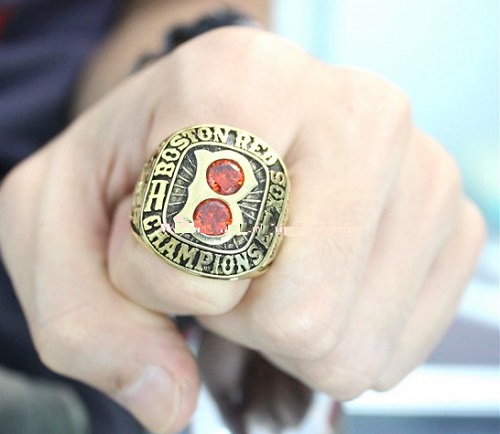
I have written about the 1967 Red Sox before.They taught me that miracles do happen, that underdogs sometimes prevail, and that perseverance and foolish hope are sometimes rewarded, while giving me the best, most exciting, most inspirational summer of my life. One of the bit players who had a role in that “Impossible Dream” season” was a Double A infielder named Ken Poulsen, an obscure farmhand  called up mid-season when the Sox bench was thin. He postponed his wedding for the chance to play in the big leagues, and had what is called ” a cup of coffee,” playing only five games, getting five at bats, and collecting one lonely hit, a double that had no impact on the game at all.

It was better than Moonlight Graham, but not much. Poulsen was soon returned to the minors and never reached the Major Leagues again. From the SABRE website: Continue reading

Crosswalk Ethics

I was waiting at red light in Alexandria, on the way home from a brief acting coach gig for a friend.  On one side of street, preparing to cross, was a striking African-American couple, the women in a formfitting orange and white pattern dress, he in an open white blazer and slacks, highlighted by a pocket hanky that matched the orange in the woman’s dress.

When the “Walk” light finally flashed on, they crossed in front of my car, and as they passed, I rolled down my window and called out, “Best dressed couple I have seen all say!” and saluted.

They beamed. They waved. They shouted, in unison, “Thank you!” and walked on, laughing. I think I may have made their day.

And I thought, I really need to be on the look-out for opportunities like that. This is the way to combat the metastasizing nastiness, incivility and distrust in our culture. Be nice. Reach out. Socialize. Try to make meeting you a positive experience, no matter how brief or trivial.  It takes almost no time at all. It’s not hard. All it requires is committing to making the people around you as happy as possible.

I also had two thoughts. One: if they had been talking on their smart phones, texting or otherwise not interacting with the world around them, I wouldn’t have said anything at all.

Two: I wish I had been wearing a MAGA cap.

Morning Ethics Warm-Up: Last Day Before The Start Of The Baseball Season Changes Everything Edition

http://www.youtube.com/watch?v=agkJ5WFNL4k

Good Morning!

1. The best explanation ever composed to explain why baseball helps keep us ethical, by preserving our ability to give a damn—-for in the end, the most important of the virtues, the one that makes all the others matter—is caring.

Roger Angell, from his 1975 essay “Agincourt and After,” about the ’75 World Series and Carlton Fisk’s iconic homerun in Game #6 (yes, I was there):

It is foolish and childish, on the face of it, to affiliate ourselves with anything so insignificant and patently contrived and commercially exploitative as a professional sports team, and the amused superiority and icy scorn that the non-fan directs at the sports nut (I know this look—I know it by heart) is understandable and almost unanswerable. Almost. What is left out of this calculation, it seems to me, is the business of caring—caring deeply and passionately, really caring—which is a capacity or an emotion that has almost gone out of our lives. And so it seems possible that we have come to a time when it no longer matters so much what the caring is about, how frail or foolish is the object of that concern, as long as the feeling itself can be saved. Naïveté—the infantile and ignoble joy that sends a grown man or woman to dancing and shouting with joy in the middle of the night over the haphazardous flight of a distant ball—seems a small price to pay for such a gift.

2.  Some Democrats are displaying integrity and patriotism...This morning’s Ethics Hero: Rep. Jim  Himes ( D-Ct), who disappointed MSNBC’s hack-fest Morning Joe by deploring his colleagues who are sorry the Special Counsel did not find collusion with Russia by the President. They  need to think, he told Joe and Mika, pointing out that he fact that a sitting President is not found to have traitorously conspires with a foreign power to pervert an election is cause for celebration, not regret.  Hey, do you think he reads Ethics Alarms? [Pointer: VinnyMick]

3. But most are not, especially this guy: Martha MacCallum  had Rep. Eric Swalwell (D-Calif.) on her Fox News show last night. Along with Adam Schiff, he has been one of the worst offenders in asserting as fact, without evidence, that the President committed impeachable acts .  True to form, Swalwell told his host that nothing in the salacious and unverified dossier had been proven “not factual.” I am also hearing this Bizarro World legal standard being endorsed by some commenters and, naturally, the  Facebook Borg. In this country, people don’t have to prove themselves innocent, even people like Donald Trump, who seem especially ethics-impaired. Allegation,s rumors and accusations are not enough; in fact, they aren’t anything until they have been confirmed. The Steele Dossier is literally not anything, although it was used deceptively and probably illegally to justify spying on the Trump campaign. Continue reading

Encore: On the Importance Of Christmas To The Culture And Our Nation : An Ethics Alarms Guide

[As promised, here is the Ethics Alarms Christmas package, lightly revised, last posted three years ago]

I don’t know what perverted instinct it is that has persuaded colleges and schools to make their campuses a Christmas-free experience. Nor can I get into the scrimy and misguided minds of people like Roselle Park New Jersey Councilwoman Charlene Storey, who resigned over the city council’s decision to call its Christmas tree lighting a Christmas Tree Lighting, pouting that this wasn’t “inclusive,” or the  CNN goon who dictated the bizarre policy that the Christmas Party shot up by the husband-wife Muslim terrorists had to be called a “Holiday Party.”  Christmas, as the cultural tradition it evolved to be, is about inclusion, and if someone feels excluded, they are excluding themselves.  Is it the name that is so forbidding? Well, too bad. That’s its name, not “holiday.” Arbor Day is a holiday. Christmas is a state of mind. [The Ethics Alarms Christmas posts are here.]

Many years ago, I lost a friend over a workplace dispute on this topic, when a colleague and fellow executive at a large Washington association threw a fit of indignation over the designation of the headquarters party as a Christmas party, and the gift exchange (yes, it was stupid) as “Christmas Elves.” Marcia was Jewish, and a militant unionist, pro-abortion, feminist, all-liberal all-the-time activist of considerable power and passion. She cowed our pusillanimous, spineless executive to re-name the party a “holiday party” and the gift giving “Holiday Pixies,” whatever the hell they are.

I told Marcia straight out that she was wrong, and that people like her were harming the culture. Christmas practiced in the workplace, streets, schools and the rest is a cultural holiday of immense value to everyone open enough to experience it, and I told her to read “A Christmas Carol” again. Dickens got it, Scrooge got it, and there was no reason that the time of year culturally assigned by tradition to re-establish our best instincts of love, kindness, gratitude, empathy, charity and generosity should be attacked, shunned or avoided as any kind of religious indoctrination or “government endorsement of religion.”  Jews, Muslims, atheists and Mayans who take part in a secular Christmas and all of its traditions—including the Christmas carols and the Christian traditions of the star, the manger and the rest, lose nothing, and gain a great deal.

Christmas is supposed to bring everyone in a society together after the conflicts of the past years have pulled them apart. What could possibly be objectionable to that? What could be more important than that, especially in these especially divisive times? How could it possibly be responsible, sensible or ethical to try to sabotage such a benign, healing, joyful tradition and weaken it in our culture, when we need it most?

I liked and respected Marcia, but I deplore the negative and corrosive effect people like her have had on Christmas, and as a result, the strength of American community. I told her so too, and that was the end of that friendship. Killing America’s strong embrace of Christmas is a terrible, damaging, self-destructive activity, but it is well underway. I wrote about how the process was advancing here, and re-reading what I wrote, I can only see the phenomenon deepening, and hardening like Scrooge’s pre-ghost heart. Then I said… Continue reading

When The Anti-Liberty Mobs Attack, Courage And Character Are Paramount, Part I: The “Rub & Tug” Fiasco

As I explained in the initial post about the “Rug and Tug” controversy, the protests against Scarlett Johansson being cast as a biological female who led her life as a transsexual male  (that’s “Tex” on the left) made no sense. The arguments put forth by the transgender cyber-mob and others  undermined the movement for non-traditional casting that would provide minorities, like trans actors, more opportunities in their chosen field.  Their position was a double standard and  internally inconsistent, asserting that biological males who had transitioned to female were a more logical choice to play a real life character who was born female, than a female actress who would be playing a female identifying as a male…when as a female actress, that’s what she would be doing in reality. The controversy was unfair to Johansson (again) and was contrary to the whole concept of acting. Never mind! Transsexuals are currently the darling victim group of the Left, and don’t have to make sense, be consistent, or even advocate causes that avoid undermining other progressive causes and constituencies. What they say is just right, because they say so, that’s all, and anyone who disagrees is a bigot, and that’s that. They want what they want, and because they have been discriminated against in the past, they don’t have to be logical or consistent.

Thus, in episodes like this they can become monsters, using bullying and  social media to demand their desires regardless of whether it is an ethical position or not. Make no mistake: in this case, their position was not an ethical one. What is desperately needed when groups misbehave this way and abuse their influence and power is for their target to say no. Unfortunately, doing so requires unusual levels of principal, character, responsibility, intelligence and courage.

Johansson is a talented actress and a major star, but she does not, we now know, have what it takes. Noticing that no significant voices in Hollywood rallied to her defense, the actress quit the project and resigned from the role, issuing standard Hollywood political correctness blather:

“In light of recent ethical questions raised surrounding my casting as Dante Tex Gill, I have decided to respectfully withdraw my participation in the project. Our cultural understanding of transgender people continues to advance, and I’ve learned a lot from the community since making my first statement about my casting and realize it was insensitive. I have great admiration and love for the trans community and am grateful that the conversation regarding inclusivity in Hollywood continues. According to GLAAD, LGBTQ+ characters dropped 40% in 2017 from the previous year, with no representation of trans characters in any major studio release. While I would have loved the opportunity to bring Dante’s story and transition to life, I understand why many feel he should be portrayed by a transgender person, and I am thankful that this casting debate, albeit controversial, has sparked a larger conversation about diversity and representation in film. I believe that all artists should be considered equally and fairly. My production company, These Pictures, actively pursues projects that both entertain and push boundaries. We look forward to working with every community to bring these most poignant and important stories to audiences worldwide.”

This is Authentic Frontier Gibberish, self-contradictory and easily translated as “Hey, whatever the anointed  in-group says is right is right with me! I’m certainly not going to buck conventional wisdom if it means losing fans, roles, and money! You tell me what to think, and I’ll think it. Tell me to jump, and I’ll say “How high?” I welcome my Political Correctness Masters, and will do their bidding.” Continue reading

Another 7-11 Ethics Moment

Regular readers here know that my local 7-11 (on Quaker Lane in Alexandria, Va.) has been the site of multiple ethics dramas and lessons. Another occurred yesterday.

For about a year now, a middle-aged man and a middle-aged woman have routinely sat outside the store, trying to make eye-contact with customers and persuade them into handing over money, cigarettes, or to buy them something inside. (The two are never there at the same time: maybe they have a schedule.) We think, but it is just speculation, that they are residents of a local half-way house that is a few blocks away. Yesterday, it was the woman’s turn. She knows both me and my wife, especially Grace, who has often replied positively to her entreaties over the last 12 months, as have I, though less often.  Yesterday we were in a rush, and entered the store without interacting with her. She followed my wife into the 7-11, knew I was behind her, and let the door close right in my face, nearly knocking me flat. Later she managed to beg four cigarettes off my wife.

I know. The woman is probably mentally ill. She was dealt a poor hand of whist, to use Clarence Darrow’s favorite analogy for life. Nevertheless, she is very aware that we have been kind and generous to her. I don’t ask much or expect much, but I do not like being treated as a mark or a chump. I have held the door open for her at that 7-11; I always acknowledged her existence: she received the same respect and civility that everyone does whom I encounter at that neighborhood establishment. The least she could do is hold the door open and not let it swing shut just as I am trying to enter. The message her actions conveyed was that if I am a not submitting to her charity extortion, I’m a non-person, as far as she is concerned.

Got it. She can now look elsewhere for her free hot dogs, cigarettes, and ten dollar bills. I know she doesn’t regard me as a neighbor, or a benefactor, or an ally, but as a gullible, inexhaustible  resource to be taken advantage of.

The hell with that.

I’ll still hold the door open for her, however, like I do for everyone else.

Morning Ethics Warm-Up, 6/4/2018: 500 Days Edition

Good Morning!

1.  In one respect, it is his fault. The most infuriating defenses of the Samantha Bee cunt-fest may be the rationalizations who pronounce her blameless (and thus Turner/TBS) because President Trump made her do it. (Well, maybe the second most infuriating: CNN fake-ethics commentator Brian Stelter actually referred to the episode in a tweet as the “feckless” controversy. You see, Brian, when your field is journalism ethics, you can’t play deceit games like that, because…oh, why do I bother?). To be fair, however, while Bee and the other potty mouthed resistance members and DNC leaders should be held responsible for their own ugly conduct, electing Donald Trump did give a cultural green light to incivility and assholery.

Since nobody else gives me credit and public recognition when I’m right before most of the chattering class (Ethicists Don’t Matter), I have to do it myself. Here is what I wrote in part on September 10, 2015:

We have elected Presidents without experience, who were narcissists, sociopaths or psychopaths, who were not too bright, who were unjustifiably cocky, who spouted policy nonsense, who had only style without substance, who acted tough, who were the product of marketing rather than talent. Some of them turned out to be pretty good; some of them surprised everyone and changed their ways. None of them wrecked the nation. I am confident that even at this difficult time in our nation’s history, reeling from the serial incompetence of  the Bush and Obama administrations, the United States could survive a Trump Presidency as a nation.

We could not, however, survive it as a culture.

Placing a man with Trump’s personality and his rejection of the basic features of civilized conduct and discourse to an extent that only the obscenely rich or the resolutely misanthropic can get away with would ensure that American culture would deteriorate into a gross, rude, selfish, assault muck in which no rational human being would want to live…

Even if Trump was a policy whiz, a political magician and a foreign policy master who balanced the budget and restored American’s primacy in the world, it would not be worth what would be lost: dignity, fairness, civility, caring, respect.

Continue reading

The Brutal Ethics Truth About “7 Brutal Truths That Will Make Your Life Better If You Accept Them”

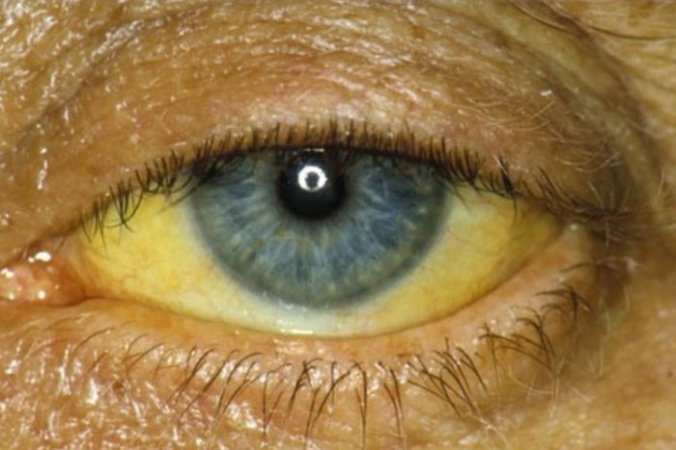
All looks yellow to the jaundiced eye.

Conservative writer John Hawkins published a post called “7 Brutal Truths That Will Make Your Life Better If You Accept Them.”

If I were as cynical as he is, I might say that a better title would be “How to Rationalize Being a Jerk,” but I’m not.

However, his post does demand some ethical perspective. Most, though not all, of his truths are really constructs to justify unethical conduct. Let’s examine them:

1. The average person cares more about what he eats for lunch than whether you live or die.

Maybe, and so what? That doesn’t mean that you should emulate them.  To begin with, there is no “average person.” There are individual people, good, bad and in-between. Hawkins writes,

“You tell the average person that doesn’t know you very well that you have a fatal disease and he’ll say, “I’m so sorry to hear that.” Then he’ll forget about it in five minutes while he debates with his friends whether they’re going to Chili’s or the Mexican restaurant down the street. What that means is that everything you want out of life, you better prepare to earn without getting a lot of favors on the way. If you fall, you have to be the one to pick yourself up off the ground, brush yourself off and get your life back on track. You care. They don’t. So it’s up to you.”

But the a stranger doesn’t always react that way. Sometimes he gives you his kidney. Hawkins is supplying an excuse to be callous based on a Golden Rule Distortion: “Do Unto Others As They Would Do Unto You.” Don’t listen to him.  Care about other people, and don’t hesitate to ask for help. People are better than you think: they will surprise you. In the meantime, it is your job to be as good as you would like them to be.

2. Life is not and will never be fair

I’ve written about this recently: fairness is a vague and broad concept in ethics. Life isn’t “fair” because life is often random, and nobody is tending the fairness meter. Systems either are fair or are not depending on your point of view. The mainstream conservative view about fairness is that one should play the cards one is dealt and stop complaining about it. It’s facile, though not without some truth: it is better to spend time trying to overcome obstacles than to bitch about them. On the other hand, each of us has an obligation to make the world better for those who follow us. Genuine unfairness, in systems, institutions, the culture and society, should be exposed, attacked, and fixed if possible. Hawkins’ approach would have left the U.S. with slavery, second class citizenship for women, Jim Crow, straight-only marriages, age discrimination, brutal monopolies and unchecked consumer fraud. His #2 is a license to be callous.

3. Most people are shallow

What an elitist and ignorant thing to say. If one has spent any time talking to and getting to know a wide range of people, it becomes clear that the opposite is the case. Again, assuming that most people are shallow provides Hawkins with an excuse to ignore them, or treat them with contempt. Most people will tend to behave as if they are shallow because they are rushed, stressed, distracted and focused on short-term exigencies. Give them time to think, a reason to consider a topic carefully, and the respect they deserve, and frequently unexpected depths will reveal themselves. “Most people are shallow” is a crippling bias for anyone to adopt. Expect the best of people: you will often be disappointed, perhaps, but you will also allow validations of your faith in humanity to bloom.

Writes Hawkins:

“So, use the shallowness of other people to your advantage. Learn to dress like a successful person. Pay attention to how you look. Find ways to give off the appearance that you are doing well. Don’t be a phony—be you, but also take advantage of the fact that a superficial appearance will be the reality to most people.”

Let’s see: pretend to be a successful person, but don’t be a phony; be you, but try to fool people by not revealing who you are. What?

People don’t assume that people who dress well,  speak well,  have manners and behave in a civilized fashion are successful because they are shallow. They assume that because they have learned from experience that certain traits both aid success and result from it.  Hawkins is the one revealing shallowness. Continue reading

The NFL Is Pretty Close To Evil. Do Their Fans Care? Sponsors? Hello?

http://www.youtube.com/watch?v=s4A21ZW6_f4

I read an ESPN piece a couple of days ago—I lost the link—evaluating the factors that have led to the large (and expensive ) drop in the NFL’s television ratings.. It wasn’t just the gratuitous, half-baked protests during the National Anthem, the author explained. No, it was also injuries, too many mid-week games, too many bad games, viewers “cutting the cord” and leaving cable, and other factors.

Oddly, the fact that it is increasingly clear that the NFL makes its money by maiming and killing young men never made it onto  the list. Maybe that’s right; maybe football fans don’t care that the heroes they cheer today will be drooling, tortured, burdens on their families in their 50s and 60s, if not sooner. Hey, they get good money to have their brains pureed, right?

If this is true, then my headline is  incomplete. The NFL and its fans are pretty close to evil.

A recent scandal showed us just how cynical the league’s claims that it was addressing its concussion and CTE problems.

Tom Savage, the Houston Texans quarterback, took a violent  hit from Elvis Dumervil of the 49ers ia a December 10 game. Savage rolled onto his back and lifted up his hands, which could be seen trembling, as if he were being electrocuted, a textbook indication of a likely concussion. He went to the sidelines but re-entered the game for the next series. He then left the game again and has not played since.

Some protocols on concussions the NFL has! Remember, this occurred after the news about CTE, the crippling brain disease  afflicting 99% of football players p whose brains have been examined, has gotten progressively more frightening.  The NFL initially denied the problem, stonewalled, and now is apparently faking concern.

The NFL announced it will not discipline the Texans for their negligent handing of  Savage’s head injury. That’s odd, don’t you think, if this is something the league cares about? If a team will send a player back out onto the field after he shows those symptoms, what other players with less visible signs of concussions have been sent back out to get disabled? My guess is countless players, and in every game.

Hey, they get good money to have their brains pureed, right? Continue reading

The 87th And 88th Rationalizations: The Reverse 15 And The Psychic Historian

Translation: “I got nuthin’!'”

I haven’t been in tip-top shape the last several days, making new posts more of an ordeal than they should be. Luckily this motivates me to catch up on updating the Rationalizations List, which has several waiting additions, including these:

Rationalization #15 A. The Reverse 15, or “If I don’t do it ( and I don’t want to) somebody else will.”

The Reverse 15 uses exactly the same excuse as #15. The Futility Illusion:  “If I don’t do it, somebody else will,” but for the opposite purpose. In #15, the rationalizer wants to avoid the consequences of doing something unethical by arguing that his or her refusal to follow orders would have no practical effect: someone else would just step in and do what was demanded anyway. How, asks the fictionalized version of Confederate Captain Henry Wirz in “The Andersonville Trial,” can a post-Civil War military tribunal fairly hold him responsible for cruelly mistreating the Union prisoners in the Georgia prison camp as he was ordered to, when if he refused he would have been shot, and his successor would have abused them anyway?

In 15A, the argument is the opposite. The rationalizer refuses to perform a necessary ethical act out of apathy, callousness or fear, but this was reasonable because he or she was certain that someone else would do the right thing instead. The Reverse 15 could also be called “The Kitty Genovese Rationalization,” recalling that the many people who heard the murdered woman’s screams chose not to “get involves” while convincing themselves that someone would come to her aid. All of the Mount Everest climbers who left a stricken colleague behind to die protested later that they were certain the next climber behind them (or the next, perhaps) would stop to help the man. We pass a stopped car in distress on the highway at night, reasoning that someone else will stop to help, sparing us the trouble.

Sometimes someone does. Sometimes not. This abdication of an ethical duty is accomplished by casting one’s lot, and gambling with the fate of another, while relying on the unpredictable quirks of moral luck. The only ethical decision is to take action. You must do what you know is the ethical act yourself, and not ignore your obligation because you can pass the buck and then argue, disingenuously, “How could I know that everyone else would be as unethical as I am?”

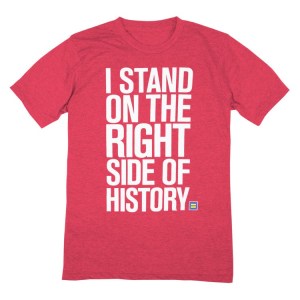
Rationalization #1B. The Psychic Historian, or “I’m On The Right Side Of History”

Continue reading