
Comment Of The Day: “The Barefoot Contessa and the Compassion Bullies: An Ethics Drama”

Angry-Blogger

I haven’t made one of the spammed Ethics Alarms hate comments a Comment of the Day for a while, but this one really asked for it. The commenter, who calls herself Sarah Bradley but isn’t, was spitting vitriol over a five-year old Ethics Alarms post that I remember well, the story about a mother’s attempt to shame and bully a cooking show star, Ina Garten, who politely turned down her sick son’s “Make A Wish Foundation” request that she hold a special live cooking exhibition just for him.  The mother  used her blog to call down the web Furies on the chef’s head, and I, as you may notice that I often do, pointed out that the conventional wisdom that the chef deserved the abuse was ethically obtuse, writing in part…

Garten’s refusal was not wrong, and it was not justification for criticism. There are many legitimate reasons for her choosing not to give Enzo an audience, including just not wanting to do it. Do all of us have an obligation to do a favor for a stranger simply because they asked for it? No. Do we have an obligation to do the favor if the stranger is sick? Young? Old? Dying? No, no, no and no. Accept any other answer, and we are declaring that whenever the Make-a-Wish Foundation delivers a request, it is really a demand, backed by the threat of public humiliation….dictatorship of the desperate, attack of the compassion bullies.

Would I make Enzo’s wish come true, under almost any circumstances? Yes. Ina Garten doesn’t have to. Would most celebrities? Yes…and Ina Garten still doesn’t have to. Being kind and generous is ethical, but saying no when there is no ethical duty to say yes is not unethical. If Enzo is making a request, then the request can be refused. If its isn’t really a request, but an order, Enzo has no right to issue it. There is a duty to rescue. There is a duty to confront and report wrongdoing. But a duty to comply with the random desires of sick children? Absolutely not.

I wish all of my posts were as clear and well-argued as that one. Yet “Sarah” thought it was deserving of an abusive, ethics- and logic- free attack, because she reasons like about 85% of the commenters on most blogs and news aggregating sites. There no objective logic, no balancing of interests, no understanding of values, no ability to distinguish rationalizations from ethical analysis, no ability to see a complex situation from multiple perspectives, no objectivity. All there is to support “Sarah’s” indignation and fury is knee-jerk emotion and pre-digested platitudes. She is typical of the average member of the public who has never been trained in logic or ethics, doesn’t understand why that’s a handicap, and who allows their lizard brain to guide them through life, making society and the culture a mine field for the rest of us.

I didn’t get into the ethics field to help people like Sarah, because people like Sarah are too far gone to help. I’m an ethicist to try to help people, and their kids, and anyone they may have an influence upon, to avoid becoming like her. When you can’t think any clearer than Sarah, you are incompetent at life, and others will suffer.

Here is Sarah Bradley’s Comment of the Day, on the post, The Barefoot Contessa and the Compassion Bullies: An Ethics Drama: Continue reading
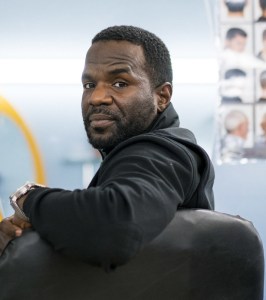

Ethics Hero : Don Huber

George Williams, finally free and on his way. If only I used barbers...

George Williams, finally free and on his way. If only I used barbers…unfortunately, that requires hair…

Here in Virginia, we are debating Governor Terry McAuliffe’s decision to let felons be jurors and to vote for Hillary Clinton (for whom they are are presumed to have natural affinity, as well as for Governor McAuliffe himself, perhaps), but nobody would begrudge them the chance to be barbers.

That’s what George Williams is about to be: a barber. He just graduated from Tribeca Barber School in Lower Manhattan, and  will soon face state examiners to qualify for his New York barber’s license. He almost didn’t make it.

As he was about to be released four years ago from the infamous  Attica Correctional Facility where he was serving  his two- to four-year sentence for robbing a pair of Manhattan jewelry stores, a gang of prison guards brutally attacked and beat him. Williams had both legs and his collarbone broken, and a fractured eye socket  Doctors placed screws into one leg to hold the bones together.

Disgustingly, prosecutors allowed the guards involved to exchange a guilty plea to a lesser charge for a punishment that included no prison time. Here was their primary penalty: they can’t be prison guards any more. Funny, I would think that would be automatic, plea or no plea, when you beat prisoners half to death.

The story of George Williams’ beating and the ridiculously, suspiciously lenient sentences received by his state-paid muggers was one of the nightmarish Tales From The Dark Side of the Justice System in a front page of a The New York Times story about The Marshall Project. Williams was quoted as saying that he still  headaches and nightmares from the attack but was trying to save the $2,600 barber school tuition to start a new life as a law-abiding tonsorialist.

27-year-old United States Army specialist, Don Huber read the article while stationed in Fort Riley, Kansas. He had been raised in Attica, New York, and had just finished serving nine months  in Afghanistan with the First Infantry Division.

Huber was moved William’s plight and bothered by the bad reputation the incident  gave his community. Huber had gone to high school with one of the guards who beat Williams, but had never met George. Still, Huber organized an online fundraising campaign to raise at least $2,600 to help the ex-prisoner get on with his life. The campaign quickly received $5,800 through more than 70 donations. Continue reading

Surprise! Donald Trump Lied Outright About His Charity Contributions

To quote a wise baby: "This is my shocked face..."

To quote a wise day-trading baby: “This is my shocked face…”

From the Washington Post:

Since the first day of his presidential campaign, Donald Trump has said that he gave more than $102 million to charity in the past five years. To back up that claim, Trump’s campaign compiled a list of his contributions — 4,844 of them, filling 93 pages.

But, in that massive list, one thing was missing. Not a single one of those donations was actually a personal gift of Trump’s own money. Instead, according to a Washington Post analysis, many of the gifts that Trump cited to prove his generosity were free rounds of golf, given away by his courses for charity auctions and raffles….

The largest items on the list were not cash gifts but land-conservation agreements to forgo development rights on property Trump owns. Trump’s campaign also counted a parcel of land that he’d given to New York state — although that was in 2006, not within the past five years. In addition, many of the gifts on the list came from the charity that bears his name, the Donald J. Trump Foundation, which didn’t receive a personal check from Trump from 2009 through 2014, according to the most recent public tax filings. Its work is largely funded by others, although Trump decides where the gifts go.

Some beneficiaries on the list are not charities at all: They included clients, other businesses and tennis superstar Serena Williams.

Observations: Continue reading

Ethics Hero: Minu Pauline And Her Curbside Fridge

free food

Ethical people will come up with the damnedest ways to do good things.

After watching the poor and homeless rummage through the dumpster outside of the restaurant she owns in Kochi, India, Minu Pauline thought about how she could facilitate access to the perfectly edible food that her establishment had to dispose of on a regular basis. So when she opened a second restaurant, it included a fully functional refrigerator on the sdiewalk out front.  She stocks it with leftover food from her restaurant, and invites others to do likewise.  Now her customers and residents of the community leave their leftovers and excess food, marked with the date, in the curbside fridge too.The homeless and the poor can take whatever they need 24 hours a day, seven days a week, without having to beg.

Pauline calls the refrigerator  nanma maram, which means “tree of goodness” or “virtue tree.” The name is particularly apt, for she is providing dignity and kindness, as well as charity.

________________________

Pointer: Fred

From The Pot Obsession Files, Or “If The Only Tool You Have Is A Hammer, Every Problem Looks Like A Nail, You Morons”

stoned-santaI hardly know how to begin describing how–what? Sad? Dumb? Irresponsible? Satisfying because all my predictions about how legalizing marijuana will screw up society in all sorts of ways is coming true?–this story is.

Denver nonprofit Cannabis Can gave away a thousand free, pre-rolled marijuana joints to the homeless and anyone else who wanted one on Christmas Eve. This was all for a “good cause,” of course —raising awareness about homelessness and getting people to donate  money to buy several RV’s and provide restrooms and showers for destitute. And getting the homeless high, because making everyone in the U.S. high or wanting to get high  is the most important thing in the world to the marijuana obsessed.

“‘Cannabis can make a difference,’ is kind of what we’re standing for,” said Nick Dicenzo, proud founder of Cannibis Can, nicely illustrating the verbal dexterity one is capable of once you’ve had a couple of joints before breakfast for a decade or so. “A lot of the people we spoke with really were just like, ‘if I had regular access to a shower, and a haircut my life would be so much better – I’d have so much more opportunity’,” Dicenzo continued.. I wonder how many of those homeless were on the streets in the aftermath of drug abuse and addiction. I wonder how many would have enough money to buy a suit, or rent a room, if they hadn’t blown so much money on drugs, or gotten themselves fired for showing up stoned for work. Continue reading

Comment of the Day: “On the Importance Of Christmas To The Culture And Our Nation : An Ethics Alarms Guide”


Belle is a Jewish reader of the recent Ethics Alarms Christmas post who sent  her comment to me off-site, then agreed to have it posted as the Comment of the Day after I requested permission.

She describes a real dilemma that I am very aware of, and thus am grateful for her raising it clearly and directly. I’ll be back with a bit more at the end, but here is Belle’s Comment of the Day on the post, On the Importance Of Christmas To The Culture And Our Nation : An Ethics Alarms Guide

I would like to try to make you understand at least a little why I am SO heartened that my children are growing up with “Happy Holidays” and Chanukah menorahs along with Christmas trees in public places, and how difficult it was for those of us non-Christians who didn’t. I sense that you were so antagonized by your colleague’s aggressiveness and different world view that you couldn’t hear what might have been behind the aggressiveness. You write that “Jews, Muslims, atheists and Mayans who take part in a secular Christmas and all of its traditions—including the Christmas carols and the Christian traditions of the star, the manger and the rest, lose nothing, and gain a great deal. Christmas is supposed to bring everyone in a society together after the conflicts of the past years have pulled them apart, What could possibly be objectionable to that? What could be more important than that, especially in these especially divisive times? How could it possibly be responsible, sensible or ethical to try to sabotage such a benign, healing, joyful tradition and weaken it in our culture, when we need it most?” Continue reading

On the Importance Of Christmas To The Culture And Our Nation : An Ethics Alarms Guide

christmas-hero-H

I don’t know what perverted instinct it is that has persuaded colleges and schools to make their campuses a Christmas-free experience. Nor can I get into the scrimy and misguided minds of people like Roselle Park New Jersey Councilwoman Charlene Storey, who resigned over the city council’s decision to call its Christmas tree lighting a Christmas Tree Lighting, pouting that this wasn’t “inclusive,” or the  CNN goon who dictated the bizarre policy that the Christmas Party shot up by the husband-wife Muslim terrorists had to be called a “Holiday Party.”  Christmas, as the cultural tradition it evolved to be, is about inclusion, and if someone feels excluded, they are excluding themselves.  Is it the name that is so forbidding? Well, too bad. That’s its name, not “holiday.” Arbor Day is a holiday. Christmas is a state of mind. [The Ethics Alarms Christmas posts are here.]

Many years ago, I lost a friend over a workplace dispute on this topic, when a colleague and fellow executive at a large Washington foundation threw a fit of indignation over the designation of the headquarters party as a Christmas party, and the gift exchange (yes, it was stupid) as “Christmas Elves.” Marcia was Jewish, and a militant unionist, pro-abortion, feminist, all-liberal all-the-time activist of considerable power and passion. She cowed our pusillanimous, spineless executive to re-name the party a “holiday party” and the gift giving “Holiday Pixies,” whatever the hell they are.

I told Marcia straight out that she was wrong, and that people like her were harming the culture. Christmas practiced in the workplace, streets, schools and the rest is a cultural holiday of immense value to everyone open enough to experience it, and I told her to read “A Christmas Carol” again. Dickens got it, Scrooge got it, and there was no reason that the time of year culturally assigned by tradition to re-establish our best instincts of love, kindness, gratitude, empathy, charity and generosity should be attacked, shunned or avoided as any kind of religious indoctrination or “government endorsement of religion.”  Jews, Muslims, atheists and Mayans who take part in a secular Christmas and all of its traditions—including the Christmas carols and the Christian traditions of the star, the manger and the rest, lose nothing, and gain a great deal. Christmas is supposed to bring everyone in a society together after the conflicts of the past years have pulled them apart, What could possibly be objectionable to that? What could be more important than that, especially in these especially divisive times? How could it possibly be responsible, sensible or ethical to try to sabotage such a benign, healing, joyful tradition and weaken it in our culture, when we need it most?

I liked and respected Marcia, but I deplore the negative and corrosive effect people like her have had on Christmas, and as a result, the strength of American community. I told her so too, and that was the end of that friendship. Killing America’s strong embrace of Christmas is a terrible, damaging, self-destructive activity, but it us well underway. I wrote about how the process was advancing here, and re-reading what I wrote, I can only see the phenomenon deepening, and hardening like Scrooge’s pre-ghost heart. Then I said…

Christmas just feels half-hearted, uncertain, unenthusiastic now. Forced. Dying.

It was a season culminating in a day in which a whole culture, or most of it, engaged in loving deeds, celebrated ethical values, thought the best of their neighbors and species, and tried to make each other happy and hopeful, and perhaps reverent and whimsical too.  I think it was a healthy phenomenon, and I think we will be the worse for its demise. All of us…even those who have worked so diligently and self-righteously to bring it to this diminished state.

Resuscitating and revitalizing Christmas in our nation’s heart will take more than three ghosts, and will require overcoming political correctness maniacs, victim-mongers and cultural bullies; a timid and dim-witted media, and spineless management everywhere. It is still worth fighting for.

More than five years ago, Ethics Alarms laid out a battle plan to resist the anti-Christmas crush, which this year is already underway. Nobody was reading the blog then; more are now. Here is the post: Continue reading

The Unlikely Ethics Dunce, And Why Nobody Pays Attention To Ethicists And I Don’t Blame Them

Wait, how can the nation's most famous ethicist be an Ethics Dunce? It's not easy...

Wait, how can the nation’s most famous ethicist be an Ethics Dunce? It’s not easy…

Ethicists have managed to make ethics nearly invisible in our cultural debates, and nearly useless as a decision-making tool, when it ought to be the most useful tool of all. They accomplished this over centuries of work, making the discipline of ethics abstruse, elitist, abstract, and worse of all, boring. Nobody should be bored with ethics, hence my statement, “Ethics isn’t boring, ethicists are.” Once ethics was pigeon-holed in the realm of philosophy, however (it belongs with “crucial life skills” and “critical thinking”) and philosophy became associated with scholarship, advanced degrees and academia, the jig was up.

The problem is that academic ethicists teach and write about abstract ethics, and life is not abstract. Their quest is for one formula to determine right from wrong, and life and human beings are more complicated than any one formula can encompass. When I started this blog, I got a lot of grad students writing me who demanded to know whether I was a Utilitarian,  Kantian Deontologist, a follower of Natural Law Ethics,  a Virtue Ethicist or a devotee of Stakeholder theory. My answer was “all of the above and none of them.” All of these and more are useful tools of analysis, but none work all the time, and the amount of words loaded into jargon to explain and debate the nuances of any of them render them all useless except for  writing scholarly papers.

The ethics that the public learns, as a result, are what pop culture and society teach them, and most of that isn’t ethics at all. For example, in the cable series “The Affair,” a well-educated older man was advising a young woman, the mistress in the affair, about how to think about the illicit relationship that broke up he lover’s marriage. Wise and thoughtful, he described his own adulterous affair, and then said, “What you did wasn’t wrong. You didn’t kill anybody. You didn’t break any laws.  Don’t be so hard on yourself.”  There is no ethics in that statement. Itis just employs two popular and facile rationalizations (#4. Marion Barry’s Misdirection, or “If it isn’t illegal, it’s ethical,” and #22, the worst of all, #22. The Comparative Virtue Excuse: “There are worse things.”) with another lurking but unspoken one, the Cheater’s Special, #23. Woody’s Excuse: “The heart wants what the heart wants,’ underlying the whole scene.

That’s ethics, I would guess, to about 90% of the population. Scary. This is, however, where ethicists have taken us. They could be so important to the culture, if they would get their heads out of their asinine models and explain ethical principles that are relevant to real lives in a manner that doesn’t make normal people become hostile to the subject.

This brings us to Peter Singer, Princeton’s acclaimed professor of bioethics who has been called the most influential ethicist alive. It is admittedly faint praise, but probably correct. Continue reading

Further Thoughts And Questions On “The Lottery Winner’s Sister-in-Law” (Part 2)

Money-box-gift

As promised, here are some proposed lines regarding the ethics quiz on the lottery-enriched brother and whether his financially-challenged sibling  should ask for a cut—and had a right to expect one. (Part 1 of the “Further Thoughts” is here)

All of the following assume that the lottery-winner does not have a personal emergency or crisis of his own that would require him to spend all or most of the money.

1. The wealthy brother is ethically obligated to offer financial assistance, if he can afford it without excessive hardship, without being asked, if his brother or his brother’s family is facing a health crisis of other catastrophe.

This is true regardless of whether his new financial resources come from luck, planning, work or skill, and regardless of how much money he has. Offering a loan rather than a gift is still fair and ethical. Charging interest under these circumstances is not, unless the poor brother has a record of not paying back earlier loans.

Possible exceptions: Continue reading

Further Thoughts And Questions On “The Lottery Winner’s Sister-in-Law” (Part 1)

lottery win

The last ethics quiz posed the questions of whether a financially struggling (that is, like most people) brother [NOTE: In the earlier version, I incorrectly said they were twins. Why, I don’t know, except that it makes the set up more perfect. I apologize for the error. It didn’t change the issues any, or the commentary.]  in his Sixties should suggest to his lottery-winning brother, now 50 million dollars richer, that he could use some of that excess cash…and whether the brother would be unethical to refuse.

The more I think about it, the more I am sure that Slate advice columnist Emily Yoffe was answering a fictional hypothetical carefully devised to coax out the answer it did. I write these things for a living, and the brothers element is suspicious. The idea was to emphasize the perception of unfairness: here we have two genetically similar human beings raised with the same advantages and disadvantages, not just metaphorically “created equal” but equal in fact. How cruel and unfair that, in “Dear Prudence’s” words,  “your brother-in-law, through no effort of his own—save the purchase of a quick pick—was smiled on by fate and now enjoys luxuriant leisure. Especially since the two brothers suffered from a start in life that would have crushed many, it’s disturbing that the lottery winner hasn’t been moved to share a small percentage of his good fortune so that his brother doesn’t spend his last years scrambling to meet his basic needs.”

I didn’t exactly give my preferred answer to the quiz, but I did suggest that Yoff’e’s answer and the orientation of the questioner were redolent of the prevailing ethos of the political left. This was met with some complaining in the comments, but come on: “it’s disturbing that the lottery winner hasn’t been moved to share a small percentage of his good fortune so that his brother doesn’t spend his last years scrambling to meet his basic needs” would be a great Occupy Wall Street poster if it wasn’t so long, and it perfectly states the ethically dubious mantra we can expect from Bernie, Hillary or Elizabeth and probably any other Democrat who is selected to be called “a lightweight” and “a loser” by Republican nominee Trump.  In fact, I think this hypothetical would be a great debate question….and better yet if we explore some of the  variables.

For example: Continue reading