Ethics Quiz: “12 Years A Slave” Plays The Racial Guilt Card On Oscar Voters

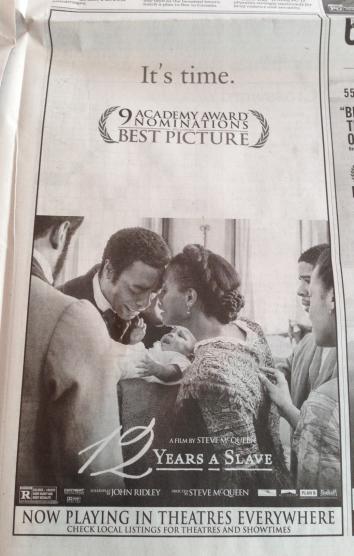
12_years_ad_2.jpeg

“It’s time.”

This is the  tag line in the post-Oscar nomination ads being prominently run in New York and California for  “12 Years A Slave,” a strong Academy Award contender (nine nominations, including best film).

Although there is room for disagreement, and the ad has the virtue of all clever advertising that it conveys different messages to different markets—Haven’t seen the film yet? “It’s time!”  Desperate to see the best movie you saw in 2013 finally get its due? “It’s time!”  When will the question of whether the most honored film of the last 12 months will win the biggest honor of them all be answered? “It’s time!”…or almost time, as the Oscar ceremonies are coming up on March 2—the consensus is that “It’s time” is mainly aimed at Oscar voters, and the message it conveys is, as Slate puts it, “it’s time for a movie about slavery, and with a significantly black cast and crew, to be recognized by the Academy of Motion Picture Arts and Sciences.” Film critic Phil Hammond puts it slightly differently:

“The ad not only can be interpreted as shining a light on a very dark period in American history, it also shines a light on the Academy’s fairly dismal record of awarding its top honor to any movie about the black experience. In fact there has been only one Best Picture winner in the 85 years the Academy of Motion Picture Arts and Sciences has been handing out Oscars that even remotely qualifies in this regard. In 1968, In The Heat Of The Night, a murder mystery set against the racial divide in a small Southern town, won Best Picture and four other Oscars just a few days after the assassination of Martin Luther King (the ceremony was even postponed two days out of respect). The votes were in before the King assassination, but it seemed then that “It’s Time” would have been an appropriate way to describe that victory. However, outside of lead actor Sidney Poitier — who also co-starred in another racially themed Best Pic nominee that year, Guess Who’s Coming To Dinner —  this movie  featured a largely white cast, white producer, screenwriter and director (Norman Jewison).”

If so many in the industry are interpreting the ad this way, it is fair to assume that this was at least one of the ad’s objectives, and on the assumption that it was an objective, your Ethics Alarms Ethics Quiz today is this:

“Is appealing to Oscar voters on this basis fair and ethical?”

I can see strong arguments for each position. Continue reading

The Alex Rodriguez Suspension, Barry Bonds, And The Slippery Slope

New York Yankees' Alex Rodriguez stretches before American League baseball game at Fenway Park in Boston

In a decision that further defines major league baseball’s cultural standards regarding performance enhancing drugs and the players who use them, New York Yankee Alex Rodriguez was suspended for the entire 2014 season and post-season by an arbitrator yesterday. Rodriguez, a long-time superstar who was once considered a lock to break baseball’s career home run record, and who is the highest paid player in the game, was suspended for illicit drug use without testing positive under the game’s union-negotiated testing system. He was, instead, suspended for a violation of the player’s Basic Agreement under baseball management’s right to police the game and do what is in its best interests.

The evidence that Rodriguez was a flagrant and long-time steroid abuser came from documents obtained from Biogenesis, a lab that developed drugs for athletes and others, as well as convincing testimony. Rodriguez had challenged the suspension in a grievance procedure after MLB handed down a 211 game suspension during the 2013 season. The arbitrator’s ruling, which is confidential, apparently concluded that the player not only cheated, but obstructed efforts to enforce baseball’s intensified anti-drug measures in the wake of the wide-spread use of PEDs in the 90’s and thereafter.

As expected, the result produced the usual complaints and rationalizations from the disturbingly large contingent of baseball fans and writers who remain obdurate regarding the offensiveness of steroid cheating, claiming that it was “a part of the game,” that the objections to it are inconsistent, and that baseball’s vilification of users is hypocritical. They had been practicing these and related arguments for months as they waited for the baseball Hall of Fame voting results announced last week, in which about 65% of the voters showed that they regarded steroid use as a disqualification for the honor, even when a player-user had excelled on the field. Rodriquez’s defeat deeply undermines the cause of the steroid defenders, and the likelihood that their argument will ever prevail. Continue reading

Here’s The Ethics Lesson From The Hall Of Fame Voting Results Tomorrow…

HOF

And that lesson is: sportswriters have no clue when it comes to ethical analysis, or any other kind of analysis, really.

Tomorrow the results of the Major League Baseball Hall of Fame voting will be announced, and those former stars receiving at least 75% of the vote will be officially enshrined as immortals. Every year before the steroid era, the voting was preceded by weird arguments that made no sense, like the one about whether a former player should be a “first time electee.” Some writers would concede that a given player was great enough for the Hall, but not vote for him because “he wasn’t good enough to get in on the first ballot.” This was, and is, ridiculous, and unfair. The question is, “Was this player great enough to deserve enshrinement, when the standards are unchanging?” It’s a yes or no question. “Maybe next year” is not a valid answer.

Thus I suppose that it should be no surprise that these same clods, faced with some really difficult ethical lines to draw in the wake of the so-called steroid era, show themselves to be not merely dunces, but ethics dunces as well. I just heard a sportswriter, Marty Noble, tell a baseball talk show that he won’t vote for any player about whom there is any question whatsoever regarding whether he cheated with steroids, including doubts based on rumors, whispering campaigns, looks, suspicions and drug tests. But he still voted for some players, he says. Well, that’s just wrong, by his own standards—he can’t be 100% sure about anyone. He also said that while he can vote for up to ten players, and agreed that there are more than ten players this year who have strong Hall credentials, he’s only voting for three. Why? Because, he says, the induction ceremony is too long.

Yes, he’s an idiot. Continue reading

Ethics Dunce: ESPN Blogger David Schoenfield

...reason is emotion, and emotion is reason...

…reason is emotion, and emotion is reason…

Every year about this time, a large group of baseball writers, not to mention fans, expose their ethics and analytical deficiencies by making terrible arguments for admitting steroid-using stars of note into baseball’s Hall of Fame. The voting for the Hall is going on now, you see, and this year a bumper crop of candidates were either proven steroid users or reasonably suspected of being so.

Also every year at this time, I pick one of those ethically-challenged writers as an Ethics Dunce. This year, the winner is ESPN’s David Schoenfield, by virtue of a sentence near the end of a recent post in support of Frank Thomas and Edgar Martinez, neither of whom are on the Performance Enhancing Drug suspicion list, as Hall of Fame candidates. Schoenfield wrote,

“The PED disagreements are all about emotion (“Cheaters!”) versus reason (“It was part of the game in that era, we don’t know who did what, etc.”).

Talk about a big, fat, hanging curveball over the heart of the plate! Continue reading

Ethics Dunce: NBA Coach Jason Kidd

"Clean up on Court One!"

“Clean up on Court One!”

Needing a time out with his team trailing in a close NBA game with the L.A. Lakers, Brooklyn Nets coach Jason Kidd used a trick he had apparently learned as a player at the knee of another cheating coach. Kidd “accidentally on purpose” spilled his cup of Coke on the basketball court. Naturally, play had to be halted so the mess could be mopped up, giving Kidd that time-out he needed to set up the next play. (His Nets lost anyway. Good.)

Later, Kidd insisted that his spill was accidental.  “Cup slipped out of my hand I was getting Ty,” Kidd told reporters. “Sweaty palms. I was never good with the ball. In the heat of the battle, you’re trying to get guys in and out of the game, and the cup fell out of my hand.” Then video showed Kidd telling a player, “Hit me!” to force the spill. That sparked a $50,000 fine from the NBA, but no acknowledgment of wrongdoing by the coach. Later he admitted that he “probably” shouldn’t have done it, “it” being “cheating,” but that he was just trying to win the game. “It’s about trying to win and those guys in that locker room, and I tried to put those guys in a position to get a basket, a good look and we did,” he said. Continue reading

Sugardaddies, Pregnancy Tests and Nigeria, or “If U.S. Culture Is More Ethical Than The Rest Of The World, The Rest Of The World Is In Big Trouble”

Our surprisingly ethical U.S. culture on display...

Our surprisingly ethical U.S. culture on display…

Aniruddh Khachaturi an is from Mumbai, India, and has been in the U.S. for the past two years, studying  computer science at Carnegie Mellon. For some reason his observations about what surprises him about American culture are newsworthy, according to Investors Daily, as opposed to, say, anyone else. They are thought-provoking, however, especially this : he is impressed with the nation’s “strong ethics”:

“…everyone has a lot of integrity. If someone cannot submit their completed assignment in time, they will turn in the assignment incomplete rather than asking for answers at the last minute. People take pride in their hard work and usually do not cheat. This is different from students from India and China as well as back home in India, where everyone collaborates to the extent that it can be categorized as cheating.”

I happen to think he is right, and that this is probably the reaction of most foreigners who spend much time here. Compared to almost everywhere else on the planet, the population of the U.S. is more ethical, and the U.S. culture is more concerned with ethical values, as one should expect in the only nation expressly founded as the expression of ethical ideals.

Nonetheless, our culture has shown alarming signs of growing more tolerant and even accepting of unethical conduct, and that is worthy of more than merely academic concern. Continue reading

Ethics Dunce: ARod-Plunking Red Sox Pitcher Ryan Dempster

I’ll admit it: I came thiiiiis close to designating Red Sox pitcher Ryan Dempster an Ethics Hero. Right after he intentionally threw a fastball  into Alex Rodriguez’s ribs on what would have been ball four, I was ready to write the post. Good for Dempster, I thought, making a statement for all the players who deplore steroids and the cheats who use them and for all the fans who feel that sociopathic, lying, greedy players who have debased the greatest game on earth with their use of PEDs. I continued to think that even after the Red Sox lost last night’s game against the Yankees, in no small part because Dempster put the Yankee third baseman, who continues to play while he appeals Major League Baseball’s suspension of him for this season and next, on base.

I was not, however, thinking clearly or ethically at the time.

Now, I am. Continue reading

The Ethics of Cheering Alex Rodriguez

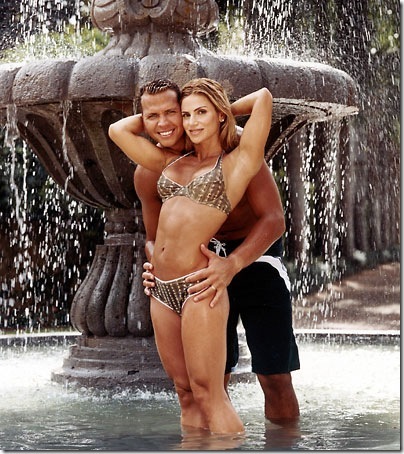
Poor Alex Rodriguez and his wife...

Poor, downtrodden, Alex Rodriguez and his wife…

Baseball’s most embarrassing super-star, the steroid cheat Alex Rodriguez, in playing for the New York Yankees while appealing his long suspension by Major League baseball. As he is unquestionably a repeat liar and a serial violator of the game’s rules against PED’s (performance enhancing drugs), as he signed a contract, in part generated by the results of his cheating, that will both enrich him by millions and handicap his team competitively while conferring few, if any benefits, as he would qualify, by most objective standards, as the antithesis of a sports hero, the fact that Arod, as he is called, still was cheered by a vocal minority in Yankee Stadium when he made his season debut this week is intriguing. What does this mean? Can it be ethical to cheer Rodriquez now?

These are deceptively complex and difficult questions. The threshold  issue is whether cheering or jeering any sports figure, or any public figure at all, is an act with ethical content rather than just a communication of an opinion. Is it conduct, or just “words”? I think, in the context of the Rodriquez situation, a sound argument can be made that it is conduct. Registering group approval or disapproval of prominent conduct by someone of status and influence is a crucial societal function in setting standards, registering disapproval, and prompting shame, regret, apology and reform—none of which, so far at least, seem to register with Arod.

That is pretty clearly what the boos convey, but what about the cheers? If the boos are ethical—they are if the disapproval is proportionate, rational, fair, and just—then are the cheers automatically unethical? Not necessarily. Here are some of the things those cheers could be expressing: Continue reading

Ethics Corrupter: Yankee Third Baseman Alex Rodriquez; Ethics Dunce: Yankee Manager Joe Girardi; Disgraced: The New York Yankees

Corrupted!

Corrupted!

Today, Major League Baseball announced that it was suspending Alex Rodriquez, the New York Yankees aging superstar, for the remainder of the 2013 season and the 2014 season for  using banned performance enhancing drugs, and impeding baseball’s investigation of his cheating. This was the climax (but not the end) of a long, drawn out, messy process and investigation involving a sleazy Miami drug lab, called Biogenesis, now closed down, which had records indicating that many professional baseball players had obtained banned substances.

Former National League MVP Ryan Braun (who I keep calling “Steve”) has already been banned for the rest of the year by the evidence obtained from Biogenesis records. The process has been marred by serial leaks from MLB  (unfair to the players involved, including Rodriquez) and ugly maneuvering between Rodriguez, who has been recovering from a serious hip issue, and the Yankees, who owe him approximately a gazillion dollars (thanks to an idiotic career contract signed in 2007 after he had already admitted to using steroids once), would like nothing more than for him to vanish in a puff of smoke and sulfur.

To explain the baroque ins and outs of baseball’s steroid wars, its player union relations, and the various intersecting agreements, special clauses and other things that have an impact on Rodriquez’s suspension would take too long here and would even bore the baseball fans. What you need to know now is this: Continue reading

When The Incompetent Meet The Corrupt: The U.S. Postal Service vs Lance Armstrong

Left to right: Lance Armstrong's lawyers, the U.S. Postal Service, Lance.

Left to right: Lance Armstrong’s lawyers, the U.S. Postal Service, Lance.

The U.S. Postal Service, virtually insolvent and incapable of doing anything about it, wasted $31 million in 2000 on a four-year contract sponsoring Lance Armstrong and his cycling team. Why? Search me. Still, it was , the Service says, paying to endorse champions, not cheaters, which is what Armstrong and his team were. Now Postal Service is joining a false claims lawsuit, claiming that Armstrong and the team defrauded the government and violated their sponsorship contract by using performance-enhancing drugs. The Postal Service filed the suit shortly after Armstrong finally admitted that what had been alleged for over a decade, what he had denied and sued over and attacked and protested and postured indignantly in pained and defiant terms was, in fact true. He had used illegal and banned substances and methods on the way to his epic success, hero status and world fame.

Armstrong is also a crook, taking millions from the Post Office and other sponsors who believed he was a real champion rather than a phony one. It would be nice, inspiring even, if just one lying, cheating miscreant voluntarily returned the millions he acquired through dishonest means, rather than using those millions to hire super-lawyers to allow him to keep the ill-gotten gains. Lance, however, bottom of the ethics barrel-scum feeder that he is, would not be my most likely candidate for such a noble display. Indeed, he is living up to my low expectations. Continue reading