 What else could he say?
Chief Justice John Roberts’ Statement Regarding The Dobbs Leak
What else could he say?
What else could he say?

This post just leapt over several others because the case was just announced.
The Louisiana Unsafe Abortion Protection Act, enacted in 2014, requires physicians performing abortions in Louisiana to have the right to admit patients to a hospital within thirty miles of the place where the abortion is performed. The law is virtually identical (as today’s opinion points out) to a Texas law that the Court held in Whole Woman’s Health v. Hellerstedt was unconstitutional four years ago by a vote of 5-3. In a vote that will have conservative bloggers’ heads exploding like fireworks, Chief Justice John Roberts, who had been among the dissenters in the Texas case, joined the four liberals in ruling that the Louisiana law is also unconstitutional, while saying that he still believes that the Texas case was wrongly decided.
The decision is here. SCOTUS Blog’s coverage is here.
I won’t comment on the dissents—-there are several—because I haven’t read them yet. (But I would bet my head that Justices Alito and Thomas essentially recycled their previous objections to Whole Woman’s Health v. Hellerstedt. ) However, I wrote at length about the Texas case in 2016, and upon reviewing it, I see nothing substantially different from what I would conclude about today’s decision. in both cases, it seems clear that the state was using a pretextual safety measure to restrict abortions as much as possible. Then I wrote, Continue reading

—–Democratic Senate leader Chuck Schumer, sounding like Sonny Corleone, in front of the Supreme Court.
How many ways was this demagoguery wrong, as in spectacularly unethical? Let’s see:
There is no possible justification for such ominous rhetoric
Perfect.
Even addled Larry Tribe, the former Harvard Law School icon turned mad anti-Trump tweeter and conspiracy-monger, called Schumer’s outburst intolerable, tweeting,
These remarks by @SenSchumer were inexcusable. Chief Justice Roberts was right to call him on his comments. I hope the Senator, whom I’ve long admired and consider a friend, apologizes and takes back his implicit threat. It’s beneath him and his office.
Prof. Jonathan Turley joined the chorus and wrote, Continue reading

What Chief Justice Roberts said:
“We do not have Obama judges or Trump judges, Bush judges or Clinton judges. What we have is an extraordinary group of dedicated judges doing their level best to do equal right to those appearing before them. The independent judiciary is something we should all be thankful for.”
What prompted his comment: After federal judge Jon Tigar of the U.S. District Court for the Northern District of California temporarily blocked the Trump administration from denying asylum to migrants who enter the U.S. illegally, the President said that the decision was a “disgrace,” adding,
“Because every case, no matter where it is, they file it — practically, I mean practically — for all intents and purposes — they file it in what’s called the 9th Circuit. This was an Obama judge. And I’ll tell you what, it’s not going to happen like this anymore. Everybody that wants to sue the United States, they file their case in — almost — they file their case in the 9th Circuit. And it means an automatic loss no matter what you do, no matter how good your case is. And the 9th Circuit is really something we have to take a look at because it’s — because it’s not fair. People should not be allowed to immediately run to this very friendly circuit and file their case. And you people know better than anybody what’s happening. It’s a disgrace. In my opinion, it’s a disgrace what happens with the 9th Circuit. We will win that case in the Supreme Court of the United States.”
This was—I don’t think it’s unfair to characterize it as “gleefully”—gleefully reported as a rare rebuke of the President by a Chief Justice.
Notes: Continue reading
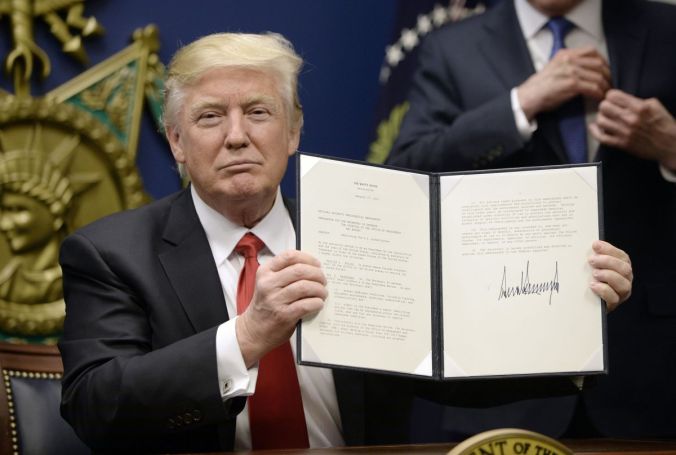
The Supreme Court properly and ethically killed the burgeoning liberal judicial theory that different Presidents have different restrictions on how they can exercise established Presidential powers. The majority in in the just announced decision in Trump v. Hawaii conclusively struck down a Hawaii judge’s ruling that Trump’s hostile comments about Muslims on the campaign trail rendered his travel restrictions unconstitutional, while a similar measure ordered by a nice President for the right intuited reasons would be presumably acceptable. This seemingly partisan ruling required substituting mind-reading for the President’s stated reasons for the Executive Order, and would have established a terrible precedent in a number of areas.
Sadly, this was another 5-4 ruling where the Court seemed to divide along ideological lines. However, since it seems clear that the five conservatives would have ruled the same way no matter which party’s President had issued the order, while the liberal bloc was indulging “the resistance” with a “Trump is special” approach, only one side of the political divide appears to have left integrity and and objectivity in their spare robes. Many, many commentators around the web have noted that this should have been a 9-0 decision, and that the political bias of the Hawaii decision was flagrant from the start. I agree. The President’s authority in this area is clear and unambiguous.
Writing for the majority, Chief Justice John Roberts wrote that the government “has set forth a sufficient national security justification” for its action. “We express no view on the soundness of the policy,” Roberts added.
More, from the holding: Continue reading

Virginia Governor McDonnell shows off the luxury watch he got as a gift from a businessman he barely knew who expected expected nothing in return…
Governor Bob McDonnell, Virginia’s Republican governor from 2010 to 2014, was charged with using his office to assist businessman Jonnie R. Williams Sr., who, often with Mrs. McDonnell as a conduit, gave his family wedding receptions, loans, vacations and jewelry worth more than $175,000. I wrote about this scandal here, here, and here. The gifts were legal, thanks to absurdly lenient Virginia ethics laws, just as they were obviously unethical, except perhaps to the clueless McDonnells.
Governor McDonnell arranged meetings for Williams and attended events with him. My favorite part of the criminal trial was when McDonnell claimed that he never dreamed that Williams expected anything in exchange for all of his gifts, and then Williams said that of course he expected some favors in return. The jury found that McDonnell’s actions amounted to corruption and a quid pro quo exchange amounting to bribery. A federal appeals court upheld the conviction.
The Supreme Court’s 8-0 decision this week to vacate the conviction upholds the principle that even if someone has done something obviously bad, there has to be a law against what was done before the act occurred in order to convict him. It’s a rather narrow decision. The Court points out that the law McDonnell was convicted of breaking requires “official acts” to be bought and sold for the law to be breached, but that all McDonnell did was hand out political favors to his “friend”: setting up meetings, communicating his favor, greasing the wheels, essentially. (Much is made of the fact that Williams didn’t benefit very much from any of this, which is just moral luck. It doesn’t make what the governor did any less sleazy.)
Wrote Chief Justice Roberts in his opinion for the unanimous Court: Continue reading

Because he just IS, that’s all. Everybody knows it. Come on. What’s the problem?
Well, I’m still waiting for the wave of op-eds and pundit pieces condemning the judge in the Dennis Hastert case for somehow turning the ex-Speaker’s trial for breaking banking laws into a trial for child molestation even though he couldn’t be charged with that crime.
I appear to be one of the very few people alarmed by this. Coming at a time when we have a Presidential candidate advocating the imprisonment of financial traders without any indications that they broke actual laws, this qualifies as a bona fide societal virus, and a potentially dangerous one.
Over at Popehat, habitual Ethics Hero Ken White flagged another outbreak that somehow I missed (I blame Fred).
It seems that an Oklahoma court rejected the prosecution of a teenage boy for engaging in oral sex with a teenage girl (she was, to be delicate, the oral recipient) who was passed out drunk, and the Court of Criminal Appeals agreed, ruling:
“Forcible sodomy cannot occur where a victim is so intoxicated as to be completely unconscious at the time of the sexual act of oral copulation. We will not, in order to justify prosecution of a person for an offense, enlarge a statute beyond the fair meaning of its language.”
Ken begins, tongue hard in cheek,
“Did you hear? Oklahoma said it’s legal to rape someone if they’re unconscious from drinking! They said it’s not rape at all! It’s classic victim-blaming! It’s outrageous! It’s rape culture! It’s just what you would expect from one of those states!”
He then examines the statutes involved. It turns out that the unimaginative legislature, when defining the crime of forcible sodomy which was what the boy was charged with, missed this set of potential facts. She wasn’t forcibly raped, because she wasn’t conscious. Continue reading
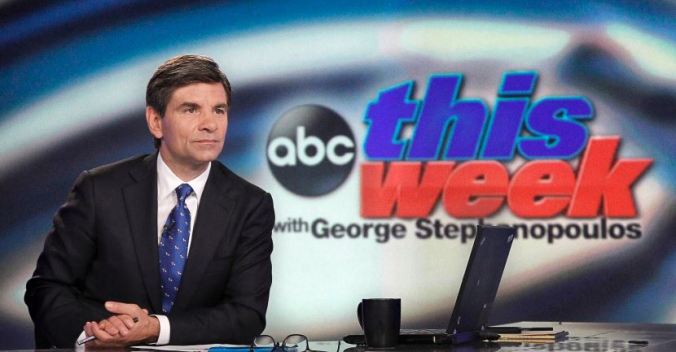
You have to congratulate ABC’s This Week with George Stephanopoulos today for managing to demonstrate, within a 45 minute span, everything that is currently wrong with the Presidential race, and the current front-runners:
First George interviewed Donald Trump, who, as always, said nothing of substance, declared that what he would do as President would be wonderful, gave no specifics whatsoever about how he would “be great for the blacks, bring all those jobs back from China,” and showed that his versions of law, logic and ethical reasoning are infantile…BUT did it with cockiness and flair, which is apparently good enough for millions of people. He mainly rambled on about how Chief Justice Roberts has been “a disaster,” demonstrating that he assesses judges like interior decorators: if you like the result, they did a great job. Trump cited Ted Cruz’s support for Roberts’ nomination, and Stephanopoulos didn’t have the wit to point out that Cruz wasn’t elected to the Senate until 2012, whereas Roberts was confirmed in 2005.
Actually, the Cruz-Roberts connection is that Cruz recruited Roberts, whom he knew as a Supreme Court law clerk, for George Bush’s legal team during the 2000 election controversy. Bush won that election, you will note, so in that case, Roberts seems to have been a good choice. I suspect that history will look at Roberts as an unusually skillful Chief Justice who managed to keep an unusually fractious court in line, and squeezed a lot of unanimous decisions out of a group that easily could have been dysfunctional.
When the host pointed to an old video in which Trump appeared to endorse the concept of “New York values,” Trump repeated his stunt that worked so well during the debate, waxing on about the city’s response to 9-11. I can understand why Cruz didn’t make this point, but a competent interviewer is obligated to: “Wait, sir, are you saying that New York City reacted any differently or more courageously to that tragedy than Charleston responded to the church shooting or the people of Oklahoma City responded to its bombing? Surely you know that Sen. Cruz was talking about liberal social values, not typical American resilience in the face of tragedy?” Continue reading
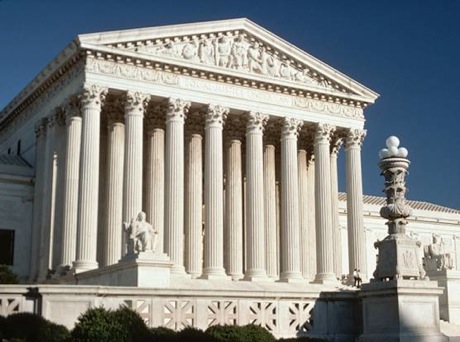
Obergefell v. Hodges, in which the Supreme Court considered whether states had to recognize a right to same-sex marriages, and King v. Burwell, in which the Court was called upon to clarify some incompetent drafting in the Affordable Care Act, could not be more dissimilar in terms of issues, topics, and significance. Nonetheless, because the two decisions involved hot political issues and arrived on consecutive days, and because they ended up favoring the positions that Democratic and progressive partisans support, they have been conglomerated in public discourse to fit several general themes, all, to varying degrees, misleading, simplistic, and biased. The decisions have also launched some of the most hysterical and embarrassing commentary in recent memory.
Some ethics, as opposed to legal, observations:
1. Anyone who hasn’t read the majority opinions and the dissents, who just skimmed them—believe me, if law school taught me anything, it taught me that skimming court opinions was a sure road to error and humiliation—or who read them but could not understand them, should be ignored, and perhaps gently mocked, for expressing any view at all about whether the decisions were the “right” ones. Quite simply, such people are not qualified to hold an opinion. They can have, and express, an opinion regarding whether the Court’s calls on Burwell or Obergefell are consistent with their own needs, desires, belief or political orientation, but they have no basis for asserting that either decision is wrong, or, right, on the law.
2. One can find it troubling and ominous, as I do, that the votes on the two cases were as predictable as they were. Objective legal scholars with integrity should be capable of ruling in ways that are not congruent with the personal political philosophies. A Democratic Presidential appointee who favors expansive government activity in health care control should be able to look at a statute designed to accomplish that purpose and still conclude, “Nope, the law mean what they want it to mean,” or “Sorry, the damn thing is unconstitutional.” Similarly, we should be able to trust a politically conservative justice to examine a statute that he objects to on principle and still conclude, “Yup, it passes the test.” Maybe all the Justices are capable of meeting this standard, but these two cases don’t suggest that. They suggest the opposite. Continue reading

Supreme Court justices deserve to have a good laugh now and then.
Michigan, Ohio, Kentucky, and Tennessee are all defending their legislative bans on gay marriage in briefs before the U. S. Supreme Court. Only one of their legal teams came up with—-or had the guts to include—the novel argument contained in the Bluegrass State’s brief, which explains why a ban on gay marriage does not “discriminate on the basis of sexual orientation”:
Kentucky’s marriage laws treat homosexuals and heterosexuals the same and are facially neutral. Men and women, whether heterosexual or homosexual, are free to marry persons of the opposite sex under Kentucky law, and men and women, whether heterosexual or homosexual, cannot marry persons of the same sex under Kentucky law.
This is in the amusing category of arguments that make technical sense in legal terms—well yes, come to think of it, if you look at it that way, you’ve defined discrimination right out of the case!— but no sense whatever in the real world. Gays can’t marry their intended life partner but heterosexuals can; that’s obviously unequal treatment and constitutes discrimination. The defense deceitfully pretends that the whole reason for the emotional controversy doesn’t exist: “Love? What’s that? We know nothing of this thing you call love!”
These come up all the time when legal teams are brainstorming which theories to pursue in an appellate brief, and are virtually always discarded after some general amusement and admiration for the Clintonian who devised it. There is nothing unethical about including a dubious argument along with better ones in a brief, even a Supreme Court brief: consider the position that carried the day in the Obamacare case, when Chief Justice Roberts adopted a rationale for the individual mandate that the Obama Administration had repeatedly rejected and denied. The problem is that such an off-the-wall argument is risky:
1. It pulls time, attention and consideration from more promising arguments.
2. It makes the client look foolish or unserious to the public.
3. Worse, it might make the client look foolish to the justices.
4. Some justice might react to it as an insult to his or her intelligence.
More than all of that, however,the argument is not going to work. Can you imagine what the reaction would be if the Supreme Court endorsed gay marriage bans relying on that logic? The argument is a non-starter, so including it in the brief sends a loud and clear message that no appellate lawyer ever wants a judge to hear:
“We got nothin’.”
 Ethics Alarms