Remembering Christmas Music

nativity

It is slowly dawning on me that Christmas music, one of the annual joys of my childhood and perhaps yours, is in a perilous state, both culturally and aesthetically. The best of the songs musically are religious in nature, which means that schools won’t pass them along to their charges as happened routinely when I was a child, and even playing them on the radio is likely to be regarded as a religious statement. I just loved the music, as I think most kids would if they ever got the chance before they were brainwashed into believing the ancient songs were subversive.

A full court cultural press is underway to make those songs as rarely heard outside of church as hymns, and I don’t see the trend as reversible. One obvious bar to a comeback: current pop stars don’t have the pipes to sing most of them without causing a sound pollution emergency. Or, if one of the few singers who could actually hit the notes dared to cover a carol like “O Holy Night,” he or she would feel required to apply flourishes of the sort that make every rendition of “The Star Spangled Banner” at a major sports event an invitation to PTSD.

Even for the more secular Christmas repertoire, the clock is running out. The most listenable versions, and the definitive ones in most cases, are by performers of the past who are not just dead, but also long forgotten by the current culture. An hour of classic Christmas recordings on the radio is now a reminder of how old I am and close to joining great singers like Bing Crosby, Judy Garland, Andy Williams, Nat King Cole, Jo Stafford, Burl Ives, Gene Autry, Frank Sinatra, Dean Martin, Elvis—dead, dead, dead. I guess Brenda Lee is still alive, so “Rockin’ Around The Christmas Tree” is a little less depressing, but it’s a minor classic at best. It’s gotten so bad that when I hear “The Little Drummer Boy,” I find myself wondering if the whole Harry Simeone Chorale is dead too—Harry died in 2005, and the recording is 56 years old, after all.

Meanwhile, our post-modern culture is sneering at the whole idea of Christmas songs, and Christmas itself. Most modern Christmas songs either are making fun of Christmas, about sex, or just lousy. The tradition is being undermined in more creative ways, too: this week I watched a 2012 straight-to-video movie called “12 Disasters of Christmas,” based on the loopy premise that “The Twelve Days of Christmas” was really a coded recipe for stopping the 2012 apocalypse predicted by the Mayan calendar. “The Mayans knew that the knowledge would have to be preserved for centuries, so they devised a song that would carry the secret and would be passed on and learned by children for generations,” explains the old codger who’s figured it all out. (But why would they choose such a monotonous and stupid song?) Come on, guess: How does the “Chosen One” stop the end of the world? [Answer below.]*

The movie is on to something, though. The Christmas songs that have the best chance of persevering though this age of  cynicism and cultural illiteracy may be those that either tell a story  or that have an interesting one related to their creation. The simple and beautiful tune of “Silent Night,” for example, as one of those films they used to show in school assemblies every year before some anti-religious hysteric sued, was composed for guitar in response to a Christmas Eve crisis for a small church in the Austrian alps in 1818: the church organ wasn’t working.  I have found that Irving Berlin’s “White Christmas”  affects me far more deeply since I learned that the Berlins’ infant son died on Christmas day, and that while his children celebrated Christmas as a cultural holiday, Berlin and his wife did not. They spent each Christmas after their son’s death in mourning. The song is a wistful remembrance of a happier time that the composer will never experience again.

Maybe another Christmas song will persevere if its origins are remembered; I was reminded of its history this week as a result of the thaw in U.S. relations with Cuba. Though my wife hates it, the song is one of my favorites, perhaps because it brings back warm memories: I watched the song’s first national broadcast with my sister and parents, and the Marshalls bought the recording the next day.

It was 1962. Noel Regney and Gloria Shayne were a husband and wife songwriting team of modest success. They were saddened by the lack of any spiritual content in popular Christmas songs then; imagine what they would think today.

Like all Americans, they were petrified during the thirteen days of the Cuban Missile Crisis, when the world stood on the brink of nuclear annihilation. As the crisis intensified, Regney found himself inspired to write down a simple poem with a Christmas theme. (Later, the couple would say that neither of them could ever sing the song through, because of the strong emotions it recalled.) When the nation could finally take a deep breath of relief as the threat ended,  Gloria devised a melody for her husband’s words, though he had always been the composer when he and wife wrote songs together.

The result of this unique variation on their collaboration was recorded before the end of 1962, but it wasn’t until the following year, when Bing Crosby sang the team’s creation live on ABC’s  “Hollywood Palace,”  that it became widely known. The song written during the Cuban Missile Crisis became a best-seller, Crosby’s last hit Christmas record, and also the last popular Christmas song to have a religious theme.

It was, and remains, a prayer for peace.

____________________________

* By finding and wearing FIVE GOLDEN RINGS, of course!

On Its 100th Anniversary: Remembering The Great War’s Christmas Truce Of 1914

christmas-truce-1914-H

On December 7, 1914, as the horrible, pointless, world-disrupting “War to End All Wars”  was only five months old, Pope Benedict XV suggested a truce for the celebration of Christmas. The governments of the battling nations rejected the idea, but in the days leading up to  Christmas and after, many of  the soldiers in the trenches of this ugly conflict took the Pope’s advice.

On December 20, Germans soldiers in some areas took in British wounded from the no man’s land between the warring armies. A German soldier reported on December 22 that both sides had been heard singing Christmas Carols in the trenches. German troops arriving into the lines had begun bringing Christmas trees, and some men placed them on the parapets of the fire trenches. Then, on Christmas Eve, many German and British troops serenaded each other across the lines. Allied soldiers reported that sometimes their singing was accompanied by German brass bands. Then, Christmas Day, 1914, some of the German soldiers left their trenches and  carefully approached Allied lines, shouting“Merry Christmas” in French and English. Allied soldiers climbed out of their trenches, and shook hands with the men who had only recently been trying to kill them. Some even exchanged exchanged gifts of cigarettes and and food. There were even instances where soldiers from opposing sides played soccer: in England, one organization is holding a match next week against a German team to commemorate such contests. Continue reading →

Signature Significance: The Sick Little Girl’s Stolen Puppy

pug-puppy

If you ever want to explain the concept of signature significance in ethics—how one act can be sufficient evidence to make a fair and valid judgment about someone’s character—to a friend or colleague, this story should do the trick.

In California, a kind woman named Shawna Hamon heard about a 7-year-old girl with leukemia whose Christmas wish was for Santa to bring her a pug puppy. So Hamon bought a pug puppy, and gave it to a friend who promised to deliver the little dog to the girl in Sacramento in time for the holidays.

The puppy never arrived, however.  The friend decided to keep it for herself. Hamon sent an animal delivery service and an attorney to the woman’s Los Angeles home, but the woman refused to give the dog back. Then Hamon  filed a theft complaint and police got a search warrant to search the home, but found no pug puppy. After searching some other nearby homes, they eventually found the little dog at a neighbor’s  house, where the pug-napper had hidden it.

Hamon now has the dog back, and learned her lesson. She will deliver it herself this time, a bit late, to the sick little girl. The child is currently receiving experimental treatment for leukemia in Philadelphia.

Now, what are the chances that the woman who took the dog, a desperately sick child’s Christmas gift, for herself, and foiled the compassionate act of a friend in the process, was just having a bad day, just made one mistake, really is a fine, upstanding, trustworthy individual and can’t be judged conclusively as an unethical cur (no offense, puppy…) based on this one incident, because a single episode has no statistical and predictive significance?

None.

____________________________

Pointer: Fark

Facts and graphic: NBC

There May Not Be A War On Christmas, But Whatever It Is, Christmas Is Losing

??????????????????????????????????????????

I don’t think it’s my imagination, or that I’m watching too much Bill O’Reilly (since I almost never watch Bill O’Reilly), but it became very clear to me this year that Christmas, as a society-wide cultural convergence in America, is losing its grip.

The reasons are varied and many, and to pick out any in particular one would betray my own biases. But I am a fairly obsessive observer of the popular culture, and there was markedly less Christmas this year in every way. Religious references to the Christmas story—the manger, the Wise Men, the Star of Bethlehem and the rest, are almost invisible outside of church. On television, that part of Christmas is taboo, apparently; on radio too, traditional carols, which once were standard fare, whether sung by pop singers like Bing Crosby or classical artists, are mostly relegated to the classical music channels. On the other stations, there was less Christmas music than I can ever recall, and perhaps because of that, I was very conscious of how dated virtually all of it is. The last non-frivolous Christmas standard to enter the playlist was 1962’s “Do You Hear What I Hear?, ” and the other newer ones  are either songs about romance using Christmas as a backdrop, anti-Christmas novelties (“Grandma Got Run Over By  A Reindeer”), or just lousy.

Meanwhile, listening to the parade of pop yule classics is an exercise in morbidity. Almost all of them are sung by dead artists that no one under the age of thirty (or forty?) could have ever heard or seen perform live. Bing, Dean Martin, Karen Carpenter, Andy Williams, Burl Ives, Gene Autry, Judy Garland, Nat King Cole, Mel Torme, Frank Sinatra—Andy just left us, but most of the rest, with the lingering exceptions of Johnny Mathis and Harry Belafonte, are not merely dead, but long dead, like Marley. No one has taken their place in this genre, and that means that it’s a dying genre.

It is obvious that Christmas movies are being run on television less than ever before, too. It was once impossible to avoid encountering several versions of “A Christmas Carol,” and sometimes the same one would keep popping up, annoyingly so. Not any more. “It’s A Wonderful Life” had its annual showing, and I stumbled upon “White Christmas” a couple of times, but the pickings were slim.   The lousy Richard Attenborough “Miracle on 34th Street’ turned up; Turner Classics ran through most of the old Christmas classics once, but you had to look for them. There haven’t been any new Christmas movies from Hollywood that have made the grade for a very long time: with the exception of the first “The Santa Clause,” what Hollywood has been churning out are more or less bitter comedies (“Christmas With The Kranks,” “Jingle All The Way,” “Bad Santa,” “Christmas Vacation”–even the “Home Alone” films) that portray Christmas as suburban hell.

Then there are the wan or missing town hall and town center Christmas displays (Gotta watch out for those law suits), the tasteless Christmas TV commercials (the men in boxers jingling their “bells” is gross, in my opinion), and the hesitation you hear in strangers’ voices as they try to guess whether “Merry Christmas” will offend you or not.  I used to encounter carolers several times every Christmas, in shopping malls if nowhere else. The malls are disappearing, and kids don’t go caroling any more. They don’t know carols any more, because if their school teaches them one (because it’s a lovely song) some fanatic will raise a stink and claim its religious indoctrination.  Children, in a more innocent, less cynical age, were allowed to believe in Santa Claus well past the age of 5. (I was 26 before I knew the truth.) No longer. Christmas just feels half-hearted, uncertain, unenthusiastic now. Forced. Dying.

It was a season culminating in a day in which a whole culture, or most of it, engaged in loving deeds, celebrated ethical values, thought the best of their neighbors and species, and tried to make each other happy and hopeful, and perhaps reverent and whimsical too.  I think it was a healthy phenomenon, and I think we will be the worse for its demise. All of us…even those who have worked so diligently and self-righteously to bring it to this diminished state.

But anyway,

Merry Christmas.

For what it’s worth.

________________________________

Graphic: Stacy Gustafson

Worlds Are Colliding! A Conflicted Holiday Invitation For Ethics Alarms Readers, Their Friends And Families…

A-christmas-carol1

Now I know how George Costanza felt. This time it is the world of Ethics Jack and Theater Jack that are colliding….

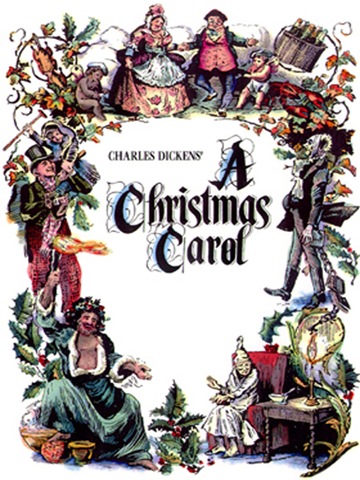
The American Century Theater, the small, Arlington, Virginia-based non-profit professional theater company—you know, one of those “culture palaces” that rich people give to so they can “hobnob” with each other (our performing space is in a Middle School) according to Robert Reich—which I helped found and have served as Artistic Director for 18 years— is producing a unique—and free—dramatized version of Charles Dickens’ “A Christmas Carol” that Ethics Alarms readers can actually “attend” and enjoy with the families, friends and ghosts.

Using a technique pioneered by Ethics Jack’s company ProEthics for Continuing Legal Education teleseminars under the auspices of Virginia Continuing Legal Education,  the production will recreate the sound and feel of old time radio drama using modern teleconferencing technology. All of the actors are snug in their own homes, using telephones as their microphones, as their vocal portrayals are mixed, live, with music and sound effects by sound designer Ed Moser, also The American Century Theater’s technical director. More than 20 current and former professional actors from  Maryland to Utah will be involved, creating an hour-long, live recreation of a script adapted from the Golden Age of radio drama, when Campbell’s Soup presented an annual live broadcast of “A Christmas Carol” starring Lionel Barrymore ( you know him best as “Mister Potter”) as Scrooge, to millions of families across the country every Christmas Eve.

Theater Jack is the director of the show, which you can listen to over your own phone, or better yet, through the speaker phone with your family taking in the sounds of the classic tale by your side.

How do you do this?

It’s as simple as licking a candy cane!

Anyone wishing to hear the broadcast will only have to call in a few minutes before 8 PM, E.S.T., on Sunday next, December 22. The  audience Dial-in number is 1-443-453-0034, followed by entering the Christmas Carol Conference Code: 758246. Then, upon entering the virtual theater, audience members must press *4 to mute their lines (if only theater audiences and their cell phones were so neatly muted!) and wait for the show to begin. There will be no charge to the listening audience for “A Christmas Carol,” except for regular long distance rates where they apply.

Feel free to let your friends, colleagues and neighbors know about the event, and consider this worlds collision-risking invitation my thanks to you for helping Ethics Alarms have a banner year of ethics debate and illumination.

Merry Christmas!

-A-Christmas-Carol

Hallmark’s Christmas Carol Ethics Misadventure

holiday-sweater-keepsake-ornamentTo consider this ridiculous controversy, let’s start at the very beginning (a very good place to start):

Here are the lyrics of the 19th Century Christmas carol “Deck the Halls,” one of the best known and most sung of the traditional carols these days because it doesn’t mention God, angels, Jesus or anything overtly religious:

Deck the halls with boughs of holly,
Fa la la la la, la la la la.
Tis the season to be jolly,
Fa la la la la, la la la la.

Don we now our gay apparel,
Fa la la, la la la, la la la.
Troll the ancient Yule tide carol,
Fa la la la la, la la la la.

(There are four more verses, but these are the ones most of us know.)

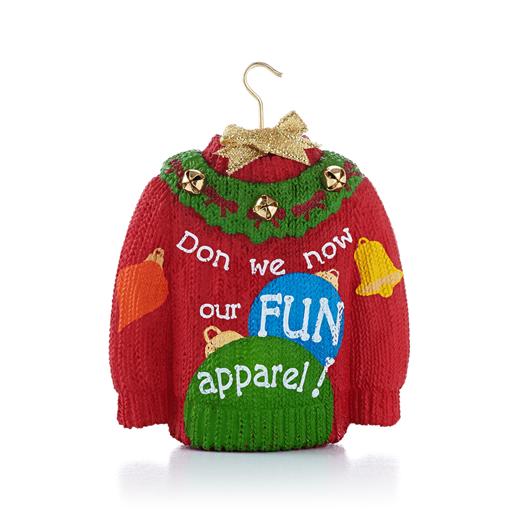
You would think that nobody could get in trouble using this particular holiday song, but Kansas City-based Hallmark was equal to the challenge. It decided to change the words for one of its new holiday ornaments, designed by “Keepsake Artist,” Matt Johnson. He  designed an ornament shaped like a typically gaudy Christmas sweater  sporting the altered lyric “Don we now our Fun apparel.” The word “gay” was removed.

Hallmark, much to its surprise, was flooded with complaints, and not just on the basis of one perceived offense, but several, and contradictory ones at that:

1. How dare they mess with the lyrics of a traditional and well-loved carol?

2. This was an anti-gay decision, literally and figuratively.

3. This was political correctness, to avoid criticism from gays.

Confronted with unseasonal hate mail and threats of a boycott, Hallmark did what many corporations do in such crises. It lied. Here was its initial statement, before Hallmark surrendered and apologized with one of those ‘we didn’t mean to offend anyone’ things : Continue reading →

The Ethics of Christmas Shaming

Ethics Alarms participant Jeff Hibbert asks my reactions to this photo:

Blurry face boy

[The sign reads: “I have to take back my PS3 that I was getting for Christmas because I wasn’t grateful to receive a Captain America action figure (That I received from Church) so I’m going Christmas shopping for other kids with the refund money!”  The actual photo on the web shows the unblurred face of an unhappy boy, and that is how I originally posted it. However, after some prompting by Jeff, I concluded that I was adding to the boy’s plight by helping to publicize his identity. Ethics Alarms commenter texagg04 kindly provided this version, as well as three others that gave me some Christmas mirth by replacing the boy’s face with Bart Simpson’s, a smiley face, and most inspired of all, the face of recent Ethics Alarms’ subject John Dillinger.]

I can’t find any context for it, back-story, or the name of the family involved. (I’m glad about that last part, by the way.)  If it is what it appears to be, a young boy’s parents are subjecting him to rather harsh punishment for displaying inadequate gratitude for a gift he didn’t care for, by forcing him to return his favorite gift, a Play Station 3, and use the money to buy gifts for presumably needy children. Continue reading →

Holiday Ethics Quiz: The Family Stuffing Dilemma

Families can fight about anything.

Further proof that families can fight about anything.

In the category of the kind of ethics controversy only families can devise comes this one, from an old friend from high school, who just e-mailed me for advice:

She is having her sister and her sister’s family, all adults, over for Christmas dinner. She is cooking all of it, turkey, stuffing, chestnuts roasting on a open fire, Andy Williams on a spit—the works. Today her sister tells her that her daughter will be bringing her own turkey stuffing, because she likes her recipe best. My friend said, “Fine,” and hung up. Now she is quietly fuming. She asks, “What kind of behavior is that? I’m inviting them to dinner. Who brings their own private courses because it’s their personal preference?” (She adds that nobody has ever complained about her stuffing. I can personally vouch for that: I’ve eaten it in past years, and it’s excellent.)

My friend thinks the whole idea is an insult and bad manners, and wants to call up her sister to say, oh, lots of possible things, like “You know Christmas Eve when we’re coming over to your house for dinner? Well, my daughter will be bringing hamburgers, because she thinks the food you serve is crap,” or, “Tell Phyllis she’s welcome to make her own stuffing and get her ass over here at 6 AM to stuff it in our bird, or she can live with what I’m serving,” or “Why don’t you all just bring your favorite damn dishes and we can just have pot luck?”

So it’s a two-part Christmas Ethics Quiz for the Ethics Alarms faithful:

1. Is the daughter’s conduct inexcusably rude?

2. Should my friend say anything about it? Continue reading →

Your Ethics Assignment…

christmas_carol_02

…read “A Christmas Carol,” out loud if possible.

As literary celebrations of ethical values go, there is nothing better.

Here.


A Christmas Story Redux: Alek and the Controllable Christmas Lights

Go ahead! Try em!

Go ahead! Try em!

Christmas is right around the bend, so it is again time to celebrate Alek O. Komarnitsky and his creative, slightly wacky, Christmas lights extravaganza that he has transformed from a mildly unethical spoof to an act of charity and generosity.

Back in 2004, Alek received national attention for his whimsical holiday website that allowed people all over the world to turn his elaborate Christmas lights on and off from their home computers. Everyone had fun, which was clearly Alek’s design. Still, when it became known that his site was a hoax and that the lights going on and off were only an illusion, I weighed in (on The Ethics Scoreboard) with the opinion that perpetrating such a large-scale deception was wrong, no matter how well-intentioned and light-hearted. Alek took issue with my criticism, and we had a spirited e-mail debate.

Then, at a significant cost in time and money, Alek devised a way to really let people all over the world turn on his lights. He has done this ever since, and uses the site to raise money to cure Celiac disease. He writes: Continue reading →