civility
Comment of the Day: “Do We Really Want To Live In A Society Where Tow-Truck Drivers Refuse To Tow The Cars Of Bernie Sanders Supporters?”

I’m sorry. I couldn’t resist.
Not much introduction is needed for prolific commenter Pennagain‘s eloquent Comment of the Day on the despicable conduct by Trump supporter Ken Shupe. The news media really don’t comprehend what is important here: it almost seems that if the motorist he left stranded because she had a Sanders sticker on her car wasn’t handicapped, this might never have been a news story at all, especially since the conduct is not far removed from what would naturally be expected from most Trump fans, or to use the technical term, idiots.
Pennagain does get it, though. Here is his Comment of the Day on the post, Do We Really Want To Live In A Society Where Tow-Truck Drivers Refuse To Tow The Cars Of Bernie Sanders Supporters?
In all the years — about forty, I think — during which I wore backpacks whereon buttons could advertise my positive preferences (social, political, philosophical or just amusing, never sports since I wasn’t suicidal), I never thought of removing one unless it was outdated for one reason or another. People often commented (that was part of the pleasure of it unless I was late to work) as either just a passing acknowledgement pro or con, or as an invitation to an argument. If the latter, I turned it to discussion as far as possible and usually succeeded, even if it meant one of us getting off the bus or the elevator with the other, or standing with a group on a street corner or at a park bench, and twice that I can remember adjourning to a nearby eatery for several hours.
Usually, people were satisfied just to state their preferences (“sharing” was big — a few jump in front of me or turn their backs so I could view their statements). More often than not and usually with tourists (or out-of-state, especially in small towns) there was an exchange of views, even if just for a few minutes, with those who were more curious than aggressive. The plus side was gathering acquaintances whom I ran into regularly, exchanging greetings or insults of the friendlier kind. Verbal aggression, yes, nearly always from fringe religious groups; physical threats only from very old people (…never understood that) and those clearly with psychological problems. I don’t know if I changed any minds, but I do know I set several people to thinking, and they did the same for me. [if they hadn’t, I probably wouldn’t be posting here now]
Do We Really Want To Live In A Society Where Tow-Truck Drivers Refuse To Tow The Cars Of Bernie Sanders Supporters?
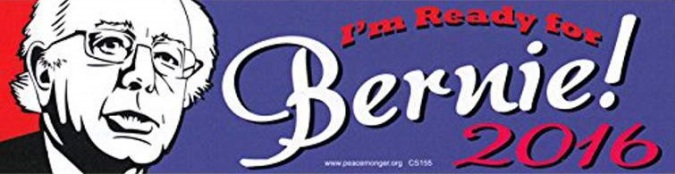
In Ashville, North Carolina, tow truck driver Ken Shupe arrived on the scene to find motorist Cassy McWade standing by her accident-disabled vehicle on Interstate 26. “He goes around back and comes back and says ‘I can’t tow you,” Wade told a reporter. “My first instinct was there must be something wrong with the car. And he says, ‘No, you’re a Bernie supporter.’ And I was like wait, really? And he says, ‘Yes ma’am,’ and just walks away.”
“Something came over me, I think the Lord came to me, and he just said get in the truck and leave. And when I got in my truck, you know, I was so proud, because I felt like I finally drew a line in the sand and stood up for what I believed.”
A few quick points and then I’ll get to the real issue:
1. Shupe is an utter, virulent, IQ-deficient jerk whose conduct and attitude makes a mockery of whatever faith it is cursed to have him belonging to it, and constitute a blight on the society, community,culture and nation so unfortunate as to be stuck with him.
2. News reports make a big deal out of the fact that McWade is confined to a wheelchair. Ah: the theory is that we are only obligated to help our handicapped neighbors in need, is it? It shouldn’t matter if she was an Olympic medalist in the 50 yard dash. You don’t treat other human beings like that in any society that values human rights and common decency.
3. Shupe’s company is Shupee Max Towing in Traveler’s Rest, South Carolina. Nobody in their right mind should patronize this unAmerican creep, including his own family. This was anti-social, cruel and objectively horrible behavior toward someone in need, and Shupe needs to be shunned, hard. If he can’t co-exist with others any better than this, he needs to live in a cave somewhere, because he’s not fit for human association.
4. To anticipate an objection: you may ask how it is that I can argue that friendship should outweigh political differences and advocacy of unethical conduct, and yet designate Ken for ignominy and rejection. If Ken were a friend of mine, I can see myself standing by him even after this miserable behavior. But, as Samuel L. Jackson tells John Travolta in “Pulp Fiction,” “We’d have to be talkin’ about one charming motherfucking pig.”
In a way, however, we should be grateful to Ken Shupe, who has provided in short order and timely fashion a near perfect example of the society-wrecking virus being actively spread by irresponsible zealots on both ends of the political spectrum who are determined to divide the nation and the culture as never before. Yes, never before. During the American Civil War, generals on opposite sides of some of the most bloody battles ever fought arranged to meet and exchange pleasantries, because they had been, and remained, friends. They understood what the self-righteous tow-truck operator, and, increasingly, our entire society, doesn’t. Continue reading
Talia Jane, Public Jerk, Grabs Credit For Yelp’s Pay Raise

She’s baaaaaack!
Remember the fifteen-minutes of infamy of Talia Jane, an entry-level Yelp employee who posted an article to the social media site Medium titled, An Open Letter To My CEO? Cheekily addressed to “Jeremy” (Yelp Chief Executive Officer Jeremy Stoppleman), the letter/rant/ classic of arrogant entitlement was a long, snotty whine about her low compensation—you know, like all entry-level jobs—alleged abject poverty (which was quickly shown to be a lie), high Bay Area living expenses (because they were a secret until she moved there), company policies and the fact that Yelp creator Stoppleman was rich.
Jane was thoroughly shredded by every online commentator (including Ethics Alarms) over the age of 21 and not a Bernie Sanders supporter. The obnoxious screed showed a complete lack of personal responsibility for her own choices, and made her a strong candidate for Most Unattractive Job Candidate of 2016. My conclusion:
I wouldn’t trust Talia Jane to run my lemonade stand.
Hey, but she’s young, she made a mistake, and she’ll learn and grow through this misstep, understanding the error of her ways and going forward to become a fair, reasonable, ethical member of society, right?
Fat chance. I hesitated to pronounce her essay as signature significance, a misbegotten ethics botch of a magnitude that indicated the author was probably an incurable toxic jerk, because 25 is too early to write off even the most egregious offenders. She may learn yet, I suppose, but the most recent evidence is not encouraging. Continue reading
Ethics Observations On The Michelle Fields-Corey Lewandowski Ethics Train Wreck

Michelle Fields, a stand-in reporter for Breitbart, gets manhandled at a Trump rally while trying to ask The Donald a question. She complains, the Trump organization attacks her, her Trumpized employers refuse to back her, and now battery charges have been filed in North Carolina against Corey Lewandowski, Trump’s campaign manager, whom Fields says grabbed and bruised her. Meanwhile, multiple members of the Breitbart staff, including website star Ben Shapiro and the reporter, have resigned.
What’s going on here, and why does it matter?
1. It matters because what should have been a minor episode has turned into a full-scale ethics train wreck, with the still-growing passenger list including Donald Trump, his campaign, Breitbart, Fox News, the justice system, Fields, Shapiro, the Washington Post, Piers Morgan, and Trump’s embarrassing supporters. Nothing has escalated into a nasty and destructive battles of wills, because Donald Trump creates a culture in which winning and never apologizing turns every dispute into ugly confrontation and warfare.
2. This is how Trump as President would and could start a real war. His entire philosophy precludes common sense and diplomacy. Just because an incident is trivial in substance doesn’t mean its implications can’t be significant, and this is an excellent example. Look at how it developed. Trump’s staff embraces the culture he has created and endorses—thuggishness, misogyny, a contempt for manners, a refusal to be gracious, insistence on winning above all, even when the benefits are dwarfed by the costs. A government and nation under Trump would do the same. A complaint over fishing rights or an imagined diplomatic gaffe would deteriorate and escalate, with President Trump shouting insults from the Oval Office. Continue reading
The Indefensible “Nigger” Double Standard
Andrea Quenette, a University of Kansas communications professor, has been on paid leave for four months after a group of her students filed a complaint that she had used the racial epithet nigger in response to a question in class. She was asked about her views on the best way to talk about race with students, and replied that as a white woman, she found it difficult to relate to minority groups’ challenges because she has not experienced racial discrimination herself. She added that unlike other campuses where there had been over racist incidents, she “had not seen “nigger” spray painted on walls at KU.”
For saying this, she was subjected to campus-wide humiliation, an interruption in her teaching career and an investigation, of what I cannot imagine. She was talking about the word, she is a communications professor, words are her business, and it is impossible to talk about the word “nigger” seriously without using it (and no, codes like “N-word” are either the exact same as using the word itself, or politically correct conventions that show just how silly word-o-phobia really is. Take your pick.) Finding offense with her using “nigger” in this context is simply a “gotcha” by race-baiting students. and as nonsensical as the gag in “The Life Of Brian” where the priest who condemns a Hebrew citizen by committing the blasphemy of speaking the name of God, “Jehovah,” is stoned by the crowd because he speaks the forbidden name in order to utter the condemnation. Nevertheless. Professor Quenette, while keeping her clearly worthless job, was sentenced to mandatory cultural competency training, a.k.a. political correctness indoctrination, and to have a second faculty member work with her to ensure that her curriculum include more diversity.
If she had enough sense, courage and integrity to be qualified to teach at the college level, she would have told the school to take its job, its curriculum, its rejection of academic freedom, its craven capitulation to race-bullying and its disgusting treatment of faculty members and shove them all. But no, she’s a good, submissive social justice zombie who just made a mistake, and it’s time for her to grovel.
Spurred by this miserable marker of how low higher education has sunk, my indispensable issue scout Fred puckishly sent me this, a Washington Post opinion piece from a year ago. The column, by African American free-lancer Michael Arceneaux, was sparked by an incident I also commented upon a year ago, when Kentucky guard Andrew Harrison muttered “Fuck that nigga” behind his hand into a live microphone while answering a post-Final Four game news conference question about Wisconsin player Frank Kaminsky, whose heroics had led to Kentucky’s 71-64 victory. My position on Harrison, then as now, was this: Continue reading
“A Nation Of Assholes” Epilogue, Baseball Edition
To be fair, Donald Trump supporters and Trump himself are not the only ones who would transform the United States into a rude, boorish snakepit of jerks and narcissists.
There is Bryce Harper, for example, shown above in his minor league days blowing a kiss to a pitcher after a home run. In a much discussed interview with ESPN, Harper decried the “unwritten rules” of Major League Baseball, which, among other things, disapprove of showboating, trash-talking, styling, and showing up opposing players. Naturally, many sportswriters, whose IQ and ethical standards hover perilously close to those of the juvenile, none-too-swift Harper, are flocking to his side.
“It’s a tired sport because you can’t express yourself. You can’t do what people in other sports do,” Harper said in the interview. “I’m not saying baseball is . . . boring . . . but it’s the excitement of the young guys who are coming into the game now who have flair. If that’s Matt Harvey or Jacob deGrom or Manny Machado or Joc Pederson or Andrew McCutchen or Yasiel Puig — there’s so many guys now who are so much fun.”
Nobody’s against fun, of course, and there have been many players past and present whose unique flair was justly celebrated. Harper, not being a rhetoric master, probably mixed up the harmless with the toxic in his list unintentionally, but there’s no excuse for Pulitzer Prize-winning sportswriter Tom Boswell, other than the fact that intellectual dishonesty is his career calling card.
“From Willie Mays basket catches to Pete Rose sprinting to first on a walk to Dennis Eckersley fanning his finger-pistol at hitters he had struck out, baseball needs all the authentic extroverted individuality it can get, ” writes Boswell in his piece about Harper in the Washington Post. Ah yes, the device of the deceptive metaphor. Willie Mays used the basket catch because that’s the way he caught baseballs. Pete Rose ran to first on walks because he hustled.
The pistol routine Eckersley used (occasionally)? He was being a jerk. Continue reading
The Rot Begins

A perfect VP for The Donald. Kill me now.
Although it appears to have substantially eluded our political pundits, one of the major reasons Donald Trump’s presidency would be a disaster for the culture is that he would further degrade political discourse by validating vulgarity, boorishness and bullying as legitimate and acceptable conduct by elected officials. That contagion will spread to the public at large, decreasing the likelihood of substantial communication and persuasion, and increasing bitter divisions with a likelihood of violence.
In fact, the process of rot is starting already.
Nevada’s GOP state representative Michele Fiore—she’s the one who sent out the Christmas card with her whole family, including toddlers, holding guns—is running for a Congressional seat. Her opponent, Annette Teijeiro, criticized Fiore for her comments about “flying to Paris” to shoot terrorists there herself. This prompted the honorable rep to stand up and challenge Teijeiro, saying, “You want to have a fight with me?” She challenged Teijeiro to put her microphone down and acted like she was ready to rumble.
A video of the incident was posted on Facebook, and Fiore is getting encouragement, presumably from Trump fans…you know, morons.
Continue reading
Post-Debate Ethics, Part I (of 4): The New York Times And The Biased Media’s Disrespect For Mitt Romney
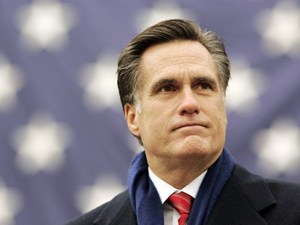
“Boy, what a jerk, warning the public against a power-mad, narcissist blow-hard before they make him President….”
Since the last GOP debate, several ethics issues have emerged, for those inclined to see them:
1. The New York Times and the Media’s Anti-Romney Bias
The biased news media helped sink Mitt Romney’s chances four years ago, and now, perhaps by habit, it can’t stop itself from bashing him even for doing something indisputably good. Though Mitt did a thoroughly statesmanlike, honest, accurate and unprecedented job eviscerating any argument for supporting Donald Trump, his own party’s front-runner for the nomination, most of the media couldn’t bring themselves to give him credit. Democratic operative Matt Lauer, on the “Today Show,” asked Romney if his direct attack was “betrayal,” as Trump portrayed it. (Hint, Matt: any time Trump stakes out an ethics position, you can assume it’s either self-serving or stupid.). The theory behind Matt’s Mistake is that Romney asked and received Trump’s endorsement in 2008, so he owed Trump the same in 2016. Let me explain to you Matt, the concepts of patriotism and statesmanship, as well as truth-telling, and how loyalty works.
You see, Matt, Mitt Romney’s loyalties in this matter, in order of priority, are individual, party, and country. If returning Trump’s courtesy had no negative impact on the Republican Party or the future of our nation, then yes, he would be ethically obligated to return Trump’s courtesy. That is not the situation, however, as I’m sure you know, but want to pretend otherwise in order to try to blunt Romney’s message and ensure that the Democratic nominee, either the unqualified Bernie Sanders or the corrupt Hillary Clinton, has to face the weakest opponent possible, now that Ben Carson has finally withdrawn.
When Romney sought and got Trump’s endorsement, Trump didn’t predicate it on a future endorsement when Donald ran, because nobody in their right mind, even Trump, would have seriously suggested that Trump would or could mount as credible campaign. Mitt was seeking the endorsement of a businessman, a reality TV figure with high visibility, celebrity and a potential donor, and that’s all he was doing. That doesn’t obligate Romney to return the favor. Lauer apparently thinks Mitt is in “The Godfather” : accept the favor from the Don(ald), and you must do whatever you are asked at a later date, even if it means shooting someone. No, you are not obligated to do anything. What you asked before was a favor; what is being asked of you now is a wrong.
For nominating Trump will wreck the Republican party. It will dissolve its values, embarrass its members, soil its reputation and legacy, and when Trump turns out to be the new Silvio Berlusconi, or a modern day Huey Long, or an American Hitler, or, as I suspect, being an optimist, just a more destructive version of Evan Meacham, the car salesman turned Arizona Governor who became the first U.S. governor to simultaneously face removal from office through impeachment, a scheduled recall election, and a felony indictment, or, in the best case scenario, a national version of Jesse Ventura. Under any of these scenarios, however, the GOP will be crippled, accountable and ultimately doomed, and that’s just what journalists like Lauer want in their heart of hearts. What they don’t seem to realize is that there is a real risk that Trump could win.
Romney owes his first loyalty in this matter to his party, and his highest to his fellow citizens. His speech was not a betrayal of either of these, but an ethical act to its core.
Even worse than Lauer was the New York Times editors, who wrote yet another embarrassing editorial, one of many they have authored in the past 12 months or so as the paper has almost completely shed its mantle as the exemplar of U.S. journalism. Rather than an objective and fair editorial praising Romney’s courageous and well-aimed broadside at a juggernaut, the Times used the opportunity to play partisan politics while expanding and re-using old cheap shots at Romney: Continue reading
Observations On The CNN-Telemundo GOP Candidates Debate
1. I heard that National Anthem rendition on my car radio, and thought, “That can’t possibly be as off-key as it sounds, can it?” Then my various singer friends started howling on Facebook. I don’t know why debates are now treated like ball games, but there are thousands upon thousands of singers, male, female, and juvenile, who can sing the anthem well, and a lot better than Dina Carter did last night. There’s no excuse for getting someone who can’t stay on pitch.
2. Ben Carson prompted me to throw a magazine at the TV with his fatuous “we won’t solve America’s problems by trying to destroy each other.” It’s a competition, you fool. Someone should have shown you how ridiculous your wasteful candidacy was months ago, and you wouldn’t be clogging up the process now. If Donald Trump, a viper in the nursery, wasn’t ahead, Reagan’s admonition not to attack fellow Republicans might be a wise and ethical practice. Now, it is the equivalent of pacifism during World War II.
3. That was weak, incompetent moderating by Wolf Blitzer and Dana Bash, allowing Trump to speak over Rubio and Cruz who were doing a good job pointing up his hypocrisy and corruption. As usual, Trump’s rebuttals weren’t rebuttals at all but distracting attacks, pitched to the gullible.
- Rubio said, correctly, that Trump criticized Mitt Romney for talking about “self-deportation” in 2012, while Trump is talking about self-deportation now. Trump said: “I criticized Mitt Romney for losing the election. . . . He ran one terrible campaign!” No, actually Trump criticized Romney’s self-deportation policy specifically.
- Rubio said Trump is the only person on the stage who’s hired people from other countries for “jobs that Americans could have filled.” Trump replied, “I’m the only one on the stage who’s hired people! . . . You haven’t hired one person in your life!” It’s completely irrelevant to the issue, just another deflection.
- Cruz pointed out that Trump contributed to the three Democratic Senators and two of the Republican Senators he now accuses of pushing “amnesty.” Trump retorted that “I get along with everybody; you get along with nobody,” an ad hominem attack that ducks a legitimate criticism.
4. Trump had one brilliant, perfect, Presidential and appropriately tough response to ex-Mexican President Vicente Fox who swore Mexico would never pay for Trump’s “fucking wall.” (We have heard increasing vulgarity from media figures like Chris Matthews, President Obama and others, and now the breakdown in official civility has crossed our borders. Yes, I blame Donald Trump, and as he grandstanded about the “disgusting” word used, someone should have had the wit to note that he has personally lowered the standards of leadership discourse more than any figure since the Nixon tapes were released.) Trump’s response: “The wall just got 10 feet taller!”
Excellent. Continue reading
 Ethics Alarms
No doubt about it: the longer comments have an edge when it comes to getting Comment of the Day recognition. Quantity isn’t quality, of course, but these special reader-composed musings constitute both useful elaborations and extensions on the themes raised in the original essay, and also a chance for me to recognize and reward the thoughtful people who make Ethics Alarms a colloquy rather than a one-man megaphone.
It is a the height of irony that my recent post about the fall-off in traffic here of late has generated more comments and traffic than almost any other May post. It also generated two fascinating comments in succession about objectivity and political orientation by prolific commentator Humble Talent. I have combined them: The comment began in response to Beth, who wrote in part, “Maybe you will start attracting a more moderate or left of center audience. I would love to see positions here debated by people on both sides of the aisle. Increased civil discourse is never a bad thing.” Here is HT’s Comment of the Day on the anxious post, A Brief Message From The Ethics Bunker: