On The Disapproval Of President Trump

Talk about cognitive dissonance…

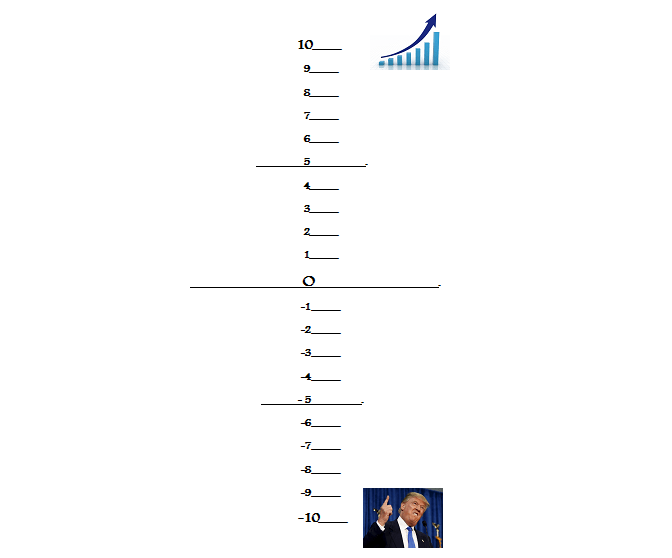
The recent barrage of  anti-Trump stories, self-inflicted Presidential wounds and media smears has the President’s approval ratings down again, back to his unshakable 37% or so core, presumable the American who, as he so memorably joked, would support him if he shot someone in Times Square. It has also been as high in some polls as 50% in the not so distant past, and substantively, not much has changed, except that the economic news keeps getting better. “There’s Never Been a President This Unpopular With an Economy This Good,”writes Bloomberg, and I’m sure that’s true. There was also never an individual as unpopular as Donald Trump elected President of the United States before he was.

The “disapproval rating” of his performance is incoherent, of course, because it is an undecipherable mess of apples, oranges, and wooden shoes.  Some disapprove of Trump because of his almost completely revolting character. Some disapprove of him because they disagree with his policies, since they are socialist, statist  One Worlders who believe, against all evidence, that Barack Obama was a great leader. Some are Republicans who are embarrassed to have such a man representing their party, no matter what policies he pursues. Some are conservatives who regard Trump as not sufficiently conservative, for indeed he’s not a conservative at all. Some are classist snobs. Some are morons who just believe what social media and the mainstream media tells them to believe. I’d love to know how this group breaks down, but we’ll never have that information.

Still, I find it encouraging that Trump remains unpopular despite his many positive achievements, some arguable, some not. It is good that the idea that there is more to being a respectable and admirable President than presiding over positive economic times, strong foreign policy, and military success. It is especially encouraging to see Democrats and progressives being driven to that position after stubbornly refusing to acknowledge that the character of a national leader is important during the Bill Clinton years, and after nominating Hillary. The President of the United States is not a CEO, and not a mere policy wonk (Yes, I recognize the absurdity of calling someone like Donald Trump a “wonk” of any kind). Leadership is as much a symbolic role as a pragmatic one. Leaders shift cultural values and norms; they define, or should, what a nation and its public regard as good, bad, right, wrong, admirable, and unacceptable. This was the basis of my initial, long-held, endlessly expressed, and unyielding opposition to his leadership style and personal demeanor, perhaps most forcefully explained here.

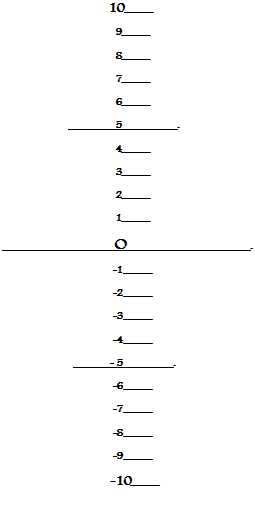
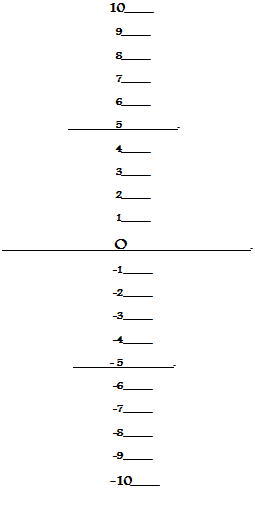
The importance of a President’s character goes far beyond being an automatic role model, however. A President, while he is in office, defines the Presidency itself. If he defines it in negative terms and values, everything connected to the Presidency suffers as well (See: the Cognitive Dissonance Scale): our system, democracy, the separation of powers, constitutional government and its institutions. A President has a duty to strengthen his office for future occupants, and to uphold the highest standards that his predecessors set. Donald Trump does not understand this aspect of his job, and never has. The reasons for this can be debated; he is obviously not a student of history, and as someone who has succeeded by breaking rules and defying conventional wisdom, he would be unlikely to understand why this role should be regarded as different from any other executive post. Continue reading
Monday Morning Ethics Warm-Up That Is Turning Up in the Afternoon Because I Looked Up At The Clock And Discovered I Had Missed Three Hours…

Good something.

(Damn job…)

1.  Police state, or stupid state? The Boston Globe reports :

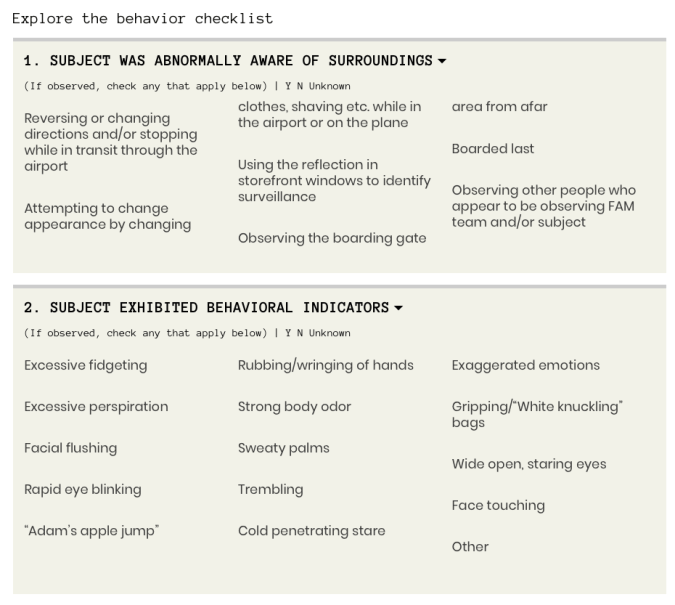
Federal air marshals have begun following ordinary US citizens not suspected of a crime or on any terrorist watch list and collecting extensive information about their movements and behavior under a new domestic surveillance program that is drawing criticism from within the agency.The previously undisclosed program, called “Quiet Skies,” specifically targets travelers who “are not under investigation by any agency and are not in the Terrorist Screening Data Base,” according to a Transportation Security Administration bulletin in March.

The internal bulletin describes the program’s goal as thwarting threats to commercial aircraft “posed by unknown or partially known terrorists,” and gives the agency broad discretion over which air travelers to focus on and how closely they are tracked.

But some air marshals, in interviews and internal communications shared with the Globe, say the program has them tasked with shadowing travelers who appear to pose no real threat — a businesswoman who happened to have traveled through a Mideast hot spot, in one case; a Southwest Airlines flight attendant, in another; a fellow federal law enforcement officer, in a third.

Look at these guidelines regarding what kind of conduct and clues could justify investigating a traveler:

I am less concerned with the civil rights implications of such idiocy than I am with the fact that the policy makers responsible for airport security appear to be morons.

But we knew that, I guess. [Pointer: Amy Alkon]

2. And it isn’t just the TSA. Remember when the IRS hired the same firm that had botched the design of the Healthcare.gov website? Now a recent Treasury inspector general’s report tells us that the IRS rehired more than 200 employees fired for misconduct in a little over a year. An earlier IG report indicates that this is a pattern dating back to 2009. It occurs, apparently, because the IRS does not provide officials responsible for hiring decisions with the information about employment history, so the IRS has rehired, among others…

  • A fired worker with several misdemeanor theft convictions and one count of felony possession of a forgery device.
  • 11 employees previously disciplined for unauthorized access to taxpayer accounts.
  • An employee who was absent without leave for 270 hours—the equivalent of 33 work days.
  • An employee fired for physically threatening co-workers.
  • An employee fired for lying about previous criminal convictions on employment forms.
  • 17 employees previously caught falsifying official documents.

Two IRS employees fired for poor performance were rehired within six months. In its response letter to the Inspector General’s Office, the IRS wrote that the IRS “determined its current process is more than adequate to mitigate any risks to American taxpayers, federal agencies, and its employees.”

Oh. All righty then!

Rep. Kristi Noem, (R-S.D.) has presented a bill, the “Ensuring Integrity in the IRS Workforce Act,” to the House that would prohibit the IRS from rehiring employees fired for misconduct or poor performance.

Good. (Pointer: The Daily Signal) Continue reading

Morning Ethics Wake-Up, 7/17/2018: Swans, Nazis Kids, Rand Paul, And More Freakouts [UPDATED]

Good Morning!

1. And today’s anti-Trump freakout topic is…The complete media/”resistance”/Democrat social media meltdown over whatever President Trump thought he was doing yesterday was typical of what we were talking about in the threads on Monday’s Warm-Up. It’s all so boring and predictable. It’s predictable that the President will say things he shouldn’t; it’s predictable that the people who have already made it clear that they hate is guts will erupt with over-the-top condemnation; it’s predictable that the social media echo chamber will adopt whatever unscrupulous Democratic Party talking point that is launched—yes, yes, Facebook Friend, yesterday proves that Putin “has something” on the President like Nancy Pelosi says. Did she call him “Bush” this time?—and that anyone who tries to point out that the reaction is wildly out of proportion to reality is a Trump-loving racist Nazi. I seriously don’t know how a responsible commentator who isn’t out of his mind is supposed to react. Ignore it, because some new hysteria will be right along, like Leo Slezak’s swan. (Don’t you know this story? It’s one of my favorites! Leo Slezak, a famous Austrian opera singer in the Thirties, was playing the role of Lohengrin in Wagner’s opera, which ends with the hero being carried off to Valhalla on the back of a giant swan. In one performance, the swan, pulled by stage hands on tracks, just swam right by him up stage, leaving the hero stranded. Slezak turned to another singer on stage and asked, loudly enough so the audience could hear him, “What time’s the next swan?” His son, Hollywood actor Walter Slezak, made the line the title of his autobiography.)

2. Obligatory freakout notes: a.  All that matters is what, if anything, comes of the summit. The President (obviously) has his own theories of negotiation. Sometimes they work. b. John Brennan’s statement that the Putin-Trump press conference was “treasonous” was two things: 1) the most ridiculous thing said yesterday by anybody, including the idiot who lives down the street here who said, reportedly, “Rpeterbokle?“, and 2) immediate confirmation of why the President said that he doesn’t trust American intelligence agencies any more than he trusts Putin. c. If anyone can point me to an unbiased authority who can explain how leaders holding joint press conferences help their nations by insulting each other, please do. d. John McCain should either show he can do his job, or he should resign and let someone able do it. Right now, apparently his only role is to snipe at the President. e. Gee, I wonder why President Trump doesn’t trust the FBI, after watching a smug FBI agent who texted about insurance policies against his Presidency and how “we” would “stop” him lecture Congress about his lack of bias? f. Nixon said much nicer things about China and Chou En Lai when Dick made his famous visit. FDR affectionately called mass murderer Stalin “Uncle Joe.” President Bush (absurdly) said that he had seen Putin’s soul, and pronounced it pure. JFK feted the Butcher of the Ukraine and Hungary, Nikita Khrushchev, during a visit to America without condemning him in a pres conference. President Obama whispered to Putin that, in essence, he was going to play tough but would be accommodating after the election. Conclusion: As usual, this President is subjected to a double standard, and it is wildly hypocritical. g. Yes, Trump’s comments were unpresidential and inappropriate. This, however, is no longer news.
Continue reading

Comment Of The Day: “THAT’S The Concept I Was Looking For—’Cultural Vandalism’!”

Another perspective on the question  of how the personal and professional misconduct of artists should affect our regard for their art comes from Curmie, a drama teacher, director and blogger who has as deep credentials for this topic as anyone.

Here is his Comment of the Day on the post, THAT’S The Concept I Was Looking For—“Cultural Vandalism”!…

Back in graduate school, I worked as a teaching assistant to a brilliant professor, Ron Willis, in his Introduction to Theatre class. Seitz’s commentary intersects with two of the concepts Ron highlighted in his course. The first of those is what Ron called para-aesthetics: those elements which affect an audience’s reception of an aesthetic event without being the aesthetic event.

These can be entirely coincidental (it’s pouring rain) or created specifically by the production company (the poster). The company many have had some, but not complete, control over the influence (there’s insufficient parking, in part because of another event in the area). The para-aesthetic influence could apply to the entire audience (the leading actor is a big star, the auditorium is freezing) or to an individual (the leading actor is your best friend, the person next to you thinks that showers are for other people, you’ve had a couple glasses of wine before the show).

The fact that a Bill Cosby’s off-camera life has been considerably short of exemplary matters in a para-aesthetic way. But each individual spectator will respond differently to each impulse. That leading actor—my best friend—is someone else’s ex. Facebook tells me that a year and a day ago I saw a play in London with a young movie star in the title role. His presence mattered to me not a bit, but there were dozens if not hundreds of his fans in the house: people who were there specifically to see him. That play was an adaptation of a script I adore and indeed directed a few years ago. The fact that the play as presented bore little if any resemblance to the original bothered me a lot; those who didn’t know the 19th-century version were far more able to accept the 21st-century revision on its own terms. Continue reading

THAT’S The Concept I Was Looking For—“Cultural Vandalism”!

Does he still seem like God to you?

“Cultural vandalism”!

Perfect! That’s the ideal description of what artists, especially performing artists, do when they engage in such revolting conduct that it becomes difficult or impossible for us to enjoy their work the way we could before we knew they were disgusting human beings.

We owe Vulture writer a debt of gratitude, not only for identifying the conduct as cultural vandalism (a term usually reserved for acts like stealing the Elgin Marbles), but also for explaining, in his article The Cultural Vandalism of Jeffrey Tambor, clearly and powerfully, why it is a serious ethical breach beyond the misconduct itself.

He writes in part,

Once I know something like this, it makes it impossible for me to look at the actor and not think of the horrible things they’ve allegedly done. I don’t care to argue whether this is rational or not (I think it is), or whether I hold inconsistent opinions of works that are problematic for whatever reason (everyone does). The repulsed feeling is still there, and it makes a difference in how I react as a spectator…This sort of thing seems categorically different from, say, watching a film starring an actor whose political beliefs are different from yours (though there, too, a line could be irrevocably crossed). Once you believe that a particular actor or filmmaker or screenwriter is a predator or abuser, you’re aware that the environment that produced your entertainment — the film set — was engaged in a conscious or reflexive cover-up, in the name of protecting an investment. You can still be passionately interested in the thing as a historical or aesthetic document — seeing it through the eyes of, say, an art historian who can contextualize Paul Gauguin within the totality of 19th-century painting, or an African-American studies professor who’s fascinated by Gone With the Wind — but you can’t lose yourself in it anymore. You can’t be in love with it. You can’t really enjoy it in the most basic sense, not without playing dumb.

You didn’t do that to the artist. The artist did that to himself…

And it’s awful. People’s lives get ruined, their careers get interrupted or destroyed. The emotional, physical, and financial damage that problematic artists inflict on people in their orbit should always be the first and main subject of discussion…On top of all that, we also have the collateral damage of cultural vandalism. Fun, meaningful, even great works that dozens or hundreds of people labored over, that built careers and fortunes and whole industries, become emotionally contaminated to the point where you can’t watch them anymore…. in recent years, an entire wing of African-American cultural history has been vaporized by the Bill Cosby allegations and his recent felony sexual-assault trial, including the most popular sitcom of the ’80s (The Cosby Show), some of the top-selling comedy albums of all time, the precursor to the R-rated buddy comedy genre (Uptown Saturday Night and its sequels), and the first Saturday morning cartoon with a predominantly black cast (Fat Albert and the Cosby Kids). Predators’ careers are getting raptured, as well they should be. But unfortunately — perhaps inevitably — their work is getting raptured along with it, imploding into dust as the culture moves on to things that aren’t as problematic (or that might have skeezy stuff going on behind the scenes that we don’t know about yet)….

…Nobody is stopping anyone from watching these works (though they’re no longer as easy to find, and you probably have to own a DVD player). We can still talk about them, study them, write about them, contextualize them. But the emotional connection has been severed. The work becomes archival. It loses its present-tense potency, something that significant or great works have always had the privilege of claiming in the past.

That’s all on the predators. It’s not on you. None of us asked for this.

Continue reading

Althouse’s Commenters Delineate A Trend

Is something in the etho-cultural air? I wonder. Suddenly hints that patience with the resistance/progressive/Democratic/mainstream media assault on the Presidency, democracy, fairness, honesty, civic discourse and the rule of law is running out even with typically left-leaning citizens are turning up in multiple venues all at once. This is, of course, gratifying here at Ethics Alarms, since I have regarded this as an ethics crisis since 2016.

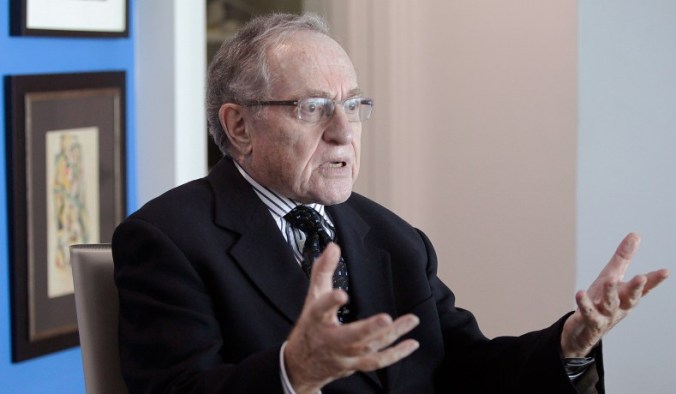
Fascinating evidence can be found in the comments to a recent post by Ann Althouse, in which she pointed to a res ipsa loquitur piece in Politico, “‘What Happened to Alan Dershowitz?’,  which I would summarize as “Whatever could have possessed Alan Dershowitz to make him opt for objectivity, principles and integrity at a time like this?” Ann, as she frequently does, didn’t comment substantively on the essay, deciding instead to make an arch observation while pointing the way for her readers. She flagged what she called “the most obvious quote” in the essay: “Maybe the question isn’t what happened to Alan Dershowitz. Maybe it’s what happened to everyone else.” Of course, nothing happened to Dershowitz. He’s doing what a lawyer, an analyst and a trustworthy pundit is supposed to do: apply the same standards to everybody; not let emotion rule reason, and when all around him are losing their heads and blaming it on him, keeping his own despite temptations to follow the mob.

Ann’s readers distinguished themselves in their reactions. I wonder if the Democrats are paying attention. They are fools if they don’t.

Read as many as you can. Here’s a representative sample: Continue reading

A Strange And Disturbing Conversation…

It’s baaaack!

Yesterday I did a pro bono ethics presentation for a local lawyer group. During the lunch, which, as usual in such situations, I never got to eat, I was seated next to a lively, intense, talkative young man, like the rest of my audience, a corporate counsel. The discussion was oddly tentative for a long time, which the lawyer’s body-language suggesting wariness and his verbal choices suggesting unusual care. He was probing for something, and I couldn’t tell what. What was it that they vibe reminded me of? Poker? A job interview? Suddenly I realized what it was: the conversation had the tenor, though not the implied subject matter, of those awkward conversations I recalled from parties and encounters where a new male acquaintance was trying to figure out a) whether I was gay and b) whether, if I wasn’t, he could trust me enough to say that he was.

In this case, however, the young man was probing to see if I hated President Trump. I don’t know which comment of mine put him at ease, but suddenly it all poured out. This lawyer and Haitian-American immigrant was an enthusiastic supporter of the President’s policies and leadership style. Once he was certain that I would not look at him like he was the spawn of Satan for daring to express such a view—which he explained extremely logically and eruditely—we had a fascinating discussion, covering illegal immigration, the news media’s bias, the “resistance,” racism, muscular foreign policy leadership, the 2016 campaign,  and more.

However, the fact that simply expressing support for the elected President of the United States, even limited support, indeed even the absence of affirmative contempt, is considered such a perilous social stance that citizens are afraid to express it among their peers demonstrates the monstrous—I think that’s a fair adjective here—intimidation and speech suppression that has been perpetrated by the Left since the 2016 election. Hate is such a powerful emotion that even when it is unjustified, the threat of it being focused on you now keeps Americans from openly expressing their opinions. This is a thought and attitude control strategy, weaponizing the Cognitive Dissonance scale (above) to achieve power and control. If you have this position, we will hate you. Be warned. The message goes out in a thousand ways, especially on social media, but in face-to-face encounters as well, with family, in the workplace, and in social situations.  Some—I think a surprising number–have the strength to resist it as the unethical compelled political conformity tactic that it is. Still, many capitulate, at least in public.  The tactic is even turned on experts and analysts with integrity as well, as in this Politico essay about Alan Dershowitz, which carries the message that a good liberal should not be making the case that the criminal law is being abused and civil libertarian principles discarded as the Left attempts to undo an election by any means necessary. The effectiveness and intimidating weight of the implied threat of shunning is acknowledged by what one blogger describes as the “Trump Bump”—“that little obligatory hiccup in which the speaker on any given topic must pause to make a pejorative reference to Donald Trump before going on, in order to establish his or her bona fides as a good person. ” Continue reading

Morning Ethics Warm-Up, 5/3/2018: Katie’s Rationalization, Teachers’ Extortion, Rudy’s Zugswang, And Kanye’s Influence

Goooood morning!

(I thought it was time for “Singin’ in the Rain” again. Of course, it is always time for “Singin’ in the Rain”…)

1. And that’s when you know…When alleged sexual harassers are accused, the way you know whether they are guilty or not often depends on whether the floodgates open, and large numbers of other women step forward. This was Bill Cosby’s downfall. Now we learn that 27 more victims of Charlie Rose have raised their metaphorical hands. Sorry, Charlie!

The mystery to me is why  current and former colleagues of outed abusers and harassers so often rush to defend them, even post #MeToo, and even women. I suppose is cognitive dissonance again: the defenders have high regard for the harasser, and simply can’t process the fact that they may have been engaged in awful conduct. Katie Couric’s defense of Matt Lauer, however, is especially damning.

Variety reported that Lauer’s office had a button that allowed him to remotely lock his office door when he had female prey within his grasp…

“His office was in a secluded space, and he had a button under his desk that allowed him to lock his door from the inside without getting up. This afforded him the assurance of privacy. It allowed him to welcome female employees and initiate inappropriate contact while knowing nobody could walk in on him, according to two women who were sexually harassed by Lauer.”

Yet on “The Wendy Williams Show” this week, Couric “explained”…

“I think the whole button thing, you know? I think — NBC — a lot of stuff gets misreported and blown out of proportion. A lot of NBC executives, they make it sound like some kind of den of inequity. I don’t know what was happening. A lot of NBC executives have those buttons that opened and closed doors… They did. I mean, it was really just a privacy thing. It wasn’t..Honestly I think it was an executive perk that some people opted to have and I don’t think it was a nefarious thing. I really don’t. And I think that is misconstrued….”

Wowsers. First, Couric is intentionally blurring the facts, using “open and close” as a euphemism for “unlock and lock.” I guarantee that no button would cause the office door to swing open or swing closed, as Couric suggested. I’ve searched for such a device: all I can find are remote office door locking mechanisms. Second, while it is true that other NBC execs once had that feature, it appears that Lauer was “was one of the few, if not the only, NBC News employee to have one,”a senior NBC News employee told the Washington Post.

Second, Couric is engaging in The Golden Rationalization: “Everybody does it.”

2.  Extortion works! Arizona’s governor signed a 9% pay increase for the state’s teachers, because the teachers engaged in a wildcat strike, kids were missing school, and parents couldn’t go to work without their state funded child-sitters. I’m not going to analyze whether the teachers demands were right or wrong, because it doesn’t matter. The teachers’ tactic was unethical, just like the Boston police strike in 1919 was unethical, just like  the air traffic controllers strike in  1981. In the former, Massachusetts governor Calvin Coolidge (what happened to that guy?) famously fired all the striking cops, saying in part that  “The right of the police of Boston to affiliate has always been questioned, never granted, is now prohibited…There is no right to strike against the public safety by anybody, anywhere, any time.” President Reagan quoted Cal when he fired the air traffic controllers and eliminated its union.

Striking against children and their education is also a strike against the public safety. What now stops the teachers, in Arizona or anywhere else, from using similar extortion tactics for more raise, policies they favor, or any other objective?  What was lacking here was political leadership possessing the integrity and courage to tell the teachers to do their jobs during negotiations, or be fired.

This precedent will rapidly demonstrate why public unions are a menace to democracy Continue reading

About The Cosby Verdict

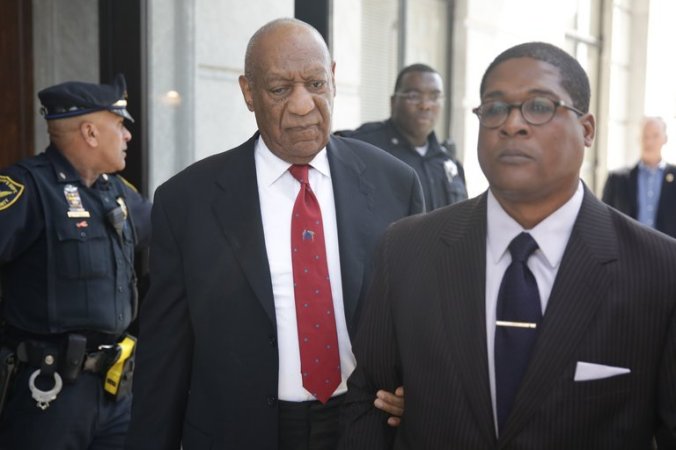
Serial rapist and sexual predator Bill Cosby was found guilty today. From the New York Times:

A jury found Bill Cosby guilty Thursday of drugging and sexually assaulting a woman at his home near here 14 years ago, capping the downfall of one of the world’s best-known entertainers, and offering a measure of satisfaction to the dozens of women who for years have accused him of similar assaults against them.

On the second day of its deliberations at the Montgomery County Courthouse in this town northwest of Philadelphia, the jury returned to convict Mr. Cosby of three counts of aggravated indecent assault against Andrea Constand, at the time a Temple University employee he had mentored.

The three counts — penetration with lack of consent, penetration while unconscious and penetration after administering an intoxicant — are felonies, each punishable by up to 10 years in state prison, though the sentences could be served concurrently.

Observations:

1 Good. Cosby should be serving hard time for rape. This verdict won’t accomplish that, and he has the resources to keep the matter tied up in appeals, maybe even forcing a new trial. Never mind: the verdict itself is satisfying punishment for a true ethics villain.

2. The verdict overcame the Cognitive Dissonance Scale, and that’s no mean feat. The jury deserves a lot of credit. Here, for the umpteenth time, is the scale:

Celebrities—or the characters they are identified with— are typically so high on the scale ( think of Bill/Cliff Huxtable as a plus 100) that even the evidence of a crime can’t pull them down sufficiently for jurors to be able to resolve the dissonance when they are thinking, “But he’s a great man and a wonderful person! How could he do these things?” The dissonance creates automatic reasonable doubt, all by itself, at least with enough jurors to ensure a mistrial, as in Cosby’s first trial. Hence O.J. Errol Flynn was acquitted of statutory rape. Robert Blake (“Baretta”) was acquitted of murdering his wife. Bill Cosby figured to have an unusually strong celebrity shield, but several  factors overcame it:

  • the amount of evidence against him.
  • the fact that what he did represented such a betrayal of his public image
  • the judge allowing, in the re-trial, other victims to testify
  • the series of previously admired show business figures who have been exposed as predators and sexual abusers since the Harvey Weinstein Ethics Train Wreck pulled out of the station, and
  • the fact that Cosby peak celebrity was decades ago.

If the trial had occurred at the time of “The Cosby Show,” I wonder if any evidence could have convinced a jury to convict him. Continue reading

Morning Ethics Warm-Up, 4/24/18: Jarrar And The Kardashians

Good morning, everyone!

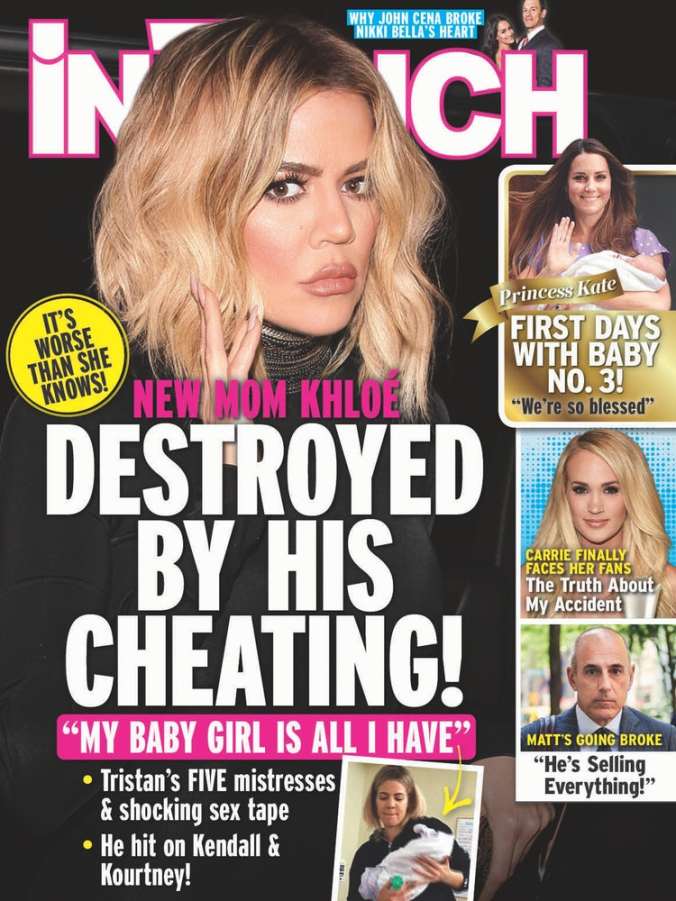
1 Something stupid. I haven’t written about the Kardashians for a long time, unless you count Kanye West, but he has a legitimate claim to celebrity and the fact that he’s married to Kim K. is more or less a footnote. This morning, checking some cyanide out at the CVS, I saw this cover by the register:

Quick, now: why would it be smart and profitable to put this story on the front of a tabloid magazine? Who is Khloe Kardashian (normally I would try to find a way to get that accent over the “e” but it just isn’t worth it) and why would anyone on God’s green earth care about what she’s doing or what someone else is doing to her?

This woman is the youngest of the original Kardashian sisters, all of whom achieved fame-via-reality show after Kim’s sex tape was released and she gained fame for the size and shape of her butt. I’m not kidding. That’s it. That’s the whole basis for the culture’s love affair with the Kardashians,  and the reality show that introduced ugly duckling heavyish for a professional slut family youngest sister Khloe to America began in 2007, eleven full years ago. And what has Khloe, who is no longer heavy, or recognizable, and that was worth a book and a spin-off reality show—done since then to make her adventures worthy of the time you would normally use to alphabetize your sock drawer?  Absolutely nothing, other than appearing on TV with her weird, venal, narcissistic family, and being rich due to no fault of her won. (Her late father was one of O.J.’s cronies, played by David Shwimmer —“Ross” in “Friends”— in the O.J. miniseries, and her mother is a successful Hollywood hustler.) Here is the full extent of her societal worth, courtesy of the ridiculously long Wikipedia entry:

On September 27, 2009, Kardashian married NBA basketball player Lamar Odom, who was a member of the Los Angeles Lakers at the time. The couple were married exactly one month after they met at a party for Odom’s teammate Metta World Peace. Following her marriage, Kardashian removed her middle name to include her married surname, becoming Khloé Kardashian Odom. Kardashian adopted a pet boxer named Bernard “BHops” Hopkins, after the famous boxer.

On December 13, 2013, after months of speculated separation, Kardashian filed for divorce from Odom and for legal restoration of her last name.[43] Divorce papers were signed by both parties in July 2015; however, the divorce had yet to receive final approval from a judge. In October 2015, Odom was hospitalized after being found unconscious in a Nevada brothel, and was in a coma for four days; as he lay in a hospital, Kardashian withdrew her pending divorce petition. In an interview with People Magazine, Kardashian confirmed that they had not reconciled and the divorce had been withdrawn so that she might make medical decisions on Odom’s behalf.Kardashian and Odom’s divorce was finalized in December 2016.

Kardashian is currently in a relationship with basketball player Tristan Thompson. The couple reside in Cleveland, Ohio.In December 2017, she announced they were expecting their first child together.  In March 2018, Kardashian revealed she would have a girl. On April 12, 2018, Kardashian gave birth to their daughter, True Thompson. He cheated on Khloe Kardashian with other girls leading to him being inactive on social media at Khloe Kardashian’s wishes.

This does not speak well of the culture, American society, its values or its prospects.  My father’s generation was enthralled by the family dramas and controversies surrounding pubic figures like Charles Lindbergh, who, after all, accomplished something and displayed useful and admirable values in doing so.  His generation and the precedding one did have a soft spot for robbers like Dillinger, Bonny and Clyde and before them, Jesse James, but that was because they were styled as latter day Robin Hoods. At least robbing the rich to give to the poor is something. Actors, actresses and sports heroes have always been popular culture icons, but they were famous for their art and achievements, not just for showing up, or worse, showing up and acting like an idiot.  Imagine Babe Ruth being idolized because of fame bestowed on him solely based on his gluttony, promiscuity and drunkenness. That’s where we appear to be now. There really are tweens out there who will announce that they want to grow up to be like one of the six or seven—I don’t know where to put the former Bruce Jenner—Kardashian girls. Parents should lock them in a high tower like Rapunzel, but they won’t, because they probably hope their daughters grow up to be like Kim, Kourtney, Kendall, Khloe aand whatever that the other ones are named…Katmandu? Kalamazoo?

How can ethics survive in a culture like that? What am I doing? Continue reading