Ethics Dunce: Skechers

Do you know who the very first Ethics Dunce was? It was Pete Rose. This was in January of 2004, on the newly launched Ethics Scoreboard, and Pete had just admitted that he did indeed bet on baseball while managing the Cincinnati Reds, even though he had been loudly denying it (and smearing the reputation of Bart Giamatti, the baseball commissioner who banned him from baseball and entry into the Hall of Fame for it) for 10 years.

Now another decade has past, and Pete still doesn’t really get it. Helping him make money for not getting it is the “relaxed fit footwear” people, Skechers, with  jaw-dropping TV spot showing Pete in his own home (supposedly), padding down a hallway festooned with his many trophies, Silver Bats and other symbols of his days as “Charley Hustle,” as he revels in the comfort of his Skechers and the joys of being in “the hall.” Then his wife or girlfriend (with Pete, it’s hard to keep up…if she’s his wife now, then someone else is his girlfriend)) sticks her head out of a doorway and tells him, “Pete, you know you’re not supposed to be in the hall!”

HAR! What a hoot it is, being disgraced in your own sport for undermining its integrity! Pete has never quite comprehended what all the fuss is about—after all, his bets were always in favor of his team, never against it, and never affected his management decisions! He says. And why wouldn’t everyone believe him about that, just because he knowingly broke baseball’s biggest taboo (Pete can tell you Shoeless Joe’s batting average down to the 5th decimal: believe me, he knows all about the Black Sox), lied about it everywhere and often, and got himself thrown in jail for cheating on his taxes?

What would make anyone, in any company, think that an unapologetic lifetime sleaze like Pete Rose being associated with their product would make people run out and buy it? Continue reading

Finally There’s Name For The Conduct I’ve Been Calling Unethical For Years…Now Let’s Agree To Stop It

eclipse

That name is “partyism.”

From Harvard Professor Cass Sunstein:

“…party prejudice in the U.S. has jumped, infecting not only politics but also decisions about dating, marriage and hiring. By some measures, “partyism” now exceeds racial prejudice — which helps explain the intensity of some midterm election campaigns. In 1960, 5 percent of Republicans and 4 percent of Democrats said that they would feel “displeased” if their son or daughter married outside their political party. By 2010, those numbers had reached 49 percent and 33 percent. Republicans have been found to like Democrats less than they like people on welfare or gays and lesbians. Democrats dislike Republicans more than they dislike big business.”

Based on what I’ve seen, the fact that Republicans/conservatives  are nearly twice as likely to be “partyists”  as their hated enemies to the left on the political spectrum doesn’t surprise me. Most of the manifestations of the bigotry I’ve seen out in the open and written about here—restaurants that give discounts to praying customers and bars that claim that they will only serve “red voters”—have come from that sector, but 33 percent isn’t anything for liberals to be proud of, either. Over all, the trend is horrible for the country. As I wrote regarding “Mary’s,” the restaurant that favored its religious customers…

“I detest this kind of thing, and so should you, because it is ethically indefensible and un-American to the core….splitting the world into them and us, good guys and bad guys, the virtuous and the reviled. All of “Mary’s” customers are human beings, and that is the only thing that should matter in the United States of America.”

I confess that since I have been observing this phenomenon, I am preconditioned to think the Stanford research that purported to measure it as has validity. Most social science research, especially involving politics, is so skewed by researcher bias and agendas that it is inherently dubious, and perhaps this example is too: I wouldn’t rely on the percentages. Also 1960 would have to be the absolute low water mark in U.S. political passions, after the remarkably non-partisan, unifying two terms of Dwight Eisenhower while the public felt united against a common enemy in the Cold War. I’m guessing the numbers in, say, 1860 would show a sharper divide.

I do think that the intensity of emotion, rising to bigotry, distrust and hate, in the nation’s political polarization is growing, is very alarming, and dangerous to our health and future. I’d like to know more about where it resides. Is the bulk of the bigotry coming from the low-information voter, who uncritically absorbs every campaign smear, bumper sticker insult and Facebook meme as fact—you know, morons? Or are the individuals who would rather die than see their daughters marry men who oppose the family’s favorite party the narrow-minded political junkies who watch only Fox News and listen to Rush, or who cheer Al, Chris, Rachel and the 24-7 conservative-bashers on MSNBC? I’d like to know.

Naturally theories will abound regarding the reasons for this new bigotry. In a general sense, it is pure cognitive dissonance, and can be explained by people today caring more about politics and ideology than they have for quite a while. People care about something when they sense that it matters to their lives, health and welfare, as well as those around them: if political views were regarded as no more important than what baseball team one rooted for, there is no way substantive bigotry would attach to them. With foreign threats looming, the economy weak, nobody certain of the right policies in so many crucial areas and the pettiness, corruption and ineptitude of parties in and out of power, trust has plummeted. When we can’t trust those whom we have given the job of looking out for our welfare, we become worried and scared, as well we should. Then it makes sense to care more about politics. If we care more, and feel strongly about what should be done either out of a lack of sophistication and gullibility (the morons) or from unbalanced self-education (the zealots), then those who proclaim opposing views seem more obnoxious and more threatening, prompting active discrimination. The Stanford study found that “discrimination against the out-group is based more on out-group animus than in-group favoritism.” That figures. But for a nation, it is suicidal.

This nation of ideals gleaned from a diverse population must value trust and belief in what all citizens share more than it embraces passion and anger over what we disagree over. If we cherish the basic principles of democracy, then we must accept, encourage and respect dissent, frank speech, the shocking opinion and the minority view.  We must always keep our minds open to new ideas, different solutions to old problems, and the possibility that we, or the public officials, scholars and pundits we favor, may be wrong on any one topic or issue. If we can’t do that, we doom ourselves and our culture to self-righteousness, doctrine, cant  and rigidity, which block out enlightenment like an eclipse blocks sunlight. Continue reading

Is There An “Almost Naked Lovely Lawyer Principle”?

cathy-mccarthy

Not really.

But it’s complicated.

Cathy McCarthy (above) is a 2013 graduate of Loyola Law School-Los Angeles, and she is sounding the clarion call for the right of bikini model-lawyers to be taken seriously. She wrote…

I graduated law school a year ago after receiving an academic scholarship and passed the California Bar last November on my first try. I am also a model and have had moderate success, building fan base of over 26,000 people where I do mostly bikini promotions. Does this make me better or worse at my job? According to some people, it makes me unable to be taken “seriously” in the business community. In fact, two weeks ago, I was reprimanded by a coworker for my online presence and was told to “handle the situation.”I fought back and was ultimately let off the hook, but this is not the first time that I have faced backlash from colleagues who think that a lawyer should not also get the privilege of “looking hot in a bikini.”

Unlike the case with primary and secondary school teachers, where a published presence on the web that is sexually provocative can interfere with a healthy student-teacher relationship, there is no automatic impediment to a lawyer client relationship posed by the lawyer moonlighting as a bikini model, a fold-out, or even a porn star. The profession acknowledges this in several legal ethics opinions affirming lawyers’ First Amendment rights. Lawyers can express themselves any way they choose, provided that it does not undermine their ability to represent their clients in any way. Continue reading

The O’Bannon Case: A Judge Explains How The Law Requires An Unethical and Corrupt Practice To Be Fair….But It’s Still Unethical and Corrupt

NCAA-ban

Now that a federal judge has declared the elite student-athletes at big time sports colleges to be what they are…paid mercenaries…and the sports programs at such institutions to be what we always knew they were…cynical sideshows that sacrificed education to greed…will the pubic, the media, educators, and universities now stop this slow-moving ethics train wreck?

Of course not.  If they cared about how high-profile college sports were warping both America’s education and its values, they would have addressed the problem decades ago. They would have stopped it before, for example, schools started paying football and basketball coaches more than any professor. They would have stopped it before prestigious schools gave degrees to graduates whose entire education was a sham, who took ridiculously easy courses and who were held to infantile academic standards, all so rich, fat alumni would continue writing checks. They would have stopped it before a revered football coach held such power in a university that he was able to persuade the school’s leadership to allow a child sexual predator operate on campus.

U.S. District Judge Claudia Wilken, in a 99-page ruling agreeing with the claim of a group of plaintiffs fronted by former UCLA basketball player Ed O’Bannon, issued an injunction against the NCAA from “enforcing any rules or bylaws that would prohibit its member schools and conferences from offering their FBS football or Division I basketball recruits a limited share of the revenues generated from the use of their names, images, and likenesses in addition to a full grant-in-aid.”

The ruling will be appealed, and some of its legal conclusions certainly seem debatable. That is not my concern. The opinion effectively kills the fiction that the semi-literate youths who perform on-the-field heroics to burnish the images of universities and attract huge broadcast fees are what the NCAA, alumni, students , the schools and the media pretend that they are. Now that we know they are not truly students, what persuasive ethical justifications can be given for them to play college sports at all?

My answer?

None. Continue reading

Ethics Quote Of The Week: Bill Bigelow

FireworksHistory5

“The pretend war of celebratory fireworks thus becomes part of a propaganda campaign that inures us—especially the children among us—to current and future wars half a world away.”

Former teacher and current Howard Zinn disciple Bill Bigelow, in a jaw-dropping screed titled “Rethinking the Fourth of July”

Revolting and hateful right wing radio host Michale Savage authored an appropriately revolting and hateful book titled “Liberalism is a Mental Disorder.” That kind of marginalization of dissenting opinions apes the tactic of recent totalitarian regimes, which often subjected political enemies to forced hospitalization as “insane.” Extreme ideological zealotry that refuses to acknowledge either the good faith or the possible virtues of opposing views is anathema to a functioning democracy, and the fact that we have a toxic amount of such zealotry right now is one of the reason our government isn’t working very well.  Nonetheless, when I read a statement like the quote above, I cannot help but ponder how any rational individual reaches the point where he would think such a sentiment was worth publicizing. I think it is a form of ideology-sparked derangement. That doesn’t mean that liberalism is a mental disorder. It may mean that intense indoctrination in leftist (or conservative) cant leads to progressive derangement.

How does someone come to see the colorful spectacle of fireworks as “pretend war”? The invention of fireworks predated the use of bombs as weapons. They are an art form, and nothing more nor less. All right, they are also fun. (Can’t have that.) Seeing celebratory firework displays as indoctrination requires a paranoid view of one’s country and the world.  Continue reading

Animal Abuse, Law, Ethics…And More Cognitive Dissonance

Gothic pets

Some animal abuse issues are ethics slam dunks, some should be, and some are more complicated than the wo people posture over them seem to think. Here are three examples from the news:

1. Tattooed Kittens?

A law about to be passed in New York, S.6769, will make it illegal for pet owners to inflict tattoos or piercings on their pets except for medical purposes or when a tattoo is used strictly for identification purposes. Violations would carry fines of up to one year in jail and a $1,000 fine.

“I believe that if given the choice, animals would decline to having themselves undergo a painful procedure of being either tattooed or pierced,” said New York State Senator Mark Grisanti, a Republican who is supporting the measure introduced by Democratic Assemblywoman Linda Rosentha in 2011.

Ya think? The fact that a law would even be necessary to articulate that tattooing or piercing a pet for the owner’s amusement is horribly wrong and obvious cruelty foretells the approaching apocalypse.  That such a law would take three years to pass also tells us something bad about, oh, New York, politics, partisan warfare, human intelligence…just about everything. The problem, was brought to public attention by the prosecution of this idiot.

2. The Opossum Drop Continue reading

Scott Esk, The Tea Party, And Leon Festinger’s Warning

Ignore Leon at your peril, Republicans!

Ignore Leon at your peril, Republicans!

A Texas Republican, using my least favorite rationalization (#22. Comparative Virtue, or “It’s not the worst thing”)  to excuse the party’s intentionally insulting anti-gay platform, could argue, “Hey! At least we don’t want gays to be stoned to death!”

True. That would be the position of Tea Party candidate for the Oklahoma state Senate, Scott Esk.

In a Facebook exchange last year, Esk indeed endorsed, without espousing, killing gays:

“That [stoning gay people to death] goes against some parts of libertarianism, I realize, and I’m largely libertarian, but ignoring as a nation things that are worthy of death is very remiss…I never said I would author legislation to put homosexuals to death, but I didn’t have a problem with it.”

Contacted by Oklahoma magazine to clarify his remarks, Esk did indeed, saying:

 “That was done in the Old Testament under a law that came directly from God and in that time there it was totally just. It came directly from God. I have no plans to reinstitute that in Oklahoma law. I do have some very huge moral misgivings about those kinds of sins…I know what was done in the Old Testament and what was done back then was what’s just. … And I do stand for Biblical morality.”

Before going further, I have to give Esk integrity points for not claiming that he was taken out of context or misunderstood. He was honest, he accepted responsibility for his words, and he didn’t try to “walk back” his statement, as is the current fashion among all the Washington politicians we should not trust. His courage and candor are admirable.

If only he weren’t a hateful, ignorant fool. Continue reading

The Fake Japanese Beethoven And Musical Cognitive Dissonance

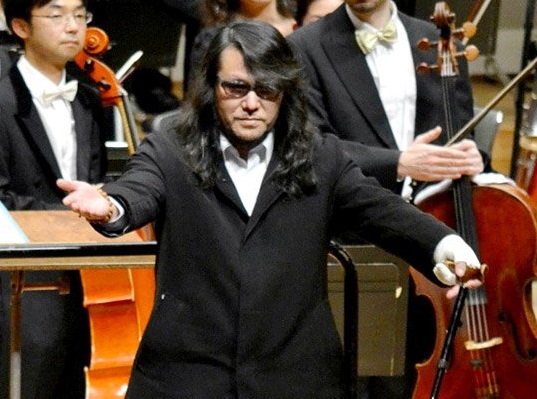
Not a composer, not deaf, and maybe Irish, female, and 12-years old, for all we know.

Not a composer, not deaf, and maybe Irish, female, and 12-years old, for all we know.

There need be no debate about whether this was unethical, or why. It is obviously one of the great arts hoaxes of all time.

Mamoru Samuragochi, the composer sometimes known as “The Japanese Beethoven,” was exposed this week as being more like a Japanese Milli Vanilli. A double fraud, he didn’t compose the works that made him Japan’s most popular classical composer, and he isn’t even really deaf, which was a large element of his fame and notoriety. Samuragochi has perpetrated a long, elaborate, audacious hoax, hiring a musical ghostwriter to compose for him over nearly two decades. The Man Behind the Curtain revealed himself as Takashi Niigaki, a  lecturer at a Tokyo music college, who admitted to writing more than twenty compositions for Samuragochi since 1996, receiving the equivalent of about $70,000.  Samuragochi’s  most famous works include Symphony No. 1 “Hiroshima,” the theme music for the popular video games “Resident Evil” and “Onimusha,” and especially the “Sonatina for Violin,” which is the program music for the Japanese Olympic figure skater Daisuke Takahashi.

What interests me most about this strange story is how it illustrates the power of cognitive dissonance in the arts. Continue reading

How People Rationalize Being Close-minded: A Case Study

close_minded

For “close-minded,” you can substitute ignorant, knee-jerk partisan, misguided, arrogant, stupid, reckless,naive, easily-manipulated, or just stubbornly wrong.

I owe Ethics Alarms expatriate Barry Deutsch for pointing me to this; on weekends I often check out the blogs and websites, and sure enough, on his own blog Alas! Barry was once again discussing the issue that was in part responsible for his contentious departure here—the issue of how comfortable on-line forums should be for participants. Though Barry has his own—typically nuanced, too-equivocal for my tastes—views on the topic, the post I want to feature is one he linked to, a blog called Apophemi. In a post about why the blogger avoids participating on the so-called “rationalist” forum “Less Wrong,” which appears to be a major source for the writers of “Big Bang Theory,” he argues for, as translated by Barry and others—he needs a translator—“safe places,” meaning web forums where certain ideas, topics and positions will not or cannot be discussed. He writes (I warned you, remember);

“I am reasonably confident (insert p value here) that this attitude is self-replicating among people who are accustomed to being at risk in a specific way that generally occurs to marginalized populations. (I cannot speak for people who may have a similar rhetorical roadblock without it being yoked to a line of social marginalization, other than that I suspect they happen.) This would mean that rewarding the “ability” to entertain any argument “no matter how ‘politically incorrect’” (to break out of some jargon, “no matter how likely to hurt people”) results in a system that prizes people who have not been socially marginalized or who have been socially marginalized less than a given other person in the discussion, since they will have (in general) less inbuilt safeguards limiting the topics they can discuss comfortably. In other words, prizing discourse without limitations (I tried to find a convenient analogy for said limitations and failed. Fenders? Safety belts?) will result in an environment in which people are more comfortable speaking the more social privilege they hold. (If you prefer to not have any truck with the word ‘privilege’, substitute ‘the less likelihood of having to anticipate culturally-permissible threats to their personhood they have lived with’, since that’s the specific manifestation of privilege I mean. Sadly, that is a long and unwieldy phrase.) Environments for discourse which do not allow/encourage what I’m calling “discourse without limitations” are frequently (that I have seen) trash-talked in the context of environments which do allow/encourage that type of discourse.”

I guess this would be “trash-talk,” then: Apophemi is rationalizing echo chambers, close-minds and intellectual laziness. Continue reading

Ethics Hero: Dylan Farrow (and Observations On Her Open Letter To Woody Allen’s Fans)

dylan-farrow

Dylan Farrow was 7 years old when, she alleges, her adoptive father Woody Allen began sexually molesting her. Although this became the focus of the legal and public relations battle between her mother, actress Mia Farrow and Allen as their once romantic and domestic relationship—-already destroyed by Allen’s courtship, seduction and marriage of Dylan’s older, also-adopted sister Soon Yi—exploded onto the scandal sheets more than 20 years ago, the now-married Dylan has never spoken out about it herself, though her mother and other siblings have. Allen avoided any criminal charges despite an investigation that found probable cause, and his popularity among film-goers and his stature in Hollywood seemed to be undamaged. Last month, however, a lifetime achievement award at the Golden Globes (accepted by a fawning Diane Keaton) re-opened the unhealed wounds for the Farrows, and Allen’s Oscar nomination last week for his original screenplay for “Blue Jasmine” was apparently too much.

Now Dylan Farrow has decided to tell her own story, and has done so in open letter form, published on the blog of New York Times columnist Nicholas Kristof.

I ask that you read it now, here, before you read anything else. Her courage in writing this powerful statement earns the right to have it received on its own terms.

Observations: Continue reading