Swastika Ethics: 8 Observations On The George Washington University “Hate Crime”

swastika

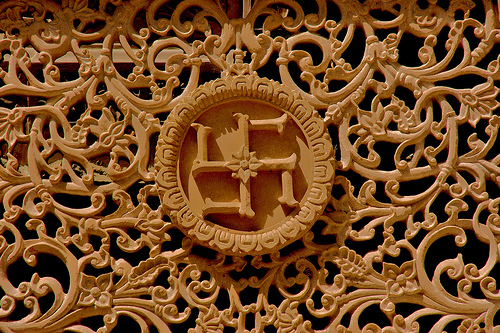
I was recently reminded about the origins of the Nazi swastika, ironically enough, during the Cincinnati funeral service of my dear friend, Georgetown classmate,  lawyer and patriot Mitchell Dale, who died last summer. Looking down during a prayer, I was startled to see the Hindu version of the symbol in a mosaic imbedded in the church floor.

Oddly, the pastor and mourners weren’t arrested.

Yet last month, an unnamed Jewish student placed a small, bronze, Indian swastika on the bulletin board of his Jewish fraternity, Zeta Beta Tau, in the university’s International House. The building had recently been the target of an unidentified vandal who drew three swastikas on the walls. After posting the swastika, the student stayed close to the bulletin board, intending to discuss it and the previous vandalism with observers. He briefly stepped away, unfortunately for him, and during that period a member of the student’s fraternity saw the swastika and called GWU’s campus police. They  filed a report and took the swastika as evidence. When the student found out the police had been called, he immediately came forward to authorities and said that he had posted the  image to spark a conversation about the ancient symbol, cultural appropriation, messages, perception…as in what used to be called “education.” He said he did not intend to offend anyone, noting in doing so that this was an Indian swastika, not a Nazi one. He had just returned from studying religion in India, and said he became fascinated by the idea that a symbol that was not one of hate could become so defined by hate.

GWU suspended the student and evicted him from university housing pending the outcome of five disciplinary charges. The university also kicked him off campus, and referred the incident to the District of Columbia police for investigation as a potential “hate crime.” He could face expulsion.

Ethics observations:

1. FIRE, Freedom for Individual Rights in Education, is on the case. Thank you, FIRE. FIRE Program Officer and attorney Ari Cohn wrote,

“GWU may not ignore thousands of years of history and effectively forbid all uses of the swastika because it was used by Nazi Germany. It’s ironic that the charges against the student illustrate the very point he was trying to make in the first place—that context is important and there’s much to be learned about the history of the swastika.”

2. Now the Hindu American Foundation is protesting as well. This is the wonderful aspect of diversity, and a warning to institutions and diversity hounds that diversity must cut in all directions, or is a sham. It is discriminatory for a university to demonize and censor an aspect of a world religion’s symbology and culture. Do you think the administrators at GW sufficiently understood this, or just didn’t care, going with what they perceived as the most powerful interest group?

3. The George Washington fiasco comes in the wake of other  colleges  responding to anti-Semitic swastika vandalism, but that shouldn’t have mattered. Continue reading

Iowa’s Kirkwood Community College Imprisons Its Students In Deference To Hillary Clinton

"This is a great community college, you know?"

“This is a great community college, you know?”

I’m willing to entertain the notion that the exigencies of the situation may have justified Boston’s police ordering citizens to stay in their homes during the dragnet for the Boston Marathon bombers in 2013, Barely. Still, the explosion of extra-legal, unconstitutional abuses of power by national and state governments during the Presidency of Barack Obama is profoundly troubling, and even more so is the complacency of the public and media when it occurs.

Yes indeed, I see this particularly frightening fish-rot as being initiated from the head in the White House, who has embraced the governing theory that if consensus and compromise on desired measures, laws and policies can’t be achieved under the Constitution’s formula, do it anyway. This isn’t strength, you know. It is weakness, the desperate resort of an unskilled executive with contempt for democracy. Under this administration, we have seen a President and a Justice department refuse to fulfill their duties and defend a duly passed and signed law that they just didn’t like (DOMA). Wrong. We have seen a President unilaterally amend his own sloppy health care law because he knows that if he tried to fix it legally, the Congress would gut it. Wrong. We have seen Obama repeal immigration restrictions by executive order, and declare that the Senate was in recess in order to avoid the bother of getting legally mandated  confirmation of his appointments—that one, at least, was struck down by the Supreme Court.

The cumulative effect of all of this is gradually increasing public tolerance for official breaches of the rule of law, at all levels of government, and by private entities too. I believe that that this threatens the democratic culture, and I do not understand why progressives are not as outraged by this development as moderates and conservatives. Do they really think that having allowed Constitutional protections to erode so their precious agenda can be advanced, those protections will be suddenly vigorous again when their adversaries have the upper hand? What utter, utter fools:

The sickening effect of this complacency was on display at Kirkwood Community College in Monticello, Iowa, Continue reading

Ethics Musings On The Project Veritas Cornell Video

1. I am deeply conflicted about how to handle the results of James O’Keefe’s “undercover video” operations when they hit gold like this. His methods are dishonest, Project Veritas does not treat his targets fairly, and publicizing his work just ensures that he will do more of it, and that imitators will follow in his slimy footsteps.

2. On the other hand, it makes no sense to apply an ethics blog exclusionary rule, and pretend that the videos don’t show what they show, when what they show is enlightening.

3. I’m not entirely certain that this video shows what it shows. It may show Cornell’s assistant dean for students, Joseph Scaffido, slipping into automatic sales mode, and neither paying attention to what comes out of his mouth nor applying critical thought. Surely he knows–please, please, tell me he knows!— that a pro-ISIS group on any American campus, especially a high-profile and prestigious one like Cornell’s, would be a public relations nightmare.

4. What should we want to happen to Scaffido? If he’s fired, he has lost his job because of tricks and lies, and because he trusted a stranger. That seems unfair. Yet if Cornell just shrugged this off, it is guaranteed to upset parents and alumni. What kind of people are teaching today’s college students at Cornell? Are they really this stupid? How many people like Scaffido are in positions of authority, or worse, tenured professors? Isn’t this obviously a problem? Continue reading

Those Huge University Speaking Fees: Hillary Clinton A Venal Hypocrite? Say It’s Not So!

To be fair, she really needs the money...

To be fair, she really needs the money…

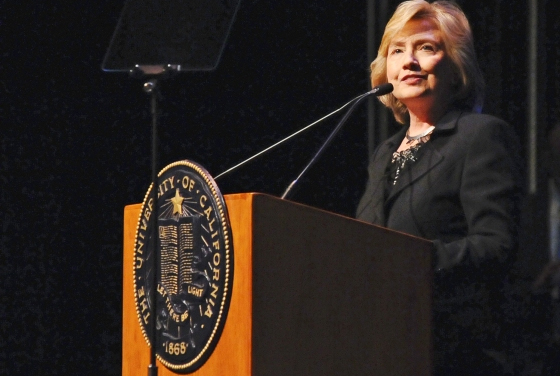
Hillary Clinton has sounded the alarms (lest Sen. Elizabeth Warren sound it louder) over student dept and the high cost of college education. Then she has blithely accepted nearly two million dollars to give one hour canned speeches at eight universities, including four public institutions.

This is causing some anger on campuses, as it should. How can a school raise tuition, claim that it is strapped for funds, and then pay a wealthy woman over $200,000 to give a speech? It can’t—not responsibly or ethically. Nor is it responsible or ethical for the speaker, while stating publicly that she deeply cares about higher education, to ask for and accept such funds.

The issue came to light after University of Las Vegas students began protesting a scheduled speech by Clinton at her going rate of $225,000, asking her to return the fee. What has followed is a lot of rationalizing and lame defenses of the indefensible.

Fact: no school should be paying the equivalent of a student’s multi-year tuition for a one hour speech, even if Abraham Lincoln has agreed to come from beyond the grave to give it.

Fact: no decent, caring public figure should charge or accept such a fee. Continue reading

If Your Institution Is Named After George Washington, Shouldn’t We Be Able To Trust It To Tell The Truth?

The General is not pleased.

The General is not pleased.

Shame on George Washington University (in Washington, D.C.), not only for lying to its students and community, but also for dishonoring the name of the scrupulously ethical American icon which they presumed to expropriate as their own. Such things carry with it some crucial obligations.

For years, the GW admissions and financial aid offices have claimed in printed materials and on the University website that admissions were independent of need. The admissions process does not consider financial need during the first round of screening applications. Before applicants are notified, however the University examines its financial aid budget and decides which students it can actually afford to admit. Wealthier students are accepted, taking the spots of students who would need more financial aid from the University.

Last week, a GW administrator confessed to a student newspaper—one ironically called “The Hatchet” after the apocryphal axe little George used to cop down that cherry tree in Parson Weems’ fable—– that financial resources indeed were considered in the admissions process, and have always been considered despite University statements to the contrary.  As  recently as last weekend, admissions representatives told prospective students that their applications would be judged without consideration of their financial aid profiles. Until it was removed Saturday evening, the newspaper reports, the undergraduate admissions website read, “Requests for financial aid do not affect admissions decisions.”

That site now confirms a “need-aware” policy that has always been in place. George Washington University just had another policy of lying about it. Continue reading

The Ethics of Sex in the Classroom

"All right, Professor, this time you've gone too far!"

Northwestern University Professor John Michael Bailey decided to enrich his course on Human Sexuality by having a man use a dildo to bring a naked woman to orgasm as his students watched. Did the professor do a live play-by-play of the encounter, like sportscaster  Howard Cosell in “Bananas”? We don’t know. (Yes, today is Woody Allen Film Allusion Day, and no, I don’t know why.) Not surprisingly, this caused quite a bit of controversy on campus, and at least one formal complaint was filed challenging the ethics of the exhibition.  Bailey defended the exhibition, which was voluntary (meaning, presumably, that it wouldn’t be covered on the exam—about a hundred students attended) by arguing that such  unconventional demonstration provide “useful examples and extensions of concepts students learn about in traditional academic ways.”  Northwestern president Morton Schapiro concluded that “I simply do not believe this was appropriate … or in keeping with Northwestern University’s academic mission,” and the college has assigned Bailey other courses while announcing that “Human Sexuality”  will not be offered in the coming academic year. Continue reading