The Loyalty Problem: Fundamental Ethics Confusion at Mount St. Mary’s University

Mt st mary

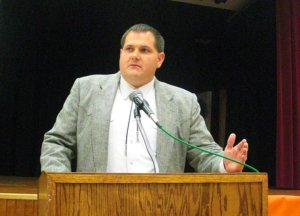
Loyalty is an ethical virtue; the whole concept of duty often depends on it. Loyalty is also the most dangerous of all ethical principles. Misapplied, misinterpreted, followed blindly or carried to extremes, it can lead to absolute wrong. A current controversy at Maryland’s Mount St. Mary’s University illustrates how.

A reliable source obtained information that the school’s president, Simon Newman had argued that the school needed to be ruthless in maintaining high standards by getting rid of less competitive students, and had done so by telling colleagues opposing him, “This is hard for you because you think of the students as cuddly bunnies, but you can’t. You just have to drown the bunnies…Put a Glock to their heads.”

The student newspaper reported the conversation, which Newman hasn’t denied, and it was duly published in The Mountain Echo, the student newspaper.

Shortly after the “scoop,” The Mountain Echo’s faculty advisor Ed Egan was fired by Newman for violating the “code of conduct and acceptable use policies.” During the same period in which Egan was fired,  Newman did a Michael Corleone on some other “disloyal” lieutenants.” Thane Naberhaus, an associate professor of philosophy, was dismissed after criticizing Newman’s policies, and David Rehm, was stripped of his role as provost after questioning university policies.

The dismissal letter to Naberhaus, signed by Newman, said “As an employee of Mount St. Mary’s University, you owe a duty of loyalty to this university and to act in a manner consistent with the duty. However, your recent actions, in my opinion and that of others, have violated that duty and clearly justify your termination.”  Ed Egan says that he was also told that he had been “disloyal.”

I can’t speak to the dismissals of the other employees, but in the case of Egan, his loyalty was where it should be. President Newman doesn’t understand his own job, or the ethical principles applicable in academia. Continue reading

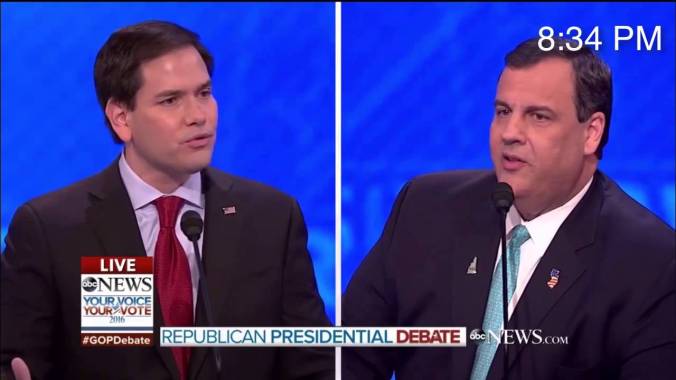
Ethics Observations On The GOP New Hampshire Debate

Rubio meltdown

Two ethics controversies occurred before the ABC debate (transcript here) even began.

  • DNC chair Debbie Wasserman Schultz really is a shameless and audacious hack. Does anyone seriously defend her? After being justly criticized in the news media for unabashedly hiding the Democratic candidates debates, staging them on weekends and against football games to smooth the road for Hillary, she actually had the epic gall to accuse the GOP of doing the same thing in a tweet yesterday, which read:

“Hmmm, wondering why @GOP trying to hide their #GOPdebate on the Saturday of #SuperBowl weekend no less?!”

Is she that lacking in self-awareness? Was she mocking herself? Is she an idiot? After she was blasted left and right for the tweet, she either revealed her real objective or concocted a face-saving retort:

“.@TheDemocrats debates set viewer records. Both parties’ broadcast network debates on wknds. Replies to SuperBowl #GOPdebate make my point,”

Whether this was her original intent of a U-Turn, it was also her trademark, a ridiculously transparent lie. “TheDemocrats debates set viewer records” is deceit: all the debates by both parties have exceeded previous viewer levels, but the Republican debates have significantly out-drawn the Democrats. There is no doubt that the Democrats would have drawn more had they avoided weekends like Republicans did, and that the fact that they did not was entirely intentional.

Why do Democrats tolerate a sleaze like Wasserman Schultz? It is natural to judge a party by its leadership, and she is neither bright, nor honest, nor effective,  nor appealing.

The other issue was the unfairness of leaving Carly Fiorina out of the debate. I don’t pretend to understand the formula used to demote the candidates, but since all of the other potential debaters–Gilmore, Graham, Huckabee, Santorum, Paul—had dropped out, either Fiorina should have been given a chance to debate herself for two hours, which would have been fun, or be in the main debate. Her New Hampshire poll numbers are equivalent to several who debated last night.

Debate observations: Continue reading

In Virginia And D.C., Botching The Complex Relationship Between Law And Ethics

aforadultry

Laws don’t exist merely to do things; they must also stand for the ethical principles that sustain a stable and productive society. Laws create moral codes of conduct as well as a pragmatic ones. It is profoundly puzzling to me that so many regard this as a controversial statement, especially in a country founded by two documents that are steeped in values.

There are laws against stealing to discourage theft, but also because the official voice of society must make it clear what the values of that society are. The laws against stealing state that theft is wrong. The law expresses societal consensus about acceptable and unacceptable conduct; it also reinforces and strengthens that consensus.

The fact that this is a proper function of law doesn’t mean that those who write and pass laws or the public understand any of this. The relationship isn’t taught in schools, and while one might encounter this concept in law school or a good college government or philosophy course, one can be well-educated and never think about this at all. In other words, the officials who make laws often don’t have a clue what they are doing, and neither does anyone else.

Two glaring examples have arisen in my neck of the woods, the District of Columbia, where I work, and Virginia, where I live.

Behold:

In Virginia, Virginia Senate declined to pass a bill that would have decriminalized adultery in the state. Currently, adultery is a Class 4 misdemeanor. Sen. Scott Surovell (D–Fairfax) introduced a measure that would have reduced adultery from a criminal offense to a civil one, keeping the criminal law’s fine of no more than $250. Thirteen states have repealed similar adultery statutes in recent years, and only about a dozen states still treat the act as a crime. The immediate criticism of the Virginia decision was predictable and focused on “legislating morality,” as if that isn’t a legitimate function of law. What critics, usually from the left, mean when they use this catch phrase is “How dare the government interfere with private conduct that is nobody else’s business?” Well, is spousal abuse and child abuse private, then? Bigamy? The reason adultery is illegal is that it hurts people, wrecks families, traumatizes children, and destabilizes society. It is completely appropriate for society to say  “This is bad for everyone, so don’t do it.” The law is how we express such messages. Continue reading

Prof. Jonathan Turley On The Latest Clinton E-Mail Revelations

the_end_justifies_the_means_by_carlos0003

“Highly classified Hillary Clinton emails that the intelligence community and State Department recently deemed too damaging to national security to release contain “operational intelligence” – and their presence on the unsecure, personal email system jeopardized “sources, methods and lives,” a U.S. government official who has reviewed the documents told Fox News.”

The mainstream media is dutifully ignoring this while they can, so you may well say, “Oh, well that’s just Fox News.” However, this bit of leaked information should not be surprising, and assuming that it is accurate, it follows the pattern of each bit of new data further discrediting Clinton’s various defenses for her indefensible handling of communications.

I point you to the analysis of George Washington law professor and blogger Jonathan Turley, who is that rarity in academia, a non-partisan, fair and unbiased commentator. Here, in part, are his recent comments on this matter. Please send it to the unshakable Clinton enablers in your life: a mind is a terrible thing to waste. (The emphasis is mine.)

While I agree with the Clinton campaign that these leaks are themselves problematic (both in terms of their timing and their disclosures from an ongoing investigation), I have long maintained that this was a serious scandal and that Clinton’s evolving defense does not track with national security rules or procedures. I consider the decision to use exclusively an unsecure server for “convenience” to be a breathtakingly reckless act for one of the top officials in our government. I am also deeply concerned about the level of “spin” coming from the campaign that is misrepresenting the governing standards and practices in the field. Much of what has been said in defense of Clinton’s use of the email system is knowingly misleading in my view.

In addition, Rep. Mike Pompeo, R-Kan., who sits on the House intelligence committee, “suggested the military and intelligence communities have had to change operations” due to the presumption that Clinton’s emails were compromised.

… I have previously noted that the decision of Clinton to use a personal server showed incredibly bad judgment that put classified information at risk. The defense that the information was not marked, which the campaign has been using recently, does not address the fundamental issues in the scandal. Clinton has insisted that “I never sent classified material on my email, and I never received any that was marked classified.” The key of this spin is again the word “marked.” I have previously discussed why that explanation is less than compelling, particularly for anyone who has handled sensitive or classified material. Continue reading

Jumbo Alert, As An Integrity And Corruption Check For Pundits, Journalists, And All Your Hillary Clinton-Defending Friends Looms

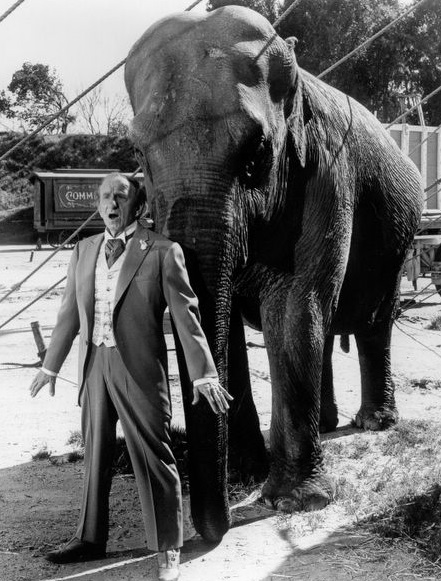
Jumbo film

The real test of when someone will lie to your face is when they will insist that their former, perhaps bias-supported but still sincerely-held position is still valid after all justifications for it have vanished. This is Jumbo territory, the point where Jimmy Durante, giant elephant in tow, shrugged to the accusing sheriff in front of him and said, “Elephant? What elephant?” That, however, was a joke. This is tragic.

Many of us knew we would reach this point long ago, of course. As many, including me, have documented since the New York Times first broke the story of how Hillary Clinton had defied policy, best practices, competent national security management, technology common sense and perhaps the law by receiving and sending her official State Department e-mail on a home-brewed server. First she said there was nothing improper about doing this, then she said she had received no classified information, then she said she had received no material marked classified. She trotted out rationalizations: “everybody did it,” “other Secretaries of State did it,” “don’t sweat the small stuff,” ultimately adding a rationalization to the list, “It wasn’t the best choice.”

Those of us who have followed the pattern of Clinton scandals over the years knew that her camp was running out of smoke when it defaulted to the old “vast right wing conspiracy” diversion that worked so well—for a while—during the Monica Mess. The facts have been pretty clear for a while now, to anyone with the honesty and fairness to acknowledge them. Hillary Clinton, for her own convenience (as she has said) and to keep her communications out of the view of Congress, the public, political adversaries and law enforcement as she mixed personal business, politics and influence peddling with her official duties, willfully endangered US security and even the lives of intelligence personnel by handling official communications in an insecure manner.

The FBI has been investigating all of this—not her, her campaign keeps reminding us, just the e-mails!—and the State Department, which has been acting as a partisan ally when it’s duty is to the American people, finally was forced by a judge to review and turn over the e-mails involved, other than the ones Clinton had destroyed by her lawyer (nothing suspicious or irregular about that). With each new batch revealed, more e-mails that contained classified information have been found. Former Defense Secretary and CIA director William Gates said this week that Russia, China and Iran, among other foreign nations, probably hacked Clinton’s e-mails, “given the fact that the Pentagon acknowledges that they get attacked about 100,000 times a day.” Meanwhile, State has identified over 1,200 emails that it deems classified were sent over Hillary’s private server, making her first denials ridiculous, and her ultimate denials an admission of gross negligence and stupidity, even if they were true. The Secretary of State didn’t discern that any of 1200 e-mails contained information requiring care and confidentiality? This is the “I’m not corrupt, I’m stupid” defense, which is one no Presidential candidate ought to be allowed to get away with, especially one being extolled by the current President for her alleged competence and experience.

Now the walls, and the facts, are closing in. Yesterday, the Obama administration confirmed for the first time that Hillary Clinton’s home server contained closely guarded government secrets, and announced that 22 emails that containing material requiring one of the highest levels of classification were so sensitive that they could not be released.  Is that clear? These are communications that were on an insecure server, vulnerable to hacking, that Clinton saw, and either didn’t recognize as such—she’s not that stupid—or didn’t care enough to start being responsible. With such e-mails, it doesn’t matter if they are marked: they are self-marking: big, loud, throbbing documents that any Secretary of State, even Secretary Gump, must know are classified because of their content.

The State Department revelation came three days before  the Iowa presidential caucuses, and, incredibly, the Clinton campaign complained about the timing! Yes, it is certainly outrageous to let voters know about the duplicity and incompetence of a candidate for President before they vote for her. This is how Clinton thinks. If that doesn’t bother you, get help.

Federal law makes it a felony for any government employee to mishandle classified information, and here comes the integrity check. With this new information, Clinton has no defense. By definition, allowing top secret information to be received and perhaps forwarded on an insecure, private server is mishandling, and illegal.  Clinton’s campaign, of course, is lying and spinning: the current tactic is to dismiss this as an inter-agency dispute over what is classified. (The Clinton-enabling Vox made bolstering this deflection the centerpiece of its “explainer”) However, when the current State Department is so sure of 22 e-mails’ top secret character that it feels it must withhold them from the public and the media, it is obvious that this was no close call, especially since State has been covering and spinning for Hillary to a disgraceful degree already.

So the facts speak: Yes, she lied. Yes, she endangered U.S. security. Yes, she willfully exposed classified documents to hacking by our enemies. Yes, she did this for her own personal and political benefit.

Yes, she broke the law, and this law ain’t jaywalking. Continue reading

Comment of the Day: “Ethics Update: The Frontrunners”

Zoltar

Rising Ethics Alarms comment star Zoltar Speaks! has weighed in with a passionate and perceptive comment inspired my recent overview of the ethical bankruptcy among the public’s current top choices to be our next President. Most commentators, even partisan ones, have become sensitive to what ZS describes, though they describe it in differing ways. Here’s a fascinating post on City Journal, giving Arthur Schlesinger, Jr., Kennedy’s hagiographer and once influential liberal/Democratic historian credit for predicting the phenomenon:

“Both lament and warning, “The Disuniting of America” reflected a Schlesinger disconcerted by the rise, within overwhelmingly liberal academia, of multiculturalism and political correctness, the linked solvents of American identity. …Trump is both a reaction to and expression of liberal delusions. Schlesinger’s fears have largely come to pass; we’ve become what he called a “quarrelsome spatter of enclaves.” Schlesinger was too much a part of the elite to imagine that the class he always thought of as representing the best of the future would come to be despised by a broad swath of Americans for its incompetence and ineffectuality. But what Schlesinger saw on the horizon seems to have arrived, with no sign of abating: we are in the midst of a soft civil war.”

Government, especially democratic government, relies on trust. Nixon and Watergate exacerbated the decline in trust created by the Vietnam War, then Clinton betrayed the dignity and image of his office to make almost any conduct by the President not just imaginable, but defensible. Sam Donaldson famously said that Clinton would have to resign if the allegation about Monica were true, and he had lied. Sam was right under previous rules, and a President who cared more about the country’s trust than himself would have done as Donaldson predicted.

Next came the completely random catastrophe of the tied 2000 election. Democrats, to their undying shame, employed it as a wedge, and to insist that the election had been stolen, a practice I described at the time as picking at the connective threads of the tapestry of our society. 9-11 was used to suggest that our government would murder its own people; Katrina was used to suggest that our government would allow black people to die because they were black. Bush’s administration blundered into a war, and then into a near-depression—in past generations, these would both be attributed to miscalculations.  But the tapestry, as I warned, was unraveling. Now those mistakes were being seen as deliberate, sinister.Then came Obama, once promising hope and harmony, who has deliberately exacerbated divisions and distrust  to build a political firewall around  his own incompetence. Public trust in government, before the Vietnam protests, was at 73%; it is below 25% today. Of course it is. The question is: Now what?

Here is Zoltar Speaks! in his Comment of the Day on the post, Ethics Update: The Frontrunners:

Do you ever get the feeling from the political front-runners in this campaign that this election is primarily being steered towards the elimination of our current political system in favor of something else?

Do you ever get the feeling that illogical social chaos and division among the people is becoming more and more prevalent across the United States and our leaders don’t seem to be spending any of their political capital to slow the trend, instead what we see is rhetoric from our leaders and potential leaders that seems to support illogical social chaos and division among the people?

Continue reading

Ethics Update: The Frontrunners

the-three-stooges6

There was ample evidence over the past week that all three of the candidates currently leading their respective party’s races for the presidential nomination are unqualified for the office by virtue of their deficiencies of competence, character, and principles. Hillary Clinton had the most spectacularly revealing week, but first, the other two….

Donald Trump: Hubris, incompetence, disrespect and unfairness

1. “I could stand in the middle of 5th Avenue and shoot somebody and I wouldn’t lose voters,” Trump boasted at a campaign rally yesterday. I know, it’s a joke. It’s also an astoundingly stupid thing to say, even in jest, and reveals massive hubris, the quality that brought down many a Greek king and the worst and most dangerous of all Trump flaws. This is what will get him, sooner or later. 3000 years of history and literature teach us that. The comment also reveals utter contempt for his supporters; he is essentially calling them blind morons. The crowd in Iowa laughed….because they are.

2.“Our great veterans are being treated terribly,” Trump says in a new campaign video. “The corruption in the Veteran’s administration, the incompetence is beyond. We will stop that.” Then critics pointed out that the clips used showed Russian veterans, not Americans, and he pulled the ad.

This is the man whose only claim to legitimacy is his management wizardry. Such an error, however, is proof of sloppy oversight and incompetent delegation. Moreover, this is the second time a Trump campaign ad  included mislabeled material: his illegal immigration ad earlier this month used footage of people crossing the Moroccan border to represent the U.S.-Mexico border. Conclusion: he’s faking it, “it” meaning everything. This is all posturing and bluffing, like a student taking an exam for a course he never studied for. Continue reading

Ethics Observations On The Academy’s Pro-Diversity “Fix”

Chris-Rock-Backstage-at-Oscars

Apparently panicked by the negative reaction to its all-white 2016 Oscar nominations,  and determined not to give MC Chris Rock more ammunition than he already has, the Academy of Motion Picture Arts and Scientists has rushed into place new voter qualifications for next year’s awards. Under the new rules, members who have not worked over the past 30 years  will lose the right to cast Oscar ballots unless they have been nominated for an Oscar themselves.

What’s going on here?

1. Is this substituting real bias for unfairly assumed bias?

Sure it is.

As one soon to be disenfranchised voter told the Hollywood Reporter, “The Motion Picture Academy, in the spirit of Affirmative Action (which has worked so well in our universities), is determined to take the Oscar vote away from the Old White Guys…Personally, I wish they’d examine their complex preferential ballot procedure which clearly isn’t working right. But no, blame the Old White Guys.” Others noted that to assume older voters, many who were at their peak during the rebellious Sixties and the Civil Rights Era, weren’t voting for black artists was foolish. The new rules seem to be an obvious attempt to stigmatize and penalize older voters.  The seniors, said one dissenting Academy member, are often “perfectly vibrant and very much with it and, while they may be retired, it doesn’t mean they aren’t functioning on all cylinders. They have earned the privilege of being in the Academy through their work and just because they’re no longer active doesn’t mean that they can’t be a good judge of what they’re looking at.” Former actress Delores Hart, who gave Elvis Presley his first screen kiss and who was the top-billed star of “Where the Boys Are?,” was direct, saying,  “It’s age discrimination.”

Of course, Hollywood has long-accepted age-discrimination, and Saturday Night Live would never skewer the Oscars for that. Continue reading

From Missouri: Good Ethics Theory, Dumb Bill

Rep. Bart Korman, deep thinker...

Rep. Bart Korman, deep thinker...

A proposed bill, sponsored by Rep. Bart Korman, a Montgomery County Republican in the Missouri legislature, would require lobbyists who have sex with a Missouri lawmaker or a member of a lawmaker’s staff  to disclose it to the Missouri Ethics Commission. The bill defines sex between lobbyists and legislators as a gift, so  sexual relations would have to be included on monthly lobbyist gift disclosure forms.

In theory, the bill is ethically admirable. Lobbyists having sex with legislators is unethical, and vice-versa. It creates a conflict of interest for the legislator, creates an appearance of impropriety, suggests a quid pro quo arrangement, and either is or looks like the equivalent of a bribe. It is grossly unprofessional for both sex partners. It is unethical in every way.

The proposed law, however, is stupid and incompetent beyond belief or justification. It doesn’t even send an important message: everyone already knows that for lobbyists and elected officials to have sex is unethical. Lobbyists and legislators are already professionally obligated to report professional misconduct, by themselves and others. This is the ethical duty of disclosure and transparency. Why would any lobbyist so unethical as to have sex with a legislator he or she was supposed to lobby suddenly decide to abide by a law and disclose it, thus embarrassing his or her paramour? It makes as much sense to pass a law requiring burglars to report their break-ins and thefts, or to require tax cheats to list the money they hid on their last tax returns as income on the next one. Continue reading

The Seventh Annual Ethics Alarms Awards: The Best of Ethics 2015, Part I

Sweet Briar montage

Welcome to the Seventh Annual Ethics Alarms Awards, our blog’s retrospective of the best and worst in ethics over the past year, 2015.

It was a rotten year in ethics again, it’s fair to say, and Ethics Alarms, which by its nature and mission must concentrate on episodes that have lessons to convey and cautionary tales to consider probably made it seem even more rotten that it was. Even with that admission, I didn’t come close to covering the field. My scouts, who I will honor anon, sent me many more wonderfully disturbing news stories than I could post on, and there were many more beyond them. I did not write about the drug company CEO, for example, who suddenly raised the price of an anti-AIDS drug to obscene levels, in part, it seems, to keep an investment fraud scheme afloat. (He’ll get his prize anyway.)

What was really best about 2o15 on Ethics Alarms was the commentary. I always envisioned the site as a cyber-symposium where interested, articulate and analytical readers could discuss current events and issues in an ethics context. Every year since the blog was launched has brought us closer to that goal. Commenters come and go, unfortunately (I take it personally when they go, which is silly), but the quality of commentary continues to be outstanding. It is also gratifying to check posts from 2010 and see such stalwarts who check in still, like Tim Levier, Neil Dorr, Julian Hung, Michael R, and King Kool.  There are a few blogs that have as consistently substantive, passionate and informative commenters as Ethics Alarms, but not many. Very frequently the comments materially enhance and expand on the original post. That was my hope and objective. Thank you.

The Best of Ethics 2015 is going to be a bit more self-congratulatory this year, beginning with the very first category. Among other virtues, this approach has the advantage of closing the gap in volume between the Best and the Worst, which last year was depressing. I’m also going to post the awards in more installments, to help me get them out faster. With that said….

Here are the 2015 Ethics Alarms Awards

For the Best in Ethics:

Most Encouraging Sign That Enough People Pay Attention For Ethics Alarms To Occasionally Have Some Impact…

The Sweet Briar College Rescue. In March, I read the shocking story of how Sweet Briar College, a remarkable and storied all-women’s college in Virginia, had been closed by a craven and duplicitous board that never informed alums or students that such action was imminent. I responded with a tough post titled “The Sweet Briar Betrayal,” and some passionate alumnae determined to fight for the school’s survival used it to inform others about the issues involved and to build support. Through the ensuing months before the school’s ultimate reversal of the closing and the triumph of its supporters, I was honored to exchange many e-mails with Sweet Briar grads, and gratified by their insistence that Ethics Alarms played a significant role in turning the tide. You can follow the saga in my posts, here.

Ethics Heroes Of The Year

Dog Train

Eugene and Corky Bostick, Dog Train Proprietors. OK, maybe this is just my favorite Ethics Hero story of the year, about two retired seniors who decided to adopt old  dogs abandoned on their property to die, and came up with the wacky idea of giving them regular rides on a ‘dog train” of their own design.

Ethical Mayor Of The Year

Thomas F. Williams. When the Ferguson-driven attacks on police as racist killers was at its peak (though it’s not far from that peak now) the mayor of Norwood, Ohio, Thomas F. Williams, did exactly the opposite of New York Mayor Bill de Blasio in response to activist attacks on the integrity of his police department. He released a letter supporting his police department without qualification. At the time, I criticized him for his simultaneously attacking activists as “race-baiters.” In the perspective of the year past, I hereby withdraw that criticism.

Most Ethical Celebrity

Actor Tom Selleck. In a terrible year for this category, Selleck wins for bravely pushing his TV show “Blue Bloods” into politically incorrect territory, examining issues like racial profiling and police shootings with surprising even-handedness. The show also has maintained its openly Catholic, pro-religion perspective. Yes, this is a redundant award, as “Blue Bloods” is also a winner, but the alternative in this horrific year when an unethical celebrity is threatening to be a major party’s nominee for the presidency is not to give the award at all.

Most Ethical Talk Show Host

Stephen Colbert, who, while maintaining most of his progressive bias from his previous Comedy Central show as the successor to David Letterman, set a high standard of fairness and civility, notably when he admonished his knee-jerk liberal audience for booing  Senator Ted Cruz

Sportsman of the Year

CC Sabathia

New York Yankee pitcher C.C. Sabathia, who courageously checked himself into rehab for alcohol abuse just as baseball’s play-offs were beginning, saying in part,

“Being an adult means being accountable. Being a baseball player means that others look up to you. I want my kids — and others who may have become fans of mine over the years — to know that I am not too big of a man to ask for help. I want to hold my head up high, have a full heart and be the type of person again that I can be proud of. And that’s exactly what I am going to do.”

Runner-up: MLB Commissioner Rob Manfred, who dismissed the ethically-addled arguments of Pete Rose fans to reject his appeal to be have his lifetime ban for gambling lifted.  For those who wonder why football never seems to figure in this category: You’ve got to be kidding.

Ethics Movie of the Year

SpotlightTIFF2015

“Spotlight”

Runner-up: “Concussion”

Most Ethical Corporation

Tesla Motors, the anti-GM, which recalled all of its models with a particular seatbelt because one belt had failed and they couldn’t determine why. Continue reading