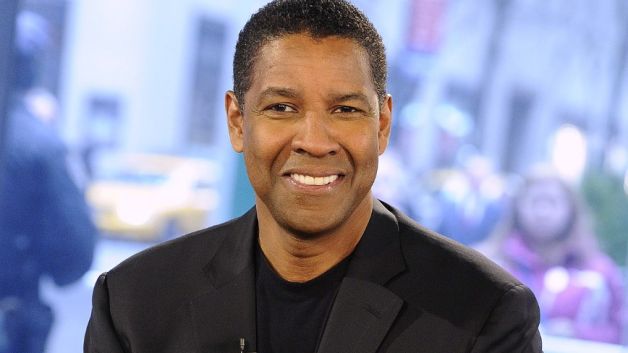
Ethics FYI To Hollywood, Pundits And Al Sharpton: There Is Nothing Racist–Or Unethical—About The Hacked Denzel Washington Memo

denzel-washington

Does anybody even bother to think about what racism is any more before accusing people of it? Do journalists think about the circumstances before they parrot knee-jerk accusations of racism from the likes of Sharpton and others? Based on the evidence of reaction to the infamous memo from a Sony honcho regarding the performance of Denzel Washington pictures abroad, apparently not.

Everywhere, this screed by an unnamed Sony executive is being called “shocking,” “unbelievable,” and, of course “racist.” It is nothing of the kind. In a scenario that reeks of the surreal Samuel L. Jackson fiasco where Ethics Alarms was virtually alone in noting that Jackson’s on-air accusation that a white TV host had confused him with fellow black star Lawrence Fishburne because “all blacks look the same to him” was unfair and completely meritless, the news media is just running with a demonstrably false accusation.

Here are the relevant portions of the e-mail exchange based on what has been reported in the media:

“I am not saying The Equalizer should not have been made or that African American actors should not have been used (I personally think Denzel is the best actor of his generation.) [But] Casting him is saying we’re ok with a double if the picture works. He’s reliable at the domestic [box office], safe, but has not had a huge success in years. I believe…the non event pictures, extra ‘bets’ should have a large inherent upside… Here there isn’t a large inherent upside….I believe that the international motion picture audience is racist – in general, pictures with an African-American lead don’t play well overseas…Sony sometimes seems to disregard that a picture must work well internationally to both maximize returns and reduce risk, especially pics with decent size budgets.”

Let’s examine this “unbelievable” e-mail, line by line and then as a whole, for ethical misconduct and incipient racism:

“I am not saying The Equalizer should not have been made or that African American actors should not have been used (I personally think Denzel is the best actor of his generation.)”

No problem there, right?

“[But] Casting him is saying we’re ok with a double if the picture works.”

The baseball analogy, a “double” over a “home run,” is a conclusion based on Washington’s films’ grosses and hard facts, not racism. It is a legitimate opinion, and one that in a business context must be made as a matter of fiduciary duty. Foriegn box office is about half (or more) of a typical film’s profit. If a star isn’t as popular in foreign markets as in the U.S., then metaphorically speaking, a “home run” is more difficult, and maybe impossible. Continue reading

“It’s Unethical To Be A Weenie,” Part III: Hypersensitive Law Students

[Part I is here; Part II is here]

“Today’s lecture is on WHAT???????”

This belongs in an emerging sub-category: future legal weenies. We have already seen black law students insisting that they be able to defer exams because the Eric Garner death has them too preoccupied to concentrate, and other law students protest an “insensitive” exam question involving the Ferguson riots. This trend does not bode well for the ability of citizens to receive competent representation in years to come. The latest entry was revealed by Harvard law professor Jeannie Suk, who registers her observations  in the New Yorker.  Suk says rape law is becoming impossible to teach and may be dropped from criminal law courses because many students can’t handle the stress of the subject matter. Criminal law professors at several schools confirmed that they are no longer teach rape law because they fear student complaints.  Suk writes, “Many students and teachers appear to be absorbing a cultural signal that real and challenging discussion of sexual misconduct is too risky to undertake—and that the risk is of a traumatic injury analogous to sexual assault itself.” Continue reading

The Professor and the Insensitive Law School Exam Question

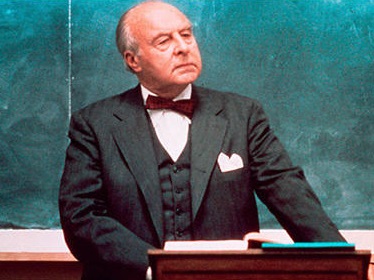
"Go ahead, tell Prof. Kingsfield that his exam is unfair because it triggers your emotions and you can't think straight. I dare you."

“Go ahead, tell Prof. Kingsfield that his exam is unfair because it triggers your emotions and you can’t think straight. I dare you.”

A Constitutional Law exam at UCLA Law School included this question:

CNN News reported: On Nov. 24, St. Louis County prosecuting attorney Robert McCulloch announced in a publicized press conference that Police Officer Darren Wilson (who has since resigned) would not be indicted in the August 9 shooting of Michael Brown. Michael Brown’s stepfather, Louis Head, was with hundreds of protesters assembled outside the police station, listening on loudspeakers and car radios when they learned Officer Wilson was not being charged. Standing on the hood of a car, Mr. Head embraced Michael Brown’s mother. Mr. Head asked someone for a bullhorn but it was not passed to him. He turned to the crowd, stomped on the hood and shouted, repeatedly, “Burn this bitch down!”

Police Chief Tom Jackson told Fox “News,” “We are pursuing those comments … We can’t let Ferguson and the community die [as a result of the riots and fires following McCulloch’s announcement]. Everyone who is responsible for taking away people’s property, their livelihoods, their jobs, their businesses — every single one of them needs to be prosecuted to the fullest extent of the law.”

County Attorney Robert McCulloch asks lawyers in his office whether to seek an indictment against Head by relying on a statute forbidding breach of the peace and another prohibiting rioting (six or more persons assembling to violate laws with violence). A recent hire in the office, you are asked to write a memo discussing the relevant 1st Amendment issues in such a prosecution. Write the memo.

The question is a fair and legitimate one, and very typical of law school exams, which often ask students to apply course content to current events. Nonetheless, it provoked a controversy.

Shyrissa Dobbins, a second-year law student in the course and is chair of the Black Law Students Association, complained, “Daily I think about Michael Brown and Eric Garner, and I have a challenge. Every day I think about this injustice and how I’m in a law school that won’t even make a statement about it.” Hussain Turk, a second-year law student who took the exam, argued that  exams should not ask students to address controversial events, and that the question was unfair, as it could be more emotionally difficult for black students to answer. “These kinds of questions create a hostile learning environment for students of color, especially black students who are already disadvantaged by the institution,” Turk said.

There is only one proper rebuttal for this foolishness:

“Grow up, deal with your biases, start thinking like lawyers or find a profession you can handle.”

Pathetically, the law professor, Robert Goldstein apologized in an email in an e-mail to students, saying, “I recognize … that the recent disturbing and painful events and subsequent decisions in Ferguson and New York make this subject too raw to be an opportunity for many of you to demonstrate what you have learned in this class this year,” and promised to discount scores students receive on the question if it lowers the overall score of the student.

Law school Dean Rachel Moran added to the misplaced sensitivity-fest, and her e-mail, said…

“In retrospect, however, he understands that the question was ill-timed for the examination and could have been problematic for students given the anguish among many in our community over the grand jury decisions in the Michael Brown and Eric Garner cases.”

Observations: Continue reading

KABOOM!* Our Hyper-Sensitive Future Lawyers

headexplode

Well, friends, for the second time this month my brains are on the ceiling, walls and floor again, and I’ve had to gate the dog so that…well, you know.

Columbia Law School announced that it is permitting students who are so devastated by recent non-indictments in the Michael Brown and Eric Garner matters to postpone taking their final exams. Isn’t that nice?

By “nice, “I mean stupid, irresponsible and embarrassing. You can read the Dean’s nauseatingly delicate statement here: I don’t want it polluting the blog, so I’m not going to quote it. Besides, if I look at it again, who knows what else might be on my walls. Continue reading

Obama Fires Hagel: The Flat Learning Curve Budges

Scapegoat

Sniffs the Weekly Standard:

How Do You Spell Scapegoat? H-A-G-E-L.

Chuck Hagel, apparently fired as Secretary of Defense, was exactly who and what Obama wanted, a weak Defense Secretary willing to carry out the President’s plan of demilitarizing of the U.S. and reducing U.S. power abroad. But that plan has led to rapidly deteriorating stability around the globe, and with ISIS appearing to be winning while the U.S. has restricted itself to bomb runs and “advisors,” Obama had a choice. He could, as he has consistently done for six years, refuse to acknowledge that his policies were misfiring and that his team was failing, thus giving the public no reason to believe that he knew, or perhaps even cared, that his ideology didn’t translate into desirable real world results. He could continue blaming others—Republicans, bad luck, Bush—for failures, and keep his loyalists in their jobs no matter how incompetent they appeared. In the alternative, he could signal that he was not satisfied with the status quo, and let heads roll—you know, like real leaders do. Continue reading

No, I’m Not Going To Write About Ethics And #Gamergate

Whatever.

Whatever.

I keep getting emails asking when I’m going to discuss Gamergate on Ethics Alarms. Several readers have sent me extensive links to bring me up to date. I’ve read them, or at least tried. Not since I was assigned the tome Peace and War by Raymond Aron has any text bored me more.

Gamergate appears to have all the markers of an ethics train wreck, but to me, at least, the train might as well be in Mongolia. I can’t contribute anything of value on this topic, because gaming is not part of my life, skill-set or interests in any way. This is a culture I don’t understand, and frankly, don’t have the time or interest to understand. I make a yeoman effort to keep up with popular culture, because I think once it gets too far ahead of you, your ability to understand the world around you is severely limited. But triage is essential. Just a few years ago, I knew who all the celebrity contestants on “Dancing With The Stars” were; this year, I never heard of half of them. More than half the stories on TMZ lately are about “celebrities” that are completely off my radar screen. I am confident, however, that in about six months, most of these stealth celebrities will be where Snookie and “The Situation” are now, which is obscurity, has-been Hell, or maybe jail.

There are ethics lessons to glean from this endless gamer scandal, but Ethics Alarms will just have to glean them elsewhere. For those who feel neglected, I highly recommend the recent post by Ken at Popehat, along with his links. It hits most of the salient ethics issues, and Ken, I gather, follows this stuff, as do his Popehat colleagues. My hat’s off to him, and them. But #Gamergate is one ethics controversy that I am not qualified to explore, and don’t want to be.

Incompetent Unannouced Presidential Candidate of the Month: Hillary Clinton

Monica Lewinsky fellow-cyber-bullying victim Hillary Clinton, who is widely-expected to be the Democratic Party’s nominee for President in 2016, proclaimed this week,  while speaking at a campaign event for Massachusetts gubernatorial candidate Martha Coakley:

“Don’t let anybody tell you that it’s corporations and businesses that create jobs. You know that old theory, trickle-down economics. That has been tried, that has failed. It has failed rather spectacularly. One of the things my husband says when people ask him what he brought to Washington, he says I brought arithmetic.”

This statement is at least as much signature significance regarding Clinton’s competence to hold elective office as Todd Akin’s career-ending claim that victims of “legitimate rape” don’t get pregnant, “The View’s” former co-host Sherri Shepard confession that she thought the world might be flat, and Sarah Palin’s falsely reported—but funny! So who cares if it’s true since we hate her?—statement that she can see Russia from her house in Alaska. Some sources explained this jaw-dropping denial of reality as Clinton “moving left.” Actually, even Stalin wouldn’t try to deny that businesses create jobs, though he would probably suggest ways to stop people from telling you that, like, say, killing them. This isn’t “moving left.” This is called “losing it.” (I think Clinton looks drunk, personally.)

It is fitting that the statement came in support of Martha Coakley, whose last campaign in Massachusetts collapsed after her almost equally ridiculous statement that Red Sox icon, Curt “Bloody Sock” Schilling, was a Yankee fan. We shall see if Clinton’s denial of basic economic realities matters to her true blue supporters as much as Coakley’s admission that she knew nothing about the culture of the state she was running to represent in the Senate (she’s also on the say to losing her campaign to be governor, thank God. Yankee fan???) mattered to Bay State residents. Continue reading

Ebola, Trust, Competence, and “The Only Thing We HaveTo Fear Is Fear Itself” Ethics

On the 4th of March, 1933, newly elected President Franklin Delano Roosevelt, taking over the Presidency in the teeth of the Great Depression, intoned his famous words, “The only thing we have to fear, is fear itself!”  It was bravado, of course, and in essence a lie: there was a lot to fear. Roosevelt knew it, and the public certainly knew it. The whole economic system seemed to be falling apart. Anti-capitalist evolutionaries were looking for an opportunity to revolt. Nobody was sure what to do.

The statement was effective, however, in focusing the nation on the challenges at hand and riveting the pubic attention on solving problems rather than cringing in terror in fear of them. Roosevelt was a magnificent speaker, warm and charismatic, and that contributed to the force of his rhetoric, but what was most important is that he was trusted. Every new President  can draw on a full, newly-replenished  account of trust, or at least could, in FDR’s time. A new President’s promises haven’t proven to be air; his political skills and talents, honesty and character have not shown themselves to be inadequate or a fraudulent pose.  In rare cases, and FDR was certainly one, they never do. The President, for good or ill, is the human face of the U.S. Government. If he is trusted, it is trusted. Continue reading

When A Reality Show And A Self-Promoting Billionaire Are More Trustworthy Than TIME, American Journalism Is Seriously Ill

astrology

This week’s print TIME and the magazine’s website has a story titled “Astrologer Susan Miller On Why You Should Pay Attention to the Lunar Eclipse.” The TIME writer, Laura Stampler,  promotes the astrologer as if she was Nate Silver,  a reliable, respectable expert in a legitimate field  who has something to teach us. Susan Miller is not a reliable, respectable expert. She is an astrologer, meaning that she is as legitimate as a palm reader, a douser, or the Amazing Kreskin. She is a fraud, in a fraudulent field, however ancient or popular. There is no scholarly controversy about this. There is more evidence of the existence of Bigfoot, Nessie, ghosts and flying saucers than there is that astrology is more than pseudo-scientific claptrap. Continue reading

“Borderism” And The Ethics Of Circulating Stupid Ideas

"Certainly sir! We'd be honored to publish your opinion piece in the Washington Post! We welcome new ideas, whatever they may be!"

“Certainly sir! We’d be honored to publish your opinion piece in the Washington Post! We welcome new ideas, whatever they may be!”

For some reason I’m not certain I’d be happy to discover, some editor at the Washington Post thinks what our world needs at this disturbing moment in time is a new form of injustice to address, one that most of us never considered an injustice at all. Thus that helpful editor decided to give a megaphone to someone named , whom, we are told, is chief information officer of an NGO in Guatemala that promotes local governance in developing countries. This is itself interesting, because it provides a hint regarding why it is that developing countries have such a hard time developing. For Mr. , by the evidence of his opinion piece, deemed worthy of publication in a prestigious newspaper, is bats.

Essentially, his essay “Losing the Birth Lottery” asserts that life is unfair, so the only ethical thing to do is to make life chaotic and unfair. feels that it’s really, really mean that the United States doesn’t guarantee the same rights of U.S. citizens to every human being on earth, and insists that its refusing to do so is the moral equivalent of racism. He helpfully suggests the term “borderism” as the name for this heinous attitude, and writes:

“One could certainly argue that racial discrimination is worse than borderism because it excludes people from opportunities within their own countries. But how much worse? Many aspiring immigrants are born into nations where jobs are nonexistent, corruption is rife and indiscriminate violence plagues daily life. Being legally segregated into poverty and tyranny because of one’s ancestry is a cruel fate, regardless whether it’s because of race or citizenship.”

Continue reading