Two Ridiculously Easy Questions For “The Ethicist” Draw Me To The Woodchipper…

Am I wasting my time? How can so much of the public be so hopelessly incompetent at analyzing basic ethics issues?

Two back-to-back questions to Kwame Anthony Appiah, the philosophy prof who moonlights as the Times’ ethics advice columnist, have me wondering if its time to do something more useful, like, say, anything. Both questions involved what is ethical to write about. Both questions shouldn’t have to be asked by anyone whose judgment regarding right and wrong is superior to that of the Clintons, or Willie Sutton. Both were deemed interesting and controversial enough to be featured by “The Ethicist” as if substantial numbers of his readers are likely to be similarly puzzled by the alleged dilemmas they present.

Really? The first inquirer asked if it would be unethical for a writer to use the real life stories of alcoholics that she heard in her A.A. meetings without their consent, as long as she didn’t use their names….just their “profession, physical appearance, hobbies and other specifics.” Participating in Alcoholics Anonymous is conditioned on absolute confidentiality. The answer should be self-evident. Why isn’t it?

Continue reading

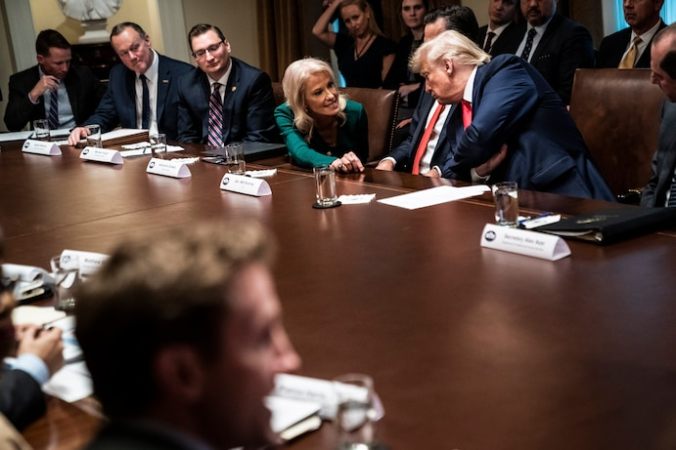
Update: So Kellyanne Conway’s Behind-The-Scenes White House Book Doesn’t Tell Negative Tales About Trump. It’s Still Unethical.

In this recent post, Item #4, I pronounced “Here’s the Deal,” former Trump campaign manager, PR flack and advisor KellyAnne Conway’s 500 page memoir of her White House days, an unethical betrayal of trust and professional ethics. According to the Washington Post,, Conway’s “tell-all” doesn’t do her former boss dirt, just other co-workers, like Jared Kushner and Anthony Fauci.

This post is to make a clarification: It doesn’t matter. Conway is still cashing in, and her book is still unethical. Workplaces do not work without mutual trust, and that means that no one can be candid, honest and spontaneous while thinking that what they do or say might be made public by an undeclared spy, mole, or blabber-mouth. Those like Conway who write books and get them out before the main characters have retired, died or faded from memory damage the workplace, politics, government, and human relations. They are ethics corrupters. They are selfish, destructive, betrayers. All of them. It doesn’t matter whether their fame arose from politics, Hollywood, the business world, journalism or someplace else. Such authors betray the trust of others for their own gain, unless every single individual mentioned by name for what they said or did has given advance consent.

Continue reading

Elon Musk Is Not A Nice Guy, And A Legal Ethics Controversy Proves It

The legal ethics world is all in a fluster over a recent controversy involving Elon Musk, the world’s richest man. This means that readers at Ethics Alarms should be flustering too.

This is the story: An SEC  attorney had interviewed  Musk during the agency’s investigation of the Tesla CEO’s 2018 tweet claiming to have secured funding to potentially take the electric-vehicle maker private. The claim proved to be false, resulting in a settlement that required Musk to resign and also to pay 20 million dollars in fines. In 2019, Musk’s personal lawyer called the managing partner at Cooley, LLP, and demanded that the firm fire the SEC lawyer, who had left the agency to become as associate at the large firm that handles Tesla’s business. The targeted lawyer had no connection to Tesla’s legal work at the firm; the sole reason for the demand was revenge. Musk wanted him to lose his job because he was angry about their interaction at the SEC. Continue reading

A Baseball Ethics Meets Legal Ethics Spectacular!

John_Henry_Wigmore_cph.3b34499

You can imagine how happy this ethics mash-up makes me.

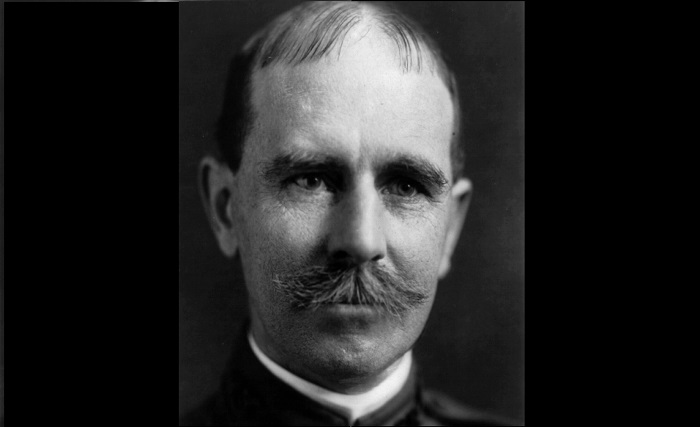
In legal ethics, a perpetual controversy involved what a law yer should do when another lawyer inadvertently sends him or her confidential information intended for the adversary lawyer’s client, and the information is a smoking gun that could win the receiving lawyer’s case. In the old days, when this involved some clerk in a law firm sending a load of documents to the opposition by mistake, the rule was simple. It was called “the Wigmore Rule,” after the famous law professor, John Henry Wigmore (above) who coined the phrase, “You snooze, you lose.”

In brief, the convention was that if a lawyer was careless enough to let this happen, he or she was at fault, and the lawyer getting the confidential documents could use them to benefit his or her client. The advent of faxes, and later the internet, and after that metadata, however, through what was largely settled law and ethics into a tangle that has yet to be settled. Technology made such errors much more common and also easier to make, and the American Bar Association’s opinions on the matter bounced back and forth like ping-pong balls, first saying that a Golden Rule approach should apply, with lawyers sending the material back to the technologically-challenged lawyer without looking it over, then concluding that lawyers should know how to use essential technology (back to the Wigmore Rule!), until the newest technological developments made them sympathetic again to lawyers who don’t get confidential metadata out of their emails. Last I checked, the state bars still don’t agree, but many are drifting back to the Wigmore Rule once again…as they should.

Now, you might well ask, how does this relate to baseball ethics?

Continue reading

Baseball Ethics While Watching Baseball, Part 2: Revenge

The second baseball ethics story that imposed upon my consciousness last night (the first was posted on here), is more substantive than the first.

Some background is required. The Houston Astros are playing the Los Angeles Dodgers for the first time since it was revealed that the Astros had used an illegal (in baseball terms) scheme to assist the team’s hitters by stealing the opposition’s signs using outfield cameras during the entire 2017 season, including the World Series. The Dodgers were the Astros’ National League opponents in that Series, a very close one. They have not been shy about claiming that they were robbed of a World Championship.

The two teams meeting for the first time since the Astros management was punished by Major League Baseball sparked lots of speculation. Dodgers manager Dave Roberts said he didn’t expect his players to retaliate against the Astros, which shows what he knows.  In the sixth inning of the first game of the series with the Dodgers leading 5-2,  fire-balling L.A. reliever Joe Kelly threw a 3-0 fastball over Houston’s MVP Alex Bregman‘s head to the backstop. This is what as known as “a message.” Later in the same inning, with runners on first and second, Kelly threw a first-pitch fastball that nearly hit Astros shortstop Carlos Correa in the head. That ball also sailed to the backstop and allowed both runners to advance. Correa  ultimately struck out, and as Kelly retreated from the mound towards the dugout, he made a mocking frowny face, then shouted, “Nice swing, bitch!” at Correa. These are known in technical baseball lexicon as “fighting words.” Both benches emptied, but no punches were thrown. The Dodgers went on to win 5-2.

During the off-season, Baseball Commissioner Rob Manfred issued a memorandum telling teams not to retaliate against the Astros. There is also a temporary rule for the shortened 60-game 2020 season prohibiting players and coaches from fighting with other teams or arguing with umpires—social distancing, don’t you know.

While I was watching last night’s Red Sox-Mets game, I learned that Joe Kelly had been suspended eight games. Continue reading

“What’s Good For The Goose Is Good For The Gander” Isn’t “Good” For A Lawyer

New Jersey lawyer Brian LeBon Calpin might still be practicing law instead of serving a suspension for a year if he had only perused the Ethics Alarms Rationalization List. Or if he had followed ABA ethics opinions. Or if he had properly functioning ethics alarms.

A former client, a massage parlor owner, had  given him negative online reviews of legal skills and acumen. In retaliation, Calpin posted a negative review of her business, which he later defended with the “what is good for the goose is good for the gander” line. (It’s “sauce for the goose,”not “good,” you illiterate clod!) Calpin wrote,

“Well, Angee is a convicted felon for fleeing the state with children. A wonderful parent. Additionally, she has been convicted of shoplifting from a supermarket. Hide your wallets well during a massage. Oops, almost forgot about the DWI conviction. Well, maybe a couple of beers during the massage would be nice.”

Unfortunately, as Calpin would have known if he attended my last ethics seminar, the ABA has clarified in a recent ethics opinion what other state bar associations have held, which is that just because information about a former client is published and available to someone looking for it, unless it is is generally known as in “widely recognized by members of the public in the relevant geographic area”or “widely recognized in the former client’s industry, profession or trade,” the information is still protected by attorney-client confidentiality, and cannot be disclosed by the client’s lawyer. That’s the professional ethics prohibition on what Calpin did. The Ethics Alarms list explains what’s unethical about “sauce for the goose is sauce for the gander” in Rationalizations 1, 2, 2A, 7, 11A, 17, 24A, 40A, 53, and 59.

As is usually the case, Calpin’s career shows other evidence of flawed ethics alarms. The disciplinary board noted that he had previously violated ethics rules regarding neglect, diligence, keeping clients informed, delivering client funds or property, and returning client property after representation. He’s lucky that he’ll get his license back after only a year.

Whether New Jersey residents should consider that lucky is another issue.

Comment(s) Of The Day: “Ethics Quiz And Poll: The Nurse Practitioner’s Dilemma”

We have a rare two-headed Comment of the Day on “Ethics Quiz And Poll: The Nurse Practitioner’s Dilemma,”about the nurse practitioner’s dilemma when she was asked by a poor, unmarried, 16-year-old , unemployed high school drop-out to help her get pregnant. Taking a minority position among commenters (the post’s poll results overwhelmingly favored counseling the girl against pregnancy), commenter valkygrrl wrote,

“Assuming the local age of consent laws make the pairing lawful, I think we have our answer in regard to professional ethics:

(f) Not discriminate against patients who have difficult-to-treat conditions, whose infertility has multiple causes, or on the basis of race, socioeconomic status, or sexual orientation or gender identity.

Assuming the local age of consent laws make the pairing lawful, I think we have our answer in regard to professional ethics.”

Commenter Tony, a physician, added in his Comment of the Day #1, Continue reading

From The “Easy Ethics Questions That Some People Think Are Hard” File: “Should A Father Warn His Daughter’s Boyfriend That She’s A Sociopath?”

Of course not.

On the the sub-Reddit “AmITheAsshole” board,  a father consulted the group as to whether it would be  wrong for him to warn daughter’s fiancé-to-be  that she’s been diagnosed  as a clinical sociopath. She is  attracted to her boyfriend, he said, she has told him in the past that  she doesn’t feel love or empathy towards anyone, nor guilt or  grief.  Yup, that sounds like a sociopath, all right. A doctor diagnosed the daughter as suffering from antisocial personality disorder at age 18.

“She exhibited odd, disturbing behavior at a young age, and after a serious incident of abuse towards her younger sister, I realized she needed professional help,” Dad wrote. “Throughout her elementary years she struggled heavily, getting in lots of trouble in school for lying, cruelty, and all other types of misbehaviors. With an enormous amount of therapy and support, her bad behavior was minimized as she grew older.”

Her boyfriend has no idea, the father believes, what kind of person he will be marrying, and the father believes that he has a right to know, saying,  “I really like and respect this young man, and would feel awful keeping this ‘secret’ from him, and letting him walk into a marriage without this piece of knowledge.”

Yet since her diagnosis, the daughter seems to have her behavior under control. She has a good job, successfully navigated through college and has  many friends. She is also popular on the dating scene.

The Reddit participants seem to have been flummoxed by the father’s dilemma. I’m not. The ethical course is clear. Continue reading

Social Media Is Eyeball To Eyeball With Legal Ethics, And Guess Who Blinked First?

Online consumer complaints about lawyers on sites like Avvo and Yelp have been driving lawyers crazy. The ethics rules on client confidentiality prohibit a lawyer from defending him (her) self online, because that requires revealing details of the representation. Two years ago, the Colorado Bar suspended a lawyer’s license d for six months after he responded to a negative online review and revealed that the complaining client had bounced a check and committed unrelated felonies. Lawyers are also generally prohibited from suing their clients for false statements about them in disciplinary complaints, but there have been exceptions. In Blake v. Giustibelli, the Fourth District Court of Appeal upheld a $350,000 libel judgement for a lawyer  against a divorcing couple who posted an online review that falsely accused the attorney of inflating fees and falsifying a contract.

Now Florida, one of the strictest jurisdiction regarding attorney ethics, has allowed a tiny crack in the wall. The Florida Bar Ethics Committee voted 18-0 to approve a Florida Bar Staff Opinion that “permits an inquiring attorney to post a limited response to a negative online review that the attorney says falsely accuses her of theft.” The Florida Bar says that  the increasing frequency of negative online reviews mandate some loosening of the rules. “An attorney is not ethically barred from responding to an online review by a former client where the former client’s matter has concluded,” the opinion states. “However, the duty of confidentiality prevents the attorney from disclosing confidential information about the prior representation absent the client’s informed consent or waiver of confidentiality.”

You can read more about the Bar Committee’s findings on the Florida Bar website here.

The Astounding, Clueless, Unethical And Doomed Hiring Of Brodie Van Wagenen

‘Conflicts of interest? I have no idea what you mean…’

Disclaimer: This is NOT a baseball ethics post. This is a business ethics post about a major ethics issue,  and the business happens to be a major league baseball team.

This week the New York Mets stunned the baseball world by hiring Brodie Van Wagenen—that’s him on the left—as its new general manager.

He is not only being hired to manage the business of a major league baseball team without having ever worked for a baseball organization in any capacity. That would be strange enough. He is also a player agent who has been the representative of several key players currently under contract to the Mets, meaning that he acted for them in negotiating against the team he now heads.Van Wagenen made $25 million in commissions last year on player contracts.

Anyone whose ethics alarms weren’t set ringing like the bells during the Great Chicago Fire by the Mets decision doesn’t understand what a conflict of interest is. Guess who this category includes. Yup: Van Wagenen and the New York Mets.

In a press conference at Citi Field, Mets executives were asked about the conflicts issue, which should have been predictable, mandating a careful, thorough answer.  As a player agent for Creative Artists Agency (Van Wagenen has divested himself of all shares in the company and future commissions…at least he figured out that much) Van Wageman’s responsibility was to negotiate the most lucrative contracts for his clients. As the a general manager for the New York Mets, his responsibility is to build a successful team within its resources, regardless of the best interests of his former clients, the players he worked with over the past 18 years. When the “C” word was raised bu reporters,  Mets President Fred Wilpon interrupted before Van Wagenen could answer  and said that he had spoken with the commissioner’s office and Major League Players Association chief Tony Clark, adding, “We have provisions in Brodie’s contract to deal with any conflicts of interest.”

Oh! Well never mind then! The contract deals with it, and the Mets have spoken to people! All taken care of!

Neither Wilpon nor Van Wagenen would say what those provisions were, but I guarantee this as an ethics specialist: the only provision that could effectively deal with Van Wagenen’s conflicts would be “Van Wagenen can’t be the Mets general manager.” Continue reading