The Difference Between Legal Ethics and Ethics: A Son Takes Sides

“You’re doing WHAT???????”

Nevada lawyer Mark Liapis decided to represent a man sued for divorce by his longtime spouse. The spouse petitioned the court to have him barred from the case, and the court agreed: Mark was, after all, representing his father against his own mother.

Ick. Continue reading

Protecting Rapists and Savanah Dietrich’s Vigilante Tweet

Savanah Dietrich, teen rape victim facing charges for refusing to protect the privacy of her rapists,

One of the Ethics Alarms principles that many find infuriating is my position that violating the law is inherently unethical. Like all rules, this one doesn’t make sense in all cases, and one of them has surfaced in Louisville, Kentucky.

Savanah Dietrich, a 17-year-old rape victim, was infuriated when her teenaged rapists managed to negotiate a lenient plea bargain for sexually assaulting her and circulating pictures of the incident to friends. She took to Twitter, named them and described what they did to her, despite being under a confidentiality order from the judge in the case. Her attackers were juveniles, and the court records were sealed. Now Dietrich is facing a jail sentence longer than her rapists, because their attorneys have asked a Jefferson District Court judge to hold her in contempt. Continue reading

Banning the Privacy Bomb

Yes, I think posting this photo is a lousy thing to do to your dog, too.

The stories come out routinely, and the opposing opinions are predictable. A boorish date dumps a woman via arrogant e-mail, which is promptly forwarded to thousands, making him a national laughing stock and pariah. A movie star sends an angry and mean-spirited message to his teenage daughter, who places it in the hands of the celebrity-devouring media…which then use it to savage the star’s reputation.  A Harvard law student takes an e-mail sent by a friend and fellow-student as a follow-up to a contentious discussion about race, and forwards it to minority advocates on campus, who then condemn the “friend” as a racist. A model live-tweets her encounter with the married actor sitting next to her on a flight, as he engages in awkward flirtation. In each case, defenders of the punitive distributor of the embarrassing communication argue that the victim deserved it, while critics of the conduct insist that it is a betrayal of privacy and trust.
We need to decide, as a culture, whether we believe that reasonable expectations of privacy should be respected or not; indeed, whether they should survive or not. Those who endorse, defend and encourage the kind of conduct in these incidents and many more are, whether they realize it or not, fouling the nest of our national culture and community, making not just privacy, but also friendship and intimacy, almost impossible. Continue reading

Unethical But Irresistible: The Trouble With Anonymous Sources

“Hello, CBS? Jan Crawford, please. Jan? I can’t talk too loudly because I’m on Justice Roberts’ wall…listen, I’ve got a…DAMN! Lost the signal again! That’s it, I’m dumping Sprint…”

The reverberations of Chief Justice Roberts’ surprise parsing of the Affordable Care Act continue unabated. He is, according to which pundit or analyst you read, a patriot, a fool, a traitor, a Machiavellian, a genius, a coward, a patsy or a hero. Now CBS reporter Jan Crawford has the Washington, D.C. elite chattering from their Manassas hotel rooms, where they have fled to find electricity and air conditioning, with a story that is headlined: “Roberts Switched Votes To Uphold Health Care Law.” Her story begins…

“Chief Justice John Roberts initially sided with the Supreme Court’s four conservative justices to strike down the heart of President Obama’s health care reform law, the Affordable Care Act, but later changed his position and formed an alliance with liberals to uphold the bulk of the law, according to two sources with specific knowledge of the deliberations. Roberts then withstood a month-long, desperate campaign to bring him back to his original position, the sources said. Ironically, Justice Anthony Kennedy – believed by many conservatives to be the justice most likely to defect and vote for the law – led the effort to try to bring Roberts back to the fold”

It is attributed to two anonymous “sources with specific knowledge of the deliberations.”

In the absence of named sources whose credibility can assessed for their own motives and reliability, Crawford’s report should be treated as no better than rumor. It is not being so treated, however. The story is headlined as fact, and the media is treating it as fact in many cases, though more responsible media sources are using the headline, “CBS: Roberts Switched Votes To Uphold Health Care Law.” Although all newspapers and legitimate news organization have ethical guidelines urging “caution,” “retraint”and “circumspection” in the use of anonymous sources to support a story, they are also addicted to them like crack. Most anonymous sources have good reasons to stay anonymous, prime among them the fact that they are breaking laws, regulations, professional ethics codes and bounds of trust by talking to reporters. Others have axes to grind and personal objectives served by planting stories. We can’t assess any of these things without knowing the identifies of the sources, and, of course, the targets of anonymous stories can’t defend themselves against ghosts. Continue reading

Ethics Quiz: Alcoholics Anonymous and Judicial Abuse of Power

Uh, wrong meeting, Barney…

A friend who is a member of Alcoholics Anonymous flagged an interesting ethical dilemma involving the huge, loosely-affiliated alcoholism recovery and support group.

Judges often order mandatory attendance at AA meetings as conditions for leniency in alcohol-related crimes, like DUI, spousal abuse, and others. The problem is that AA is system of commitment and trust, and someone who only comes to meetings under threat of jail time have neither. It is the AA attendee’s acceptance of the reality that they are helpless against alcohol and willingness to commit fully to the program with others like than that allows AA to be as successful as it is, and the assurance of anonymity the group provides makes its existence possible. “Court-ordered attendees slink in here, roll their eyes, do their time and leave,” he told me. “How do we know that they aren’t regaling their friends with hilarious tales about what does on at meetings? What right does a judge have to make AA host someone who doesn’t really meet the group’s criteria?”

Good question, and it’s the Ethics Quiz of the Day:

Is it ethical for judges to force a non-profit, non-government, voluntary organization to assist the justice system at the risk of their own integrity and their members’ confidentiality?

This time I’m going to let everyone weigh in before I show my cards.

Here is a link that discusses some of the related issues.

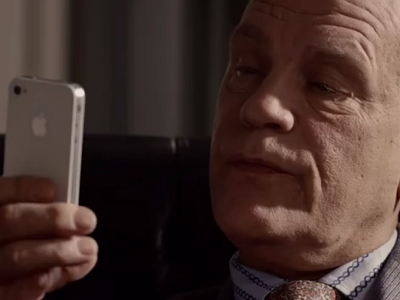
Watch Out, John Malkovich…You Can’t Trust Siri!

NO, JOHN! SIRI’S A SPY!!!!!

Wired reports that IBM has banned Siri, iPhone’s voice-activated digital assistant, its headquarters network. Employees trying to use John Malkovich’s new friend will be foiled. Why? IBM CIO Jeanette Horan told MIT’s Technology Review that the company worries that conversations with Siri might be stored somewhere. And indeed they are. Siri relays everything she hears to an Apple data center in Maiden, North Carolina. What happens to it then is anybody’s guess. Continue reading

Unethical Website of the Month: The Ethical Psychic Project

Here’s all you need to know about “The Ethical Psychic Project” and the website that supposedly advances it. One of the ethical topics covered in the ethical forum section is “Animal Communication”:

“Our animal friends need help, too! Ask one of our Psychic Animal Communicators to connect with your pet, either on the Earthly plane or crossed over!”

Sounds ethical to me! I was surprised not to see other topics of similar ethical weight and credibility,  like “Want to win in at the slot machines?” and “Ever wonder what Joe Biden will say next?”

There appears to be nothing whatsoever ethical about the The Ethical Psychic Project, except that a bunch of people who decided they couldn’t make enough money selling phony deeds to imaginary uranium mines thought that the word “ethical” might suck in some marks. Oh, there’s an ethics code on the site, all right. This psychics code is considerably worse than the last one I wrote about, and that won no prizes. This one is funnier, though, because with a little tweaking, it could just as well serve an ethics code for Superman or Green Lantern, or the Good Witch of the North. It contains such self-validating blather as: Continue reading

“Dear Legal Ethicist: I’m a Lawyer, and I Think My Real Estate Client Might Be Jack the Ripper. What Should I Do?”

Here is a perfect example of where legal ethics and ethics diverge.

The Supreme Judicial Court of Maine reprimanded veteran Maine lawyer Eric B. Cote for investigating the background of Rory Holland—leading a “one man crusade” was how the court put it— after Holland  was convicted of a double murder and sentenced to two life sentences. Cote was convinced that Holland was a serial killer, and that there were other victims. Cote set out to find out who they were.

What’s wrong with that, you ask? Well, Cote had represented the convicted murderer in a real estate transaction. The reasons he suspected Holland came from information he learned in the course of the representation, and under the ethics rules of every state, he cannot reveal such information for the benefit of others to the detriment of a current or former client. Continue reading

The Damage Incompetent Pundits Do: Criminal Defense Misconceptions

See? I WARNED you not to listen to Mercedes Colwin!

A couple of months back, I flagged some outrageously mistaken commentary on Sean Hannity’s radio talk show given out by Mercedes Colwin, who is a lawyer but prone to howlers whenever she shows up on Hannity or Fox News, which I suspect favors her for qualities that have nothing to do with her law practice. On the occasion that roused my ire, Colwin suggested that she could not defend a criminal client who told her he was guilty, because she was “an officer of the court.”

This is pundit malpractice grafted to legal incompetence: a defense attorney MUST maintain a client’s legal innocence whether the attorney knows the client is guilty or not, and being an officer of the court has nothing to do with it.

Colwin, who was discussing the Casey Anthony trial, represented herself as an expert and then reinforced the most persistent and most damaging popular misconception about the legal system, which is that there is something unethical about defending guilty criminal clients. The system has to be held to a high standard of due process, and even an “obviously” guilty defendant must be proven guilty with admissible evidence beyond a reasonable doubt. Defense attorneys are there to make sure the state meets its burden of proof by making the strongest argument for their clients’ innocence as possible, whether the defendant has confessed his or her guilt or not. For one thing, a defendant often doesn’t know if he is legally guilty, even if he “did it.” For another, even if he did it, the state still has to prove it.The defense’s job in to make sure it does, Continue reading

The Intern, The Lawyer and The Recycling Bin: A Cautionary Tale

We entrusted the job to our intern: what could go wrong?

Here is a story that should frighten all lawyers who employ non-lawyers to assist with various tasks in their practice, which is to say, every one of them. If you have a lawyer, or ever expect to hire one, maybe it should frighten you, too.

A young woman dumped documents containing private information from the clients of Ashley Bell, one of Gainesville, Georgia’s most respected attorneys, in a newspaper recycling bin at The Gainesville Times. The Times said that a majority of the documents remained in their original file folders, and no effort had been made to conceal the contents or redact sensitive information. The files included phone and Social Security numbers of former clients, information on juveniles and reports and evaluations conducted by the Department of Family and Children Services and Court Appointed Special Advocates regarding the physical and sexual abuse, which state law requires be kept confidential.  From the Times: Continue reading