From “The Ethics Incompleteness Theorem” and “The Ends Justify The Means” Files, The Pautler Case: My Favorite Legal Ethics Dilemma Ever!

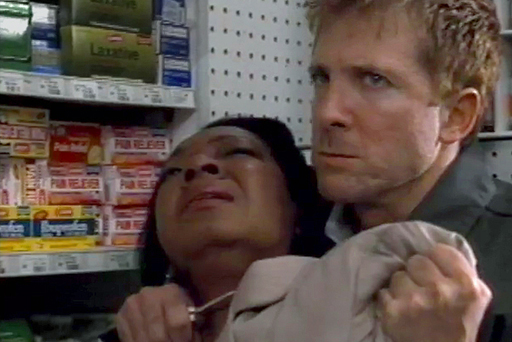
"Irena's Vow" Pictured L to R: Maja Wampuszyc, Tracee Chimo, Tovah Feldshuh (kneeling), Gene Silvers

The Sundance Channel was doing a “Law and Order” marathon this week, and I happened to see an episode from 2002 that I had missed. It was based on the Pautler case in Colorado from the same year.

In “DR 1-102,”  Assistant DA Serena Southerlyn (Elisabeth Rohm) deals with a hostage crisis in which a man suspected of bludgeoning two women to death claims he will release his captive, held at knifepoint (above), if he can consult with an attorney. Southerlyn volunteers to enter the scene, and obtains both the hostage’s release and the killer’s  surrender, but only by deceiving him into believing that she is his lawyer, and not a prosecutor working for the police and the State. Although Southerlyn is hailed as a hero, the bar seeks to disbar her, charging her with violating Disciplinary Rule 1-102 (now New York RPC 8.4 d., which prohibits lawyers from lying.  .

Actually, Serena did a lot more than that, as did her model, Mark Pautler, the Jefferson County (Colorado) assistant D.A. whose real life conduct created a legal ethics dilemma that is debated to this day.

On June 8th, 1998, Chief Deputy District Attorney Mark Pautler  arrived at a gruesome crime scene where three women lay not just murdered, but chopped in the skull.  All had died from hit in the head with a wood splitting maul. The killer was William Neal, who had apparently abducted the three murder victims, one at a time, and killed them over a three-day period. Now, police said, he was at another locale, having released three hostages he had held in terror for about 30 hours. Neal left in the apartment a tape recording that detailed all of his crimes, including a fourth murder and rape at gun point.

Neal contacted police at the apartment using his cell phone and personally described his crimes in a three-and-a-half hour conversation. The officer speaking with Neal took notes of the conversation and occasionally passed messages to Pautler and other officers at the scene. A skilled negotiator, she urged the maniac to surrender peacefully. Efforts to ascertain the location of Neal’s cell phone were unsuccessful, and it was feared that if Neal did not surrender, others would die.

Neal made it clear he would not surrender without legal representation. The police did not trust the public defenders office to handle the situation, fearing that a defense counsel’s advice might lead Neal not to place himself in police custody. Pautler also believed that a public defender would advise Neal not to talk with law enforcement. Neal was savvy enough, he felt, that a police officer could not effectively pretend to be his lawyer, so Pautler agreed to impersonate a defense attorney over the phone He told Neal that his name was was “Mark Palmer.”

Though in the ensuing phone conversation Pautler tried to avoid giving direct legal advice, it was clear that Neal believed “Mark Palmer” worked for the public defender’s office and represented him. And the deception worked: Neal eventually surrendered without further incident.

Not surprisingly, the Colorado Bar had problems with Pautler’s conduct. He was charged with violating two ethics rules, the equivalent of the one used in the “Law and Order” episode and also Colorado Rule 4.3, which requires a lawyer to inform an unrepresented party so it is clear that he isn’t representing him, and to give no legal advice other than to get an attorney. They could easily have charged him with violating others. like Rule 1.3, requiring diligent representation (Call me a stickler, but trying to trick your client into surrendering to police isn’t what the rule has in mind), Rule 1.4, which requires a lawyer to keep a client informed (“Oh: I’m really a prosecutor!“), Rule 1.6, Confidentiality (Pautler shared what Neal told him with police; a lawyer can’t do that! ) Rule 1.7, Conflicts of Interest (Ya think?) and Rule 4.1, which prohibits lawyers making false statements of fact, like “I’m here to help you.” Continue reading
Comment of the Day (2): “Ethics Hero: Dallas District Attorney Craig Watkins”

jag

The celebration here of Dallas DA Craig Watkins’ installment of an open file policy to ensure that crucial evidence that might exonerate a criminal defendant doesn’t get “inadvertently” left out of the material shared with defense counsel prompted this comment from one of the Ethics Alarms resident Marine vet, THE Bill:

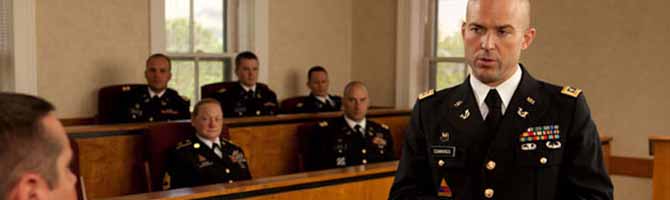
“I’ve always wondered why the civilian courts haven’t adopted the military practice of having both the prosecutor and the defense council in the same office under the same command as they do in JAG. It would seem that this would eliminate the US versus THEM mindset.”

I responded…

“It’s because of loyalty and trust, Bill. The adversarial relationship and the appearance of such assures the accused that the two lawyers aren’t colluding against the defendant, and attorney-client confidentiality is surely at risk if there is not physical distance. That’s why in law firms a lawyer with a client who might be adverse to another lawyer’s client in the same firm has to be screened from substantive contact with the other lawyer.”

(I will note here that the last section about screening is an over-simplification of a very complex and confusing issue, as when and if screening is permitted varies state to state, and in many cases still isn’t enough to deal with an unwaivable conflict of interest.)

texagg04 then added the following discussion of the cultural differences between the military and civilian America, and how this informs the differences between the ways the respective systems deal with criminal prosecutions.

This is an appropriate place to salute tex, who is among the most prolific, serious and vital Ethics Alarms commentators. As his comments are often in an advocacy or adversarial mode rather than an expository one, his percentage of  officially recognize commentary excellence is less than it should be considering the consistent quality and frequency of his participation here. He has long made Ethics Alarms better and sharper, if perhaps scarier for first time swimmers in these waters, since thanks to tex (and others), the tide is swift and merciless.

I hope he realizes how much I value  and appreciate his thoughtful and vigorous contributions.

Here is texagg04’s Comment of the Day on the post, “Ethics Hero: Dallas District Attorney Craig Watkins.”

There is a presumption given the weight of military Commissions combined with the added weight of the Oaths of Office, that barring any obvious corruption, the officers in charge are not corrupted. Whereas in the civilian world, the presumption that so much burden lies on the state and the accused’s innocence until proven guilty, that even a hint of amiability between defense and prosecution is enough to worry about corruption. Continue reading

The Real Legal Ethics Conundrums In “Bridge of Spies”

bridge-of-spies

Quite a few readers have written that they would enjoy some of the problems I present in my seminars on legal ethics. I try to please, so here are some difficult legal ethics issues that arose in the screenplay of last year’s Oscar-nominated film “Bridge of Spies.”

I wrote about the film earlier this year, here.

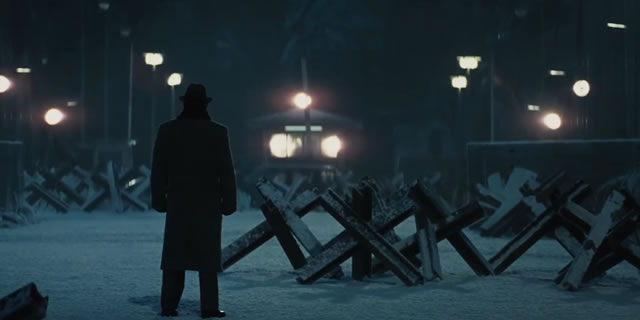
The film tells the true story of Jim Donovan, an insurance lawyer who is recruited, in 1957, by his New York bar association to take on the representation of the accused Soviet spy Rudolf Abel, a job that we see Donovan not only do bravely and competently, but one that he takes all the way to the Supreme Court. He loses, and Abel goes to prison.

Legal ethics points:

  • That ends the representation, and Abel is no longer Donovan’s client, but a former client.
  • Lawyers still have duties to former clients: they must keep all of the confidences learned during the representation and after, and not use these against the interests of the ex-client, or reveal them ever, even after the ex-client is dead and buried, except under rare circumstances.
  • A lawyer is also not allowed to become adverse to the interests of a former client in a substantially related matter to the one he (or she) handled for the client.

Because when representing Abel, Donovan had argued against executing the spy on the grounds that he might a useful  bargaining chip if an American was captured by the Russians—an argument he made to save Abel’s life, not to provide unsolicited advice to the government—the capture of U2 pilot Gary Powers after he was shot down in a spy plane makes the lawyer a candidate to make his own scenario come true. An East German official sends Donovan a letter claiming to be able to broker an exchange of Powers for Abel. When the CIA learns about the letter, they ask Donovan to go to East German and negotiate the deal. Continue reading

A Conflict of Interest Lesson: The New York Observer’s Donald Trump Endorsement

Trumps

Stipulated: Jared Kushner, who is married to Donald Trump’s daughter Ivanka Trump, and who owns the The New York Observer, which he purchased in 2006, was in a difficult situation regarding the New York Republican primary. (That’s Jared on the right in the photo above.)

He had a clear and unresolvable  conflict of interest. If his paper endorsed Trump, the endorsement would appear to be dictated by family loyalty rather than objective analysis, and would harm whatever credibility the paper has left (it has been falling in influence and quality for a long time). If The Observer endorsed anyone else, in addition to whatever problems it would cause Kushner behind closed doors (and they would undoubtedly be considerable), a rejection by a paper with such a strong Trump family connection would be interpreted as having special significance, and would be handing a potent weapon to Trump’s adversaries.

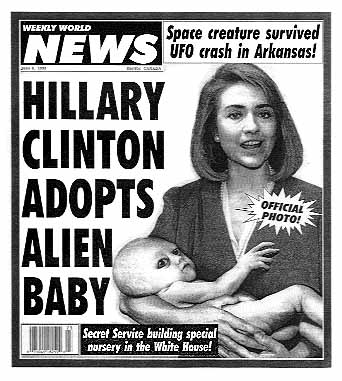
Kushner’s dilemma was made worse by the fact that for any newspaper to endorse Donald Trump for President without a conflict of interest that at least would explain such an idiotic position would be tantamount to an admission of collective insanity, instantly turning such a  paper into the successor of the late, lamented Weekly World News, which was prone to breaking scoops like this one:

Weekly_World_News_-_Cover_Art_4800

Faced with these two mutually unacceptable alternatives, there was only one ethical, rational, responsible course that would acknowledge the conflict of interest without falling prey to it: endorse nobody, and explain why.

Nah! Continue reading

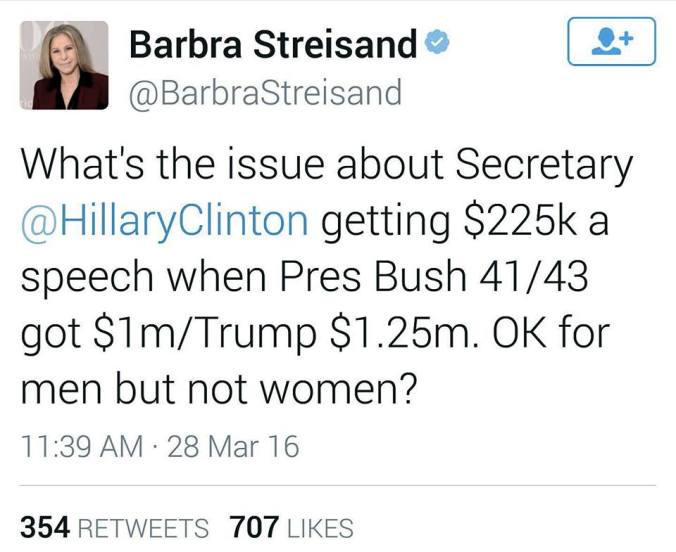
Barbra Gives An Ethics And Intelligence Test!

Streisand tweet

Quick, now: what is Babs missing, other than the basic ethics principle that “Everybody does it” is not a justification or an excuse for unethical conduct?

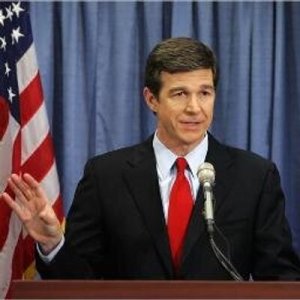
North Carolina’s Conflicted, Disloyal, Unethical Attorney General, Roy Cooper

A candidate masquerading as a lawyer...

A candidate masquerading as a lawyer…

Roy Cooper, North Carolina’s elected Attorney General, has so many conflicts of interest that he can’t credibly do his job in an ethical manner. Fortunately for him doing his job ethically seems to hold no interest for him.

To start with, he is an announced political opponent of the current Republican governor, Pat McCrory. This situation is not unique, but if an Attorney General is going to do his job ethically, for remember he is the state’s lawyer, he has to make an effort to put his political interests aside and not allow them to interfere with his duty to represent his client the state, whose voters have made McCrory its top decision-maker.

Cooper, however, isn’t making any such effort. House Bill 2, a state law passed last week that bars local governments from enacting nondiscrimination protections for the LGBT community, is anathema to Cooper’s constituency, so he is refusing to defend it in court against a federal lawsuit. If he were a private attorney whose beliefs rendered it impossible for him to represent his client, Cooper would have to resign. Since he is elected, he need not do that, but he can’t actively interfere with his client’s legal needs either. His proper course under the legal ethics rules governing all lawyers would be to find an outside counsel to do his job in this case, since he is incapable of doing it, and to defend the law.

Instead, Cooper is actively undermining his client’s legitimate objectives.  Cooper said in a news conference that the law is a “national embarrassment” and it “will set North Carolina’s economy back if we don’t repeal it.” That’s the candidate talking, not the state’s lawyer, and thus the state’s lawyer is engaged in a bright-line breach of loyalty by talking like that in public. His duty, and his only ethical option, is to shut up. He may not be able to support his client’s objectives, but he absolutely must not impede them.

Cooper has even gone beyond that ethical violation to a massive conflict of interest breach. Instead of defending McCrory, the Board of Governors and the others being sued in the federal lawsuit, Cooper has announced that he will defend the two LGBT people and the lesbian professor bringing the lawsuit against the state! Continue reading

The News Media Signals That It Intends to Have Biased Coverage, And Journalism Ethics Be Damned

"Wait---why would anyone think Obama's 2012 campaign spokesperson wouldn't be capable of fair objective analysis of the 2016 campaign?"

“Wait—why would anyone think Obama’s 2012 campaign spokesperson wouldn’t be capable of fair objective analysis of the 2016 campaign?”

As Erik Wemple, the new media blogger of the Washington Post, reveals, NBC intended to sign on an irredeemably  conflicted and biased “political analyst” for the upcoming campaign and election until her ongoing conflict of interest was made too obvious to hide. When  Politico’s  Mike Allen pointed pointed out that this announcement from the network…

Stephanie Cutter has joined NBC News and MSNBC as a Political Analyst. She will contribute exclusively on a range of topics across all platforms including Meet the Press, TODAY, Nightly and MSNBC.”

…was made the same DAY  a New York Times story,  “Obama Mobilizes Campaign Veterans to Push for Court Nominee,” by Michael D. Shear and Eric Lipton reported…

“[Stephanie] Cutter … will oversee the efforts by the new group, to be called the Constitutional Responsibility Project. Anita Dunn, the former White House communications director, is handling the news media, along with Amy Brundage, a veteran Obama aide. Also involved are Julianna Smoot, the chief fund-raiser for Mr. Obama’s campaigns; Paul Tewes, Mr. Obama’s top field operative in 2008; and Katie Beirne Fallon, the president’s last legislative director.”

…even the shamelessly partisan NBC had to backtrack. Were they really willing to promote and pay a previous Obama campaign spokesperson as an objective and independent analyst while she was being paid to promote a politically charged Obama agenda item? Apparently not—not yet, anyway. This is, of course, a textbook, unresolvable conflict of interest, though NBC avoided that clarifying phrase. The official announcement from the network cancelling the deal with Cutter before the ink was dry on her contract stated:

“We look forward to Stephanie’s insights on our air during this election year, but she will appear as a guest and not as an analyst due to her leadership role in the battle over the President’s Supreme Court nomination.”

This is a porous band-aid on a gushing ethics wound on the journalism establishment, but good enough, I’m sure, for either the average inattentive TV viewer or the partisan Democrat who thinks, for example, that it’s fine to have Democratic operative Donna Brazile posing regularly as an objective commentator on ABC and CNN. Wemple even seems to praise NBC for making the call, even though it is outrageous that any network would dare to hire a demonstrably dishonest Democratic Party hack like Cutter and pronounce her capable of competent analysis, much less objectivity. Continue reading

The Ethics Of Judges In Love

gavel heart

When  attorney Joe Foley represented a client in a matter before Judge Scott Drazewski in early 2011, he was unaware that the married judge was involved a year-long secret romantic affair with Judge Rebecca Foley, the attorney’s wife.

Now both Illinois judges  have been disciplined by state legal ethics authorities for failing to reveal their romantic relationship and violating multiple ethics rules as a result. The ethics commission imposed a four-month unpaid suspension on Drazewski for “egregious” judicial ethics violations, and censured Judge Foley for assisting, aiding, abetting, and not reporting his violation or their affair. Continue reading

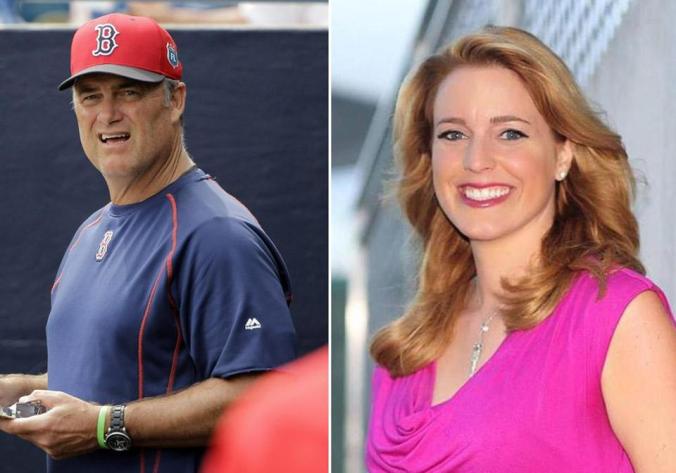
The Manager, The Hot Reporter, Conflicts and Professionalism

moranfarrell

It’s nice of my favorite baseball team to supply me with ethics stories, don’t you think? This one has management ethics, relationship ethics, journalism ethics, sexual harassment and professionalism.

The Boston Globe reported last week that Boston Red Sox manager John  Farrell and Comcast SportsNet New England reporter Jessica Moran, who covered the team,  were romantically involved. Moran promptly resigned. This quickly degenerated into the usual ethically muddled discussion by members of the public who watch George Stephanopoulos interview Hillary Clinton and see nothing amiss, and have been so badly taught the ethics basics that they couldn’t identify a conflict of interest if they tripped on one, and members of the news media, who, if anything, are worse.  Among the questions being floated, and their somehow elusive answers…

These are consenting adults. Why aren’t they free to have a relationship?

Because they are professionals, with special duties to their constituencies and stakeholders, and the relationship between a reporter and her subject undermines independence, loyalty, trust and competence.

Why is it always the woman the one who has to lose her job?

It isn’t. The journalist has to lose her job, because the journalist breached the basic ethics of the profession. The baseball manager’s conduct is wrong,  but comparatively tangential to his duties at worst. It is still seriously unethical, however, and undermines team culture and the status of other women who have duties involving the team.  Farrell, by dating Moran, was sending a message to his players and other team personnel that these women are legitimate targets for sexual courtship rather than workplace colleagues.  The relationship may have constituted third party sexual harassment, making other women feel as if team leadership had sent the message that they weren’t to be taken seriously as professionals.

Why is everyone making a big deal about this? She’s a beautiful young woman, covering a team of men. Isn’t this to be expected? Continue reading

Encore! Presidents Day Ethics: The Presidents of the United States on Ethics and Leadership

It’s President’s Day, and I see that it has been five years since the most popular Ethics Alarms President’s Day post was published. That one, from 2011, reminds us of the ethics wisdom and leadership acumen of the remarkable men who have served their country in the most challenging, difficult, and ethically complicated of all jobs, the U.S. Presidency.

In the middle of a campaign season littered with some disturbingly unethical candidates, it seems especially appropriate to re-post that entry now….with some updates. In 2011, I left out three Presidents, including the current one. Now all are represented, most of them well.

So…

Ladies and Gentlemen, the Presidents of the United States of America:


George Washington: “I hope I shall possess firmness and virtue enough to maintain what I consider the most enviable of all titles, the character of an honest man.”

John Adams: “Because power corrupts, society’s demands for moral authority and character increase as the importance of the position increases.” 

Thomas Jefferson: “On great occasions every good officer must be ready to risk himself in going beyond the strict line of law, when the public preservation requires it; his motives will be a justification…”

James Madison: “No government any more than any individual will long be respected without being truly respectable.”

James Monroe: “The best form of government is that which is most likely to prevent the greatest sum of evil.”

John Quincy Adams: “Always vote for principle, though you may vote alone, and you may cherish the sweetest reflection that your vote is never lost.”

Andrew Jackson: “One man with courage makes a majority.”   (Attributed)

Martin Van Buren: “No evil can result from its inhibition more pernicious than its toleration.”

William Henry Harrison: “There is nothing more corrupting, nothing more destructive of the noblest and finest feelings of our nature, than the exercise of unlimited power.” Continue reading