The Lawyer, The Bar And The Nigerian Prince: A Bar Can Teach A Lawyer Ethics Lessons With Sanctions, But How Does It Fix Stupid?

"YOU again!"

“YOU again!”

It can’t.

You can read, here, the jaw-dropping Iowa Supreme Court opinion affirming a one-year suspension of Iowa lawyer Robert Allan Wright Jr.for talking his clients into loaning money to…that ubiquitous Nigerian Prince. Wright  solicited more than $200,000 in loans from five current and former clients, promising them they would receive as much as quadruple their investment when proceeds of the inheritance described in that helpful e-mail was obtained.  He was only going to take a 10% contingency, which is actually very reasonable…or would be, if this hadn’t been a scam.

After his clients lost all their money, Wright was cited for violations of several Iowa Rules of Professional Conduct, including… Continue reading

The T-Rex Escapes: Lessons Of The Washington Redskins’ Nepotism

I can’t exactly say, like Jeff Goldblum as Dr. Ian Malacolm in “Jurassic Park,” that I hate being right all the time…in part because I’m not. It sure is frustrating, however, to see an ethics crisis looming, write about it once, then twice, and still see so many people surprised when it arrives like an angry T-Rex. Thus today, I began the morning by pounding my head against the wall to read in the Washington Post sports section a column by Jason Reid with the headline, “Mike Shanahan, by hiring his son Kyle, has created an untenable situation.” Wait, what year is this? Shanahan, the coach of the Washington Redskins, that team with the name that we’re not supposed to say, hired his son Kyle as the team’s offensive coordinator many moons ago, in 2010. It was a terrible idea at the time, an example of classic nepotism that created an immediate risk of exactly what is occurring now, and perhaps the certainty of it, if the situation endured long enough.

Last season, when the Redskins swept to the NFC East Championship behind thrilling rookie QB Robert Griffin III, the ethics-challenged sports fandom here (Washington, D.C., remember) cited the success as proof that nepotism is an ethics boogie man, nothing more. This was pure consequentialism. As I concluded my post on the topic last January,

“This is rank consequentialism in its worst form. Nepotism is an unethical way to run any staff, company, team, business or government, unfair, inherently conflicted, irresponsible, dangerous and corrupting. It should be recognized as such from the beginning, and rejected, not retroactively justified if it “works.”I’m sure there were and are non-relatives of the Redskins coach who could have devised a successful offense with RG3 taking the hikes. The ethical thing to do was to find them and give one of them the job. The Redskins coach’s nepotism is just as unethical in 2013 as it was in 2012, 2011, and 2010.”

In “Jurassic Park,” the same day that chaotician Malcolm warns that the dinosaur park is so complex that a fatal loss of control is inevitable, the systems break down and he gets nearly gets eaten. The same year I wrote those words, ten months later, it’s Mike Shanahan on the menu as Jason Reid wrote these: Continue reading

Cuomo Interviewing Cuomo? Of Course It’s A Conflict!

The interesting question isn’t whether CNN’s Chris Cuomo blithely interviewing the Governor of New York Andrew Cuomo—who happens to be his brother–is a conflict of interest and an example of unethical journalism. Of course it is. The interesting question is what it tells us about the state of U.S. journalism that such an interview could even occur.

Here are two prominent provisions of the Society of Professional Journalists Code of Ethics, requiring that ethical journalists…

  • “Avoid conflicts of interest, real or perceived.”
  • “Remain free of associations and activities that may compromise integrity or damage credibility.”

Is there any question that a CNN anchor man interviewing his brother regarding anything whatsoever violates both of these? Real or perceived? Compromise integrity or damage credibility? Seriously?

Cuomo the Anchorman was interviewing Cuomo the Governor regarding the recent train accident. Conflict? Sure: the journalist is supposed to have only one duty, and that is to his audience. But Cuomo the Anchorman obviously has another, potentially confounding duty of loyalty to his interview subject, and this he must not have. It calls into question his willingness to probe and, if the facts warrant it, to ask uncomfortable questions of his subject. If Chris Cuomo’s duty to his audience unexpectedly requires him to breach his loyalty to his own brother, which will he choose? We don’t know. Perhaps Cuomo himself doesn’t know. He was obligated not to place himself in a situation where the question even needed to be asked.

The various defenses being offered are, I have to say, misguided and disturbing. The usually sensible Joe Concha of Mediaite writes that the controversy is “much ado about nothing.” His reasons are … Continue reading

Wait…The Judge And The Defense Attorney Were Having An Affair, And The Defendants Were Convicted Anyway? So What’s The Problem?

"Yes, counsel, I am throwing the book at your clients because I love you."*

“Yes, counsel, I am throwing the book at your clients because I love you.”*

The Georgia Court of Appeals has ordered new trials for five men convicted of serious crimes in Fayette County because their trial judge was having an undisclosed affair with defendants’ public defender.

Doesn’t  that seem strange to you? After all, the clients of the judge’s secret love were convicted and sentenced. Why should they get the benefit of  new trials when the judge’s evident conflict and judicial misconduct didn’t benefit them or harm them in any way (unless a judge making sure his lover’s clients get prison time is a quirky way to say “I love you” in the Peach Tree State). This isn’t like the horrendous Charles Dean Hood case in Texas, where a man was sentenced to death after a trial in which the state prosecutor was sleeping with the judge.

The Georgia judge-lawyer affair (and I thought Steven Bochco was making it all up!) came to light in 2010. Paschal English, who subsequently resigned as chief Superior Court judge, had been involved in a romantic relationship with assistant public defender Kimberly Cornwell, who has also moved on to new pursuits, ideally those that don’t require trust or ethics. A three judge panel recently agreed that this relationship, undisclosed and a clear cut ethical violation for both judge and attorney, required that there be new trials for Christopher Wakefield and Travion Willis on charges of armed robbery, kidnapping, aggravated assault and other crimes; William Nutt for aggravated child molestation and aggravated sexual battery; Rashad Arnold for burglary; and Calvin Boynton for armed robbery, aggravated assault, possession of a sawed-off shotgun and drug possession.

Hmmmm… Continue reading

Comment of the Day: “Ethics Quiz: The Kidneys of Orlac”

But first, a last act of altruism...

But first, a last act of altruism?

The presumptive winner of the annual Ethics Alarms award for “Commenter of the Year” in 2013, texagg04has delivered a Comment of the Day expanding the topic of the post regarding a condemned prisoner in Ohio who wrangled a postponement of his execution so he could donate his organs to relatives. Here is  texagg04’s  take on “Ethics Quiz: The Kidneys of Orlac.” I’ll have some comments at the end.

“First, a murderer or other capital criminal being held responsible for his or her conduct seems to be in conflict with the same individual being allowed to display charity when you say they  forfeited their freedom, all of it, with their commission of a  capital crime. I’m not so sure it should be viewed from that angle.

Punishment serves a variety of purposes. Some petty crimes receive punishment designed to compensate, as best as can be, the victim – the victim being dead, capital punishment does not serve this purpose. Some crimes are of an anti-social nature, and the apt punishment seeks to rehabilitate or reconcile the perpetrator to the community. Capital crimes are so heinous that we have determined that the perpetrator must be completely cut off from society, through their death. In this case, the punishment does nothing for the victim OR for the criminal; the punishment is designed solely for the benefit of society.

If the criminal wishes to donate his/her organs to (what we must assume is to salve their own conscience – even though we can, probably, cynically assume is just a delaying tactic), we should not care one bit. They are gaining no material benefit from the community, nor are they engaging in any direct interaction with the community – so the act of cutting them off from the community as part of the punishment is still complete. Continue reading

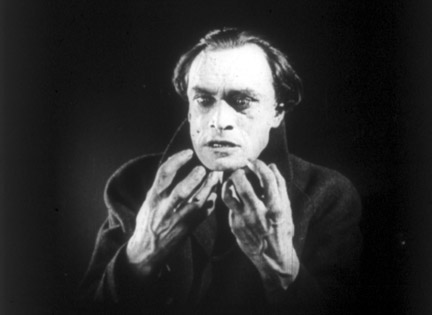
Ethics Quiz: The Kidneys of Orlac

Kidneys, okay, maybe...BUT NOT THE HANDS! NEVER THE HANDS!!!

Kidneys, okay, maybe…BUT NOT THE HANDS! NEVER THE HANDS!!!

One individual who may be having complicated sentiments this Thanksgiving is Ronald Phillips, who is current residing on Ohio’s death row. He was supposed to be dead by now, but was spared at the last moment when Governor John Kasich issued a stay of execution to ponder Phillips’ unusual request, which had been rejected by prison officials. Phillips, you see, is not a nice guy, as his current address might suggest. He was convicted of raping and killing the three-year-old daughter of his girl friend. (They subsequently broke up. It was him, not her.) He had experienced a change of heart, however, or rather, wished to facilitate one. His sister needs a heart transplant, and he wants his to be passed over to her after his execution by lethal injection. He also wants his kidneys donated to his mother, who is on dialysis because hers are failing, and any other parts of him that might save a life given to others.

Presumably this will not include his hands, because there are a couple of horror movies, one old one in particular, about what happens after that operation, and they are pretty scary. There are no horror films that I know of, however, about the aftermath of getting an executed murderer’s kidney.

Yet.

Gov. Kasich, who is a nice guy, has explained that as heinous as Phillips’ crime was, the state should try to accommodate his desire to save innocent lives. The tentative plan is to hollow Phillips out, execute him in July, and then harvest anything that’s left.

Have you seen that movie, by the way?

Your Ethics Alarms Ethics Quiz:

Should such a request by a condemned prisoner be granted?

I’ll play devil’s advocate here, except that the advocate for the child rapist deserves the title more than I do. I think Kasich is confused, and that Phillips or his lawyers have figured out one more way to foil the criminal justice system. Continue reading

If You Are Surprised To Learn That “No Animals Were Harmed During The Making Of This Film” Doesn’t Mean That No Animals Were Harmed During The Making Of The Film, Then You Havn’t Been Paying Attention To The Ethical Culture In Hollywood

"OK, the tiger almost drowned. No harm, no foul, right?"

“OK, the tiger almost drowned. No harm, no foul, right?”

Hollywood abuses its child actors routinely, and you really believed it was kind to animals?

Today the Hollywood Insider carries a thorough exposé revealing that the American Humane Association, which supposedly monitors films for their treatment of  animals and grants the familiar“No Animals Were Harmed” trademark accreditation seen at the end of film and TV credits, participates in the covering-up of animal deaths and cruelty as much as it prevents them. The report suggests that the AHA  has been thoroughly co-opted by the industry, so that it is not an objective advocate for the creatures it supposedly represents, but a willing participant in audience deception.

The smoking gun quote may be this one, from Dr. S. Kwane Stewart, the veterinarian who took over as the national director of the AHA’s “No Animals Were Harmed” program in April:

“This whole idea that we’re cozy with the industry — it’s simply not the case. We first and foremost want to keep the animals safe…[but] we need to keep in mind that [the producers and directors of productions the AHA monitors] want to arrive at their vision as well.”

This means, of course, that the AHA representatives are not acting as an advocate for the animals, but as a participant in the film-making process that balances the lives and welfare of the animals against the concerns, needs and profit motives of the speaking, spending, threatening and otherwise powerful human beings with which they share a species and common values. Gee–I wonder who has the most weight in reaching that balance… Continue reading

When Worlds Collide: Maryland’s Attorney General Doug Gansler Flunks His Ethics Test

Maryland Attorney General Doug Gansler (D) is running to be his party’s nominee for Governor, which, since Maryland is one of the Bluest of states, means that success equals the statehouse, or should. But the intense spotlight that such a quest creates can be hot and unflattering, and Gansler’s character and integrity is now being called into question…especially after this photo from last summer surfaced on Instagram, showing Maryland’s top law enforcement official in the middle of a wild teen beach party at a beach house by the Delaware shore. He’s the guy in the white shirt and the cell phone:

Gensler Party

There you have it: the exact moment when Attorney General Doug Gansler, Candidate for Governor Gansler and Father of a Teenage Son Who Graduated From High School And Wants To Party With His Friends Like In “Animal House” Gansler officially collided. Many, especially many Democrats, especially many Bill Clinton fans, and definitely aspiring toyboy lawyer Brian Zulberti, would argue that only one of them is really there: Father Doug. The others, being absent, are immune from criticism. This position is popular, convenient, lazy, ethically corrosive and wrong. There is only one Doug Gansler, yes, but he is bound by three standards of conduct. When you are bound by three standards of conduct, you have to abide by the highest one.

Again, this situation focuses our attention on integrity, a core aspect of character, and crucial to ethics. Does an individual have genuine principles that he oe she lives by, or a constantly shifting set of values that are assumed and then discarded according to situation, convenient, strategy and whim? When an ethical problem arises, do others know how the individual will respond? Are his words consistent with his actions? Trust means that others can rely on an individual’s conduct, and you can’t rely on the conduct of someone whose values and priorities with the wind, locale, attention and personal desires.

Then there is the issue of judgment. Judgement is like intelligence and common sense: an individual either has it, or he doesn’t. And such traits as responsibility, accountability, honesty, prudence, dignity, loyalty  and courage come into play. I know those who embrace the private individual/professional dichotomy are stuck with the argument that the absence of  one or more of these in a private setting has no predictive value regarding public or professional conduct, but it is a hopelessly untenable position, pure denial, and ethics poison. Continue reading

Ethics Dunce: Sen. Rand Paul (R-Ky)

dunce-capSenators should not intentionally set out to make the American public stupid, or to validate invalid ethical constructs. Thus this explanation of his current proposal from Sen. Rand Paul needs to be derided, and should also cause concern for anyone who thinks it’s important for the Republican party to find some leaders who are trustworthy. Paul, in the course of pushing his stillborn, grandstanding plan to use a constitutional amendment to require government bigwigs to live with the same health care laws they impose on the rest of us, said this to The Daily Caller:

“My amendment says basically that everybody including Justice Roberts — who seems to be such a fan of Obamacare — gets it too. See, right now, Justice Roberts is still continuing to have federal employee health insurance subsidized by the taxpayer. And if he likes Obamacare so much, I’m going to give him an amendment that gives Obamacare to Justice Roberts.”

See, the fact that U.S. Supreme Court Chief Justice John Roberts refused to declare the Affordable Care Act unconstitutional using a highly-controversial legal distinction in no way suggests that he personally “likes” it, and anyone who thinks that is what judicial opinions, especially Supreme Court Opinions, mean is shockingly ignorant of the judicial system, the legal system, the law, the role of judges in society, the Constitution, and by extension, pretty much most of the principles that give government, management and leadership any integrity or competence. The fact that such an anyone has risen to the level of U.S. Senator goes beyond shocking to terrifying. Continue reading

The Authority Trap: Elizabeth O’Bagey’s Three Ethics Strikes

Woman-pulling-off-a-mask

It is not, you see, enough to have a good idea, an original argument, or a brilliant solution.There must be reason for important people, people who make decisions that affect lives, to pay any more attention to you than they do anyone else who claims to have such things, because its is often difficult for even intelligent and experienced individuals to distinguish genius from well-expressed garbage. There must be something that elevates that unique and valuable perspective you bring to a problem above the swirling mess and noise generated by the blabbering and shouting competition, and the thing is, if you really have a valuable perspective to contribute, you owe it to not just yourself, but to your country, even humanity.

There is one asset, if you are otherwise unknown, that will provide that elevation besides the inherent virtues of your brilliant idea, and that is authority...a book, a connection everybody knows and respects, or, perhaps most of all, academic credentials. And there are two things that will make it impossible to raise your special contribution above the throng, and they are a conflict of interest, and a reputation for hiding the truth. These are the murderers of trust.

This brings us to the strange case of Elizabeth O’Bagy, a senior analyst at the Institute for the Study of War, who managed to get the Wall Street Journal to publish her analysis of the civil war in Syria, and her conclusions, based, we were to assume, on her study, analysis and time in the country, regarding the benefits of U.S. employment of military force in the region. Continue reading