Ethics Dunce: Gina Chon

“The question I continue to have is when will the conversation return to issues?  Because when they do, I know Brett will become the next ambassador to Iraq.”

Just JKF’s type. Also a Communist spy, but hey, nobody’s perfect!

Thus did loyal wife Gina Chon rationalize away Republican objections to the appointment of her husband, Brett McGurk, to be Ambassador to Iraq. Her point, apparently, is that the fact that he carried on an illicit and secret affair with a reporterher—while on a previous State Department assignment to Iraq and exchanged e-mails “joking” (?) about exchanging intelligence for sex should be an issue in his conformation.

Let’s see, now. One of the gazillion women President Kennedy may have had an affair with while he was in the White House was Ellen Rometsch, an East German spy. (JFK consistently ranks #1 in polls of which Presidents Americans think were the best. Discuss) Imagine that this came to light, that somehow JFK avoided impeachment for it (he would not have), and avoided Oswald’s magic bullet in Dallas. How would Jackie have sounded, if she argued to the press that since Jack didn’t blab state secrets during his pillow talk, his indiscretion jeopardizing U.S. national security was a non-issue?

Like a loyal wife, like a loyal Democrat, and like an idiot.

Like Chon. Continue reading

The Reporter and the Diplomat: Anatomy of an Ethics Train Wreck

Gina Chon, who handled the Iraq beat for the Wall Street Journal, “quit under pressure,” a.k.a. “was fired”, yesterday after it had been discovered that she had carried on  a romantic affair with Brett McGurk, a high-placed American official, while both lived in Baghdad in 2008. McGurk was on the National Security Council staff during the Bush administration and has been nominated by President Obama to be ambassador to Iraq.  Chon was covering McGurk’s activities while she was also romantically engaged with him, a cardinal ethics sin for a journalist. She also shared “certain unpublished news articles” with him, also a violation of Journal policy and journalism ethics. The relationship had been hidden by Chon, and only came to light when racy e-mails between the two were revealed. Of course, the fact that they had recently divorced their respective spouses and married each other probably should have been a clue.

This is a full-fledged ethics train wreck, and it is not over yet.  Let us review the participants so far:

Typical of ETW’s, the coverage itself was ethically flawed. The Washington Post story about the Chon-McGurk affair appeared in the Post’s Style section, which covers media, entertainment, and gossip. McGurk is the current Obama administration nominee to be Ambassador to Iraq, a key post. This was the last line in the Style story:

“The disclosure has intensified doubts about McGurk’s nomination for ambassador among some Republican members of the Senate, but the Obama administration has stood by him.” Continue reading

University Trustee Investment Conflicts: When the Stumps Start Showing

University boards are great for mutual back-scratching

Deep water hides all stumps, as the saying goes, and while the endowments of rich universities were piling up cash during the investment-friendly period before 2008, nobody questioned the universities’ choices of which companies and funds to invest in. Then came the meltdown, and endowments of over a billion dollars lost an average of 20% or more. That kind of hit has consequences, and among them were that a lot of programs got cut and a lot pf people lost their jobs.

That, in turn, provokes scrutiny: the deep water had receded, and the stumps were out to see in all their ugliness. As an article in Inside Higher Ed explains, among the stumps on display was the fact that many prominent universities invested their funds in places where their trustees had financial interests: Continue reading

Just What We Needed—An Ethically Clueless Prosecutor In The George Zimmerman Case

The monkey wrench in the gears of justice is named “Angel Corey”

It was evident from her initial statement on the case, however, that an ethically clueless prosecutor is what we, and Florida, and George Zimmerman got when Angela Corey was chosen for the job. Prof. Alan Dershowitz made a quick and accurate diagnosis of her problem on cable TV, and it apparently prompted Corey, ethically clueless as she is, to settle the matter by leaving no doubt. Dershowitz reports that Corey was so enraged by his calling her unethical and incompetent affidavit of probable cause to indict Zimmerman for murder as unethical and incompetent as it was that she has threatened to sue him and Harvard University. Dershowitz reports:

“State Attorney Angela Corey, the prosecutor in the George Zimmerman case, recently called the Dean of Harvard Law School to complain about my criticism of some of her actions. She was transferred to the Office of Communications and proceeded to engage in a 40-minute rant, during which she threatened to sue Harvard Law School, to try to get me disciplined by the Bar Association and to file charges against me for libel and slander.

“She said that because I work for Harvard and am identified as a professor she had the right to sue Harvard. When the communications official explained to her that I have a right to express my opinion as “a matter of academic freedom,” and that Harvard has no control over what I say, she did not seem to understand….”

This incident indicates that Corey also does not seem to understand the First Amendment and the Constitution, which  is a serious, indeed fatal, handicap for a prosecutor. It turns out that this ridiculous conduct—-a prosecutor trying to intimidate pundits by threatening to sue a legal analyst and law professor for criticizing her handling of a high-profile case—wasn’t even an aberration for Corey. Reporter Ron Littlepage writes:

Last December when I wrote a column critical of how she handled the Cristian Fernandez case, she fired off a two-page, single-spaced letter on official state attorney letterhead hinting at lawsuits for libel.…Then there’s Corey’s spat with Sandy D’Alemberte.

D’Alemberte is a former president of the American Bar Association, a former president of Florida State University and a law professor — not too shabby in the legal credentials department. When Corey was appointed to head up the investigation into the shooting death of Trayvon Martin by George Zimmerman, D’Alemberte had this to say: “I cannot imagine a worse choice for a prosecutor to serve in the Sanford case. There is nothing in Angela Corey’s background that suits her for the task, and she cannot command the respect of people who care about justice.” Earlier, D’Alemberte had criticized Corey in the Fernandez case. The reaction then: A public records request from her office to FSU seeking all emails, text messages and phone messages involving D’Alemberte related to Fernandez….”

This is beyond unprofessional, and reaches a level of shocking incompetence, arrogance, abuse of power and stupidity.

But wait! There’s more!  Law professor William Jacobson makes the perceptive legal ethics observation that Corey has created a conflict of interest for herself that raises the question of whether she should be removed from the case. He writes:

“Will she conduct the prosecution in such a way as to achieve justice, or to set herself up for a personal lawsuit against Dershowitz and Harvard?….  By threatening suit against a critic in the middle of the case, Corey has put her own financial interests at stake in the outcome and conduct of the prosecution. Florida has adopted American Bar Association Standards of Criminal Justice Relating to Prosecution Function.  ABA Standard 3-1.3 Conflicts of Interest provides in pertinent part:

(f) A prosecutor should not permit his or her professional judgment or obligations to be affected by his or her own political, financial, business, property, or personal interests.

I don’t think the question of Angela Corey having to step down as prosecutor in the case should even get to Prof. Jacobson’s issue, however. Her conduct in threatening critics, as well as her unethical probable cause affidavit and her blatant alliance with Trayvon Martin’s parents, trumpeted in her unethical press conference, makes it screamingly obvious that she shouldn’t be a prosecutor in this or any other case.

I’ll leave the final word to Prof. Dershowitz:

“…Her beef was that I criticized her for filing a misleading affidavit that willfully omitted all information about the injuries Zimmerman had sustained during the “struggle” it described. She denied that she had any obligation to include in the affidavit truthful material that was favorable to the defense. She insisted that she is entitled to submit what, in effect, were half truths in an affidavit of probable cause, so long as she subsequently provides the defense with exculpatory evidence.

“She should go back to law school, where she will learn that it is never appropriate to submit an affidavit that contains a half truth, because a half truth is regarded by the law as a lie, and anyone who submits an affidavit swears to tell the truth, the whole truth and nothing but the truth….The judge deciding whether there is probable cause to charge the defendant with second degree murder should not have been kept in the dark about physical evidence that is so critical to determining whether a homicide occurred, and if so, a homicide of what degree. By omitting this crucial evidence, Corey deliberately misled the court.

“…That’s not the way the system is supposed to work and that’s not the way prosecutors are supposed to act. That a prosecutor would hide behind the claim that she did not have an obligation to tell the whole truth until after the judge ruled on probable cause displays a kind of gamesmanship in which prosecutors should not engage…

“Even if Angela Corey’s actions were debatable, which I believe they were not, I certainly have the right, as a professor who has taught and practiced criminal law nearly 50 years, to express a contrary view. The idea that a prosecutor would threaten to sue someone who disagrees with her for libel and slander, to sue the university for which he works, and to try to get him disbarred, is the epitome of unprofessionalism.

“If Angela Corey doesn’t like the way freedom of expression operates in the United States, there are plenty of countries where truthful criticism of prosecutors and other government officials result in disbarment, defamation suits and even criminal charges.

“We do not want to become such a country.”

Indeed we don’t. But we seem to already be a country where a local incident is blown up into a racially-polarizing national event, with the assistance of race-hucksters, an inept and biased press, and irresponsible elected officials, including the President of the United States, who annoints the victim as his hypothetical offspring. Then, when the justice system is supposed to take over and sort out the facts and the law objectively, fairly and dispassionately, the case is placed in the hands of biased hack like Angela Corey.

That’s the kind of county we are, and that’s bad enough.

_______________________________________

Pointer: InstaPundit

Sources:

Graphic: Billerico

Ethics Alarms attempts to give proper attribution and credit to all sources of facts, analysis and other assistance that go into its blog posts. If you are aware of one I missed, or believe your own work was used in any way without proper attribution, please contact me, Jack Marshall, at  jamproethics@verizon.net.

Web Hoaxes: Not Funny, Always Unethical

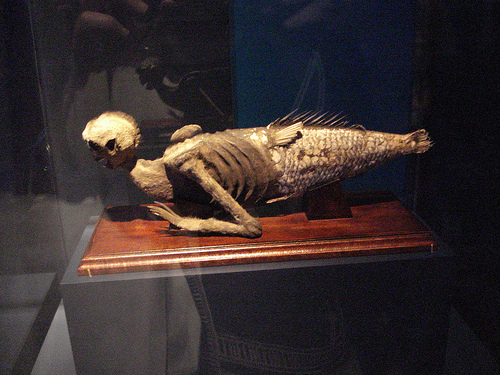
P.T. Barnum’s “Fiji Mermaid:. At least in 1842,. it wasn’t on the web.

Ethics Alarms is swearing off “angry ex-boyfriend/girlfriend takes cruel outrageous revenge” stories, no matter how juicy the ethics lesson may be. First it was the tattoo artist who defaced his ex’s back with a huge and ugly drawing of steaming dog excrement that was fantasy masquerading as news, and now it’s the Polish dentist scorned…remember? The one who pulled out her cheating boyfriend’s teeth? Yes, it seems that horror story was a hoax too.

A lot of people who should know better think that web hoaxes are funny and hoaxers are clever. I regard them as the ethical equivalent of  chefs and waiters who spit in restaurant customers’ food. The web creates—a web!—of information and communication across nations and cultures, and poisoning that web with bogus stories creates a chain of unpredictable harm. At very least, hoaxes make every trusting source that passes along the lie an unwitting accomplice in a despicable act. It harms long-nurtured relationships of mutual trust between those who post on blogs and websites and those who read them. Continue reading

New Passengers on the Roger Clemens Ethics Train Wreck

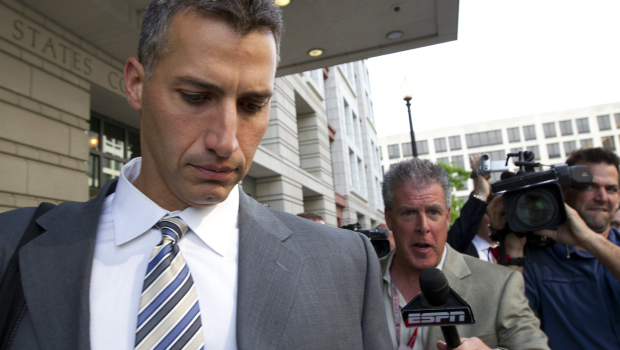
Hey Andy! Listen to that guy behind you…you won’t believe what he’s saying about you!

First, an Ethics Train Wreck recap, before we get to yesterday’s developments:

The Roger Clemens ethics train wreck officially started rumbling down the tracks in 2008, when Major League Baseball’s Mitchell Report, itself something of a train wreck to begin with, revealed that Roger Clemens’ trainer, a rather shady character named Brian McNamee,  had told the investigative commission that he had injected the pitching great with banned performance-enhancing drugs, or PED’s. In rapid succession there was ethics carnage everywhere. Clemens, under the pretense of inquiring about the health of his former trainer’s child, who was gravely ill, tried to get the trainer to admit he was lying. Congress, absurdly, called a special hearing on the matter. Clemens visited select Congressional offices beforehand, which tainted the objectivity of questioning. The Congressional committee, rather than seeking to illuminate the Clemens dispute or the status of PED’s in baseball, instead decided to take sides, with Republicans defending Clemens (a Bush-supporting Texan) and the Democrats seeking his scalp—facts had nothing to do with it. Clemens, meanwhile, made several dubious statements, and showed his class by telling the world that his wife, not he, was the PED-user in the family. A few months before, Clemens prevailed upon his friend Mike Wallace, then in his late 80’s and semi-retired, to tarnish his reputation as a tough and objective truth-seeker by tossing soft-ball questions to Clemens on CBS, so the pitcher could deny his drug use to a famously skeptical interviewer who was, in fact, thoroughly conflicted. Continue reading

Now THIS Is Unprofessional Conduct: The Lesson of the Jilted Dentist

No! It's NOT safe! It's not safe at ALL!

The hallmark of professionals is trust. We should be able to trust professionals to do their duty on our behalf despite their personal feelings. Lawyers often dislike or even fear their clients, for example: a defendant charged with murder who has stabbed his previous three attorneys with pencils is now back in court with a fourth, though certain precautions have been taken. When a professional finds that his or her personal feelings are so intense that they jeopardize the professional’s ability to fulfill their duties objectively, fairly and well, then that’s a conflict of interest, and it must be dealt with, usually by stepping aside.

A professional who doesn’t step aside despite an evident conflict has determined that he or she has the detachment and self-control to overcome it. A recent news story from Poland, however, suggests that it is not a good idea to risk too much trust on a professional’s determination that she can remain objective. Continue reading

Comment of the Day: “Ethics Chess Lesson: The Tale of the Kidney and the Ungrateful Boss”

New commenter Christine has a valuable personal experience to relate, as an individual who donated a kidney to a stranger herself.  The main thrust of her post covers a topic that I have written on before but did not mention in this case, though I should have. Someone who performs a kind and generous act counting on rewards, copious thanks and gratitude, is  doing it for the wrong reasons. The act itself is all that matters. Certainly, gratitude is the right way to respond to generosity, but an act done in anticipation of personal benefits isn’t really altruistic. It is opportunistic. This is a cliché to be sure, but true nonetheless: the generous act must be its own reward.

Here is Christine’s Comment of the Day on the post, Ethics Chess Lesson: The Tale of the Kidney and the Ungrateful Boss.

I want to also commend Christine for following the comment policies, which many of the new visitors here who commented on this post did not do. I prefer full named on posts, but I only require that I am informed of  every commenter’s real name and have a valid e-mail address within a reasonable time of their first submitted comment. One way or the other virtually all of the regular commenters here have managed to do this, and it makes a difference, even in my responses. I regard such commenters as collaborators , not just marauders, and most of the time, I treat them accordingly:  tgt, Steven, Lianne, Margy, Glenn, Tim, both Michaels, Karl, Neil, Karla, Rick, blameblakeart, Barry, gregory, Eric, Curmudgeon, Eeyore, Julian, King Kool, Joshua, Jay, Tom, Bill, Danielle, Elizabeth, Patrice, Ed, Bob, The Ethics Sage and Jeff…I know there are others.   Thanks to all of you for letting me know who you are.

Now, Christine: Continue reading

Ethics Chess Lesson: The Tale of the Kidney and the Ungrateful Boss

Ethics chess is complicated, but ignore it at your peril!

Ethics chess is the process by which one considers the likely chain of events that follow from an act, and tries to predict the ethical dilemmas that may result before they occur. Debbie Stevens and Jackie Brucia didn’t play ethics chess. This is what happened to them.

When  Stevens was exploring the possibility of returning to the Atlantic Automotive Group, where she had worked previously, she met with Brucia, her former and potential boss, and somehow got on the topic of Brucia’s health problems. She needed a kidney transplant, and had found a donor, though it was not yet certain that the kidney would be hers. Stevens said that she might be willing to contribute her own kidney if that donor didn’t work out.

Later, Stevens was hired by Brucia,and two months later, in January of 2011,  Brucia called Stevens into her office and told her that she had lost her organ donor. “Were you serious when you said you would be willing to give me one of yours?’ Brucia asked.  “Sure, yeah,” Stevens says now. “She was my boss, I respected her. It’s just who I am. I didn’t want her to die.’’ It wasn’t exactly a direct donation, but Stevens donated her kidney to a stranger who matched up well with it so Brucia could be advanced on the list and get a better matched kidney from another source. Nonetheless, Brucia got a healthy kidney because Steven’s gave up one of her own. Continue reading

Unethical Website of the Month: The Ethical Psychic Project

Here’s all you need to know about “The Ethical Psychic Project” and the website that supposedly advances it. One of the ethical topics covered in the ethical forum section is “Animal Communication”:

“Our animal friends need help, too! Ask one of our Psychic Animal Communicators to connect with your pet, either on the Earthly plane or crossed over!”

Sounds ethical to me! I was surprised not to see other topics of similar ethical weight and credibility,  like “Want to win in at the slot machines?” and “Ever wonder what Joe Biden will say next?”

There appears to be nothing whatsoever ethical about the The Ethical Psychic Project, except that a bunch of people who decided they couldn’t make enough money selling phony deeds to imaginary uranium mines thought that the word “ethical” might suck in some marks. Oh, there’s an ethics code on the site, all right. This psychics code is considerably worse than the last one I wrote about, and that won no prizes. This one is funnier, though, because with a little tweaking, it could just as well serve an ethics code for Superman or Green Lantern, or the Good Witch of the North. It contains such self-validating blather as: Continue reading