Texas Lawyers And Sex: Not Horny, Just Wise

"Now about my fee...."

Texas lawyers have voted down a proposed ethics rule that specifically condemned attorneys having intimate relations with their clients. Naturally, the media will represent the decision as the predictable reaction of a bunch of high-rolling, fun-loving Texas legal horn-dogs to people trying to spoil the perks of their job; even the legal media has settled on a misleading headline:  “Texas lawyers reject ban on sex with clients.” But Texas lawyers don’t think that sex with clients is ethical, or want it to be ethical. Like the attorneys in many other states, they just think having a rule on this topic is bad idea. And they are right. Continue reading

“The Good Wife” Ethics: Sex With Clients Edition

Diane, Diane..what were you thinking?

Last night’s episode of TV’s smartest legal drama since the 1960’s, CBS’s “The Good Wife,” dealt with the “no sex with clients” ethics rule adopted by most states (but not Washington, D.C.!) in a continuing subplot about the budding romance between firm tigress-partner Diane Lockhart (Christine Baranski ) and ballistics expert Kurt McVeigh, played by Gary Cole. In the episode, entitled “Silver Bullet,” Lockhart decides to represent McVeigh when he is sued for millions.

That’s her first ethics mistake. Continue reading

The Conflict of Interest That Isn’t, But Looks Terrible Anyway

David Becker, the top lawyer at the Securities and Exchange Commission, is suddenly an embarrassment to his employers. He and his two brothers inherited more than $1.5 million in phony profits from their mother’s investment in $65 billion Bernard Madoff’s Ponzi scheme. Since the S.E.C. was famously asleep at its post regarding Madoff, its negligence and incompetence allowing him to destroy individual lives, charities and more, having a key lawyer at the regulatory agency profit from Madoff’s scheme, even by inheritance, looks corrupt and unconscionable.  Continue reading

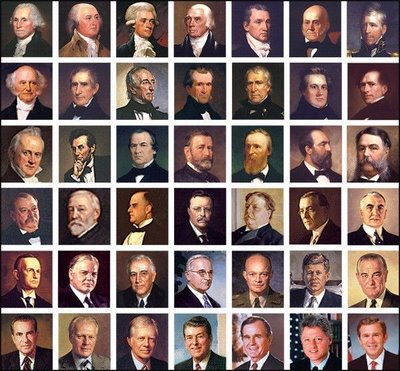
Presidents Day Ethics: The Presidents of the United States on Ethics and Leadership

In commemoration of President’s Day, Ethics Alarms presents the ethics wisdom of the remarkable men who have served their country in the most challenging, difficult, and ethically complicated of all jobs, the U.S. Presidency.

Ladies and Gentlemen, the Presidents of the United States:

George Washington: “I hope I shall possess firmness and virtue enough to maintain what I consider the most enviable of all titles, the character of an honest man.” Continue reading

Ethics Hero: New York Courts

Bravo!

New York’s court officials have decided to bar New York’s elected judges from hearing cases involving lawyers and others who make major financial contributions to their campaigns. The New York Times reports that the new rule of the state court system will be announced this week by Jonathan Lippman, the state’s chief judge. “It is believed to be the most restrictive in the country, bluntly tackling an issue — money in judicial politics — that has drawn widespread attention,” said the paper.

The new rule decrees that “no case shall be assigned” by court administrators to a judge when the lawyers or any of the participants involved donated $2,500 or more in the preceding two years. Continue reading

Ethics Dunce Follow-up: Justice Thomas’s False Disclosures

From the New York Times:

“Justice Clarence Thomas of the Supreme Court acknowledged in filings released on Monday that he erred by not disclosing his wife’s past employment as required by federal law.
Justice Thomas said that in his annual financial disclosure statements over the last six years, the employment of his wife, Virginia Thomas, was “inadvertently omitted due to a misunderstanding of the filing instructions. To rectify that situation, Justice Thomas filed seven pages of amended disclosures listing Mrs. Thomas’s employment in that time with the Heritage Foundation, a conservative policy group, and Hillsdale College in Michigan, for which she ran a constitutional law center in Washington.” Continue reading

Ethics Dunce: Justice Clarence Thomas

Will Supreme Court Justice Clarence Thomas be impeached because he failed to disclose his wife’s income, as required by Federal law, for at least five years? No.

Should he be? Probably not, though if it was proven that he intentionally used incorrect information, he could be found guilty of perjury. More likely is a civil penalty. In any event, his wife’s income isn’t a crucial piece of information in Thomas’s case, though his ideological enemies will argue otherwise. Such an omission is virtually never a cause for judicial discipline.

Is it a serious breach of his duties nonetheless? Yes. Continue reading

Ethics Dunce: Colorado Secretary of State Scott Gesslar

Less than a week after taking office, attorney Scott Gessler, Colorado’s newly elected  Secretary of State, announced that he plans to keep working part-time as an attorney for his law firm, the Hackstaff Law Group. In an interview with the Denver Business Journal, Gessler acknowledged that his plan to moonlight as a contract attorney raised ethical issues, but he needed the money.

Well that’s certainly an encouraging ethics orientation! Continue reading

Ethics Quiz: Can You Undo A Past Confict of Interest or Appearance of Impropriety?

In November, Ethics Alarms noted that Melanie Sloan, the head of the ethics watchdog group Citizens for Responsibility and Ethics in Washington, was involved in exactly the kind of Washington insider conflict of interest that the group typically slams politicians for engaging in:

“Melanie Sloan, long the leader and public face of CREW, announced that she is joining the new firm of lobbyist Lanny Davis, a long-time Democratic ally and famous for being Bill Clinton’s most ubiquitous apologist during the Monica Lewinsky scandal…Over the summer,  CREW aligned itself with the for-profit schools industry.  “Today, Citizens for Responsibility and Ethics in Washington (CREW) sent a letter to Sen. Tom Harkin (D-IA), Chairman of the Committee on Health, Education, Labor and Pensions (“HELP”), asking the committee to consider the financial motives of critics of the for-profit education industry,” a July CREW press release began. Later, Sloan again attacked the motives of for-profit school critics in a CREW blog post that linked to an op-ed piece Davis had written defending the for-profit industry. That industry then became a client of Davis’s lobbying firm.

“Got that? Sloan and CREW pushed the interests of Davis’s clients, then Sloan went to work for Davis, where she will, in part, be enriched by the very people whom she assisted in the name of ethics—by attacking the financial motives of for-profit school opponents! This is precisely the kind of D.C. two-step that CREW mercilessly exposes when elected officials do it, and now here is the very same CREW leader who once condemned such corrupt practices, doing it herself.”

Now, for reasons yet undisclosed. Sloan will not be leaving CREW after all.

Does that make everything all right, obliterating the conflict of interest exposed by her decision to take the lobbying job for a firm representing the same interests that CREW had defended? Is the stain of that apparent conflict now erased? Continue reading

To Edit, or Not to Edit: A Blogging Ethical Dilemma

I was just simultaneously reading an excellent, if not particularly revolutionary, article about blogging ethics and checking out the latest comments on the Immortal Tide (with Acti-lift!) Debate. Suddenly I found myself wishing that the author, whose essay concentrated on editing blog posts, had also addressed the issue of editing blog comments.

Unlike some blog platforms, WordPress does not have a feature that allows commenters to review or spell-check their own posts. Despite this, many of the regular commenters here have a better record of avoiding typos than I do, and I have preview and spellcheck features. When they make a spelling or grammatical error (and I notice it), I will fix it for them: WordPress allows me to edit comments. Sometimes a commenter will e-mail me personally and request an edit, and I am happy to oblige.

A while ago, one new commenter whose post was riddled with spelling and grammatical errors accused me of letting her errors stand to make her look unintelligent because she had disagreed with my original post, while I continued to edit comments that were more friendly. In her case, I actually hadn’t read the previous typo-infested comment that she was referring to, and treated her complaint as a request to edit it, which I did. But it was a mess, and I wondered then if it made sense, or was even fair, to turn an inarticulate, careless comment into a clear and persuasive one.

Today I have read several posts on the endless Tide commercial thread from a 15-year-old girl. The post is in text-speak, essentially, without capitals, punctuation or any attention to style. It is a clear comment, however,even if it is obviously the expression of a 21st Century teen. Should I edit her comment to give it more credibility, by punctuating it, for example?

What is an ethical editing policy regarding comments on an ethics blog? The options, as I see them, with their ethical pros and cons: Continue reading