War, Syria, Leadership and Ethics

Indecisiveness and narcissism makes great drama, bad leaders, and gets people killed , too.

Indecisiveness and narcissism makes great drama, bad leaders, and gets people killed , too.

I try to think about the ethics of war as little as possible, much less write about it. It is too frustrating, and ultimately a waste of time: the same debates and philosophical arguments have been made, eloquently and passionately, for not just hundreds but thousands of years, and only the mechanics of warfare have changed.

My father, a war hero and a man who would have loved to have devoted his life to the military if his wounds hadn’t prevented it, used to say that war was the stupidest of all human activities. “There is nothing good about war,” Dad said. “Yet it is sometimes necessary and unavoidable. And don’t ask me to reconcile those statements: I can’t. Nobody can.” I remember asking him about General Patton, who led my father and his comrades during the Battle of the Bulge. “Patton supposedly loved war,” I said. “He did,” my father replied. “He was insane.” He loathed Patton.

The Syria crisis has triggered all the same arguments again, and I want no part of them. Ethical analysis doesn’t work where warfare is concerned. The conduct of ritualized killing combatants and innocents is, at best, an extreme utilitarian act that always creeps into  ethically indefensible “the ends justify the means” territory before the end of hostilities. So many invalid rationalizations are used to justify killing—“It’s for a good cause,” or the Saint’s Excuse, prime among them, with “They started it!” following close behind—that it is useless to tote them up. The war most often cited as a “moral war,” World War II, still involved the killing of innocent non-combatants by the Allies. ( My father remained amazed at the efforts at “limited war” in Iraq, noting that Allied soldiers were expected to accept civilian deaths as unavoidable and not a matter of concern. He also felt that the current dedication to half-measures just guaranteed longer wars, more deaths, and less satisfactory results. “It’s war,” he said. “You can’t make it humane or sensible; you can only make it shorter. Telling the military that it has to waste time and military personnel to avoid civilian deaths makes no sense. There is no such thing as a humane war.” Naturally, he approved of Truman’s decision to drop the atom bomb, in part, he admitted, because he was slated to be in the Japanese mainland invasion force that was likely to sustain up to a million casualties.) The Allies engaged in atrocities too, such as the fire-bombing of Dresden.

You want to talk about the problem of supporting terrible people and factions to defeat another? World War II is the champion on that score. The U.S. partnered with Stalin, who was a greater mass murderer than Hitler, and defeated Japan, the enemy of China, allowing Mao, a greater mass murderer than Stalin and Hitler combined, to enslave a billion people. The peace negotiated after the Second World War was only slightly less destructive than the one that ended the First World War (and led directly to the Second): The U.S. handed over half of Europe to Communism, laying the seeds of the Cold War that only avoided ending humanity in a nuclear holocaust by pure moral luck. The fact that WWII is the “best” war powerfully makes the case: ethics and war have nothing to do with each other. Each renders the other useless and incoherent. Continue reading

And Here’s Why The Supreme Court Majority Was Right In Shelby v. Holder…

Ok, if you don't buy the theory that they hurt the public schools, how about this: they're racist!

Ok, if you don’t buy the theory that they hurt the public schools, how about this: they’re racist!

In its much maligned decision in Shelby v. Holder, the Supreme Court declared that the Justice Department could not interfere with state legislative decisions affecting voting rights based on 60 year old data about racist practices prior to the 1965 Voting Rights Act. The Federal government should not be able to over-ride the will of the people and its elected legislatures without a compelling and overwhelming interest, and allowing the large list of states designated as subject to the Act invited abuse of power. What kind of abuse? This kind:

The U.S. Justice Department has filed a lawsuit to stop the Louisiana from distributing school vouchers to poor black families in any district that remains under a desegregation court order. Over 600 public schools are affected. The argument of Holder’s Justice Department  is just as ridiculous as it reads: it is that “many of those vouchers impeded the desegregation process.” You see, if black children are able to go to better, private schools thanks to the vouchers, the percentage of whites to blacks in failing but desegregated public schools will go up, “impeding” desegregation. Can’t have that! What citizens would want politicized, absurd bureaucrats who reason like this second-guessing their legislature?

As the Washington Post noted in an incredulous editorial it called, pulling no punches, Justice Department bids to trap poor, black children in ineffective schools: Continue reading

Congressional Ethics: Why Is This Kind of Brazen Corruption Legal? Why Do We Tolerate A Congress That Conducts Itself This Way?

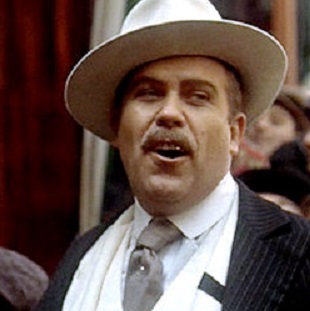
How is Eleanor Holmes Norton like Don Fanucci? In more ways than you might think.

How is Eleanor Holmes Norton like Don Fanucci?
In more ways than you might think.

Someone connected to a lobbyist released a voicemail of the D.C. delegate to Congress, Eleanor Holmes Norton (D, not that the same kind of voice mail hasn’t been left by countless Republicans too), shaking down an industry that is greatly affected by the committee Holmes chairs (though she may not vote on the floor, the District being the victim of taxation without representation) for a financial contribution, in a wounded/threatening tone reminiscent of the Sicilian gangster Don Fanucci in “Godfather Part II” who shakes down a poor merchant by asking for “enough to wet my beak.” Cenk Uygur is almost humorously unsettled by Holmes’ naked venality and the quid pro quo corrupt practices it represents, and I sympathize.

As long as voters, leaders and the news media tolerates this kind of culture, complaints about the unresponsiveness of our elected representatives are laughable. It should be obvious that the first step to a better republic is refusing to tolerate bribery.

Here’s the clip.

Weep.

_____________________________

Pointer: Instapundit

Source: Advice Goddess

The Progressives’ Attacks On Shelby County v. Holder: Unethical and Ominous

How DARE the Supreme Court not defer to Congressional judgment when it knows Congress is incapable of competent decision-making!

How DARE the Supreme Court not defer to Congressional judgment when it knows Congress is incapable of competent decision-making!

After reading more of the hysterical, sneering attacks on the Supreme Court’s decision in Shelby County v. Holder, I have concluded that I initially neglected to recognize the deep bias and contempt for basic rights that underlie them. The critics have no legitimate arguments to support allowing the current formula set out in the Voting Rights Act to continue, except that they believe trampling on innocent citizens’ rights is acceptable government practice if it makes the civil rights establishment happy, and allows the myth to be perpetuated that Republicans sit up late at night trying to figure out ways of stopping blacks from voting. “It may be unconstitutional, but it works!” is the best of their claims, a pure embrace of that hallmark of corrupted ethics, the ends justify the means. Note that this is also the justification being offered by the Obama Administration for drone strikes, PRISM, and tapping the phones of reporters. This isn’t an argument but a philosophy, and one that is offensive to core American values.

The Times, no longer the premiere news source in the country but certainly the premiere Democratic Party ally masquerading as a news source, clinched it for me. In its scathing editorial condemning the decision, the only arguments it could come up with were… Continue reading

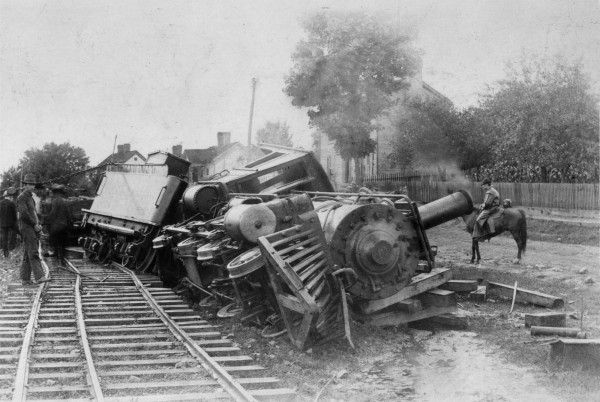
The Illegal Immigration Bill: A 37 Year Ethics Train Wreck Rumbles On, With No End In Sight

trainwreck6

The details of the “immigration reform bill” moving through Congress like a water buffalo through a snake are less important than the fact that some action is being taken regarding a problem that has been cynically, incompetently, dishonestly and negligently allowed to fester since the last illegal immigrant accommodation law was passed in 1986. This is one of the rare cases in which doing almost anything is more responsible than doing nothing, and that is the beginning and the end of the list of the bill’s virtues. This is an ugly ethics train wreck  in which there are no heroes, only dunces and villains. There may be a worse one, but at the moment, I can’t think of it.

The 11,000,000 or more illegal aliens in this country have to be given some way to attain citizenship and get out of the shadows. That is an unavoidable, pragmatic reality, the best of a stinking pile of unethical options. All the rationalizations for doing this are unethical, except one: they are here, we allowed them to get here and allowed them to stay, and now we are out of choices. It’s our fault, which is to say our incompetent, irresponsible government’s, and now we have to swallow hard and accept the consequences. Continue reading

Ethics Quote of the Week: The Washington Post Editorial Board

“…Why is Mr. Obama not leading the way to a solution? From the start, and increasingly in his second term, Mr. Obama has presented entitlement reform as something he would do grudgingly, as a favor to the opposition, when he should be explaining to the American people — and to his party — why it is an urgent national need.”

—–The Washington Post’s editors, in a spot-on editorial splitting the blame for what it correctly calls the “stupid” sequester fight equally between Congressional Republicans and the President, but pointing out the President Obama, because he is President, will be accountable for his failure to lead on the issue.

No way to run a country.

No way to run a country.

Good for the Post. I began a draft of a very similar article, and abandoned it because I have expressed my harsh assessment of President Obama’s leadership style and skills too many times here to be regarded as objective on the topic. There is nothing in the editorial I disagree with. This President’s concept of leadership has been to order the opposition to do what he wants, orchestrate deceitful  PR battles about the horrible consequences that will occur if his edict was not followed, and then to seek partisan advantage by casting all blame on his opponents when his preferred approach was rejected. His acolytes and enablers in the media have allowed him to continue this pattern: to its credit, the Washington Post has been a notable exception, particularly regarding Libya, Syria, and Iran, but also previous budget battles.

President Obama’s handling of the sequester might be his worst leadership botch yet. First he proposed the sequester. He made no effort to make resolving the issue a priority prior to the election, but falsely claimed in the third debate with Mitt Romney that it was not his idea, and that he did not propose it. Continue reading

Ethics Dunces: America’s Leaders…Or, If You Prefer, “Happy New Year! We’re Doomed!”

falling

UPDATE: 1/1/ 13  At the last possible moment —indeed, after the official deadline had past— a bi-partisan deal temporarily averting the worst effects of the fiscal cliff was achieved. The details of the compromise are here. But nothing I see in it would cause me to change any of the conclusions I reach below. It seems that the fiscal can was kicked down the road once again, for our craven leaders avoided doing their jobs:  dealing with the debt ceiling, reigning inexcessive government spending, and fixing a dysfunctional budget process. As the Washington Post stated on its front page today:

“The “fiscal cliff” was designed by Washington for Washington — it was intended to set up a scenario so severe that the president and Congress would, at last, have to take on the nation’s major tax and spending problems. Instead, lawmakers again found a way to sidestep many of the prickliest issues and in the process set up other, potentially more severe, showdowns in the new year.”

Additional taxes go into effect (supposedly an additional 600 billion over the next decade—a drop in the bucket), but no serious cuts in spending will be made, and the net effect is simply to delay considering responsible fiscal reforms until the next crisis. Our weak and feckless national leaders were minimally effective to the extent that they managed to avoid the worst possible result, looking as bad as possible in the process, waiting until the clock had run out. Do you find that encouraging, impressive and promising? I don’t.

It is disgusting.

_____________________________________________________________

The failure of America’s elected leaders to avert the so-called “fiscal cliff,” an artificial deadline that they set for themselves the last time they proved incapable of being fiscally and legislatively responsible, is frightening and dismaying proof of their utter incompetence, irresponsibility and cowardice.

While the worst condemnation ought to fall on the President, as he is in the highest office and thus bears the most responsibility when the government fails, the easiest way to spot partisan and biased individuals from now on will be to note those who claim that one party or one branch of government is more blameworthy than the other. I don’t want to hear it. All sides and interests had a duty to the nation, and they all failed us.

Recall that all of this begins and ends with the imperative of reducing the deficit in future years and beginning to pay  down the unsustainable debt. Neither party, nor President Obama, nor the Senate (which has not passed a budget in years), nor the Republican-controlled Congress, have been honest or realistic about the crucial and pressing need to reduce spending significantly (which requires reforming so-called entitlements, as well as other painful cuts) and to increase revenue through increased tax rates and reduced tax deductions. By their irresponsible and utterly stupid bungling of this escalating crisis, they have embarrassed the nation, weakened its defense, undermined its economy, risked the welfare of hard-working and vulnerable citizens, endangered the world and placed the future of the nation in peril.

It is unforgivable. Sharing the shame in this display of complete leadership incompetence are such culprits as the national media, which allowed both parties to avoid the topic of how sequestration would be averted through the entire election cycle; government watchdog groups, which made nary a peep as two years passed with the “cliff” looming, and  Congress wasted its time passing show-bills to thrill its most radical constituency, while the President campaigned and fiddled; and the unengaged, naive and polarized public, who have sent the message that there will be no consequences of a jointly-managed fiasco that threatens to crush generations to come…their children. A great job all ’round, Americans.

We enter 2013 with the permanent decline of the great American experiment evolving from a possibility to a probability, because, arguably for the first time in its history, the United States wasn’t lucky. This time, when the nation needed visionary, talented, courageous and bold leaders to address an epic crisis, there was nobody there but cowards, hacks, pygmies, narcissists, petty partisans and amateurs.

Happy New Year.


___________________________________

Graphic: According to Jewels

Morning After Report: Six Steps Forward and Seven Back In The Quest For A Trustworthy Congress

We’ll never get a trustworthy Congress this way.

So much for “the wisdom of crowds.” Last night, knowing (theoretically, at least) that the one completely irrational choice for the nation at this critical juncture in its history is more gridlock born of ideological intransigence, voters sent a dysfunctional Congress back to Washington, opting for a radical conservative House and a radical liberal Senate despite telling pollsters that this was the least trusted Congress in history. Just to make sure compromise and movement would be as difficult as possible, the public also re-elected a President who, whatever his other virtues, has shown neither the ability nor the inclination to engage in effective negotiation with his political adversaries on the Hill. There were plenty of more responsible options available to voters:

  • Commit to the President, and give his party majorities in both Houses of Congress so he could get his policies implemented, for better or worse,
  • Give the Senate back to the GOP, so some of the bills the House has passed can be sent to the President’s desk
  • Sweep everybody out and try a new team to see if it can do any better.

But no. The American public, in its infinite wisdom, opted for nearly the exact toxic partisan mix that has served the nation so miserably for the past two years. Unquestionably, the biggest ethics failure on election night was this one.

Yet there was progress, as voters rejected some of the more unethical officials offering their services. Unfortunately, these wise and ethical choices were greatly diluted by other unforgivable ones. On the plus side: Continue reading

Is It Unethical To Ban Stupid People From Congress?

In 1978, this last image from “Animal House” was hilarious. In 2012, it’s tragic…because it came true.

The Todd Akin debacle has me wondering why we don’t take measures to block the ignorant and dim-witted from gaining high elected office. I know what you are going to say: that’s what elections are for. But we can’t bar ignorant and stupid people from voting: that’s been settled in court. It shouldn’t surprise us that they frequently tip elections toward candidates that the pollsters describe as “people like them”, and voilà! Todd Akin.

Akin is far (well, maybe not very far) from the  most intellectually suspect member of Congress. For example, Georgia Congressman Hank Johnson once expressed concern that the island of Guam might tip over, like a raft. There are too many other telling anecdotes relating to other members of Congress, in both parties. For those who shrug cynically and argue that it’s always been that way, there is solid evidence that indeed, Congress is getting dumber over time. A study of every word spoken in Congress concluded that the grade level at which members of the legislative branch speak has fallen a full grade since 2005, to just half-way through the junior year of high school. Democrats are slightly more articulate (.4 of a grade) than Republicans as a group, but that just could be because Joe Biden left to be Vice-President. Continue reading

Ethics Quote of the Month: Chief Justice John Roberts

“We do not consider whether the Act embodies sound policies. That judgment is entrusted to the Nation’s elected leaders. We ask only whether Congress has the power under the Constitution to enact the challenged provisions…Members of this Court are vested with the authority to interpret the law; we possess neither the expertise nor the prerogative to make policy judgments. Those decisions are entrusted to our Nation’s elected leaders, who can be thrown out of office if the people disagree with them. It is not our job to protect the people from the consequences of their political choices.”

—-Chief Justice John Roberts, in the introduction to his majority opinion in the case of National Federation of Independent Business et al. v. Sebelius, which upheld the Affordable Care Act on the grounds that the so-called “individual mandate” was a tax, not  government-mandated commercial conduct.

The Chief Justice’s statement is what is called dicta, commentary in a Supreme Court opinion that is neither binding on future courts nor a substantive part of the decision. Dicta, however, often has great influence in shaping future cultural consensus, and we can only hope that the Chief Justice’s wise and ethical words stick.

He is talking about process and accountability, and what is necessary for our democratic republic to work, and, frankly, survive. Reading letters to the editor and web site comments about yesterday’s decision, I find the overwhelming civic ignorance and “the ends justify the means” obsession of the vast majority of the writers more than depressing. The Supreme Court decision did not “vindicate” the Democrats and President Obama—only positive outcomes from the law they rammed through the system using every obfuscation and trick in the book could begin to do that, and even then it might be impossible, at least from an ethical standpoint. The Supreme Court’s decision raised the serious question of whether the law was passed under false pretenses, a tax disguised as something else so as not to call attention to its violation of the President’s promise not to raise taxes on the middle class. Once the Affordable Care Act began traveling through the courts, the Administration began suddenly calling the individual mandate a tax—a term that was not used in the 2500 page law itself—because it recognized that its Commerce Clause rationale for the individual mandate was shaky. Some courts found the bait-and-switch cynical and offensive, and refused to consider it. The bait-and-switch was offensive, or should be to citizens who believe that the public should know the truth about the laws Congress passes, but Roberts properly held that it isn’t up to the Supreme Court to protect the public from the curs, liars and knaves they regularly elect to high office because “character doesn’t matter.” In a democracy, this is the public’s job. We are accountable. The Supreme Court doesn’t exist to protect us from our own laziness, lack of principles and stupidity. It exists to make sure that if our elected officials pass lousy, ill-considered and un-read laws that roll the nation ever closer to a national diet of moussaka, at least they did it within the bounds of the Constitution. If We the People decide to tolerate cynical, dishonest, incompetent leaders and representatives and the nation ends up like Stockton, California, well, at least one branch of government did its job to make democracy work.

In the end, it will have been the people who failed to uphold their part of the experiment. That’s what the Chief Justice was saying.

I wonder if anyone is paying attention.

______________________________

Source: National Federation of Independent Business et al. v. Sebelius

Graphic: Linda Life

Ethics Alarms attempts to give proper attribution and credit to all sources of facts, analysis and other assistance that go into its blog posts. If you are aware of one I missed, or believe your own work was used in any way without proper attribution, please contact me, Jack Marshall, at  jamproethics@verizon.net.