THIS is Hindsight Bias, So You’ll Know a Jerk When You Hear One

I haven’t watched a Red Sox game for over a month now; more on that soon. I do check on the game results however, and observed with interest that Red Sox manager Bobby Valentine, currently being dressed for the guillotine by New England sportswriters who want him punished for a miserable season in which his own work has been outstanding, is being criticized today in a textbook example of hindsight bias at work. I am flagging it for any of you who might want to explain the phenomenon to the next jerk who criticizes you for a reasonable choice you made not knowing how it would turn out, based on the jerk’s knowledge of how it in fact did turn out.

My least favorite personal run-in with hindsight bias was the time I lost a poker hand—and a lot of money– in Vegas despite having four of a kind in a game of seven card stud. The old man sitting next to me looking pathetic also had four of a kind, and in a higher denomination, the odds of two four of a kind hands appearing in the same deal in a non-wild card game being approximately six-gazillion to one. Naturally, I was betting the limit until the old man called my hand—he said later that he felt sorry for me. When he revealed that he had my four sevens beat with his four %$#@%$*& tens, it caused a genuine uproar in the casino, and the dealer said that he had never seen the like in eight years on the job.

“You should have known he had you beat,” said the ass sitting on my right. That’s hindsight bias. And so is this. Continue reading
Chris Darden: Failing The Accountability Test and Making the Unethical Quote of the Week, Too

I feel sorry for Chris Darden.

It’s all Johnny Cochran’s fault.

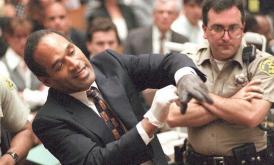
Like Monica Lewinsky and others, he was living a normal personal and professional life  until events beyond his control  thrust him to the center ring of a media circus, and the bright lights of celebrity and hyper-scrutiny derailed his life forever. As a young prosecutor, he could have made many worse errors than his infamous gamble of allowing O.J. Simpson to try on the murder gloves found at the scene of Nicole Simpson’s and Ron Goldman’s death, and been able to learn and move on. But his  blunder was on live TV, during the most watched trial in history. Master defense attorney Johnny Cochran turned it into a ditty (“If the gloves don’t fit, you must acquit”) that found immortality in law school classes, history books and “Seinfeld,” and Chris Darden, working lawyer, became celebrity road-kill. (So did his colleague Marcia Clarke. Seeing today, bleached, botoxed and barely recognizable, desperately trying to eke out a living as a D-list celebrity pundit, it becomes vividly clear that Simpson ruined more lives than the two he snuffed out that bloody night.)

So I understand why Darden, taking part in a panel discussion about the trial at Pace Law School in New York City, shocked his fellow panel members  and the audience by saying, “I think Johnnie tore the lining. There were some additional tears in the lining so that O.J.’s fingers couldn’t go all the way up into the glove.” Darden then asserted that the defense team had unsupervised custody of the glove before the infamous test, which is when he surmised that the tampering took place. I understand it, just as I understand a lot of terrible conduct that is still inexcusable. Continue reading

Ethics Dunce: Gina Chon

“The question I continue to have is when will the conversation return to issues?  Because when they do, I know Brett will become the next ambassador to Iraq.”

Just JKF’s type. Also a Communist spy, but hey, nobody’s perfect!

Thus did loyal wife Gina Chon rationalize away Republican objections to the appointment of her husband, Brett McGurk, to be Ambassador to Iraq. Her point, apparently, is that the fact that he carried on an illicit and secret affair with a reporterher—while on a previous State Department assignment to Iraq and exchanged e-mails “joking” (?) about exchanging intelligence for sex should be an issue in his conformation.

Let’s see, now. One of the gazillion women President Kennedy may have had an affair with while he was in the White House was Ellen Rometsch, an East German spy. (JFK consistently ranks #1 in polls of which Presidents Americans think were the best. Discuss) Imagine that this came to light, that somehow JFK avoided impeachment for it (he would not have), and avoided Oswald’s magic bullet in Dallas. How would Jackie have sounded, if she argued to the press that since Jack didn’t blab state secrets during his pillow talk, his indiscretion jeopardizing U.S. national security was a non-issue?

Like a loyal wife, like a loyal Democrat, and like an idiot.

Like Chon. Continue reading

How Consequentialism Leads To Bad Ethics: An Illustration

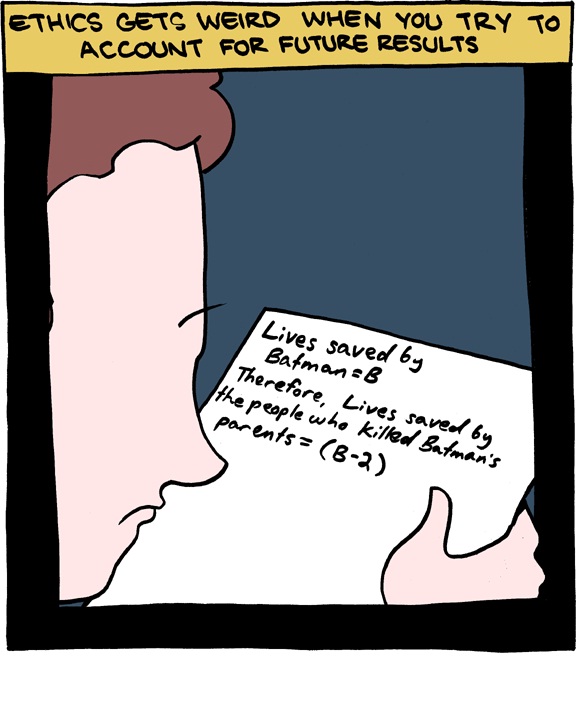
Tgt passes along this cartoon by Zach Weiner. He knew why I would like it: I am often railing about the misuse of consequentialism, justifying an act as ethical after it has produced desirable results. This fallacy bolsters “the ends justify the means” reasoning and makes every act, even clearly wrongful ones, theoretically redeemable in retrospect, after the results are in (although, of course, all the results are never in. That’s Chaos for you!)  The defense of torture by Bush administration defenders on the grounds that it may have uncovered valuable intelligence is the most recent example. Had the unconstitutional imprisonment of Japanese-American citizens in World War II  prevented some Japanese undercover plot by imbedded traitors, undoubtedly that fact would be used to justify an unjustifiable and disgraceful breach of American law and values. Looking backward creates this ethical distortion.

It is equally infuriating, to me at least, when good and ethical decisions are judged, usually by the media or by political pundits, as “wrong” or ” mistakes” because of bad results that could not have been foreseen when the decision was made or the act undertaken.

Weiner’s cartoon nicely marks the logical flaws in backward ethics, for those for whom the word “backward” is an insufficient clue.

___________________________________________

Spark and Pointer: tgt

Source: Saturday Morning Breakfast Cereal

Ethics Alarms attempts to give proper attribution and credit to all sources of facts, analysis and other assistance that go into its blog posts. If you are aware of one I missed, or believe your own work was used in any way without proper attribution, please contact me, Jack Marshall, at  jamproethics@verizon.net.


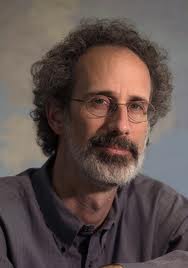
Climate Wars Ethics: Gleick’s Lie, and the Death of Trust

You cannot fight for the truth with lies. Why is this so hard to learn?

This is a big ethics story, with general ethics lessons and serious public policy repercussions in an area already muddled with ethical misconduct on all sides. I’m going to restrict Ethics Alarms to the purely ethical analysis. and, at the end, point out some of the excellent articles that the incident has inspired regarding the policy implications of it all.

Last week, leaked documents prepared for a board meeting of the libertarian think tank, the Heartland Institute, were published on various blogs and websites. The Institute is a major player in the effort to disprove, debunk or discredit scientific studies showing man-made climate change, and block the adoption of anti-climate change policies while undermining public support for them.  One of the most provocative documents was a “Climate Strategy” memorandum laying out Heartland’s secret efforts in sinister terms. The source of the documents, and the one who made them available to global-warming promoting bloggers, was a mysterious individual calling himself “Heartland Insider.”

Now the source has revealed himself, and it is a prominent climatologist on the front lines of the climate change battle, scientist Peter Gleick of the Pacific Institute. Gleick explained what occurred in a column at the Huffington Post: Continue reading

The Third Annual Ethics Alarms Awards: The Worst of Ethics 2011 (Part 2)

The 2011 Ethics Alarms Awards for the worst in ethics continues (you can catch up with Part I here) with the large and depressing…

 Shameless Bad Character Division

Jerk (defined as an individual who habitually places his personal benefit and ego gratification above the welfare of everyone and everything else) of the Year: Donald Trump

The Dennis Rodman Award, (Awarded to a professional athlete for a career and lifetime of  behaving like a jerk): Jose Canseco. Jose’s done it all, from being baseball’s Typhoid Mary of steroids, to getting arrested for various assaults, to writing a series of tell-all books designed to rat out the very players he corrupted, not as a service to his sport, but as revenge for it rejecting him. In 2011, he hit a new low, accepting money to appear in a celebrity boxing match (the 21st Century version of becoming a circus geek to pay the bills) and sending his less-talented, equally dim-witted, identical twin brother Ozzie to perform instead, hoping to fool the fools who hired him. This, of course, was fraud. It takes quite a jerk to take this award from Manny Ramirez, who became eligible in 2011, but Jose was up to the task.

Asshole (defined as an individual who intentionally and maliciously causes pain and harm to others because he can) of the Year: Rev. Terry Jones, the publicity-seeking leader of a tiny rural church, who caused riots and deaths abroad and ramped up political tensions between America and Muslim nations by threatening to burn, and finally burning, the Koran as a demonstration of contempt for Muslims and the Islamic faith. Continue reading

Roger Williams, Consequentialism, and “Born Free”

Roger Williams in his 80's. Take THAT, Drake!

Roger Williams, the pianist whose hit renditions of songs like “Autumn Leaves” and “Born Free” are pop culture generational touchpoints, died this week. One item in his obituary has double ethical significance:

“While majoring in piano at Drake University in Des Moines, he began developing a style that was a fusion of jazz, classical and pop. When a school official overheard him playing the tune “Smoke Gets in Your Eyes,” he was expelled because the school had a “classics-only” policy…”

It is both encouraging and depressing to learn that school administrators were just as doctrinaire, unreasonable, unfair, incompetent, stupid and willing to abuse their power while playing with the lives of young people back in the 1940’s as they are today—encouraging, because that generation seems to have come through it pretty well; depressing, because this field appears to have a flat learning curve.

Mainly, however, Williams’ run-in with music snobs at Drake beautifully illustrates what is wrong with the consequentialist argument that we should assess the ethical nature of an act based on its consequences. Continue reading

Ethics Confusion in Ken Burns’ “Prohibition”

I enjoy all of Ken Burns’ documentary series, and I am grateful for them. They do a better job of teaching history than the schools, and they are always thought-provoking and, of course, beautifully executed. At the same time, I am aware of the limitations in Burns’ approach, beginning with his genre. Documentaries are inherently misleading works, more misleading in the hands of some, like Michael More, than others. The sifting of which material to use, how to balance issues, choices of photographs and film footage and even the inflections of voice betrayed by narrators (To his credit, Burns has all of his narrators deliver their script in the exact same measured and deliberately-paced tones; I found myself wondering how many times Burns forced “Prohibition” narrator Peter Coyote to listen to previous Burns stand-ins David McCullough and John Chancellor in “The Civil War” and “Baseball” until he sounded as much like their clone as they sounded like identical twins) unavoidably slant the final product, sometimes unintentionally, but usually with a motive. To the extent that viewers realize this, it is an ethical medium, but for most, especially those unfamiliar with the subject matter and with no independent knowledge to draw on, it is not.“Prohibition,” Burns’ latest PBS series that debuted last week, has a more obtrusive agenda supported with more dubious logic than his previous documentaries, reminding me, at least, that his historical conclusions should always be taken with a measure of skepticism. Continue reading

Terry Francona, Accountability, and Moral Luck

Good job, Terry. 'Bye.

Barack Obama, and indeed all leaders, current and future, have reason to heed the results of meeting to be held today between the ownership of the Boston Red Sox and the traumatized team’s manager of eight years, Terry Francona. Francona will learn whether his tenure—he is beyond question the most successful manager in the team’s century-plus existence—will end as a consequence of his squad’s historic and inexplicable collapse, robbing it of the play-off spot that seemed guaranteed less than a month ago. Continue reading

The Shannon Stone Tragedy Ethics Quiz, Part II

Don't try this if you're not a firefighter

 Many commenters were upset with me for characterizing the tragic death of Shannon Stone, who fell to his death while trying to catch a ball during a Texas Rangers game, as the result of his own bad judgment, suggesting that I was impugning the character of a dead man. (I wasn’t.) That reaction sparks the second Ethics Alarms quiz question relating to the incident.

NBC baseball blogger (and lawyer) Craig Calcaterra put up a post this morning headlined “Idiot nearly falls from the stands chasing a ball at the Home Run Derby”:

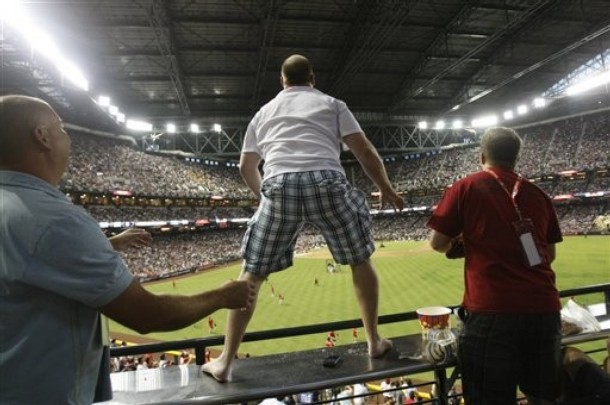
“Just days after Shannon Stone died from a fall while reaching for a baseball at a Texas Rangers game, a fan at last night’s Home Run Derby nearly fell out of the outfield stands while lunging for a home run ball hit by Prince Fielder.  He was spared serious injury or death only because his friends grabbed him by his feet, held him and then pulled him back as he dangled over the railing above a concrete deck 20 feet below…His name is Keith Carmickle, and common sense is not his forte. His fall came after he stepped up onto the narrow metal table which abutted the railing — the kind you stand in front of and set your drink on while watching the game — and then, while still standing on it, reached down low to catch the ball as it came in…He missed the ball, but his momentum carried him forward and he fell headfirst over the rail. If it wasn’t for his brother’s and his friends’ quick action, down he would have gone. Despite his idiocy, he (a) escaped this dangerous situation of his own making unscathed; and (b) was allowed to stay at the Derby by security. Both of these factors have been added to the “evidence that there is no God and/or that He is not just and fair” side of the big ledger I keep on my desk and in which I tally the wonder and folly of Humanity as I encounter it…”

Your questions to answer, if you dare: 1) Is it fair for Calcaterra to call Carmickle an idiot, and Stone just a random victim of circumstance? 2) Why or why not? Continue reading