“Grow Your Own Marrow Donor” Ethics and Consequentialism: The Ayala Family Saga

Anissa Ayala and her custom-made bone marrow donor

Once again, the fans of that ethically corrosive twin of  “the ends justifies the means,” consequentialism, were holding court in the mass media, as the “Today Show” revisited a two-decade old ethical outrage to declare that it was all perfectly fine after all…because it worked.

Thus does television, itself dominated by ethically-dim writers, producers and stars, corrupt the public. So here we go again:

Does the fact (if it indeed is a fact) that Osama bin Laden capture and execution was facilitated by torture make torture less ethically wrong?

No.

Do the fortuitous results of any action that was unethical from its inception change the nature of that conduct from unethical to ethical.

Again, no.

Is conceiving a child solely to provide donor bone marrow to her cancer-stricken older sister ethically acceptable as long as the sister’s cancer is cured?

Absolutely not!  But to listen to the “Today Show,” and revoltingly, the “Today Show’s” resident medical correspondent Dr. Nancy Snyderman, it is not only ethically acceptable but laudable. Because it worked.

Twenty years ago, Abe and Mary Ayala were desperate because Anissa, their 16-year-old daughter, had been diagnosed with leukemia. Chemotheraphy proved ineffective, and neither the Ayalas nor their son was a compatible bone marrow donor. The Ayalas had long before decided that two children were enough; Abe had a vasectomy. But then Mary came up with the idea of having another child in the hopes that it would be a bone marrow donor who could save Anissa’s life. Continue reading
No, It Still Doesn’t Justify Torture

No.

The news of how Osama bin Laden was finally tracked down and killed has caused a predictable outbreak of consequentialism. It appears that Khalid Sheikh Mohammed provided some of the key intelligence that led to the successful operation in Pakistan while he was undergoing “enhanced interrogation” in CIA prisons in Rumania and Poland. “See?” Dick Cheney’s fans are saying today. “Rendition and torture work. We wouldn’t have killed Bin Laden without them. So what do you think of those tactics now?” The opponents of torture who foolishly argued against it based on pragmatic considerations—“Torture doesn’t work!”—rather than ethical ones–-“It is absolutely wrong!“—set themselves up for this.  Now what should they say? Continue reading

Comment of the Day: “Why NPR’s Wrongs Don’t Make James O’Keefe Right”

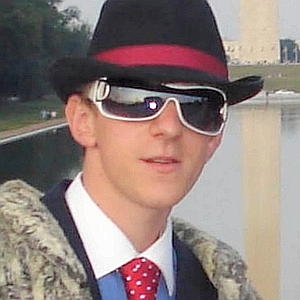
Rick comments on my ethics verdict regarding the most recent James O’Keefe “sting,” this one exposing a biased NPR exec and an ethically-weak NPR fundraiser: Continue reading

Why NPR’s Wrongs Don’t Make James O’Keefe Right

James O'Keefe, Ethics Corrupter

And the NPR Ethics Train Wreck continues

Between union hysteria in Wisconsin, carnage in Libya, and tsunamis, the fact that James O’Keefe’s fake Muslim billionaire act exposed more NPR integrity issues was drowned out by shouting, gun shots and water. In fact, the second victim of O’Keefe’s sting may have taught us more about NPR than the first.

In the surreptitious audiotape of  NPR’s continued encounters with the fake potential big bucks donor, NPR’s director of institutional giving, Betsy Liley, is heard advising the supposedly wealthy Muslim donor how the network could help “shield” his group from a government audit if it accepted the $5 million he was offering. It seems pretty clear from the tape that this was not what the sting was set up to prove: what the “Muslim donor” really wants is to get a promise from NPR that it will slant the news content the his way if the gift is big enough. Liley stood her ground on this core journalistic principle admirably—so much for the claim that George Soros bought NPR’s advocacy with his recent gift—but fell into another trap of her own making.

NPR spokeswoman Dana Davis Rehm said in a statement that Liley’s comments on the tape “regarding the possibility of making an anonymous gift that would remain invisible to tax authorities is factually inaccurate and not reflective of NPR’s gift practices. All donations—anonymous and named—are fully reported to the IRS. NPR complies with all financial, tax, and disclosure regulations.” That’s undoubtedly correct; Liley was not merely ethically wrong but also literally wrong, for what she was suggesting almost certainly couldn’t happen. However, the fact that she would say such a thing believing it could happen, or think it was acceptable if it did happen, or try to acquire a large donation by persuading a donor to believe it could happen, all point to the one conclusion: NPR’s culture is ethically compromised, and the organization’s leadership has failed to meet its obligations to create an ethical culture  there. The sting is more disturbing than the earlier one that caught an outgoing NPR executive taking extreme partisan positions that belied NPR’s position that it is objective and unbiased. The comments of Ron Schiller just confirmed what many, including me, thought was already apparent in the tone of NPR’s work. I had also always assumed, however, that the place was professionally and ethically run (excepting the tendency to fire employees for expressing politically incorrect opinions on Fox News).

So this settles it, right? O’Keefe is a hero?

No, he’s not. James O’Keefe, in fact, is an ethics corrupter, an individual who weakens the public’s ethics by encouraging it to accept his dubious values. Continue reading

A Strong Consequentialist Argument for Steve Jobs’ Liver…But Is It Right?

Steve Jobs and friend

Back in June of 2009, when “Ethics Alarms” was but a twinkle in my eye, there was a momentary controversy when ailing Apple CEO Steve Jobs was able to use his enormous wealth to land on multiple regional organ transplant lists, thus vastly improving his chances of getting a precious liver transplant in time to save his life. The California native ultimately got a Tennessee liver, but critics cried ethics foul. The organ transplant distribution system is not supposed to be based on wealth: otherwise, why not just auction off livers to the highest bidders? Because most insurance companies won’t cover multiple listings, only the richest patients can afford to employ this strategy, meaning that a system that is supposed to be means-neutral favors the wealthy after all. Continue reading

Ugly Consequentialism: The Daily Beast Backs Perez Hilton

I am developing a real dislike for the Daily Beast. Tina Brown’s slick news aggregating website has gone out of its way to slander innocent dog breeds, features self-promoting hypocrites like John Avlon, and generally displays the ethical instincts of Piers Morgan, which is to say, none. Today it gave us an update on Serene Branson, who was mocked by blogger Perez Hilton and others for having an obvious, and frightening, on-air neurological event that caused her to be unable to speak coherently. Entitled “Line-Flubbing Grammys Reporter Fine”—trivializing as “line-flubbing” what was clearly nothing of the sort; people don’t get checked out by physicians for flubbing lines—the Daily Beast’s commentary noted that paramedic could find nothing wrong, so “Laugh away.”

This is the ugly face of consequentialism, judging the ethical nature of conduct based on what happens afterwards. Perez Hilton’s cruel amusement at a reporter finding that she cannot form intelligible speech is now retroactively fine and dandy, because Branson hasn’t—so far—keeled over or gone blind. So laugh, jerks, laugh…until she does keel over, tomorrow, or next week, or next month, in which case the ridicule becomes unacceptible to The Daily Beast.

Another human being who is panic-stricken as her body turns on her is not funny, and it is a sign of callousness and a deficit of compassion to laugh at the sight of it, whether or not the apparent catastrophe turns out to be minor after all. But the Daily Beast is proving that it is a playpen, occupied by reporters, columnists and editors with the ethical sophistication of gradeschoolers.

______________

UPDATE 2/15/11 (From AOL News):

“Despite Branson’s insistence that she’s fine, doctors who have examined the now heavily circulated footage of the incident continue to express concerns.

“This is what we call a class neurological event,” Dr. Keith Black, director of the Neurosurgical Institute at Cedars-Sinai Medical Center, told NBC’s ‘Today’ show. “She was obviously aware that she was having difficulty.”

According to Black, Branson’s episode was likely the result of a transient ischemic attack, essentially a “blockage in blood flow going to the brain,” or a “mini-seizure located in the language area.”

The New York Post also spoke to doctors who viewed the tape, and they said that Branson’s garbled speech could have resulted from “aphasia, which affects the ability to articulate, and that it could have been brought on by a mini-stroke, a tumor or a circulatory issue.”

Aesop’s Unethical and Misleading Fable: “The North Wind and the Sun”

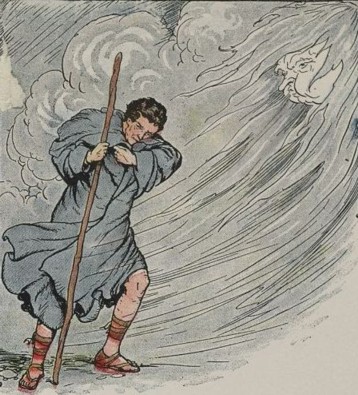
Today, by happenstance, I heard an Aesop’s Fable that I had never encountered before recited on the radio. Like all Aesop’s Fables, this one had a moral, and it is also a statement of ethical values. Unlike most of the fables, however, it doesn’t make its case; it is, in fact, an intellectually dishonest, indeed an unethical, fable.

It is called “The North Wind and the Sun,” and in most sources reads like this:

“The North Wind and the Sun disputed as to which was the most powerful, and agreed that he should be declared the victor who could first strip a wayfaring man of his clothes. The North Wind first tried his power and blew with all his might, but the keener his blasts, the closer the Traveler wrapped his cloak around him, until at last, resigning all hope of victory, the Wind called upon the Sun to see what he could do. The Sun suddenly shone out with all his warmth. The Traveler no sooner felt his genial rays than he took off one garment after another, and at last, fairly overcome with heat, undressed and bathed in a stream that lay in his path.”

The moral of the fable is variously stated as “Persuasion is better than Force” , or “Gentleness and kind persuasion win where force and bluster fail.”

The fable proves neither. In reality, it is a vivid example of dishonest argument, using euphemisms and false characterizations to “prove” a proposition that an advocate is biased toward from the outset. Continue reading

Judge Vinson’s Ruling on the Individual Mandate, Rejecting Utilitarianism

Judge Roger Vinson of Florida’s Northern District Court has struck down the much-debated individual mandate in the new health care reform law, and more striking yet, has ruled that the entire law fails to meet constitutional requirements as a result. Lawyers more skilled than I will be analyzing the opinion today and long afterward, but the opinion is also notable for its ethical approach. Continue reading

Ethics Dunce: Rep. James Clyburn (D-S.C.)

I know that Ethics Alarms has been a bit relentless regarding the accusations and the innuendos against Sarah Palin and others in the wake of the Arizona shooting, but it is an unusually widespread out-break of unfair conduct, and the Ethics Dunces are coming in waves, and from all sides and sectors.

We have a sheriff on the scene, Clarence Dupnik, who seems determined to create the assassin’s defense for him, by claiming, in the face of much evidence to the contrary, that he was driven to violence by inflammatory political rhetoric. Watch Loughner’s crack criminal defense team run with that. We have the nation’s supposedly premiere news source, the New York Times, running a revolting editorial describing Loughner’s attack as political, when this is clearly not true. (An excellent condemnation of the Times piece by James Taranto can and should be read here). Not to be outdone, Rep. James Clyburn (S.C.), the third-ranking House Democrat, took the same low road. Referencing defeated G.O.P. Senate candidate Sharron Angle’s justly criticized “Second Amendment solution” statement from the campaign (it probably, and justly, lost her the election), Clyburn tied it to Jared Loughner’s attack. Continue reading

Ethics Final For Barack Obama

Is President Obama the fair, ethical, unifying, anti-partisan president of all the people that he promised to be in 2008, or is he a Machiavellian, undercover Chicago pol, willing and ready to use divisiveness and deceit to enhance his power, silence critics and advance his agenda? During the past two years, there has been ample evidence supporting both descriptions, but his address in Arizona Wednesday could settle the issue. If the President emulates his Democratic predecessor, Bill Clinton, using the massacre in Arizona as a political wedge the way Clinton used the Oklahoma City bombing—if he adopts the philosophy of former Chief-of-Staff Rahm Emmanuel that one should never waste a crisis—then we will know the dispiriting truth about Barack Obama. Continue reading