Cuomo Interviewing Cuomo? Of Course It’s A Conflict!

The interesting question isn’t whether CNN’s Chris Cuomo blithely interviewing the Governor of New York Andrew Cuomo—who happens to be his brother–is a conflict of interest and an example of unethical journalism. Of course it is. The interesting question is what it tells us about the state of U.S. journalism that such an interview could even occur.

Here are two prominent provisions of the Society of Professional Journalists Code of Ethics, requiring that ethical journalists…

  • “Avoid conflicts of interest, real or perceived.”
  • “Remain free of associations and activities that may compromise integrity or damage credibility.”

Is there any question that a CNN anchor man interviewing his brother regarding anything whatsoever violates both of these? Real or perceived? Compromise integrity or damage credibility? Seriously?

Cuomo the Anchorman was interviewing Cuomo the Governor regarding the recent train accident. Conflict? Sure: the journalist is supposed to have only one duty, and that is to his audience. But Cuomo the Anchorman obviously has another, potentially confounding duty of loyalty to his interview subject, and this he must not have. It calls into question his willingness to probe and, if the facts warrant it, to ask uncomfortable questions of his subject. If Chris Cuomo’s duty to his audience unexpectedly requires him to breach his loyalty to his own brother, which will he choose? We don’t know. Perhaps Cuomo himself doesn’t know. He was obligated not to place himself in a situation where the question even needed to be asked.

The various defenses being offered are, I have to say, misguided and disturbing. The usually sensible Joe Concha of Mediaite writes that the controversy is “much ado about nothing.” His reasons are … Continue reading

Ethics Quote Of The Week: Sportswriter Joe Posnanski

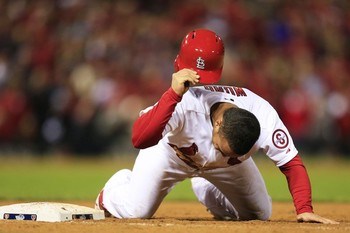
Picked off first, Kolton Wong curses the fates...

Picked off first, Kolten Wong curses the fates…

Just as baseball’s post season was starting, I wrote a post about how U.S. society’s flawed use of consequentialism to judge merit, wisdom and ethics is encouraged by our sporting events. The example I used was an old one, from the 1968 World Series, which I consider to be a classic and extreme example. This morning, the great sports essayist Joe Posnanski addressed the same issue, focusing on an event in last night’s weird World Series game, which ended like none other in post season history. With two outs and the potential tying run at the plate, Boston relief pitcher Koji Uehara picked off St.Louis pinch-runner Kolten Wong to end the game and stop the Cardinals’ most dangerous sluggers from batting with a chance to tie or win the game. Posnanski marvels at how what he considers a foolish decision to station the first baseman near the base for a pick-off throw had good results, and how hard it is for us to focus on process rather than results. He is, of course, talking about the appeal of consequentialism, and the way baseball encourages it. I beat him to it by almost a month, but Posnanski amplifies the point nicely. Here’s Joe: Continue reading

CBS’s “Blue Bloods”: Endorsing the Saint’s Excuse and Polk County Justice


Time for the department ethics training, Chief. You should sit in on it too...

Time for the department ethics training, Chief. You should sit in on it too…

“Blue Bloods,” Tom Selleck’s New York police family drama on CBS, began as a paean to the core values of public service, nobility, justice, courage and honesty as it chronicled the work and lives of three generations of the Reagan family. The Reagan men are all cops, the one female is a DA, and Selleck is the paternal Chief of Police. Based on last night’s episode, “The Truth About Lying,” series creators Mitchell Burgess and Robin Green have permitted the show’s writing staff to be infiltrated by the Dark Side in its fourth season, and now its calling cards will include the enthusiastic promotion of the abuse of power and the celebration of lying as long as it’s all for a good cause. That’s the Saint’s Excuse, one of the most deadly of the rationalizations, in which “good” people decide that they are empowered to do unethical things in the pursuit of what they believe are worthy goals. The Saint’s Excuse is something of a theme in the United States these days. Now “Blue Bloods” is making sure popular culture spreads the word.

The episode, which you can watch here, was ostensibly about Selleck’s Chief’s efforts to foil the city’s newly appointed “inspector general,” installed in the wake of a “ripped from the headlines” court rejection of an effective “stop and frisk” program by New York’s finest. Continue reading

What’s Wrong With The Florida Cyber-Bullying Arrests? Everything.

“Bullying, as they are supposed to teach you in school, is when someone uses their superior power to subordinate and humiliate someone weaker than themselves. This is wrong, and it is always wrong.”

The Sheriff of Polk County...wait, no, that's Tom Cruise, searching for pre-criminals in "Minority Report." Well, close enough.

The Sheriff of Polk County…wait, no, that’s Tom Cruise, searching for pre-criminals in “Minority Report.” Well, close enough.

This is a quote from an Ethics Alarms post earlier this year, about a school that forced students to do embarrassing things in a warped effort to discourage bullying. There is a disturbing societal consensus brewing that opposition to bullying justifies all sorts of extra-legal, unethical, excessive, abusive and unconstitutional measures, and there are a dearth of persuasive voices point out that this consensus is dangerous and wrong. Those potential voices are being stilled by a kind of cultural bullying. How can you defend bullies! Look at the victims! Think of the children! What a horrible, unfeeling person you are!

This is the only explanation I can generate for the fact that none of the commentary and media coverage regarding the Florida arrests of a 14-year-old girl and a 12-year-old girl on trumped-up charges of “stalking” following the suicide of Rebecca Ann Sedwick pointed out that the arrests were a travesty of the justice system, an abuse of power, child abuse, legally and constitutionally offensive, and, yes, bullying of a different kind. Continue reading

The Strange, Conflicted, Unethical Holiday We Call Columbus Day

"Yes, it seems like a catastrophe now, but some day creatures called human beings will celebrate this day..."

“Yes, it seems like a catastrophe now, but some day creatures called human beings will celebrate this moment…”

What are we celebrating on Columbus Day, and is it ethical to celebrate it?

When I was a child, I was taught that we were celebrating the life of Cristoforo Columbo, popularly known as Columbus, who was convinced, against the prevailing skeptics of the time, that the Earth was round rather than flat, and in the process of proving his thesis, made the United States of America possible by discovering the New World in 1492. Virtually none of what we were taught about Columbus was true,  so what we thought we were celebrating wasn’t really what we were celebrating. Columbus wasn’t alone in believing the world was round: by 1492, most educated people knew the flat Earth theory was dumb. He blundered into discovering the New World, and by introducing Spain into this rich, virgin and vulnerable territory, he subjected millions of people and generations of them to Spain’s destructive and venal approach to exploration, which was, in simple terms, loot without mercy. The Spanish were like locusts to the Americas; South and Central America are still paying the priced today. Surely we aren’t celebrating Columbus’s complicity in that. Continue reading

“Print the Legend” Ethics (Again): Does It Matter If Matthew Shepard’s Death Was Really A Hate Crime?

Powerful story; moving story; useful story. Does it matter if it isn't a true story?

Powerful story; moving story; useful story. Does it matter if it isn’t a true story?

It apparently matters to a lot of people for the wrong reasons—unethical reasons, in fact. As a result, legitimate efforts to determine what really happened to the gay rights icon, then a 21-year-old University of Wyoming student, who was beaten,  tortured and murdered  in Laramie, Wyoming  in 1998, have been exploited for ideological goals by adversaries of gay rights, and attacked by the media, gay rights advocates and good progressives everywhere. Just as it is important to the civil rights establishment, the black grievance community and anti-gun advocates that Trayvon Martin be seen as the innocent victim of a racist vigilante with murder in his heart—a characterization of Martin’s murder at war with all known facts and rejected by a jury after a fair trial—thus is it crucial to gay advocacy groups and others that Shepard be remembered as the victim of a hate crime, brutally killed because he was gay.

And facts be damned. Continue reading

Case Study In How Sports Encourages Consequentialism: The 1968 Detroit Tigers

Mickey Stanley in 1968: learning a new position in the World Series, making us dumber...

Mickey Stanley in 1968: learning a new position in the World Series, making us dumber…

Frequent readers here know that I often inveigh against consequentialism in its various forms, from labeling sound decisions “mistakes” when they don’t pan out due to uncontrollable factors, to pronouncing unethical conduct as ethical because it chanced to have some beneficent results. This particular hydra seems to be a tough one to kill, and one of the reasons is, I realize, the pervasiveness of sports in our culture.

Reflecting on sporting contests, particularly those involving teams, routinely generates hindsight bias on the part of fans and sports commentators….for one thing, it’s fun to second guess managers and coaches from the safety of an armschair or from behind a computer screen. Unfortunately, the practice endorses consequentialism. Decisions that result in a win are seldom criticized, no matter how moronic or misguided they may have been; tactics that ended in defeat are always called “mistakes,” or worse.

The baseball post-season began yesterday. We won’t see a World Series game until October is almost over, but there was a time, children, long ago, before divisions and the designated hitter, before steroids and ESPN, when in major league baseball, the World Series was the post season. This was the case 45 years ago, in 1968, when the Detroit Tigers, who had clobbered the American League competition on the way to a 103-59 record, including the last 30 game-winning season by any pitcher, turned in by Denny McLain. They were about to face the reigning baseball champions from 1967, the NL’s St. Louis Cardinals, led by future Hall of Famers Lou Brock, Orlando Cepeda, and Bob Gibson. Both were veteran teams and well-balanced; there was every reason to believe that each had a good chance at victory. Certainly, neither was in need of any last-minute overhaul.

Nonetheless, Tigers manager Mayo Smith decided to take a gamble. Continue reading

I Would Have Fired Sympathetic, Well-Meaning, Grandmotherly Sharon Snyder, Too: The Perils Of Consequentialism

Hear me out.

Why do I suspect that if this had been the clerk in question, we wouldn't be hearing about this story?

Why do I suspect that if this had been the clerk in question, we wouldn’t be hearing about this story?

The news media is indignant over the firing of Sharon Snyder, 70, a court worker who provided a copy of a successful motion for seeking post-conviction DNA testing that gained Robert Nelson a reversal of his wrongful 1984 rape conviction. He had been sentenced to more than 50 years in prison, and the belated DNA testing showed that he was innocent. Nevertheless, court officials in Jackson County, Missouri ruled that Nelson’s “angel” had improperly provided advice about a case, among other violations of court rules.

Snyder  was fired nine months before she was scheduled to retire, and there is little question that without her efforts, Nelson would still be in prison. In August 2009, Nelson filed a motion seeking DNA testing that had not been available at his trial 25 years earlier, but Jackson County Circuit Judge David Byrn denied the request. Two years later, Nelson asked the judge to reconsider, but again Byrn rejected the motion because Nelson’s self-drafted document was insufficient under the statute Nelson had cited.  After the second motion was rejected, Snyder contacted Nelson’s sister and gave her a copy of a successful motion, drafted by a lawyer, that resulted in the same judge granting another DNA testing request.  Nelson then used it as a template for a motion he filed Feb. 22, 2012, again seeking DNA testing.  Byrn sustained the motion, found Nelson to be indigent and appointed Laura O’Sullivan, legal director of the Midwest Innocence Project, to represent him.  Last month, the Kansas City Police Department’s crime lab concluded that DNA tests proved that Nelson was not the rapist in the crime he had been convicted of committing. He was freed on June 12, 2013

This is all good, and an example of justice finally, if belatedly, prevailing.

Snyder’s role, however, got her suspended without pay, and then fired on June 27. Continue reading

Unethical Quote Of The Year: Ariel Castro

Well, now, Ariel, with all due respect, I have to disagree with you here. You are, in fact, a monster.

Well, now, Ariel, with all due respect, I have to disagree with you here. You are, in fact, a monster.

Perhaps some gratitude is due to convicted Cleveland kidnapper, torturer, rapist Ariel Castro for yesterday’s long, rambling, thoroughly disturbing statement to the court before sentencing. Within the nearly 1900 words he inflicted on everyone present are a true treasure trove of rationalizations, ethical dodges and classic excuses for wrong-doing, many of which, in different contexts, we use ourselves or accept from others. Perhaps, in the future, when we hear or read of these very same rationalizations and deceit from politicians, celebrities, Wall Street manipulators, media flacks and the people who enable them, or when we detect the seeds of one of them germinating in our own heads, we will recognize them as the property of Ariel Castro, and reject them promptly.

Here is what Castro said yesterday, in its entirety. Read the whole thing…just picking out the highlights doesn’t do the statement justice. It is a masterpiece of evil. I’ll break in from time to time, in bold:

Continue reading

Confections And Consequentialism

Busted!!!!

Busted!!!!

From across the pond comes a stupid story rich with buried ethics treasures.

Eleven-year-old Holli McCann was sent home from a week long school trip to the Isle of Wight (where Paul McCartney started vacationing  when he turned 64) because she violated one of the rules of the trip: no chocolate. The Bromet (in Watford, Herts) Primary School’s headmistress, Yvonne Graves, discovered the infraction by surreptitiously reading a private letter that Holly had written to her mother. After perusing the incriminating missive,Graves ordered teachers to search Holli’s room, which they did with the diligence and thoroughness of the FBI looking for forensic evidence of a serial killing, even emptying her toiletry bag into the sink and pulling out the lining of her suitcase. It was all worthwhile, however, because they discovered the yummy but incriminating substance they sought.

After the smoking chocolate was discovered, the headmistress contacted Holly’s mother and told her to pick up her daughter immediately—she had been voted off the Isle. The mother begged  Graves to reconsider, but was refused. She had to borrow money to make the 160-mile trip to pick up her daughter.

What have we learned? Continue reading