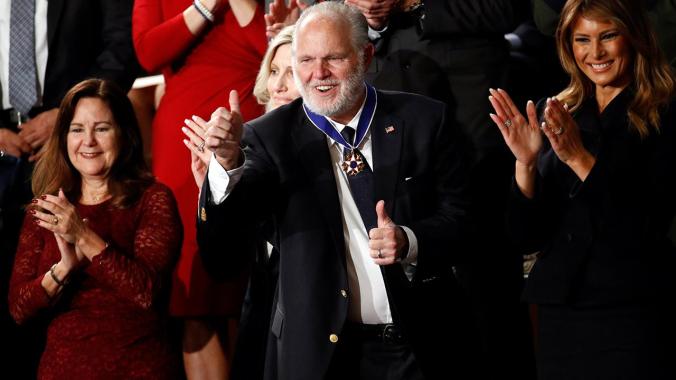
What an easy question.
Of course he was. Those who argue otherwise do not appreciate his remarkable influence on the culture, entertainment, and the political landscape. In many cases, they blame him for opening up public discourse and eroding the liberal domination of news commentary and political advocacy. They are the same people who find free speech “problematical,”
I am not a dittohead. Rush Limbaugh’s politics and causes are not mine; I admire his skills, but not always his employment of them. In the Nineties I sometimes listened to Rush in the car before I moved permanently to a home office. I have parallel life in theater, acting, comedy, skit writing and stage directing, and I was impressed with Limbaugh as a performer, which is what he is, and has always maintained that he is. His combination of politics, satire and deft disc jockey patter was unique. It was obvious why he had become, by far, the biggest star in talk radio.
The end of the Fairness Doctrine, which required broadcasters to present all sides of opinion when discussing public issues—(riiiight)—was repealed in 1987, and Limbaugh invented a new format, a conservative talk radio show that was dominated by a quick-thinking , quick-tonged, generally jovial ideologue with a sonorous voice. Rush took phone calls from people on all sides of the political spectrum, and unlike so many talkmeisters that followed him, was never rude or abusive to those who challenged his positions.



 Ethics Alarms