“Is We Getting Dummer?” Res Ipsa Loquitur!

veitone464

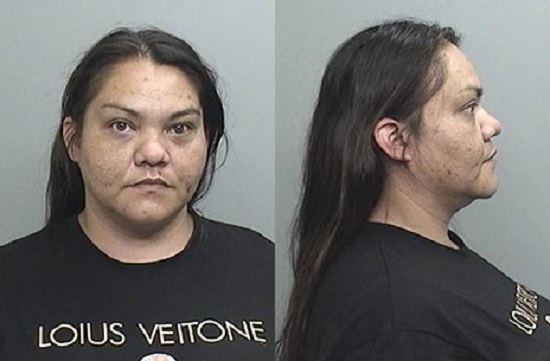
Above is the mug shot for 31-year-old Bridgette Frank, arrested in California last week on a felony bad check charge and for failing to appear in court in a misdemeanor case. her record includes convictions for drunk driving, assault with a deadly weapon, child cruelty, and narcotics possession.

Note her shirt, which appears to be an incredibly inept knock-off of a Louis Vuitton T-shirt, since it, you know, spells “Vuitton” wrong. That’s Stupid Level One.

Stupid Level Two is that the knock-off was still not so stupid that it couldn’t fool Frank. Oh, you may choose to argue that Bridget is just full of sly, ironic humor and is wearing the self-identifying moron shirt for laughs. Go ahead. She strikes you as a P.G. Wodehouse aficionado, does she? That conclusion might qualify as Stupid Level Three, but it’s not.

This is: after the Smoking Gun’s article about the shirt concluded with “Public records do not indicate whether, at the time of Frank’s arrest, she was wearing a Rolez watch or carrying a Channel handbag,” commenter Thomas D Fitzpatrick asked, “What is a Rolez watch?”

Sigh.

The Ethics Alarms motto that “Bias makes you stupid” has its corollary in “Jack’s Observation” that “Stupid makes you unethical,” leading to the depressing but undeniable Ron White’s Law, “You can’t fix stupid.” How much of America’s ethics crisis flows from that sequence?

I don’t want to think about it.
Comment of the Day: “Ethics Quiz: The Case of the Fake But Accurate Social Security Card”

My ethics conundrum regarding the fake but accurate Social Security card solution—the Dan Rather approach, if you will— continued to garner a wide range of responses. Rick, as usual, has delivered one of the most thoughtful and provocative, and it is a worthy Comment of the Day.

Here is his comment on “Ethics Quiz: The Case of the Fake But Accurate Social Security Card”:

It strikes me that sometimes—not always, but sometimes—ethics is on a continuum. There’s the truly ethical, the not unethical, and the unethical, with many finer distinctions to be made.

I don’t running screaming into the night at the idea of faking a card, under the circumstances. Still, the truly ethical thing to do in this situation is to tell the prospective employer the truth. And the availability of all those other possible means of identification is indeed relevant. Provide one of the non-Social Security card alternatives and whatever other documentation is available. Importantly, if the employer, for whatever reason, is unwilling to accept this legally sufficient documentation, you don’t want to work for this person, no matter how much you need a job. Continue reading

Ethics Quiz: The Case of the Fake But Accurate Social Security Card

A conundrum I have been asked to solve:

A mother is working to get her foreign adopted child a new copy of his Social Security card, which was lost. The child is a citizen since infancy, and a SS number has been assigned to him, but the process for a naturalized alien to get another is long and fraught with red tape, delays and frustration. So far, replacing the card has taken ten months, though it was supposed to take three. Now the son is waiting for the card to be issued. Social Security says it is waiting for final approval from Immigration, and Immigration says that there is a bottle neck, but not to worry.

Meanwhile, the boy has a standing job offer for a job that he is excited about and that would help family finances considerably. He cannot be processed without a Social Security card, however. And the job will not be held open forever.

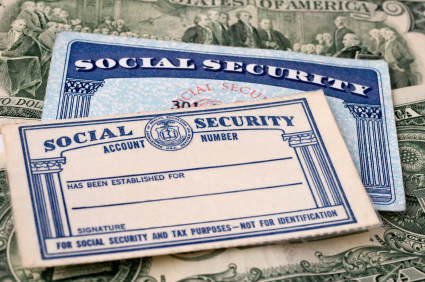
For $250, a friend of the mother’s can get a counterfeit Social Security card with the son’s real number on it. He can have it in a week,

Your Question, in the last Ethics Quiz of 2011:

Granted that getting such a fake card is illegal, is it unethical?

None of the agencies involved dispute his citizenship, that he is enrolled in Social Security or that his number is valid. He has a document from Social Security that lists his number. The fake card would not assert anything that wasn’t true, except that he actually had the official card. He would be offering fake proof, but fake proof of something that is undisputed and true.

Is this one of the rare cases when conduct would be both illegal and ethical?

I’ll take your responses and update this with commentary later.

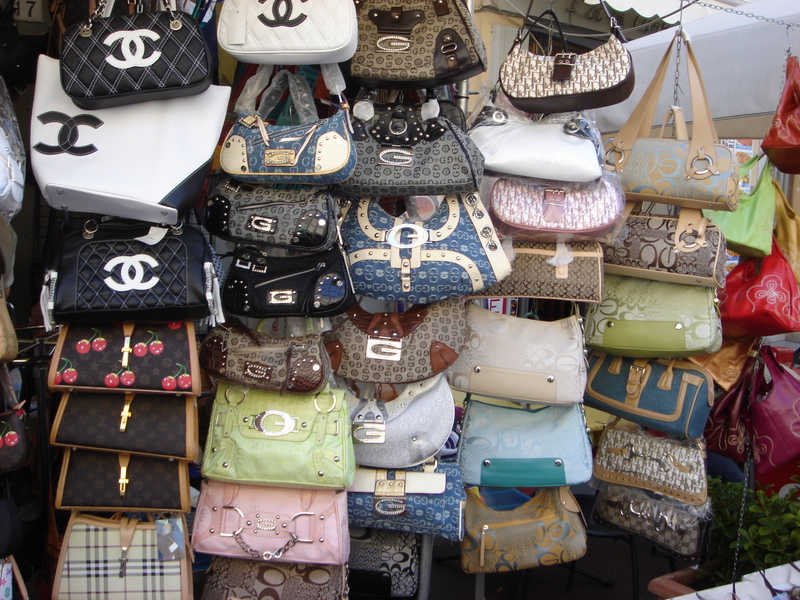
Should It be Illegal to Buy Counterfeit Designer Goods?

The ethics of this issue are clear, I think. The mystery is: Why did it take so long, and why isn’t there a national law?

New York City councilwoman Margaret S. Chin, whose district includes Chinatown, has introduced a bill would make it a misdemeanor  to  buy fake designer merchandise on the street or anywhere else. Violators would face a $1,000 fine, a year in jail, or both.

The New York Times interviewed a tourist who articulated the argument against Chin’s bill.
“I come down here, I will continue coming down here, and I will follow the Chinese people wherever they take me,” the New Jersey resident told the Times reporter “as she stood amid the purse and sunglass vendors on Canal Street.” “I don’t believe in child labor and I don’t believe in supporting terrorists, but if I want to buy a knockoff, that’s my business.” Continue reading