Ten Ethics Observations On The Government Shut-Down

lincoln_memorial

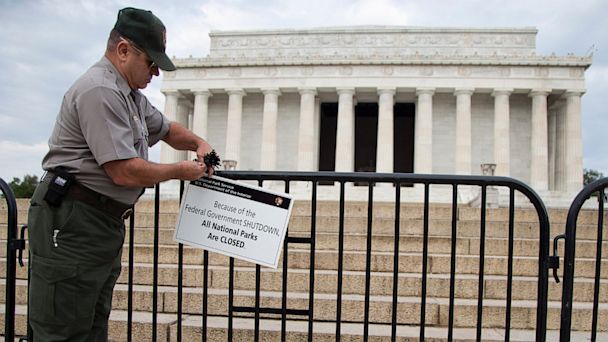
Stipulated: I am not in generally favor of government shutdowns, just as I do not favor strikes, boycotts, Massada-style mass suicides, wars, or any other destructive tactics, strategies and actions in response to impasses over important matters. Sometimes, however, they are necessary and responsible. Sometimes, they are not.

1. It is fascinating reading the comments on the shutdown from my friends on Facebook. It is startling how many of them simply parrot back partisan talking points they have heard on CNN and MSNBC, but especially striking are the angry rants of the government employees who appear to take the shutdown as a personal affront. How dare the evil Republicans disrupt their lives, their paychecks, their work schedule, their vacations! I wonder if my friends have the same reactions to labor strikes, wars and national disasters. Do they really believe that those elected officials struggling to decide on crucial matters of policy, firmly believing in a course that is right for the nation and reaching an impasse, should just shrug off the serious implications of the issue at hand and say, “But, hey, Joe Finsterwald will have a tough time if his agency has to shut down, and the Bradys’ DC vacation will be ruined, so the heck with it: go ahead with that law we think will be a disaster for the country. We’ll back off.” Do those Facebook complainers really think that would be responsible governance? You know, guys, this isn’t personal: it’s called politics and two party government. It’s part of the deal. Disagree with the policy arguments if you have the knowledge and perspective to do so, but taking the position that the entire business of running the country revolves around your convenience over the next few days or weeks is as juvenile as it is irresponsible. If you work for a private company, you risk disruptions because of business failures, competition and re-organizations. If you work for the government, you risk things like this. It’s not only about you.

2. What various polls show about what the American public believes or doesn’t believe is irrelevant, and anyone on either side of the dispute who cites them as support for the Affordable Care Act or gutting the Affordable Care Act is either naive or trying to deceive. Continue reading


Your National Hispanic Heritage Month Assignment: Remember The Amazing Elfago Baca (February 10, 1865 – August 27, 1945)

Baca statue

As frequent readers of Ethics Alarms know, I fervently believe that history is important, and that we all have a duty to remember and honor the remarkable Americans who have gone before us, their exploits, triumphs, struggles and achievements, both for our sakes—for we can learn much from them—and theirs. I am constantly discouraged by the inspirational stories and fascinating historical figures who have nearly been forgotten. The schools don’t teach our children about them, and popular culture ignores them. This weakens the flavor and the power of our shared culture: it is wrong, that’s all.

Today, as I realized we were in the midst of National Hispanic Heritage Month ( September 15-October 15), I want to do my part to help keep alive the name and the story of a Mexican-American who may have faded from memory because the events of his life seem more fictional than real. Indeed, for most of my life, until a couple of years ago, I thought Elfago Baca was a creation of Walt Disney’s creative staff, who wrote a ten episode mini-series about him called “The Nine Lives of Elfago Baca” for the “Disneyland” show (“Now…from Frontierland!”) in 1958. I loved that series, but it never occurred to me that the series’ tales of a gunslinging, lawyer-sheriff in Old New Mexico could possibly have any connection to reality.

But they did. The real Elfago was, if anything, even more improbable than his fictionalized counterpart, portrayed by a very young and athletic Robert Loggia, who is best known as the toy magnate who plays “Chopsticks” on the giant keyboard with Tom Hanks in “Big.” Continue reading

Ethics Hero: Miss America Contestant Theresa Vail

theresa-vailMiss Kansas, also known as Theresa Vail, would be a standout in current 2014 Miss America pageant just based on her unusual set of experiences and talents: the 22-year-old student at Kansas State is a member of the Kansas Army National Guard’s Medical Detachment, a serious bowhunter, a former motorcycle racer, an  M16 marksman, a boxer, an auto mechanic, and an opera singer.* What is ethically of interest, however, is that she wore a bathing suit that  revealed her two tattoos.

This just isn’t done in beauty pageants, not that many contestants are the tatooing sort. Tatoos have traditionally been regarded as ruining a contestant’s “perfection,” and aesthetically, I have to agree: a beautiful woman is still beautiful with something scribbled on her side, but it is hardy an enhancement. But Vial, in announcing her decision on her blog, made a compelling ethical argument for letting her tats show:

“What a hypocrite I would be if I covered the ink. With my platform, how could I tell other women to be fearless and be true to themselves if I can’t do the same?…But I am who I am, tattoos and all.”

That is as good a definition of integrity as you will find. Brava.  Where integrity lies, you can usually find honesty, trustworthiness and courage as well. Continue reading

Presenting the Ethics Alarms Heroes’ Hall Of Honor

remember

Today, the anniversary of September 11. 2001, American minds should be occupied with thoughts of gratitude for heroes, the often anonymous and unknown people we may pass in the street every day, as well as the justly famous and celebrated, who make our lives and many others better by living their own selflessly and well. They are our salvation, role models and neighbors, and they teach us the lesson that all is never lost, and hope is always thriving, as long as there are good and courageous people who will do the right thing, no matter what the cost, when fate turns to them.

This seems like a propitious time to dedicate the Ethics Alarms Heroes Hall of Honor, the list of the Ethics Heroes Emeritus whose stories have been told here (and on this site’s predecessor, The Ethics Scoreboard.) Every current member of the Hall is now deceased, like the brave men and women who died this day, 12 years ago. Each of them, in a unique way, teaches how human beings can rise above the vicissitudes of mere survival, self-interest, personal benefits and the base desires of the species  to live  meaningful and virtuous lives. Some accomplished this over decades, some with one brilliant and transforming act of distinction.

There are currently 32 members enshrined in this virtual Hall. Obviously, it is far from complete. They are just symbolic representatives, worthy ones, of millions more who once breathed the same air we do today, and like those who perished twelve years ago, face the prospect of being forgotten over time, as we all go about the consuming task of getting from one day to another. Each one of us, I believe, is capable of emulating their example.

Here are the thirty-two members and their stories, as of this date,

September 11, 2013... Continue reading

For Those Of You In The Los Angeles Area…

NPR…I will be on NPR. live, around 11:45 Pacific time as part of a discussion about the Matt Cordle video confession, which I posted about here.

Ethics Hero: DUI Manslaughter Killer Matt Cordle

The video is self-explanatory, I think.

I’m certain some will say that it is self-serving, that he made the video to try to minimize his punishment. This could be, and so what? The YouTube confession is still the best, most honest, most ethical, most courageous option that he had, once he had made the tragic and irresponsible decision to drive while intoxicated. Many, indeed most, and arguably all ethical acts have an element of self-serving in them. If they are right, they are right.

Imagine how much better society and the justice system would be if those who committed crimes fulfilled their societal duty to admit them, apologize, and accept their just punishment. Cordle, ironically, is not merely an Ethics Hero, but a role model.

Source:  DNA

Comment of the Day: “Ethics Hero Emeritus: Henri Salmide, 1919-2010”

Henri Salmide

Henri Salmide, Hero: Unknown in the US, and only barely recognized in Germany or France. Greatly appreciated on Ethics Alarms, however.

German visitor Reinhard Gross sent me a useful clarification on the 2010 Ethics Alarms tribute to Henri Salmide, who as a German soldier in World War II saved the French port of Bordeaux by defying orders to blow it up and blowing up his German superiors instead. You can read the post on Salmide, an Ethics Hero Emeritus, here, and his New York Times obituary here. It’s an inspiring story, and if you are not familiar with Salmide, you should be.

Salmide lived the rest of his life as a French citizen in Bordeaux, and until late in life was seldom noted for his heroic act in France, so strong was the bias against him as a former German soldier. I asked Reinhard what the attitude in Germany was toward Salmide, and his Comment of the Day was the response. It also provides some insight on the the long and painful process the German culture must work through, as the German people come to terms with the dark Nazi period, when their society and its values were so horribly warped, with such tragic consequences for Germany and the world.

Here is Reinhold Gross’s Comment of the Day on the post Ethics Hero Emeritus: Henri Salmide, 1919-2010…and I thank him for reminding me of Henri Salmide’s courageous and ethical act: Continue reading

Ethics Dunce: Colin Powell

I will file this under "disillusionment."

I will file this under “disillusionment.”

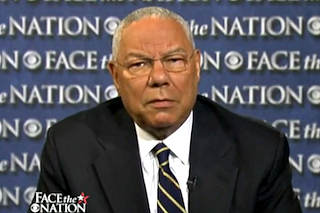
Another prominent African-America leader lept on board the Trayvon Martin-George Zimmmerman Ethics Train Wreck Sunday, when General Colin Powell aided and abetted the increasingly successful effort by divisive activists to re-write the history of the George Zimmerman trial into an example of a racist all-white jury freeing the murderer of a black man in defiance of the evidence and justice.

Appearing on “Face the Nation,” the former Secretary of State said that he thought the jury’s verdict “will be seen as a questionable judgment on the part of the judicial system down there,” adding that he didn’t know if it would have “staying power.” Powell’s comment was an especially pusillanimous fog on the issue, not explicitly endorsing  the criticism of the verdict—“Now I never said it was questionable, just that it will be seen that way,” the General can claim—but appearing to support it nonetheless. How weak, irresponsible, and disappointing. Continue reading

Ethics Hero: John Dryden, High School Teacher

DrydenIt took a couple of months to determine whether John Dryden, would be best described as a high school social studies teacher in Batavia, Illinois, or as an ex- high school social studies teacher in Batavia, Illinois.  That part had a happy ending: he was not fired, as appeared at one point to be likely, for his act of ethical heroism.

In April, he was directed by the school board to distribute a survey on so-called “emotional learning” to his students. The results of the test, created and scored by Multi-Health Systems, were to be evaluated by comparing them to statistical data obtained from a large sample of students of similar ages given the same test. The MHS test included thirty-four questions regarding the use of drugs, alcohol, and the students’ emotions. Though Dryden was supposed to assure his students that their responses would be confidential, they were not. Any student whose answers raised concerns was to be sent to the school’s  counselors.

After the teacher picked up the survey forms from his mailbox shortly before his first class of the day, he noticed that each survey form had a student’s name on it  and that the questions involved under-age drinking and drug use. He had just finished teaching a unit on the Bill of Rights, and recognized a looming Fifth Amendment violation while fearing that his students, who were used to following orders, would not be aware that their rights were in peril. The survey, he correctly surmised, was state-compelled self-incrimination, and a breach of his students’ right to refuse to incriminate themselves.There was no time to confer with administrators, so he told  his students that they did not have to complete the forms if doing so involved admitting illegal behavior. Continue reading

Ethics Hero: Millikin University

This story sounds like it was dreamed up for joint production of the Lifetime Movie Network and Chiller.

Above: The scene of Wolcott's mothers shooting; below, his father.

Above: The scene of Wolcott’s mothers shooting; below, his father.

Millikin University is a private institution in Decatur, Illinois with approximately 2400 students. It has been thrust into local headlines with the discovery that one of its psychology professors, James St. James, who heads the schools Department of Behavioral Sciences, murdered his parents and his older sister when he was 15. Then he was called James Gordon Wolcott.

He changed his name after being treated in a mental institution, where he was sent after being found not guilty of the crime because he was legally insane at the time of the killings. High from sniffing glue, the brilliant but emotionally disturbed teen grabbed a .22-caliber rifle, walked into the living room and shot his father, then shot his sister and his mother.

Six years after being sent to Rusk State Hospital,  Wolcott emerged apparent cured, and ready to lead a productive life. Ironically, his patricide and his insanity  had greased the way for his rehabilitation: he inherited his parents’ estate and was able to draw a monthly stipend from his father’s pension fund. Changing his name to St. James, he earned a bachelor’s degree, a master’s degree and a PhD, and became an award-winning professor at Millikin. Professor St. James’ secret was undiscovered until this year. He is now 61. Continue reading