Ethics Dunce: The New York Post

Autumn Pasquale appears to have been murdered by the two boys who lived next door because they wanted her bicycle.

From today’s New York Post:

“A New Jersey mom ratted out her teen sons for the murder of a 12-year-old girl after reading a Facebook posting hinting that one of them wanted to go on the lam, law-enforcement sources told The Post.”

Wrong. A courageous mother made the most difficult ethical decision of all, placing her duties as a citizen,  a member of the community and a neighbor above her duties of loyalty and love as a mother, to report her two sons for the murder of the 13-year-old girl who lived next door.

The Post’s use of the term “ratted out” is irresponsible and offensive. “Ratting out” is a pejorative term for reporting crimes to the police, and the foundation of a resilient and warped ethical code that works to the benefit of inner city thugs and gangs while undermining efforts to combat crime. The mother is an Ethics Hero, and deserved respect and admiration from the Post, not derision as a “rat.”

You can read the Post story here. A more responsible version is here.

Ethics Hero: Christina Aguilera

In Jessica Simpson’s Weight Watcher’s TV ad, the former “Daisy Duke” appears only as a giant head, as if the spot was directed by Francis Ford Coppola and Jessica was a last minute stand-in for Marlon Brando.

“the horror…the horror…”

It is clear that Jess is not willing to show America her post-pregnancy body, even though she is telling the public to buy what she’s using to slim it. She is ashamed, in other words, and if a beautiful young woman like her believes that not being able to fit into Daisy’s cut-offs makes her hideous, just imagine how that makes the average woman feel.

Then there is Christina Aguilera. The former waifish “pop tart” who sang “Genie in a Bottle” is now an established pop music diva, and posed for photographers as she announced the American Music Awards Nominations in a throbbingly purple form-fitting dress that didn’t hide a single pound or curve, and showed that she has an abundance of both.

“We’re gonna need a bigger bottle…”

Christina’s not ashamed, nor should she be, and her willingness to look happy and confident regardless of her expanding figure is a boon to a culture that has been working overtime to make women of all ages feel unattractive unless they look like super-models. Continue reading

Confession of Faithless Fan

The 2012 Red Sox season

I’ve been meaning to write this post for more than a month, almost two., for it has been that long since I have watched a Boston Red Sox game, or indeed any baseball game at all. This, I knew, was complete abdication of everything I believe about loyalty, courage, faithfulness and gratitude, yet I could not force myself to meet my own standards, and I am ashamed.

For I hate sports fans like that, feckless, fair weather, Sunday soldiers who root loudly for their team when things are good, and who defect to the booers and the doubters when the tides of fortune turn. I have been the most loyal and faithful of Boston baseball fans since my childhood. I watched or listened to every game when the team was annually awful, from 1962-1966, and yet got reserved seats for the final series of the 1967 season a year in advance, because I thought, absurdly, that the team might be in a pennant race. (And I was right!) I endured team collapses and disappointments in many seasons since—all the famous ones, and others that only a dedicated lifelong fan would remember.

What happened to me this year? Continue reading

Jaffrey, N.H. Motto: “Live Free, or, Well, We Don’t Really Want To Die, Exactly, Maybe Just Play It Safe And Try Not To Make Crazy People Too Angry At Us So They’ll Leave Us Alone”

The Mayor of Jaffrey, New Hampshire.

Every year, Jaffrey, New Hampshire holds a Festival of Fireworks in August that attracts thousands of people to the town and is one of the special pleasures of living there. The festival was scheduled for today, but city officials cancelled it after they received a letter threatening to set off a bomb at the event.

As one non-threatening letter writer commented in a local paper, “So much for “Live Free or Die.” Continue reading

Ethics Quiz: Who Is More Unethical…the Coward Who Left His Girlfriend and Child to Die, Or the Girlfriend Who Agreed To Marry Him Anyway?

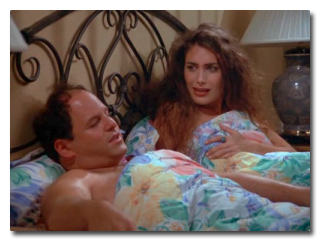
Would an ethical woman marry George?

I am a great fan of the old Seinfeld show in general and the George Costanza character in particular (all ethicists love George, who  exemplifies how messed up a life without ethical instincts can be), but I didn’t laugh at the episode when he smelled smoke at kids’ birthday party and trampled the children as he escaped in panic from the apartment. And that was just a TV sitcom; the actions of Jamie Rohrs, the Colorado man who ran out of the Aurora movie theater when James Holmes started shooting and drove away in his truck, leaving behind his girlfriend and her two young children—one of whom was fathered by him— go beyond unfunny to revolting. Luckily, and no thanks to Rohrs, Patricia Legaretta and her kids did not die, because a stranger, Jarell Brooks, helped them escape the theater and the massacre.

Then comes the rest of the story, revealed to Piers Morgan on CNN: after his act of aggravated cowardice, Rohrs had the gall to propose to the mother of his child, and Legaretta, incredibly, accepted.

Your Ethics Quiz:

Who is more unethical—Legaretta, or Costanza, er, Rohrs? Continue reading

London’s Curfew Fiasco: Sir Paul, The Boss, and Exception Ethics

It was the stuff of legends, the kind of moment that onlookers would cherish and tell their grandchildren about. American rock icon Bruce Springsteen was on a roll before a huge Hyde Park crowd, and suddenly he was joined on stage by Sir Paul McCartney. The two giants of rock and roll began spontaneously jamming, and then some bureaucrat who worked for the concert organizers pulled the plug, cutting off power because the concert was running over its permit allotment and a local sound curfew.

Good ethics can require knowing when rules and even laws should be stretched, amended, finessed, or even ignored. This takes some skill, of course, and some character. It is much easier, and certainly entails lower risk, to just go by the book, and permit no exceptions. It is also lazy, uncaring, and leads to needless fiascos like this one. Continue reading

The Ethical Fate For Joe Paterno’s Statue

In the wake of the Freeh Report’s revelations regarding the extent of the late Joe Paterno’s involvement in allowing Jerry Sandusky’s child molesting appetites to be sated with Penn State’s  assistance, many are calling for the campus statue honoring the now-disgraced coach to be removed.

I am generally opposed to removing memorials and honors to historical figures according to the popular verdicts of the day, for several reasons. The main one is that every individual who ever achieved something worthy of such honor also was guilty of misconduct that someone could convincingly argue outweighs it on moral or ethical grounds. New facts are uncovered, cultural values shift, and over time, no revered figure is safe from deconstruction. The reverse is also inevitable: if a life can be judged unworthy of honor, subsequent generations may well disagree. The verdict of a community, a culture and an era should be given due weight and respect;  a statue, memorial or monument not only recognizes an individual but also represents the judgment of our predecessors. Leave their judgments alone, and if we disagree with them, try to make ours better. Continue reading

Rushed Ethics

Feeling pressured?

The Economist points its readers’ attentions to two studies showing the ethical benefits of delay to decision-makers. It is an important topic, with profound ethical implications. Deadlines and the perception of urgency are both what I call pre-unethical conditions, situations that so frequently lead to unethical conduct that our ethics alarms should start ringing the second we start feeling the dread of time-pressure. The Economist article notes that…

“…[ in ] an obscure article in the Academy of Management Journal by Brian Gunia of Johns Hopkins University… Mr Gunia and his three co-authors demonstrated, in a series of experiments, that slowing down makes us more ethical. When confronted with a clear choice between right and wrong, people are five times more likely to do the right thing if they have time to think about it than if they are forced to make a snap decision. Organisations with a “fast pulse” (such as banks) are more likely to suffer from ethical problems than those that move more slowly….The authors suggest that companies should make greater use of “cooling-off periods” or introduce several levels of approval for important decisions.” Continue reading

“I’m Warning You: If You Rescue That Drowning Man Over There, You’re Fired!”

“Not your concern…”

The brain-dead and ethics-empty conduct of Jeff Ellis Management, an Orlando, Florida-based company, in its recent firing of 21-year-old lifeguard Tomas Lopez is welcome in one respect, and one respect only. It helps explain the inhuman attitude of the two Brooklyn EMT’s who stood by and watched a woman die of a heart attack as they munched bagels. It begins to explain why two Seattle security guards stood by and allowed a woman to be nearly beaten to death while they looked on. It almost explains how a crowd of people on a California shore, including firefighters, stood by as a man named Raymond Zack took nearly an hour to drown himself. It might even provide some insight into the thought processes of Penn State assistant football coach Mike McQueery, who famously observed Jerry Sandusky as he engaged in a child rape but didn’t stop it. For one of the reasons so many Americans turn off their ethics alarms, reject their humanity and flunk their duty to rescue those in peril is that there are people like  Jeff Ellis, who deem human life less important than business, policy and profit, and who will punish any employee who doesn’t feel similarly and act accordingly.

The company fired Lopez after he pulled a struggling swimmer out of the ocean on Hallandale Beach in Broward County, saving his life. The rescue, you see, occurred 1,500 feet south of the firm’s contracted boundaries for lifeguard service.  Lopez was told that a swimmer was in peril off the neighboring beach, and ran to his rescue, leaving the “protected beach” area where his services had been contracted to serve. The near-drowning victim was swimming in the “unprotected area” without lifeguards, and there’s no point, the management company reasons, to hire it to provide lifeguards if the heroes like Lopez will dive in for free. Continue reading

Ethics Hero: Anderson Cooper

It was not exactly a surprise, but CNN anchor Anderson Cooper announced today that indeed he is gay.

This is far from the career death sentence that it would have been just a few years ago, but Cooper’s announcement took great courage nonetheless. It is difficult for gay children and teens to develop confidence and self-esteem when gay adults who have achieved success, fame and respect in their fields remain closeted out of fear and uncertainty. If there is nothing wrong with being gay, they think, then why are prominent gays hiding it?

Well, we do know the answer, and that the societal problem isn’t gays, but bigotry. That is why Cooper’s actions are so important. His openness about his sexual orientation challenges both the fear and the bigotry, and gives young gays a mainstream role model of substance and character.

Bravo.

________________________________

Source: The Daily Beast

Graphic: Media Bistro

Ethics Alarms attempts to give proper attribution and credit to all sources of facts, analysis and other assistance that go into its blog posts. If you are aware of one I missed, or believe your own work was used in any way without proper attribution, please contact me, Jack Marshall, at  jamproethics@verizon.net.