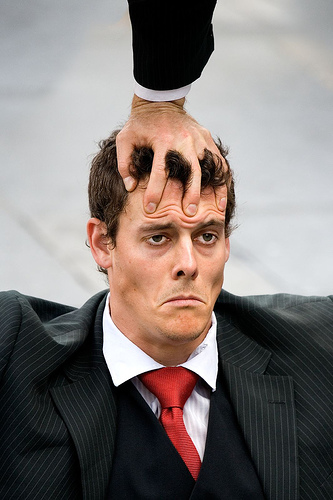
Feeling pressured?
The Economist points its readers’ attentions to two studies showing the ethical benefits of delay to decision-makers. It is an important topic, with profound ethical implications. Deadlines and the perception of urgency are both what I call pre-unethical conditions, situations that so frequently lead to unethical conduct that our ethics alarms should start ringing the second we start feeling the dread of time-pressure. The Economist article notes that…
“…[ in ] an obscure article in the Academy of Management Journal by Brian Gunia of Johns Hopkins University… Mr Gunia and his three co-authors demonstrated, in a series of experiments, that slowing down makes us more ethical. When confronted with a clear choice between right and wrong, people are five times more likely to do the right thing if they have time to think about it than if they are forced to make a snap decision. Organisations with a “fast pulse” (such as banks) are more likely to suffer from ethical problems than those that move more slowly….The authors suggest that companies should make greater use of “cooling-off periods” or introduce several levels of approval for important decisions.”
This points up one of the dilemmas of leadership, and shows why being an ethical leader is harder than non-leaders, back-benchers, followers and critics tend to acknowledge. In leadership, a late decision is often as bad as no decision at all. Deadlines are real, and the consequences of missing them can be catastrophic. It is fine for theorists to say that waiting maximizes the likelihood of more ethical decisions and minimizes the chances of making mistakes, but waiting too long can make any decision the wrong one, and earn a leader a label of incompetence…and incompetence in crucial jobs is unethical too. The competent, ethical, effective leader knows how long to wait while evaluating options, but also has the courage to make a hasty decision if one cannot be avoided. When the choice is between making a decision under conditions that may lead to a miscalculation and making the best and most ethical decision too late for it to be effective, accomplished leaders have the courage to act in haste and to accept responsibility for being wrong.
You can read the article here.
_______________________________
Source: The Economist
Graphic: Mindful effect
Ethics Alarms attempts to give proper attribution and credit to all sources of facts, analysis and other assistance that go into its blog posts. If you are aware of one I missed, or believe your own work was used in any way without proper attribution, please contact me, Jack Marshall, at jamproethics@verizon.net.

