Ethics Hero: —Wait For It—Rush Limbaugh!

No, not for that!

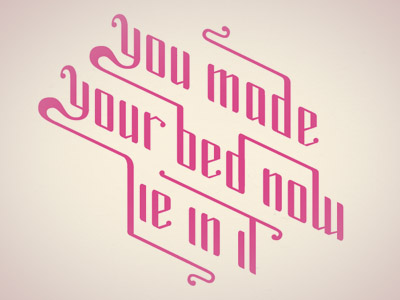
For this:

Odd...one would think that a bed company would be familiar with this expression. Well, NOW it is!

After Rush Limbaugh’s personal attack on Sandra Fluke for her testimony before some House Democrats generated furious backlash and activist threats of boycotts of his sponsors, Sleep Train, which calls itself  “the No. 1 Bedding Specialist on the West Coast, and most recognized mattress retailer in the region,” announced that it was ceasing its advertising on Limbaugh’s daily radio show. It had been a national sponsor for 25 years. “As a diverse company, Sleep Train does not condone such negative comments directed toward any person,” the company said in a statement. “We have currently pulled our ads with Rush Limbaugh.”

Sleep Train is, to use the vernacular, a corporate worm. It began advertising with Limbaugh when it was a small company, and he has treated it well. At a moment when the talk show host was under attack by political opponents who want to get him off the air and be free of influential political commentary that often spears their cherished objectives, the company not only abandoned Limbaugh but kicked him when he was down. It was also deceitful about it: while it’s announcement sounded unequivocal, in fact it had only suspended its ads rather than withdrawn as a sponsor. Continue reading

The Gas Price Blame Game: Can “Tit for Tat” Ever End?

There’s an amusing page up at Buzz Feed that has an audio of Senator Barack Obama raking the Bush Administration (in 2006) for the $3.40 gas. Also on the page : a video of Nancy Pelosi, while Speaker of the House, attacking the Bush White House for the same problem. Applying the well-worn unethical practice of “Tit for Tat”, also known as “You Did It To Us, So We Can Do It To You and Nobody Can Blame Us,” the Republican presidential hopefuls (Groucho, Chico, Harpo and Zeppo) are making similar accusations against President Obama, since that $3.40 cents gas looks like the Good Ol’ Days now.

Is the Republican criticism of Obama for this round of high gasoline prices any less unfair, dishonest and irresponsible than the Democratic version six years ago, because Obama was part of it? No, it’s exactly as unfair, dishonest and irresponsible. Continue reading

Tim Wakefield, the Knuckleball, and Character

My favorite baseball player retired a few days ago. Tim Wakefield, a knuckleball specialist who had pitched the last 17 years with my home town Boston Red Sox, finally decided to hang up his spikes at the age of 45. There were several remarkable aspects to his long and successful career (he won 200 games, something the vast majority of major league pitchers never do), not the least of which was throwing the knuckleball almost exclusively, an infamous and rare pitch that is almost as difficult to throw as it is to hit or catch. (Former catcher Bob Uecker famously quipped that the best way to catch a knuckleball was to wait until it stopped rolling, and pick it up.) The most remarkable, however, was the way Wakefield always exhibited exemplary character, on the field and off of it. Continue reading

Tales of Moral Luck: The Snake, the Testicle and the Lousy Friend

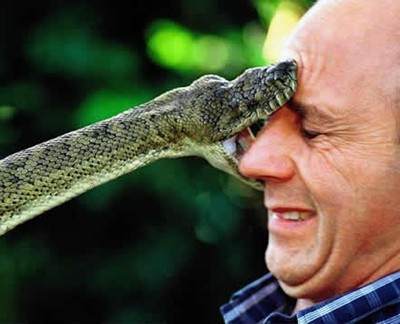
"Heck, sure, pal, I'll suck the venom out of your face--what's that? You were bitten WHERE????"

Irish tourist Jackson Scott was engaged in a necessary bodily function while vacationing in the Australian outback, when he was bitten—on the testicle.  The biter was a tiger snake, and its venom can be fatal.

Panicked, Scott begged his camping companion, Roddy Andrews to suck the venom out. Roddy, however, said, “Ewwwww!

Also, “No.”

But he drove Scott in a race against time to the nearest hospital, where doctors administered an antidote in time, barely, to save Scott’s life. Continue reading

Comment of the Day: “Ethics Quote of the Week: Yu Jie”

Michael, fortunately, focuses attention back on the actual meaning of the quote from the Chinese dissident, Yu Jie, that I had posted as an Ethics Quote of the Week. I then confused the issue by expanding my commentary to the dangers (or, as commenter properly corrected me, theoretical dangers) of  U.S. indebtedness to China. My error, and I am grateful to Michael both for returning to the issue and his thoughtful comments.

Here is his Comment of the Day on the post, Ethics Quote of the Week: Yu Jie:

“…No matter how craven our federal government has been, why are the Universities allowing themselves to be censored by the Chinese? There are two reasons: Continue reading

Ethics Quote of the Week: Yu Jie

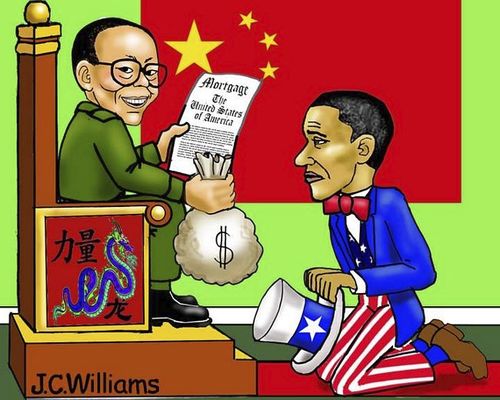
“I arrived in the United States a month ago, thinking I had escaped the reach of Beijing, only to realize that the Chinese government’s shadow continues to be omnipresent. Several U.S. universities that I have contacted dare not invite me for a lecture, as they cooperate with China on many projects. If you are a scholar of Chinese studies who has criticized the Communist Party, it would be impossible for you to be involved in research projects with the Chinese-funded Confucius Institute, and you may even be denied a Chinese visa. Conversely, if you praise the Communist Party, not only would you receive ample research funding but you might also be invited to visit China and even received by high-level officials. Western academic freedom has been distorted by invisible hands.”

Yu Jie, Chinese dissident and author recently relocated to the U.S., in an op-ed column in the Washington Post, exposing how America’s dependence on China for trade and financing has not only made the nation vulnerable, but is also eroding its integrity and values.

Every budget cycle that the United States permits to expand its debt makes the nation more indebted to China, and places more power in the hands of its leaders to exert influence over American policies. Yu Jie’s disturbing article shows how our values are being undermined as well. China’s is a repressive, undemocratic and often brutal regime that the United States has foolishly allowed itself to become dependent upon. What will the consequences of this be? How can the United States lead the free world while being under the thumb of the Chinese? Corruption is inevitable. Yu Jie writes, Continue reading

Ethics Hero Emeritus: Roger Boisjoly (1938-2012)

Roger Boisjoly’s death was originally just reported locally when he died in Utah last month at the age of 73. Only now is the media reminding the public of Boisjoly’s life, his tragic role in a national tragedy, and how he tried and failed to avert it.

In 1986, Boisjoly was a booster rocket engineer at Morton Thiokol, the NASA contractor that, infamously, manufactured the faulty O-ring that was installed in the Space Shuttle Challenger, and that caused it to explode. Six months before the Challenger disaster, he wrote a memo to his bosses at Thiokol predicting”a catastrophe of the highest order” involving “loss of human life.” He had identified a flaw in the elastic seals at the joints of the multi-stage booster rockets: they tended to stiffen and unseal in cold weather.  NASA’s shuttle launch schedule included winter lift-offs, and Boisjoly  warned his company that send the Shuttle into space at low temperatures was too risky. On January 27, 1986, the day before the scheduled launch of the Challenger, Boisjoly and his colleague Allan J. McDonald argued for hours with NASA officials to persuade NASA to delay the launch, only to be over-ruled, first by NASA, then by Thiokol, which deferred to its client.

And the next day, on a clear and beautiful morning, the Shuttle’s rocket exploded after take-off, killing the crew of seven and mortally wounding the space program. Continue reading

Tales Of Ethics Dunces Past: Recalling the Self-Indulgent Suicide of Hunter Thompson

I can’t claim that I am surprised that my post about the suicide of Don Cornelius attracted comments that either showed a misunderstanding of what I wrote or a stubborn determination to change the subject. It was not a post about the virtues of suicide, but about how suicide’sethical calculations may be changing as a broken medical care system increasingly makes the final years and months of the elderly a burden that crushes families and constricts the quality of life  for the nation generally. In short, killing yourself for your country may have to become an accepted practice, an ethical and courageous act, if something doesn’t change. Killing yourself for yourself—to avoid pain, problems, or the consequences of your own actions, should always be considered wrong, for wrong it is.

Jeff Hibbert, one of my favorite contributors here and also one with a great memory, reminded me that I had written on this topic once before. I had forgotten, but that post may be a useful contrast to the Cornelius post. There is not a word of it that I don’t still believe. It concerned the 2005 suicide of Hunter S. Thompson, the cult “gonzo journalist” who lived like frat boy and  wrote like angel. Here it is:

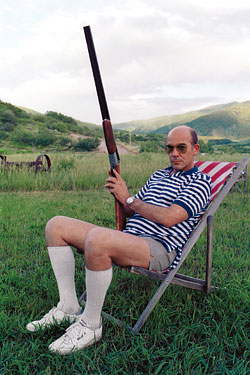
Hunter Thompson’s values were admittedly always a little out of whack, but nothing diminished the self-styled “gonzo journalist” in this world so much as his manner of leaving it. He shot himself to death last February while talking on the phone to his wife, with both his son and grandson in his house with him. Nice. That should guarantee some lucky psychoanalyst or three a comfy income for the foreseeable future. Continue reading

Don Cornelius, Suicide…and Ethics Hero?

“Soul Train” creator and pop culture icon Don Cornelius took his own life at 75 yesterday, using a gunshot to the head to do it. Suicide always conjures up feelings of special sadness for the deceased, sometimes mixed with anger. The act can be cruel and devastating to family members and friends; often it leaves behind crushing problems, financial and otherwise, that the living have to deal with. Suicide is stigmatized in our culture as a coward’s way out of earthly problems; many religions consider it a sin, and many legal systems consider suicide a crime. Yet it may be that American culture will have to undergo a major cultural transformation in the matter of taking one’s own life. While morality tends to ossify, ethics is fluid and adaptable. Changing conditions and new realities can, in rare circumstances, cause societies to conclude that what was once considered right is really wrong, and what was once condemned as wrong is in society’s best interests. I think we may reach that point with suicide. Continue reading

Ethics Quiz: Hair, Rules, School, and the Cancer Survivor

"I think this has gone far enough, son."

I’m really not picking on the schools, though I’m sure it looks that way. There have just been a wave of strange controversies lately in the halls of academe….like the travails of  J.T. Gaskins, 17, who is fighting with his charter school near Flint, Michigan.

J.T. is a model student; in fact, he was honored on his high school’s “Wall of Fame” for perfect behavior. But he’s doing his school work from home these days after being suspended by the school governing board of Madison Academy in Burton, Michigan. The reason:  the length of his hair. J.T. is a leukemia survivor, and he decided over the holidays to grow out his hair, cut it all off and give it to a non-profit group called Locks of Love, which donates hairpieces to kids undergoing cancer treatments. He was inspired to get growing after learning that the sister of a family friend had cancer.

Gaskins’ long hair is violating school policy, however, and he was told to cut it, or go home. So home he went. “I fought cancer my entire life. I’m going to keep fighting this,” he said. “I’m not going to not give back just because my school says no.” Continue reading