Morning Ethics Warm-Up, 3/14/2018: The “Blotto From A Sleepless Night Fuming About Nobody Stopping That Puppy From Being Stuffed In The United Overhead Luggage Bin” Edition

Good Morning, United!

Where’s that whimpering sound coming from?

Grrrrrrr.

1 Don’t make America stupid, ABC. The new ABC legal drama “For The People” premiered last night, and lost me forever. I can’t trust the writers. In the final moments of the episode, a veteran female defense lawyer was consoling a young lawyer who was upset after losing a case. The older lawyer evoked the memory of a 1951 rookie for the New York Giants, who went hitless in his first Major League games and was devastated. But his manager put him in the line-up again, and he hit a home run in his first at bat, and never stopped hitting.

“Ah,” said the young lawyer, “Willie Mays. The greatest player who ever lived.” The older lawyer nodded sagely.

By no measure was Willie Mays the greatest baseball player. Is this racial politics by series creator Shonda Rhimes? I assume so: there is no other plausible explanation. The odds of two randomly selected baseball fans asserting that Mays was the greatest baseball player would only be more than miniscule if anyone who knows baseball believed that. Willie was the greatest centerfielder of all time, the greatest African-American player of all time, quite possibly the most charismatic and entertaining player to watch of all time, and very possibly the second most gifted baseball player of all time. But he wasn’t the greatest. The best player by every measure, statistical, modern analytics, WAR, JAWS, OPS, contemporary reports and common sense was, of course, Babe Ruth. He was the greatest hitter who ever lived, a great pitcher before that, and no athlete in any sport ever dominated it like Babe did in the Twenties.

Now, any individual can hold an eccentric opinion that Willie was better. But that was not how the assertion was presented. It was presented as an accepted fact that two random baseball fans agreed upon. This is irresponsible misrepresentation. I was trying to think of an equivalent: I think it’s like a TV show having someone quote the Declaration of Independence, and a listener then  say, “Thomas Jefferson. Our greatest President!” as the other individual nods sagely.

2. Four Regans, or, if you prefer, Linda Blair Heads.This is the new Ethics Alarms graphic for unethical media spin. The number of Regans can range from one to four, with four Regans signifying “spinning so furiously her head might fall off.” (If you don’t get the reference, you are seriously deficient in cultural literacy.) The four Regans go to the polar news media spinning yesterday’s special election in Pittsburgh, Pennsylvania, where Democrat Conor Lamb appears to have narrowly won a seat in a Republican stronghold, though the race is still too close to call. Continue reading
Morning Ethics Warm-Up, 3/6/ 2018: “Remember the Alamo” Edition

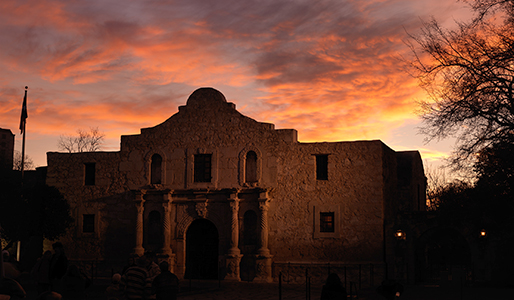
1 Remember the Alamo! On this date in 1836, before dawn, the Alamo fell. From the official Alamo website:

While the Alamo was under siege, the provisional Texas government organized at Washington-on-the-Brazos. On March 2, the convention declared independence and the Republic of Texas was born, at least on paper. The Alamo’s garrison showed its support for independence from Mexico by sending its own delegates to the convention.While they were unaware that Texas had declared independence, the roughly 200 Alamo defenders stayed at their post waiting on help from the settlements. Among them were lawyers, doctors, farmers and a former congressman and famous frontiersman from Tennessee named David Crockett. While the youngest was 16 and the oldest defender was Gordon C. Jennings, age 56, most defenders were in their twenties. Most were Anglo, but there were a handful of native Tejano defenders as well. Legendary knife fighter and land speculator James Bowie was in command before falling ill and sharing duties with Travis. Several women and children were inside the Alamo, including 15-month-old Angelina Dickinson. Just before the final battle, Travis placed his ring around her neck, knowing she would likely be spared. One of the last messages from the Alamo was a note from Travis asking friends to take care of his young son Charles.

The final attack came before dawn on March 6, 1836. As Mexican troops charged toward the Alamo in the pre-dawn darkness, defenders rushed to the walls and fired into the darkness. Travis raced to the north wall but was soon killed. Bowie was most likely killed in his bed, while reports differ as to Crockett’s death. Many believe Crockett survived the initial attack but was put to death by Mexican soldiers soon afterward.

Mexican soldiers breached the north wall and flooded into the compound. The fierce battle centered on the old church, where defenders made a last stand.

The battle lasted about 90 minutes.

From the San Antonio Express News:

BEXAR, Texas, March 6, 1836 — Alas, alas! Forever more, the name of the Alamo shall stand alongside that of Thermopylae in the annals of history as a tale of unmatched bravery to be handed down from generation to generation.

The bastion of Texas Liberty has fallen, and to a man, Lt. Col. William Travis and his fellow defenders — like the immortal 300 Spartans — have been martyred.

After withstanding an unrelenting siege of twelve days’ duration by one of the mightiest armies ever assembled on this continent, the walls of the old mission that had housed Travis (a man as brave as the fabled King Leonidas), Col. James Bowie, the Hon. David Crockett and some 200 other defenders were breached before the sun rose to-day.

Savagery was unleashed therein as a juggernaut orchestrated by the modern-day Xerxes, Mexican Gen. Antonio López de Santa Anna, swept over the Alamo….

Since I was a small boy, this episode in American history moved me more than any other. It still does.  I first learned about the Alamo when I watched Fess Parker as Davy Crocket, swinging his rifle like a baseball bat at Mexiacn skulls, the last man standing as behind him we could see more of Santa Anna’s soldiers pouring over the wall. We never saw Davy fall—my dad explained that this was appropriate, since nobody is sure how or when he died, unlike Travis and Bowie, and the last verse of the Ballad of Davy Crocket played…

His land is biggest an’ his land is best
from grassy plains to the mountain crest
He’s ahead of us all meetin’ the test
followin’ his legend into the West
Davy, Davy Crockett, king of the wild frontier!

The politics and complexities of the Texas war of independence don’t alter the essential facts: a group of men of different backgrounds, under the command of three prototypical American figures—the pioneer (Crocket), the settler (Bowie), and the law-maker (Travis), all of whom were trying to recover from dark periods in their lives—chose to make the ultimate sacrifice for a cause they believed in fervently enough to die for, in the company of others who felt the same. It was, after all, the perfect ethical dilemma, the choice between an ethical act for the benefit of  society and a non-ethical consideration, the most basic one of all: staying alive. They all had the same choice, and rejected life for a principle.

That’s what I remember about the Alamo.

2. There is hope. Once again, I gave a 90 minute presentation to a Boy Scout troop and parents last night, and challenged them this time with several hypotheticals that Ethics Alarms readers would recognize, such as this one, the plight of Ryan Seacrest and those who snubbed him on the red carpet,  the “Mrs. Miniver” flower show, and this one, from personal experience, which set off the most lively debate of all:

The Option

Your professional theater company has limited funds, so it offers its actors an option. They may choose a flat fee for their roles, or get a percentage of the show’s profits, if there are any, on top of a much smaller base fee.

The company just completed an extremely profitable production, the biggest hit your theater has ever had. Nine of the show’s ten cast members chose the percentage of profits option, a gamble, because most of the shows lose money. One, the star, who you know could not afford to gamble, took the flat fee for the role. After the accounting for the production is complete, you realize that every member of the cast will make $1000 more than the star, because of the show’s profits.

Question 1: What do you do?

  1. Give him the extra $1000. It’s only fair.
  2. Pay him the flat fee. A deal’s a deal.

You can weigh in:

Question 2: You remount the production, and the exact same thing happens. The actor chooses the flat fee, the show is again a huge money-maker,,and the rest of the cast will make much more than him because they chose the percentage. Do you give him the extra amount again?

  1. No. Now he’s taking advantage of me.
  2. Yes. Nothing has changed.

As before, the approximately 50 11- and 12-year old boys were astute, serious, thoughtful, and gutsy, and their ethical instincts were superb. Continue reading

Morning Ethics Warm-Up, 2/26/18: Spin! Hypocrisy! Heresy! Demagoguery! Idiocy! And Weren’t Those Sex Slaves Cheering For North Korea Adorable?

Good Morning!

Of course it’s a good morning…the 2018 Winter Olympics ended last night!

1 The Schiff Memo. The Democrat’s alleged rebuttal to the Devon Nunes memo regarding how Carter Page came to be the object of secret surveillance that extended into the Trump campaign should have been the big story of the weekend, along with the fact that government systems repeatedly failed to protect the students in Parkland from an unbalanced young man who had been repeatedly identified as a risk for exactly the kind of mad act he ultimately engaged in. But the left-biased news media downplayed it after trying to spin it, because the hyped memo did not rebut the key allegations in the previous Republican House document. The FISA court was not informed that the Russian dossier was created and funded by the Democratic National Committee and the Clinton campaign. The dubious dossier  was a key component of the evidence that led a secret court to remove the Constitutional rights of a citizen, while interfering with a Presidential campaign.

Amusingly, the Schiff memo spins that the Obama Justice Department application was “transparent,” and then describes transparency as a FISA warrant application that said that Christopher Steele, referred to as “Source #1,” was “approached by” Fusion GPS founder Glenn Simpson, referred to as “an identified U.S. person,” who

indicated to Source #1 that a U.S.-based law firm had hired the identified U.S. Person to conduct research regarding Candidate #1’s [i.e., Trump’s] ties to Russia. (The identified U.S. Person and Source #1 have a longstanding business relationship.) The identified U.S. Person hired Source #1 to conduct this research. The identified U.S. Person never advised Source #1 as to the motivation behind the research into Candidate #1’s ties to Russia. The FBI speculates that the identified U.S. Person was likely looking for information that could be used to discredit Candidate #1’s campaign.

Andrew McCarthy, in the National Review, concludes that the Schiff memo does the Democratic narrative more harm than good. I agree: it looks like a desperate spin attempt to me, so desperate that the news media abandoned the story as quickly as it could.

2. Segue Alert! And speaking of transparency…From the Boston Herald: Continue reading

The Michigan High School Ethics Bowl

More than 100 high school students from across lower Michigan will gather February 17-18 at the University of Michigan for the fifth annual Michigan High School Ethics Bowl. The winner  will represent Michigan in the National High School Ethics Bowl held at the University of North Carolina at Chapel Hill in April. The Ethics Bowl is organized by A2Ethics, the University of Michigan  Department of Philosophy Outreach Program and the high school faculty coaches in the High School Ethics Bowl League. During the two-day competition, judges  evaluate teams’ responses to case studies written by local community members.

See? There is hope!

Here are the case studies the students will analyze, fifteen of them. I may do posts on a few of them suggestions are welcome. One of them, #2, I have discussed in several legal ethics seminars:

The Michigan Rules of Professional Conduct forbid lawyers from revealing information received in confidence (information protected by the “lawyer-client privilege” of a client), and similarly from using that confidential information for the advantage of a third person, unless the client consents.

You are a lawyer whose practice is focused almost exclusively on criminal defense. You have been active in the criminal defense bar association for several years, and you represent criminal defendants at both the trial and appellate (appeals court) levels.

One of your clients, Gilbert, age forty, is in prison for murdering a woman named Alice. You represent Gilbert in the appeal of his conviction and life-without-parole sentence. During confidential meetings with Gilbert, he confesses to you that he also murdered Bob, and he acted alone when he did. Although you were not involved with the case of Bob’s murder, you are somewhat familiar with it and know that a man named Enrique was convicted of Bob’s murder and is consequently serving a sentence of life without parole. Enrique’s conviction and sentence were recently reaffirmed after a thorough, years-long appeals process. Unless new evidence comes to light, he will not be able to appeal again.

After you are unsuccessful in challenging Gilbert’s conviction and sentence for Alice’s murder, you speak with him about Bob’s murder. He repeats his confession, this time in more detail, but refuses to consent to your request to reveal the confession on Enrique’s behalf.

Continue reading

The Unknown Ethics Hero Of The Hawaii False Alarm Fiasco

The story of the day was that this…

went out to cellphones across Hawaii on Saturday, setting off widespread panic .

Oopsie!  Nearly 40 minutes after it was issued, the Hawaii Emergency Management Agency cancelled the alert, which was a false alarm. The explanation was that somebody pushed the wrong button during a shift changeover.

“The public must have confidence in our emergency alert system,” the Aloha State’s governor, David Y. Ige, said. “I am working to get to the bottom of this so we can prevent an error of this type in the future.” Then, as he appeared on live TV answering questions from a reporter, a small, thin, middle-aged man standing with the governor said (I am quoting from memory),

“This was my responsibility. It should not have happened,  and we will be making sure this cannot happen again, and will make certain that a new system is installed that requires two separate human verifications before a warning is sent out.”

WOW! Continue reading

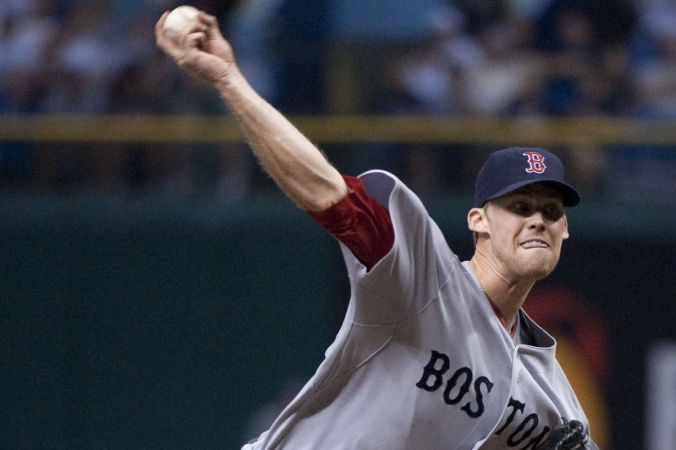
Grace In Disaster: Daniel Bard, Ethics Hero

It’s freezing, and I’m sick, so naturally my thoughts travel to warm summer nights at Fenway Park. Daniel Bard just retired. It gives me something different, and inspiring, to think about.

If you’re not a Red Sox fan or a dedicated baseball follower, you have no idea who Bard is. He was a relief pitcher, a set-up man, who could throw nearly 100 mph in the days, not long ago, when almost no pitchers did. Through August of 2011, his third major league season with Boston, Bard had appeared in 181 games with  a 2.42 ERA, and .186 batting average against him. The Red Sox went 123-58 in the games in which he pitched. In 186 innings, Bard struck out 202 of the batters he faced. A young man in his mid-20s, Daniel Bard could look forward to stardom, glory, celebrity, and millions and millions of dollars.  Then, suddenly in September of that year, he lost it all.

Nobody took special note, even though his ineffectiveness down the stretch was major reason for the epic Red Sox collapse that shook the franchise and led to the exodus of the team’s popular manager Terry Francona (now the very successful manager of the Cleveland Indians) and its boy genius GM, Theo Epstein, now the architect of the suddenly championship caliber Chicago Cubs. Bard was just tired, everyone assumed. There was no apparent injury; nothing had changed. But the next season, Daniel Bard couldn’t throw as hard consistently as before, and more alarming still, he couldn’t get the ball over the plate. Suddenly, he wasn’t a good or even a barely acceptable major league pitcher any more; indeed, he was a dangerous one, hitting a batter or two almost every inning, along with lots of wild pitches and walks.  By June, he was back in the minor leagues. Bard’s control got worse, and he sunk lower and lower into the low minors. Boston papers would report outings with unbelievable line scores: 2 innings, eight walks, four hit batters, five wild pitches, or worse. Bard tried surgery, meditation, mental coaches,, psychologists, changing his delivery.  He was still young, so team after team gambled that they could get him back to his All-Star form–Texas, the Mets, Pittsburgh, St. Louis and the Cubs. Bard kept trying, and failing. Continue reading

When Doing The Ethical Thing Is Ugly But Necessary: AG Sessions’ Retracts One Of Those Obama “Dear Colleague Letters”

By the way, “when doing the ethical thing is ugly but necessary” both refers to Sessions’ action and my writing this post…

 In March 2016 , President Obama’s Justice Department sent another one of the administrations patented (well, not really) “Dear Colleague letters” like the one that was used to bully colleges and universities into punishing male students for alleged sexual assault in the absence of sufficient evidence. This one was sent to state and local courts, urging them <cough>to review their procedures regarding fines and other punishments issued to the indigent  to ensure that they were consistent with “due process, equal protection and sound public policy.” The Justice Department’s 2016 release linked the letter to its description of a $2.5 million grant program to help agencies develop strategies that reduce unnecessary confinement of those who can’t pay fines and fees.” The letter said in part,

“Typically, courts do not sentence defendants to incarceration in these cases; monetary fines are the norm. Yet the harm caused by unlawful practices in these jurisdictions can be profound. Individuals may confront escalating debt; face repeated, unnecessary incarceration for nonpayment despite posing no danger to the community; lose their jobs; and become trapped in cycles of poverty that can be nearly impossible to escape.”

The letter also outlined “basic constitutional principles” regarding fee and fine enforcement. They included: Continue reading

Introducing Rationalizations #25B, and #25C: “I’m Just Doing My Job,” and “It’s Policy!”

Here are two  more rationalizations for the list, bringing the grand total to 89.

#25B  The Nuremberg Rationalization, or “I’m Just Doing My Job!”

Amazing: 87 previous rationalizations described, and the word “Nuremberg” did not appear once.

Rationalization # 25. The Coercion Myth, covers the excuse for unethical conduct that the actor “had no choice,” and # 25A. Frederick’s Compulsion or “It’s My Duty!” posits that duty excuses wrongdoing. #25 B follows the theme of denying free will by using the fact of employment to justify or excuse unethical conduct. It embodies the defense of the Nazi officers at the Nuremberg Trials that because they followed the orders of others, they were simply agents, and their horrible crimes against humanity should not bring them punishment…after all, they had no choice. It was their duty to follow orders, because that was their job.

We all need jobs, but we all have a choice whether to remain in a job or not. Sometimes it’s not a very attractive choice, and even a frightening one, in which choosing the ethical course requires personal sacrifice. Nonetheless, when a job requires one to commit unethical acts, the choice is this: quit the job and refuse to perform the unethical act, or commit the unethical act, following orders but accepting the responsibility, accountability and consequences of doing so.

For inspiration, we need look no further than the first admittee to the Ethics Alarms Heroes Hall of Honor, the amazing Henri Salmide.

From the Ethics Alarms post:

In 1944, Salmide was a German officer in the 159th Infantry Division of the German army occupying the French city of Bordeaux, the largest seaport on the west coast. It was August 19, and Allied Forces were spreading out from the beaches at Normandy and taking control of the war. An order came from Berlin calling on the Division to destroy the entire seven miles of port infrastructure before abandoning the city. The port’s destruction was scheduled to occur within a week.

“It fell to me,” Salmide recounted in an interview, because, as head of the bomb disposal unity, he had expertise with explosives. “I couldn’t do it. I knew the war was lost. What was the point of this, I asked myself. People would die and suffer, and the war would still be lost by Germany.”

On  August 22, he filled a bunker at the docks with detonators, plungers, timers and other hardware needed for the planned demolition. But instead of using them to destroy Bordeaux, Salmide blew them up with dynamite, in a terrifying explosion. “It was all I could do,” he said later.

French historians estimate he saved 3,500 lives by refusing to carry out his orders. About fifty Nazi soldiers died in the blast instead. “I could not accept that the port of Bordeaux be wantonly destroyed when the war was clearly lost,” he explained in an interview. “I acted according to my Christian conscience.”

Salmide deserted, and was hunted by both the Gestapo and the French authorities. He hid with the French Resistance for the remainder of the war. Then Salmide adopted a French name, married a local woman, became citizen of France, and raised his family in the very city his conscience had rescued. The Germans regarded him as a traitor, and even the French were reluctant to give him the recognition he deserved, according to his wife.

“No one wanted to admit that he had done it,” Mrs. Salmide told the New York Times. “If he had been French, it would have been easier for him.”  It was not until 2000 that the French government finally awarded him the French Legion of Honor,* and the Bordeaux City Hall said this week that it wants to erect a memorial to Salmide.

His best and most lasting memorial, however, would be for his story to be known around the world, and taught in every school, of every nation. For when any of us finds ourselves being required to act under authority to accomplish unjust and cruel ends—to blindly do our job, knowing that the results would harm others unjustly, and we wonder if it is fair for us to be accountable for our actions when, in reality, we seem to have no choice, we should recall Henri Salmide. His moment of courage should remind us that we are always accountable, and we always have a choice, provided we also have the ethics and courage to take it.

Continue reading

Comment of the Day: “Desperate Ethics Quote Of The Week: Louis C.K.”

This is a combination of two comments, by the same wise commenter. I thought both were excellent, and together they are better still.

This is La Sylphide’s Comment of the Day on the post, Desperate Ethics Quote Of The Week: Louis C.K.:

Twice a summer I work as a “runner” for two huge music festivals: one country, one rock. I am often in close quarters, or in a car, with very famous people. I’m always professional. I’m always discrete. Rarely am I star struck. (O.k., driving Johnny Depp was pretty cool.) Most stars and their tour managers are kind and thoughtful. But now and then you get a blowhard, or two. One, very well known country star wanted me to share his cigar with him as I drove him to his private plane. “C’mon, sweetheart” as he held out the cigar to me, “it’s not THAT wet…” The whole car went silent. There I was, the only woman in a car with 5 men, a wet cigar, and a wink wink. I played dumb. I blew off his remark with a smile… They all laughed. Here’s the thing: he held no power over me. He couldn’t advance my career or ruin it. I had nothing at stake. And so yes, I can understand these women, in the same industry as Louis C.K., trying to make it, in a hotel room with him and wondering “wtf, do we do now ?!? How much damage will be done if we stay? How much damage will be done if we tell him to GFH? ” So very often, when you are dealing with someone who wields enormous power, it’s like navigating a mine field. For women, there are often split second decisions to be made: do I cross the street now because it’s late at night, I’m alone and he’s coming toward me, or if I cross the street will I anger him and make things worse.”

Continue reading

Integrity Check For Saturday Night Live: Time For A Mr. Mike Moment

Larry David was the darling of the left-tilting TV audience of Saturday Night Live last year when he became the lovable avatar of Bernie Sanders, a casting no-brainer which, I will remind the assembled, I predicted here well before it became reality. It was also predictable that David, the misanthrope who co-created Seinfeld, was the real life model for funny sociopath George Costanza, and who just returned to HBO playing a fictionalized version of his laughably awful self in “Curb Your Enthusiasm,” would be asked to host the creaky satire show, which he did last weekend.

But THE HORROR! David’s opening monologue was genuine Larry David, as any “Seinfeld” fan would recognize. That show mocked Jews, gays, women, AIDS marches, Puerto Rican Pride Day, old people, disabled people,  ugly babies, Kosher diet restrictions,  dwarves, Kennedy’s assassination and stroke victims, among other topics…in other words, it was intentional political incorrectness as comedy. It should not have been a surprise, then, when David riffed on girl-watching in Nazi concentration camps:

“I’ve always been obsessed with women, and I’ve often wondered if I’d grown up in Poland when Hitler came to power and was sent to a concentration camp, would I be checking women out in the camp? I think I would.However, there are no good opening lines in a concentration camp.”

Then he ventured into the Harvey Weinstein minefield, noting that a lot of the executives being accused of sexual misconduct are, like him, Jews:

“I don’t like when Jews are in the headlines for notorious reasons. I want ‘Einstein discovers the theory of relativity,’ ‘Salk cures polio.’ What I don’t want? ‘Weinstein took it out.’…I consistently strive to be a good Jewish representative. When people see me I want them to say, ‘Oh, there goes a fine Jew for you!'”

Either of these would have been at home on “Seinfeld,” where George once mused about Moses’ nose-picking habits, and enthused about having a prison inmate girlfriend, so he could have sex and ensure that she had to wait until he chose to come back and see her. (She escaped, though…). Ah, but 2017 isn’t the Nineties. Now delicate progressives seek safe spaces, and the only acceptable targets of humor are the rich, whites, males, straights, Christians and conservatives. And Donald Trump, of course. The rest is hate speech. Taboo. “We–the Virtuous Collective of the Left— are not amused.”

Social media erupted with condemnations of David for daring to be unfunny on Saturday Night Live. For perspective, consider that SNL has sometimes gone years without being funny. Salon pronounced him “out of his depth and out of his time.” How dare he make a Holocaust jokes “when an era when anti-Semitism is surging in the United States”? (Any guesses whether Salon would similarly object to anti-Republican jokes when GOP Senators are being shot at, and mugged by their Socialist neighbors?) He hasn’t “moved with times,” tut-tuts that arbiter of hilarity, Salon.  After all, “Blazing Saddles” isn’t funny any more. “The Producers” is offensive, with all those Hitler jokes. How dare “Airplane!”make fun of black dialect , seek (and get) laughs with a stereotypical gay character, or show African natives instinctively dunking the second they touch a basketball? That’s not funny! You aren’t allowed to laugh at that, Comrade. Watch it! Because we are watching you.

Now, calling the President of the United States a cockholder and suggesting that he wants to have sex with his daughter, THAT’S funny.

Check the rule book.

At the Washington Examiner, Tom Rogan has the right and ethical perspective:

At The Atlantic, Professor Jeremy Dauber wailed that David thought comedy was acceptable “after Charlottesville.” Dauber continued, “David’s invocation of the concentration camp on Saturday as a kind of peekaboo provocation … might ring particularly hollow in an America where neo-Nazis march openly on the streets and white-nationalist memes proliferate online.”

“Might ring particularly hollow” are the operative words there. Dauber encapsulates the Left’s new reflex that if some words might offend someone somewhere, they should not be said.

I believe the opposite is true. Humor is supposed to be unrestrained and, if a comedian so desires, uncomfortable. Whatever our particular personal views, we’re lucky to live in a society in which humor is defined by the humorist not the humorless hordes. So yes, some might be offended to see Larry David make concentration camp jokes or urinate on a picture of Jesus (that one made me uncomfortable) or have a Jewish boy knit a swastika.

I say too bad. The beauty of humor in a democracy is that it’s always those who laugh who matter most.

Bingo. I don’t care if you find something funny: if I find it funny, that’s all that matters….and vice versa. Moreover, if the Left abandons humor (unless it is politically weaponized, like the tediously redundant  all-anti-Right-hate-all-the-time  late night talk shows and  cable shows), humor is doomed. Comedians and comics have almost entirely arisen from the liberal side of the ideological spectrum. A funny conservative is as rare as a popular ethicist.

Thus the attack on David for telling the kinds of jokes Larry David tells creates an integrity test for Saturday Night Live. A commenter named Michael Bauer told  the New York Times that “Mr. David’s comments were completely unfunny and embarrassing, not only to Mr. David but also to the show’s producer, Lorne Michaels, and everyone associated with ‘Saturday Night Live.'”

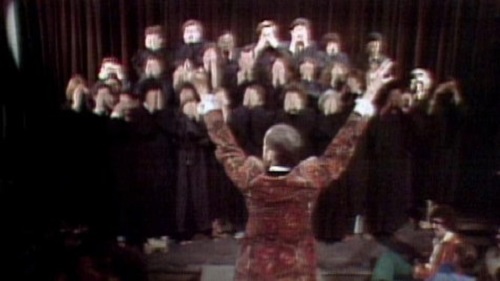
Really? Really? This was the show that once, in its greatest years, featured the intentionally tasteless and blackest of black humor-obsessed Michael O’Donoghue. The ultimate O’Donoghue gag was a trilogy of sick  bits he performed as “Mr. Mike” to end SNL shows spaced over several weeks. In the first of them, he announced that he would do an impression of nice guy daytime talk show host Mike Douglas, with a twist:

Michael O’Donoghue: ” We all love Mike Douglas, of course. And I was watching Mike’s show this afternoon, and  a funny thought occurred to me. I thought, what if someone took steel needles, say, um, fifteen, eighteen inches long — with real sharp points — and plunged them into Mike Douglas’s eyes. What would his reaction be? I think it might go something… like this …

Then he removed his glasses, pocketed them, and turned around, in the fashion of celebrity impressionists from time immemorial, paused, and suddenly  began screaming and writhing on the floor.

TV critics, many of them, were not happy. The show and NBC received complaints. Cruelty, after all, isn’t funny. (I loved it.)

To their undying credit, SNL, Lorne Michaels, and O’Donoghue doubled down. A couple of weeks later, “Mr. Mike” was introduced again, again at the end of the show. This time, he was ushered on  by two attractive young African-American women in gowns: Continue reading