Integrity Check For Saturday Night Live: Time For A Mr. Mike Moment

Larry David was the darling of the left-tilting TV audience of Saturday Night Live last year when he became the lovable avatar of Bernie Sanders, a casting no-brainer which, I will remind the assembled, I predicted here well before it became reality. It was also predictable that David, the misanthrope who co-created Seinfeld, was the real life model for funny sociopath George Costanza, and who just returned to HBO playing a fictionalized version of his laughably awful self in “Curb Your Enthusiasm,” would be asked to host the creaky satire show, which he did last weekend.

But THE HORROR! David’s opening monologue was genuine Larry David, as any “Seinfeld” fan would recognize. That show mocked Jews, gays, women, AIDS marches, Puerto Rican Pride Day, old people, disabled people,  ugly babies, Kosher diet restrictions,  dwarves, Kennedy’s assassination and stroke victims, among other topics…in other words, it was intentional political incorrectness as comedy. It should not have been a surprise, then, when David riffed on girl-watching in Nazi concentration camps:

“I’ve always been obsessed with women, and I’ve often wondered if I’d grown up in Poland when Hitler came to power and was sent to a concentration camp, would I be checking women out in the camp? I think I would.However, there are no good opening lines in a concentration camp.”

Then he ventured into the Harvey Weinstein minefield, noting that a lot of the executives being accused of sexual misconduct are, like him, Jews:

“I don’t like when Jews are in the headlines for notorious reasons. I want ‘Einstein discovers the theory of relativity,’ ‘Salk cures polio.’ What I don’t want? ‘Weinstein took it out.’…I consistently strive to be a good Jewish representative. When people see me I want them to say, ‘Oh, there goes a fine Jew for you!'”

Either of these would have been at home on “Seinfeld,” where George once mused about Moses’ nose-picking habits, and enthused about having a prison inmate girlfriend, so he could have sex and ensure that she had to wait until he chose to come back and see her. (She escaped, though…). Ah, but 2017 isn’t the Nineties. Now delicate progressives seek safe spaces, and the only acceptable targets of humor are the rich, whites, males, straights, Christians and conservatives. And Donald Trump, of course. The rest is hate speech. Taboo. “We–the Virtuous Collective of the Left— are not amused.”

Social media erupted with condemnations of David for daring to be unfunny on Saturday Night Live. For perspective, consider that SNL has sometimes gone years without being funny. Salon pronounced him “out of his depth and out of his time.” How dare he make a Holocaust jokes “when an era when anti-Semitism is surging in the United States”? (Any guesses whether Salon would similarly object to anti-Republican jokes when GOP Senators are being shot at, and mugged by their Socialist neighbors?) He hasn’t “moved with times,” tut-tuts that arbiter of hilarity, Salon.  After all, “Blazing Saddles” isn’t funny any more. “The Producers” is offensive, with all those Hitler jokes. How dare “Airplane!”make fun of black dialect , seek (and get) laughs with a stereotypical gay character, or show African natives instinctively dunking the second they touch a basketball? That’s not funny! You aren’t allowed to laugh at that, Comrade. Watch it! Because we are watching you.

Now, calling the President of the United States a cockholder and suggesting that he wants to have sex with his daughter, THAT’S funny.

Check the rule book.

At the Washington Examiner, Tom Rogan has the right and ethical perspective:

At The Atlantic, Professor Jeremy Dauber wailed that David thought comedy was acceptable “after Charlottesville.” Dauber continued, “David’s invocation of the concentration camp on Saturday as a kind of peekaboo provocation … might ring particularly hollow in an America where neo-Nazis march openly on the streets and white-nationalist memes proliferate online.”

“Might ring particularly hollow” are the operative words there. Dauber encapsulates the Left’s new reflex that if some words might offend someone somewhere, they should not be said.

I believe the opposite is true. Humor is supposed to be unrestrained and, if a comedian so desires, uncomfortable. Whatever our particular personal views, we’re lucky to live in a society in which humor is defined by the humorist not the humorless hordes. So yes, some might be offended to see Larry David make concentration camp jokes or urinate on a picture of Jesus (that one made me uncomfortable) or have a Jewish boy knit a swastika.

I say too bad. The beauty of humor in a democracy is that it’s always those who laugh who matter most.

Bingo. I don’t care if you find something funny: if I find it funny, that’s all that matters….and vice versa. Moreover, if the Left abandons humor (unless it is politically weaponized, like the tediously redundant  all-anti-Right-hate-all-the-time  late night talk shows and  cable shows), humor is doomed. Comedians and comics have almost entirely arisen from the liberal side of the ideological spectrum. A funny conservative is as rare as a popular ethicist.

Thus the attack on David for telling the kinds of jokes Larry David tells creates an integrity test for Saturday Night Live. A commenter named Michael Bauer told  the New York Times that “Mr. David’s comments were completely unfunny and embarrassing, not only to Mr. David but also to the show’s producer, Lorne Michaels, and everyone associated with ‘Saturday Night Live.'”

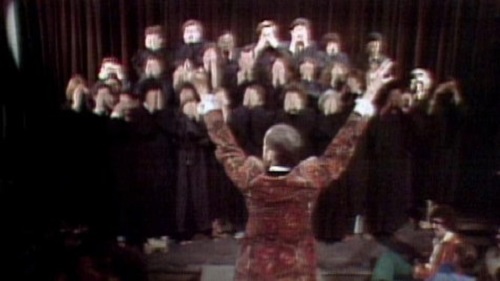
Really? Really? This was the show that once, in its greatest years, featured the intentionally tasteless and blackest of black humor-obsessed Michael O’Donoghue. The ultimate O’Donoghue gag was a trilogy of sick  bits he performed as “Mr. Mike” to end SNL shows spaced over several weeks. In the first of them, he announced that he would do an impression of nice guy daytime talk show host Mike Douglas, with a twist:

Michael O’Donoghue: ” We all love Mike Douglas, of course. And I was watching Mike’s show this afternoon, and  a funny thought occurred to me. I thought, what if someone took steel needles, say, um, fifteen, eighteen inches long — with real sharp points — and plunged them into Mike Douglas’s eyes. What would his reaction be? I think it might go something… like this …

Then he removed his glasses, pocketed them, and turned around, in the fashion of celebrity impressionists from time immemorial, paused, and suddenly  began screaming and writhing on the floor.

TV critics, many of them, were not happy. The show and NBC received complaints. Cruelty, after all, isn’t funny. (I loved it.)

To their undying credit, SNL, Lorne Michaels, and O’Donoghue doubled down. A couple of weeks later, “Mr. Mike” was introduced again, again at the end of the show. This time, he was ushered on  by two attractive young African-American women in gowns: Continue reading
The 87th And 88th Rationalizations: The Reverse 15 And The Psychic Historian

Translation: “I got nuthin’!'”

I haven’t been in tip-top shape the last several days, making new posts more of an ordeal than they should be. Luckily this motivates me to catch up on updating the Rationalizations List, which has several waiting additions, including these:

Rationalization #15 A. The Reverse 15, or “If I don’t do it ( and I don’t want to) somebody else will.”

The Reverse 15 uses exactly the same excuse as #15. The Futility Illusion:  “If I don’t do it, somebody else will,” but for the opposite purpose. In #15, the rationalizer wants to avoid the consequences of doing something unethical by arguing that his or her refusal to follow orders would have no practical effect: someone else would just step in and do what was demanded anyway. How, asks the fictionalized version of Confederate Captain Henry Wirz in “The Andersonville Trial,” can a post-Civil War military tribunal fairly hold him responsible for cruelly mistreating the Union prisoners in the Georgia prison camp as he was ordered to, when if he refused he would have been shot, and his successor would have abused them anyway?

In 15A, the argument is the opposite. The rationalizer refuses to perform a necessary ethical act out of apathy, callousness or fear, but this was reasonable because he or she was certain that someone else would do the right thing instead. The Reverse 15 could also be called “The Kitty Genovese Rationalization,” recalling that the many people who heard the murdered woman’s screams chose not to “get involves” while convincing themselves that someone would come to her aid. All of the Mount Everest climbers who left a stricken colleague behind to die protested later that they were certain the next climber behind them (or the next, perhaps) would stop to help the man. We pass a stopped car in distress on the highway at night, reasoning that someone else will stop to help, sparing us the trouble.

Sometimes someone does. Sometimes not. This abdication of an ethical duty is accomplished by casting one’s lot, and gambling with the fate of another, while relying on the unpredictable quirks of moral luck. The only ethical decision is to take action. You must do what you know is the ethical act yourself, and not ignore your obligation because you can pass the buck and then argue, disingenuously, “How could I know that everyone else would be as unethical as I am?”

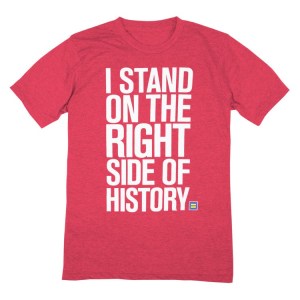
Rationalization #1B. The Psychic Historian, or “I’m On The Right Side Of History”

Continue reading

From The Ethics Alarms Lost Files: The Ballet Dancer, The Man On The Tracks, And The Duty To Rescue

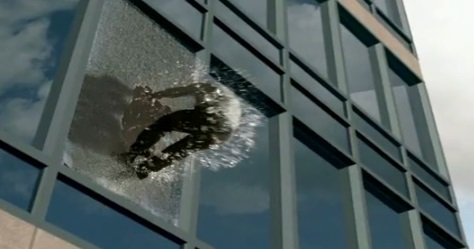
That’s our hero, Gray Davis, in the bottom photo. The top photo is just a suggestion if he decides to go pro…

[This story is several months old, but I missed it.  Luckily my friend, long-time Ethics Alarms reader and commenter Ethics Bob did not, and sent it to me. Then I missed his e-mail. Until today.]

Ethics Alarms often writes about the duty to rescue, but has also often discussed the reasonable limitations on that duty. You are ethically required to do what you can to prevent a tragedy if you have the power to do so, and instant presence of mind to do so. There is no ethical duty to act like Batman, unless, of course, you are Batman.

Gray Davis is Batman.

Well, that’s not quite right.

Let’s call him “Ballet Man,”

In June, a 58-year-old homeless man fell or was pushed onto the subway tracks at the 72nd Street Broadway-Seventh Avenue station in Manhattan. People began screaming and shouting for someone to help. Davis, 31, told reporters that “At first I waited for somebody else to jump down there…. But nobody jumped down. So I jumped down.” Actually he leaped down. Davis is a ballet  dancer with the American Ballet Theater. He had not performed that night, a Saturday, because he was recovering from a herniated disk. He had just watched his wife, soloist Cassandra Trenary, dance in both the matinee and the evening performances of “The Golden Cockerel.”

After Gray’s graceful assemblé from the platform onto the tracks, he lifted up the man, following a temps leve, although the carry itself was not standard and had several technical flaws by ABT standards, forgivable because ballerinas are not typically dead weight, and unconscious homeless men are not typically ballerinas. Gray deposited his temporary partner on the platform, where he was immediately attended to by others.

Then the dancer heard a train in the distance, and for the first time realized how high it was to the platform from the tracks. “Luckily, I’m a ballet dancer,” he said. Luckily for everyone. Lifting his let up over his head is a breeze.

Ballet dancers are much-maligned, and increasingly unappreciated as artists despite the fact that they are among the most skilled athletes in the world. Batman would have to have ballet training; Daredevil too. Unfortunately, they aren’t real. Graey Davis, Ballet Man, is real, and when a life was at stake and everyone else was calling for someone else to he a hero, he was one, because he knew he had the skills to pull it off.

Bravo!

Encore!

_____________________

Pointer: Ethics Bob

Ethics Dunce Hillary’s George Costanza Moment

In “The Comeback,” a much admired “Seinfeld” episode, George Costanza obsesses over the fact he missed what he is sure was the perfect comeback when a colleague at a staff lunch, watching him gluttonize a bowl of shrimp, quipped that “George, the Ocean called, and they’re out of shrimp!” George wishes he had said, “Yeah? Well, the jerk store called, they’re running out of you!” The problem is that much success in life is based on timing. If you miss your moment, it’s gone, and coming back later to explain that you had the perfect response and didn’t use it is trolling for sympathy, when you don’t deserve any.

Now Hillary Clinton, in her post-Presidential-run botch excuse tour, is channeling George as she muses about whether she missed the perfect comeback when, she says, Donald Trump was “invading her space” during the town meeting style debate.

In an audio clip to promote her upcoming book (above), Clinton reads the section in which she recounts her thoughts as she claims she considered telling her Republican adversary to “back up, you creep” as he roamed the stage behind her during the second presidential debate.

“My skin crawled,” Clinton reads. “It was one of those moments where you wish you could hit pause and ask everyone watching ‘well, what would you do?'” Just two days before, Clinton says, “the world heard [him] brag about groping women.” She says she decided against telling Trump to “back up, you creep, get away from me. I know you love to intimidate women, but you can’t intimidate me,” and instead gripped the microphone “extra hard.”  Now she wonders if she made the right choice.

Hey Hillary, the loser store called, and it’s out of you! Continue reading

An Epic And Unexpected Example Of How The Right Thing To Do Is To Undo A Bad Decision As Soon As You Realize that It Was A Mistake, And Not Worry About How Anyone Reacts, Who Says “I Told You So!”, Who Says You Shouldn’t Have Made The Mistake In The First Place, Or How Much You Are Tempted To Try To Make The Original Bad Decision Work Out Despite Knowing Deep In Your Heart That It Never Will…

I am referring, of course, to President Donald Trump firing Anthony Scaramucci as his Communications Director today.

For the first time, President Trump has given future Presidents a positive role model to emulate. Almost no Presidents, indeed, almost no executives anywhere,  have the guts and competence to do this. Of course, I don’t know if any President has made as unbelievably bad an appointment before. Lincoln appointing George McClellan as his top general for the second time comes close.

Donald Trump seldom admits mistakes. There is no other way to interpret this stunning act (I first saw it in a comment on Ethics Alarms, and I thought it was satire), no matter what the President says, other than “I screwed up big time, and I had to fix it.” Neither Obama, nor Clinton, nor either Bush, nor Reagan were ever willing to do this hardest and most humbling of management acts.

Apparently General Kelly told the President that “Mooch” had to go, and he went. This is excellent news on multiple fronts. I assumed that Kelly would eventually demand loose-cannon Scaramucci’s head—it was so, so obvious that he was a walking, talking pathogen in an already sick White House culture. I did not think Kelly would act so quickly. This speaks very well for him: Davy Crockett would have approved too. Davy’s ethics formula was “Be sure you are right, and then go ahead.” Kelly was sure, and saw no reason to wait. There was none. Every second Scaramucci remained wild and free was a second closer to the next crisis.

It is also a wonderful sign that the President took his new Chief of Staff’s advice. Wow. I now have hope that he may be persuaded to give up stream-of-consciousness tweeting.

We can use this event as yet another test to assess just how biased various pundits are.  How many will have the integrity to say, as I do, that firing a Scaramucci as soon as possible is a competent and courageous example of good management, even if it was made imperative by the President’s own  head-explodingly terrible, incompetent and irresponsible decision?  My guess is very few. What they want to do is bash Donald Trump, and this certainly gives them ammunition.

I would ask them this, however: how often have you hesitated to admit a mistake and fix it, waiting and hoping that somehow it would work out, only having to fix the problem later after the predictable catastrophe occurred? And you weren’t doing this in front of the whole nation, with a pack of hateful journalists just waiting to heap ridicule and abuse on you for doing the right thing?

President Trump deserves praise for this. And if his example is followed by managers everywhere, it will be a better world in too many ways to count.

[I thought this was over-kill, however…]


Morning Ethics Warm-Up: 7/21/17

Good Morning!

1. There was one of those moments in a Major League Baseball game yesterday that teaches life lessons in character, and ethics for anyone who is paying attention.

The Boston Red Sox were playing the Toronto Blue Jays in an afternoon game at Fenway Park. Boston led 3-1 in the second inning, but the Red Sox pitcher,  veteran Doug Fister, was struggling with an uncharacteristic control lapse: he walked his third batter in the inning, and also had given up a couple of hard-hit balls that suggested that a gaggle of runs and a blown lead were inevitable. Then, mirabile dictu, Fister caught a break. The next Toronto batter swung mightily and lofted an easy, lazy pop-up to the infield. If there had been one out rather than two, it would have been called an automatic out under the Infield Fly Rule. Everyone, including Fister, who is fighting to preserve his spot on the Sox roster as well as his flagging career, breathed a sigh of relief. The Toronto batter slammed his bat to the ground. Settling under a pop-up not any more difficult than those he had successfully caught as a Little Leaguer was Red Sox utility man Brock Holt, a second baseman this day. He is much admired for his versatility, energy and reliability. Holt is also trying to revive his career after a frightening, season-long battle with vertigo, as well as to show the team that he can fill a yawning void at third base.

Holt dropped the ball. It bounced off his glove, as the Toronto baserunners were charging around the bases at the crack of the bat, since there were already two outs. Two of them scored, and later two more after Fister surrendered hits in te lengthened inning, making the bounty bestowed by Holt’s muff four runs. Fister was soon out of the game, and was charged with his team’s eventual two-run loss by an 8-6 score. (Today’s headline in Boston: “Doug Fister’s Future As Starter Uncertain After Loss To Jays”).

Yet Fister never shot an angry glance at Holt. He’s played the game; he knows how mistakes and random bad luck can turn everything around in an instant. He probably has dropped a similar ball in a crucial situation: I know I’ve done it, at second base, losing a company soft-ball game. Holt trotted to the dugout, got supportive pats on the back and fanny from his team mates, and played the rest of the game with his head high and his skills on display. There is no doubt that he felt terribly about the play, but Holt  didn’t hide under a rock, rend his garments, or make a big display of anger and frustration to signal to the hometown crowd—which didn’t boo or jeer him at any point in the game.

That’s life, as my father used to say, and this is how ethical people handle life. Disaster strikes out of a confluence of factors (a very bright sun undoubtedly helped Holt miss the ball, but professional ballplayers learn to cope with the sun) and all we can do, if we are competent at life as well as fair, responsible and brave, is to accept responsibility, not make excuses, and not allow such events to diminish or destroy us. Both Fister and Holt displayed the character necessary to do that. Neither blamed the other, and no one blamed them. Tomorrow is another day.

Play Ball!

2. Professional troll Ann Coulter is having a public spat with Delta Airlines that reflects badly on both of them. Continue reading

Integrity Check For Senator McCain

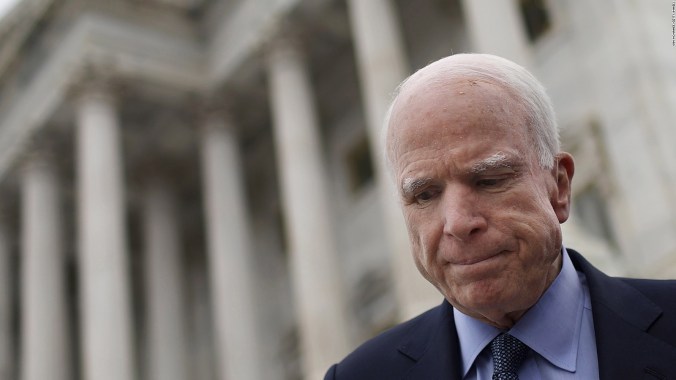
Arizona Senator John McCain, a long-time leader of the Republican Party and a bona fide old lion of the U.S. Senate, has been diagnosed with an aggressive and malignant form of brain cancer. Surgeons removed the tumor this week, but the Vietnam war hero and former Presidential candidate knows he is facing the fight of his life. This kind of tumor tends to come back, so McCain’s treatment has to be as aggressive as the cancer.

The unavoidable truth is that Senator McCain has an ethical obligation to resign, and the sooner the better. Members of Congress, like Supreme Court Justices, should not drag their tenure into advanced age, when health, energy and mental acuity are likely to decline. McCain, who is 80, has shown unusual vigor as he has aged, but it is absurd to  imagine that he can do his job while undergoing life-and-death cancer treatments. For his own sake, that of his party, the institution of the Senate, his nation and his legacy, Senator McCain needs to be an exemplar to his colleagues and future elected officials who have the public’s trust. It is a time for him to model sacrifice, selflessness, humility and good judgment.

There is important work to be done, and if it is to be done well, men and women of health and focus must be the ones to do it. John McCain is an amazing and honorable man who doesn’t have to prove his mettle and fortitude to anyone. Now he has to have the courage and integrity to do the hardest thing of all: to know when to quit, and to do it.

I’m betting that he will. John McCain knows how to be a hero.

The Unappreciated Home Depot Hero

It’s more exciting than you think!

Ethics Alarms has dealt with this issue multiple times: an employee violates policy by intervening to prevent a crime or serious injury, and is fired for it.  In 2009, a bank teller named Jim Nicholson turned Batman and foiled a bank robbery, then was fired.. A would-be robber had pushed a black backpack across the bank counter to Nicholson and demanded money. The teller threw the bag to the floor, lunged toward the man and demanded to see a weapon. The robber sprinted for the door with Nicholson in pursuit. Eventually Bat-Teller  knocked the man  to the ground and held him until the police arrived.

The bank had to fire him. The episode could have gone wrong many ways, some resulting in bank customers and employees being injured or killed. Law enforcement repeatedly cautions against such conduct, and the bank’s policies were clear.

In other cases, no-tolerance makes no sense, as no-tolerance often does. In 2012, Ryan Young, then working in the meat department of a Safeway grocery store in Del Rey Oaks, California, witnessed a man beating a pregnant woman, apparently his girlfriend. Young told the man to stop, but when he continued with his assault, shoving and kicking her, Young jumped over his counter, pushed the thug away, and ended the attack.

Safeway fired him. So what would it have had Young do, stand there and wag his finger? This crossed into duty to rescue territory. Young did the right thing, and rather than blindly following a policy that didn’t fit the facts, Safeway should have realized that an exception was called for.. (Eventually public opinion and bad publicity forced Safeway to re-hire the hero). A similar scenario involved a lifeguard who violated his employer’s policy by saving a drowning man off a beach adjacent to the property where he was stationed. Jeff Ellis Management, an Orlando, Florida-based company, fired  21-year-old Tomas Lopez for daring to save a life pro bono, and was similarly pilloried by public opinion. Two lifeguards quit in support of Lopez, and he was also eventually offered his job back. Lopez told Jeff Ellis Management to get bent, or words to that effect. Continue reading

Observations On That Disturbing Trump Cabinet Meeting

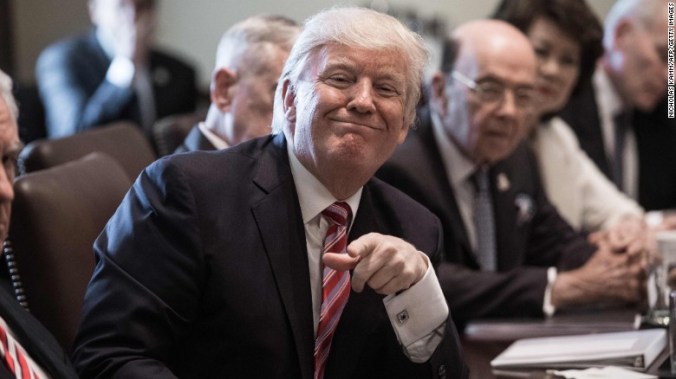
Yesterday’s weird, televised segment of the Cabinet meeting was troubling in many ways. If you missed it, and I am envious if you did because it will haunt my nightmares for a long time, here is what happened:

Trump began by giving a positive assessment of his first 143 days and said,”Never has there been a President….with few exceptions…who’s passed more legislation, who’s done more things than I have.” Bad start. Trump, in fact, has signed very few bills. “Never—with few exceptions”—is classic Trump-speak, aka gibberish. This is also the kind of statement Trump’s Furies call “lies.” This was not a lie. In some convoluted way, the President thinks its sort of true. THAT’S the problem, not that he’s lying.

This was just the appetizer, though. The full course was the Cabinet officials, one by one, around the table, taking turns praising their boss.  This could not have been spontaneous. It reminded me of “King Lear”s” opening when the old, fading monarch requires each of his three daughters to tell him how much they love him as the price for getting a piece of his kingdom.

The charade began with Vice President Pence, who called it the “greatest privilege of my life” to serve in the Trump administration. Then Attorney General Jeff Sessions said it was an “honor” to serve Trump, and the rest of Trump’s Cabinet more or less aped what Pence or Sessions had said. Maybe they had all been given talking points. As a final inducement to projectile vomiting, Lackey-in-Chief Reince Priebus gave us a suck-up for the ages:

“On behalf of the entire senior staff around you, Mr. President, we thank you for the opportunity and the blessing that you’ve given us to serve your agenda and the American people And we’re continuing to work very hard every day to accomplish those goals.”

And may I fellate you here, sir, or later?

Disgusted and depressed observations:

1. This is exactly the kind of self-destructive fiasco  a top Chief of Staff who has a proven record running successful government operations on the state or national level could and would prevent. Instead, Trump has a Chief of Staff who actively made it worse. In February, Ethics Alarms featured my post calling for the appointment of such a figure as “the single most ethical thing President Trump could do.” That was four months ago, and this is more desperately needed now than ever.

2. Since this horrible display did happen, we now can say with certainty that none of the President’s inner circle has the influence, guts or common sense to stop him when he yields to his worst instincts.

3. We can also conclude that not a single member of the President’s Cabinet possesses  sufficient integrity, courage, principle or self respect to be trusted by the American public. These are billionaires and generals, and not one said to Trump, “I’m sorry, Mr. President, but this will make you look weak and me look like an ass-kissing yes-man. I won’t do it, nor will I remain in a Cabinet stocked with lapdog sycophants who would debase themselves and their high offices by doing it.  Do you discard this idiotic charade, or do I resign now?”

Shame on them, every one. Continue reading

Ethics Hero: Lindsey Bittorf

I regard people who contribute kidneys to near strangers as residing in a special category of Ethics Hero, in the exemplary ethics category….maybe the exemplary exemplary ethics category.  Considering Don Bedwell, the first individual I learned about who  engaged in this extraordinary act of sacrifice, kindness, and compassion,  I began my 2005 post, “There are special and rare people whose ethical instincts are so pure and keen that they can make the rest of us feel inadequate.”  Bedwell, a traveling businessman, donated his kidney to a waitress who often served him at his favorite Cleveland restaurant when he was passing through the city on business. The second altruistic organ donor was East Haven, Connecticut  Mayor April Capone Almon, who gifted one of her kidneys  to a desperate constituent she barely knew.

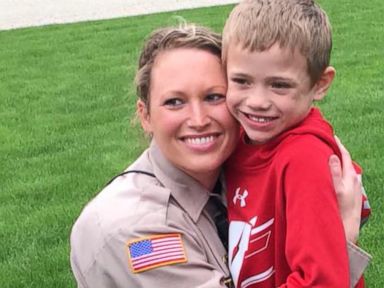
Wisconsin police officer Lindsey Bittorf is the most recent example of this special breed of ethics hero.  She saw a Facebook post from a local mother pleading for someone to rescue might  her  8-year-old son, Jackson Arneson, who needed a kidney. The boy’s family and friends had been tested and none were a match. Bittorf didn’t know the child or the family, but got herself tested on a whim. Doctors told her she was an unusually good match,considering that she was not related to the boy.

Last week, Bittorf  rang the doorbell at Jackson’s home to surprise his family with the good news,  ABC News reported. Jackson could have one of her healthy kidneys.The police officer told Jackson’s mom, Kristi Goll, that it was an “early Mother’s Day gift.”  That’s a bit better than flowers, you’ll have to admit. Continue reading