The Michael Slager Trial: When The Ethical Course Is To Not Exercise a Right

shooting_of_walter_scott

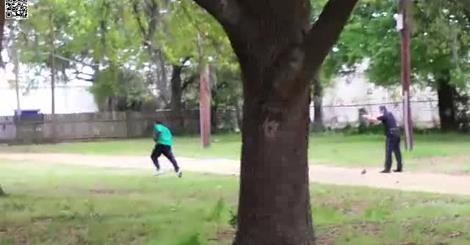
Michael Slager is the white North Charleston police officer who stopped African American Walter Scott for a taillight violation on April 4, 2015, and in the ensuing events, ended up fatally shooting Scott as he fled the scene, in the back, as recorded on a cell phone video. Of all the many police-involved shootings, this is the least equivocal. Slager is guilty of murder of one kind or another: in South Carolina, there is only one kind, and  mitigating circumstances are reflected in the sentence. He could receive life in prison, or much less time.

But every criminal defendant has the right to be tried by a jury of his peers before the law finds him guilty, and Slager is taking full advantage of the right. In doing so, he is forgoing his last clear chance at redemption. The former officer—he has already been fired for the episode and not just put on paid leave, as is usually the case—is understandably trying to avoid a conviction and jail time, even though, should he be acquitted by some miracle or act of mass hypnosis, it would be certain to provoke even more anger and distrust in the black community, and, I would hope, among non-African Americans as well. A justice system that finds, no matter how it reaches such a conclusion, that an officer who shoots a fleeing man dead like Slager did is not guilty needs to be blown up and seeded with salt. When Slager’s first lawyer saw the video, he quit.

Do you think an acquittal is impossible? Don’t. All that is needed is a jury full of people who “think,” and I use the word generously, like the signers of this petition. I’m pretty sure that there are more than twelve of them available. Continue reading

Holiday Ethics Assigment: Quick! Watch These 25 Great Old Ethics Movies Again Before You Go Bonkers Too!

movie-theater

I am compiling a new list of great ethics movies to help those troubled by the recently completed Presidential campaign, the election and its aftermath. I haven’t decided whether to reveal it piecemeal, or collectively as I have before, but I do need to begin by presenting the previous list of 25, actually the combination of several previous posts. Ethics films I have covered individually since those lists debuted, like Spotlight and Bridge of Spies, will eventually be added.

For now, here’s the top 25. Don’t pay attention to the order.

1Spartacus (196o)

The raw history is inspiring enough: an escaped gladiator led an army of slaves to multiple victories over the Roman legions in one of the greatest underdog triumphs ever recorded. Stanley Kubrick’s sword-and-sandal classic has many inspiring sequences, none more so than the moment when Spartacus’s defeated army chooses death rather than to allow him to identify himself to their Roman captors (“I am Spartacus!”)

Ethical issues highlighted: Liberty, slavery, sacrifice, trust, politics, courage, determination, the duty to resist abusive power, revolution, love, loyalty.

Favorite quote: “When a free man dies, he loses the pleasure of life. A slave loses his pain. Death is the only freedom a slave knows. That’s why he’s not afraid of it. That’s why we’ll win.” [Spartacus (Kirk Douglas)]

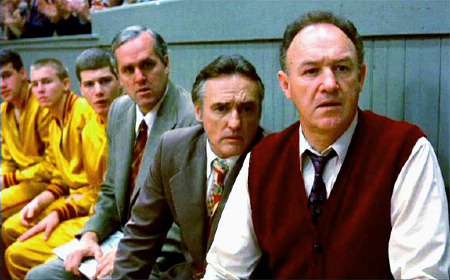
2.  Hoosiers (1986)

“Hoosiers” is loosely based on true story, but its strength is the way it combines classic sports movie clichés—the win-at-all-costs coach down on his luck, the remote superstar, over-achieving team—into a powerful lesson: it isn’t the final victory that matters most, but the journey to achieving it.

Ethical issues highlighted: Forgiveness, generosity, leadership, kindness, courage, loyalty, diligence, redemption.

Favorite quote: “If you put your effort and concentration into playing to your potential, to be the best that you can be, I don’t care what the scoreboard says at the end of the game, in my book we’re gonna be winners.” [ Coach Norman Dale (Gene Hackman)]

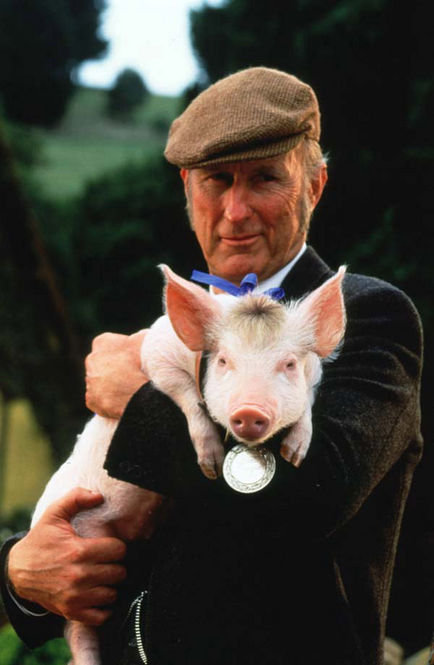
3. Babe (1995)

A wonderful movie about the virtues of being nice, the greatest civility film of all time. Second place: “Harvey.”

Ethical issues highlighted: Civility, kindness, reciprocity, loyalty, courage, love, friendship, bigotry, bias.

Favorite quote: “Fly decided to speak very slowly, for it was a cold fact of nature that sheep were stupid, and there was nothing that could convince her otherwise…The sheep decided to speak very slowly, for it was a cold fact of nature that wolves were ignorant, and there was nothing that could convince them otherwise”  The Narrator (Roscoe Lee Browne) Continue reading

Ethics Hero: Stevie Van Zandt

van-zandt

There is at least one liberal, Donald Trump-hating celebrity performer who has the integrity to insist that wrongful conduct is still wrongful regardless of the target.

Bruce Springstein guitarist Stevie Van Zandt, an inductee to the Rock and Roll Hall of Fame (and a memorable actor on “The Sopranos”), used a series of tweets to criticize the cast of the musical “Hamilton” for targeting Vice-President Elect Mike Pence  from the stage when Pence was in the show’s audience. Van Zandt wrote:

“Lin-Manuel is a genius. He has created the greatest play since West Side Story. He is also a role model. This sets a terrible precedent…When artists perform the venue becomes your home. The audience are your guests. It is nothing short of the same bullying tactic[s] we rightly have criticized Trump for in the past. It’s taking unfair advantage of someone who thought they were a protected guest in your home…There never has been a more outspoken politically active artist than me. Everyone who is sane disagrees with [Pence’s] policies…He was their guest. You protect your guests. Don’t embarrass them.”

Boy, just wait, Stevie: now you’ll get all the good progressives explaining to you that Pence had it coming, that he doesn’t deserve to be treated like a guest, that these vile Republicans should be treated like they will treat others, that these are not ordinary times, that ethics is a luxury we can’t afford right now, that the cast was nice about it (actually, I just saw the video, and they weren’t nice at all; they were strident and  confrontational), that everybody does it, that the ends justified the means, on and on. Just check the “Hamilton” defenders’ excuses on the threads here and here.

Van Zandt is 100% correct, of course, and courageous to oppose the approved unethical cant from the Left.  Unfortunately, most of his ideological mates have decided that standards of decency, respect, fairness and professionalism were suspended by an election result they disagreed with.

James Comey’s Ethical Conflict

twopaths2

We now know that James Comey’s decision to inform Congress that the Clinton e-mail investigation had been re-opened (If I hear one more Clinton spinner  tells me that no case is ever “closed,” even one that is “completed,” I am going to run naked through the Safeway, screaming dirty limericks in pig latin. Be warned.) was “against Justice Department policy,” specifically the policy of “not acting in such a way as could influence an upcoming election.” Comey understood he was violating these guidelines, sources tell us,but felt he was obligated to do so because he had promised members of Congress he would inform them of any further developments related to Clinton’s email server misuse. Thus he sent a letter to F.B.I. employees after alerting Congress of the (possible) new evidence that necessitated re-opening the investigation. In the letter,  Comey acknowledged that his actions were unprecedented, but explained that…

I feel an obligation to do so given that I testified repeatedly in recent months that our investigation was completed. I also think it would be misleading to the American people were we not to supplement the record. At the same time, however, given that we don’t know the significance of this newly discovered collection of emails, I don’t want to create a misleading impression. In trying to strike that balance, in a brief letter and in the middle of an election season, there is significant risk of being misunderstood, but I wanted you to hear directly from me about it.

According to the Washington Post,  Comey was also concerned that the discovery of the emails would be leaked to the media after he briefed a team of investigators about them, causing the  F.B.I. to be accused of a coverup to benefit Clinton.

Some ethics conclusions:

1. Comey’s actions are consistent with an understanding of the Ethics Incompleteness Principle, which is often discussed on Ethics Alarms:

The human language is not sufficiently precise to define a rule that will work in every instance. There are always anomalies on the periphery of every normative system, no matter how sound or well articulated. If one responds to an anomaly by trying to amend the rule or system to accommodate it, the integrity of the rule or system is disturbed, and perhaps ruined. Yet if one stubbornly applies the rule or system without amendment to the anomaly anyway, one may reach an absurd conclusion or an unjust result. The Ethics Incompleteness Principle suggests that when a system or rule doesn’t seem to work well when applied to an unexpected or unusual situation, the wise response is to abandon the system or rule—in that one anomalous case only— and use  basic ethics principles and analysis to find the best solution. Then return to the system and rules as they were, without altering them to make the treatment of the anomalous situation “consistent.”

Assuming that the “policy” is a sensible and ethical one to begin with (though it isn’t), this was an anomalous case. The FBI, and Comey personally, were rightly under intense criticism for their handling of the investigation. Among other puzzling decisions, Clinton’s aides were given immunity for no apparent reason; Clinton’s interview was neither videoed nor under oath; and Cheryl Mills, who was directly involved in the private server fiasco, was allowed to serve as Clinton’s lawyer when she was questioned. The policy was designed to protect the Justice Department and its component from suspicions of bias and partisan complicity, and the inept handling of the investigation  had already created those suspicions. When such a policy appears likely to have the opposite effect that it was established for, the rational and ethical approach is to make an exception, which is what Comey did.

2. This was courageous. Continue reading

Comment of the Day: “Ethics Hero Emeritus: Edna Gladney (1888-1961)”

edna-gladney

I love when a well-considered comment is entered on an older post. It draws my attention back to topics I may have forgotten about, and as in the case of this Comment of the Day, it reminds me of people and things I really shouldn’t forget.

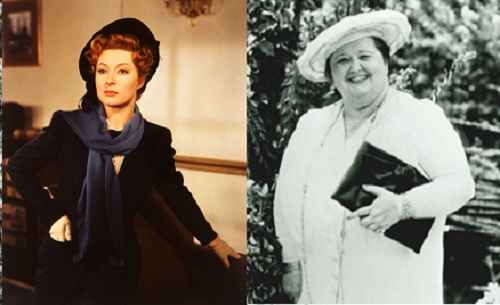
Rebecca, in her first visit to the comments wars, entered this reaction to the post about Edna Gladney (that’s her on the right above, with Greer Garson, her screen avatar, on the left), an amazing woman who should be better known than she is for her  pioneering work on behalf of orphans and unwed mothers. I suggest that you read the post about Edna first, and then read Rebecca’s Comment of the Day. Here it is:

I just recently saw the TCM movie and was instantly taken by her courage and perseverance, especially since I, too, consider myself a child and family advocate. However, once I read about the historical Gladney, I am saddened that Hollywood thought it necessary to change the storyline to “soften” the blow of Edna’s own illegitimacy. Just goes to show how much was (and still is) wrong with the media. Also goes to show how media perpetuates certain attitudes about our societal issues. For example, even though the movie was retrospect, and even though Gladney may have been successful in removing illegitimate designations on birth certificates, society itself was still hell bent on being judgmental….couldn’t even tell the story like it was for fear it wouldn’t be accepted.

Continue reading

Ethics Hero: “Mama Betty”

pitchess

In Los Angeles, six thousands of LA County prisoners are housed in Pitchess Detention Center, which is 50 miles from the inner city neighborhoods where most of the prisoners there live. Using public transportation, which is what most friends and family members must use to reach Pitchess, the journey can take up to five hours to visit an inmate for 30 minutes, through a glass window, with no physical contact. The closest bus stop is a mile away from the jail, and at the bottom of a steep hill.

For five years, a woman named Betty Peters, now 76, has picked up visitors at that bus stop and driven them to the prison. She also waits for the women (mostly) to finish their visits, and drives them back to the bus stop. The grateful visitors know her as “Mama Betty.”

This is an act of pure compassion and kindness, and not without its risks. If a visitor tries to smuggle in contraband, drugs or a weapon,Betty could be prosecuted as an accomplice. Nor does she know the character of those whom she ferries from the jail to the bus and back. Might she be at risk of harm herself? I would assume so. Those with criminals as friends and associates are more likely to be criminals themselves.

I hope this story has a happy ending, because every time kindness like this is returned with cruelty and exploitation, the number of Mama Bettys among us is diminished, and our society becomes a little more meaner, more callous, and less ethical.

Ethics Alarms salutes Betty Peters as an Ethics Hero…and worries.

You can hear a podcast about Mama Betty here.

________________

Pointer: Fred.

Ethics Quote Of The Week: Ann Althouse

bart-and-lisa

I’ve been aware as I watch the election unfold that I am rooting for Donald Trump. I don’t intellectually embrace him or much of what he is saying, but I know — it’s so clear — that I’m rooting for him. That’s an observable phenomenon, and it’s undeniable.

—-Law prof. Ann Althouse, in a post that compares Hillaty vs Trump to Nurse Ratched vs. McMurphy, or the “Goody 2 Shoes” sister, “getting away with stuff on the sly” vs. the brother who “thinks it’s all bullshit” and who is “not going to be your good little boy.”

And the truth shall make us free.

This admission is very brave of Althouse, a professor in a liberal stronghold, Madison, Wisconsin, and a member of an increasingly politically monolithic profession in which favoring a Republican, much less a villainous fool  like Donald Trump, is the equivalent of dire heresy. Her confession is perceptive and illuminating. It explains why this election is so perplexing and conflicting despite Trump’s crippling character deficits. It explains why Hillary “isn’t 50 points ahead.” It is also perhaps the single aspect of the widespread Trump support that taps into something undeniably positive about the United States of America…unlike, for example, the fact that so many voters are ignorant.

I too find myself rooting for Trump while reviling him. It disturbs me, but the response is emotional. People like Hillary Clinton in our lives deserve to face rebellion, and need to be both opposed and exposed. I have spent much of my own life fighting a lot of Hillary Clintons (of both genders).* Seeing their smug, sneaky, cynical and self-satisfied faces covered with pie is one of the great thrills of existence, especially when you have had a hand in steering the course of the pie. Continue reading

Ethics Quote Of The Month: Patrick Smith, Father Of Sylville Smith

http://www.youtube.com/watch?v=JpXKxzJjrIs

“What are we gonna do now? Everyone playing their part in this city, blaming the white guy or whatever, and we know what they’re doing. Like, already I feel like they should have never OK’d guns in Wisconsin. They already know what our black youth was doing anyway. These young kids gotta realize this is all a game with them. Like they’re playing Monopoly. You young kids falling into their world, what they want you to do. Everything you do is programmed. I had to blame myself for a lot of things too because your hero is your dad and I played a very big part in my family’s role model for them. Being on the street, doing things of the street life: Entertaining, drug dealing and pimping and they’re looking at their dad like ‘he’s doing all these things.’ I got out of jail two months ago, but I’ve been going back and forth in jail and they see those things so I’d like to apologize to my kids because this is the role model they look up to. When they see the wrong role model, this is what you get. They got us killing each other and when they even OK’d them pistols and they OK’d a reason to kill us too. Now somebody got killed reaching for his wallet, but now they can say he got a gun on him and they reached for it. And that’s justifiable. When we allowed them to say guns is good and it’s legal, we can bear arms. This is not the wild, wild west y’all. But when you go down to 25th and center, you see guys with guns hanging out this long, that’s ridiculous, and they’re allowing them to do this and the police know half of them don’t have a license to carry a gun. I don’t know when we’re gonna start moving. I’ve gotta start with my kids and we gotta change our ways, to be better role models. And we gotta change ourselves. We’ve gotta talk to them, put some sense into them. They targeting us, but we know about it so there’s no reason to keep saying it’s their fault. You play a part in it. If you know there’s a reason, don’t give in to the hand, don’t be going around with big guns, don’t be going around shooting each other and letting them shoot y’all cause that’s just what they’re doing and they’re out to destroy us and we’re falling for it.”

—–Patrick Smith, father of the late Sylville Smith, the 23-year-old man shot after an arrest by a black police officer, igniting horrific riots in Milwaukee. The body camera video allegedly confirmed that Smith’s son had a gun in his hand when he was killed.

Smith’s last sentence makes no sense, but accurately reflects the false and divisive narrative African Americans have been indoctrinated to believe. Other than that and the Constitution-ignorant suggestion that guns should have been banned in Milwaukee, this is as balanced, sincere, passionate and perceptive a statement regarding police shootings in the black community as any I have read or heard.

Mr. Smith understands the principles of responsibility and accountability, and possesses the courage to accept the hard truths they compel. He deserves our attention, compassion and respect.

I hope his community is listening.

Observations On The University Of Houston’s Anti-Free Speech Oppression

zipper on mouth

Prelude

I gave an ethics training session for a local non-profit yesterday. At the end of the two hours, a staffer who was pursuing U.S. citizenship was obviously stimulated by the various issues and principles we had discussed and had many provocative questions, which he struggled to articulate in his second language, for he was Sorth Korean. “Why is it right for me to pay taxes to assist illegal immigrants?” he asked. “In Sorth Korea, they say we are decades behind the US is democracy, but Korean laws are enforced no matter who the law-breaker is. I see that law-breakers in the US who are rich and powerful or famous get special dispensations from the law. Doesn’t that mean that Korea is ahead of the U.S., at least in that respect?” (Gee, I wonder who he was referring to…)

He had insightful observations, as recent immigrants to the U.S. so often do. Finally he said, “Do you agree that political correctness is a great threat to liberty and democracy?”

Yes. Yes I do. I thought so the first time I heard the term “politically correct” in the Seventies, and was so certain that the concept’s loathsomeness (and the parallel loathsomeness of its advocates, frankly), ensured that it would be a short-lived phenomenon.

Which shows how smart I am…

***

Shortly after the July 7 massacre of  five police officers in Dallas, Rohini Sethi, the vice-president of the University of Houston’s Student Government Association, posted this on Facebook:

BLM tweet

The student governing body suspended her from her office and the group.

From the Houston Chronicle…

Student body vice president Rohini Sethi has been suspended by the SGA and is temporarily barred from participating in group activities. She is also due to attend a “diversity” workshop per the ruling….The University of Houston issued a statement this week that said the move is not a university action and doesn’t impact Sethi’s academic standing. “The University of Houston continues to stand firm in support of free speech and does not discipline students for exercising their constitutional rights,” the statement said.

The action came after minority student groups on campus condemned her statement as racist or “insensitive,”and demanded her removal. The accommodating president of the SGA complied. For her part, Sethi apologized and agreed to take a three-day cultural sensitivity workshop, though she wrote several Facebook posts defending her actions. Ultimately she was brought to heel, made a public statement along with the SGA head, and like a brain-washed prisoner of war, grovelled..

“I have chosen to take these steps on my own because of the division I’ve created among our student body. I may have the right to post what I did, but I still should not have. My words at the time didn’t accurately convey my feeling and cause many students to lose their faith in me to advocate for them. I will always continue to learn and be ready to discuss these issues.”

Observations: Continue reading

Ethics Hero: Angela Martin, As St. Paul Strangers Prevent A Suicide

Angela Matin

Remember Raymond Zack?  In 2011, 50-year-old Raymond Zack waded into the surf at an Alameda, California beach and stood calmly in the 54-degree water, apparently waiting to die. His suicide took nearly an hour, but eventually he drowned, with no rescue attempts from any of the 75 San Franciscans, including firefighters, who gathered on the shore to watch the entire tragedy. I am so used to reading about bystanders allowing desperate people, sick, wounded or otherwise in peril, to perish because they “didn’t want to get involved” that a story like this one, the opposite of the Raymond Zack tragedy from St. Paul, Minnesota, comes as a shock.

How sad is that?

Motorist Angela Martin  saw a woman  climb onto a concrete wall and scale a chain-link fence above Interstate 94 in St. Paul, Minnesota. Martin could have continued driving, but she acted immediately, parking her car and calling 911. But she sensed there was no time to lose. Martin ran over to the woman, who  having climbed over chain-link fence was now clinging to it with her fingers above heavy highway traffic.

“ No, honey. Don’t do this,” she shouted. Martin told reporters that the distraught young woman kept repeating,  “My mom don’t love me. My mom don’t care for me.’”

“No, we love you, ” Martin told her. Martin reached through the links  and grabbed the woman’s shirt and  belt, just as the would-be suicide released her grip so she could fall to her death. Other motorists on the overpass saw the unfolding scene and came to Martin’s aid, and joined her in reaching through the fence to keep the woman from falling. Continue reading