The Unethical Ethicist And Yale: If Bill Cosby Were A Famous Ethicist, He’d Be Prof. Thomas Pogge

The Accuser and the Ethicist

The Accuser and the Ethicist

Here is the short version:

Yale’s Thomas Pogge is a world famous Yale professor of philosophy and ethics who is especially renowned for condemning the terrible human rights effects caused by disparity of resources between rich countries and poor ones. His books, lectures and a well-recieved TED talk argue that the power imbalance between rich countries and poor countries is so great that poor countries cannot reasonably be said to “consent” to agreements between them. Pogge has also accumulated many credible accusations of exploiting, harassing, and taking sexual liberties with his female students in multiple institutions. In the case that has led to this contrast becoming public, Yale offered a female accuser, a Yale graduate named Fernanda Lopez Aguilar, $2000 in exchange for ending the matter and keeping the story out of the news media.

The long version is here. Because the publisher is BuzzFeed, which is not widely regarded as a sterling source of trustworthy journalism (to say the least), the detailed and apparently well-researched report will be easy for Pogge and Yale to ignore and shrug off. However, other publications, including the Yale Daily News, have investigated the work of author Kaitie J.M. Baker, and so far it has held up to scrutiny.

Pogge has responded, less than convincingly, I would say, to the Lopez Aguilar allegations here. I say unconvincingly because he does not address the previous accusations made against him at Columbia University, and if there is one common characteristic of sexual harassers and abusers that stands out above all others, it is that they are habitual and repeat offenders. Anyone who has spent any time in academia (like me) is well aware that the culture permitting professors, especially male professors, to use the student body and bodies as a sexual perk of the job is widespread and only weakly restrained, if at all. Does that prove that Pogge is one of the professors who partakes in the lusty opportunities presented to him as an object of trust and admiration? No. There is, however a lot of smoke surrounding him, and the smoke has been issuing for a long time.

Yale’s institutional conduct is more than smoke. Yale appears to be another example of a trusted institution deciding that it is preferable to cover up the possible, likely or proven misconduct of a valuable employee than to risk damaging the reputation of that institution, or alienating the loyalties of other employees, by addressing it openly and decisively. I’m sure you can name other infamous examples of this phenomenon, broadly covered by the rationalizations “The King’s Pass” and “The Saint’s Excuse” on the Rationalizations List. Among the most infamous of these are the Catholic Church’s decades, perhaps centuries-long enabling of child sexual predators in the priesthood, the Watergate cover-up by the White House, and Penn State’s failure to stop a known child predator from using the school’s football program and its campus as a base of operations. Yale’s particular variety of this unethical choice is an especially unsavory one, closer to the Joe Paterno/ Sandusky and “Spotlight”scandals, because it intentionally  places future innocent victims at risk of harm.

I accept that there is a possibility that Pogee is an impeccable  professional and as pure as the driven snow, and thus himself a victim of a smear, though this seems unlikely. What I am more interested in now is to address the questions asked in the BuzzFeed piece, which relate to how we should regard unethical ethicists as well as other prominent figures who defy, in their actions, the wisdom they are celebrated for dispensing to others—the Bill Cosbys of the world.

I have some additional questions of my own, but for now I will restrict myself now to those posed in the article. Continue reading
A Federal Court Reinstates Tom Brady’s Suspension For Cheating

Good.

What Brady doesn't get: When people think you cheated, the smirk is does as much damage as the conduct.

What Brady doesn’t get: When people think you cheated, the smirk is does as much damage as the conduct.

The U.S. Court of Appeals for the Second Circuit appeals court reinstated the NFL’s four-game suspension of New England Patriots quarterback Tom Brady yesterday. This overturned last year’s ruling by U.S. District Judge Richard M. Berman, who had nullified the league’s suspension of the superstar quarterback. The three-judge panel of the appeals court wrote…

“We hold that the Commissioner properly exercised his broad discretion under the collective bargaining agreement and that his procedural rulings were properly grounded in that agreement and did not deprive Brady of fundamental fairness.”

It is important to note that the Court only ruled on whether NFL Commissioner Roger Goodell had the power to suspend Brady and did not violate the player’s rights as a players union member by doing so. The NFL’s current deal with the players gives Goodell the kind of power Major League Baseball gave to its first commissioner after the 1919 Black Sox Scandal, when gamblers fixed the World Series. Goodell, like Landis, can use his discretion to punish a player for “conduct detrimental” to the game and the NFL. They did this because a disturbing number of NFL players were getting headlines for doing things that don’t comport with what the public expects of its paid heroes, like sucker-punching women, shooting people, getting in bar fights, and engaging in assorted felonies. The game also has a very successful coach, Brady’s coach, in fact, who has made it very clear that he will cheat whenever he can get away with it..

I’m not going to rehash the “Deflategate” incident: I wrote enough about it when it occurred. Nobody knows for certain if Tom Brady in fact did conspire with Patriots employees to cheat when his team was behind in a crucial play-off game, but we know this: Continue reading

Ethics Film of the Year: “Spotlight”

No spoiler alerts necessary; I’m not going to say much about the film’s plot. Just go see it.

Sure, I was predisposed to like “Spotlight.” It’s about Boston, my home town; Fenway Park even appears in it, Red Sox and all.  I had also followed the unfolding Catholic Church sexual molestation scandal there that the Boston Globe broke in 2002. This was the Globe’s momentous investigative journalism series which showed the extent to which high-ranking Church officials allowed child predator priests to continue harming trusting kids, as the Church paid for confidential settlements to victims and transferred the criminal priests to other parishes, where they could, and did, strike again. “Spotlight” tells the story of how a group of Globe editors and reporters finally exposed a local conspiracy of corruption that spread across institutions and professions, and that pointed to a world-wide scandal that still haunts the Catholic Church today.

It’s a better ethics movie than “All The President’s Men,” to which it will inevitably be compared. Whether it’s a better movie or not is a matter of taste. (I liked it better.) Where the movie really shines, however, is how it raises so many of the ethics issues we routinely cover here, such as…

  • Legal ethics: the duty of lawyers to represent clients, confidentiality, and when, if ever, human ethics require the breaching of professional ethics.
  • Ethics corruptors, and what happens when admired, trusted and powerful people and institutions require their followers to show their loyalty by ignoring, rationalizing or covering up wrongful acts.
  • Journalism ethics: the business of journalism’s conflict with the duty of journalists to find and publicize the truth; how ambition, personal biases and non-professional concerns can warp perspective and performance
  • Ethics and religion, hypocrisy, and the institutional utilitarian choice to protect the whole when it means sacrificing individuals
  • Rationalizations, including the Saint’s Excuse and the King’s Pass, in which prominence and “good deeds” seem to justify double standards.
  • Hindsight bias, Moral luck, and more.

Continue reading

The Last Of Deflategate, And What It Means

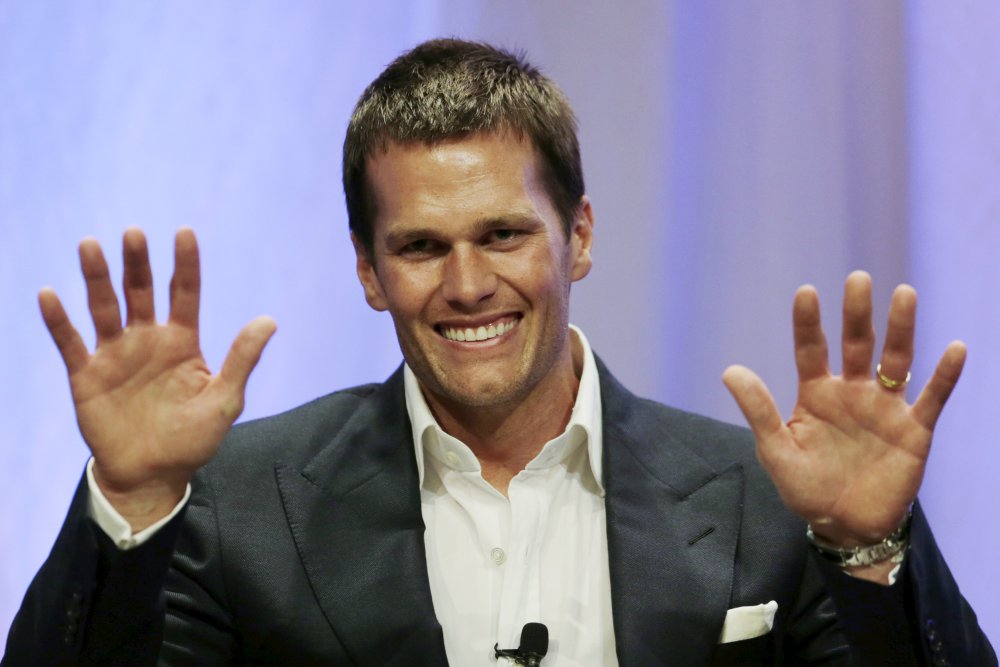
New England Patriots quarterback Tom Brady speaks at Salem State University in Salem, Massachusetts, May 7, 2015. REUTERS/Charles Krupa/Pool ORG XMIT: BKS06

I have received a lot of mail seeking my reaction to a judge reinstating Tom Brady and vetoing Roger Goodell’s harsh punishment decree. My reaction is that this is bad for football, the NFL, and the culture, and one more step toward validating cheating as an accepted cultural norm, not just in sports, but in the nation itself. Once upon a time, sports were supposed to model good sportsmanship, integrity and fairness. This episode demonstrates how far from that we have come. It is a serious and troubling development.

From a legal standpoint, I get it. I assumed that Goodell knew the limits on his own power: silly me. Apparently the NFL’s labor deal neutered the absolute power of a Commissioner to do what he felt was necessary to protect the integrity of pro football. Unions seldom care about the integrity of their game, at least not when their members’ money is involved. The original sports league commissioner, baseball’s Judge Kenesaw Mountain Landis—Damn! Why didn’t we name our son “Mount McKinley Marshall”?—banned Shoeless Joe Jackson and his team mates from baseball forever after a jury had acquitted them of throwing the World series for bribes. His drastic action probably saved baseball, and has influenced the sport to this day. Goodell’s failure, in contrast, promises to do lasting harm.

Remember, the judge didn’t exonerate Brady; he just ruled that Goodell didn’t have the power to punish him. There is no doubt in my mind that Brady cheated, just as there was no doubt in the NFL’s investigator’s mind. There is also no doubt that you could not prove Brady’s guilt beyond a reasonable doubt. The idea behind absolute power in a sports commissioner is that sports contests must be viewed as being fair or people will stop watching, and any hint of cheating and corruption must be banished. I agree with that idea. Baseball flunked its most crucial recent test when Bud Selig didn’t have the guts to pull Barry Bonds off the field when he was breaking records on steroids (and everyone knew it); pro football has been flunking one test after another. Society is becoming more cynical and more tolerant of cheating, and I think professional sports are as much a cause as a symptom.

Why am I convinced Brady cheated? Many factors, none of which individually are conclusive:

  • The conditions under which the cheating took place: bad weather, a play-off game, the team behind.
  • The Patriots’ well-established contempt for the rules.
  • The fact that a quarterback knows the feel of his tool, footballs, and that an experienced one like Brady could not possibly have been unaware that the balls he was throwing were even a little bit underinflated.
  • Brady’s evasive, smug, wink-wink ha-ha demeanor in multiple venues regarding the incident, like a high school jerk who knows he’s getting away with something and thinks its hilarious.
  • The immediate “everybody does it” defense from Brady’s fellow quarterbacks. (That’s not a defense. That’s an admission.)
  • The “it didn’t matter, they would have won anyway” defense from the same quarters. This is also an admission of cheating. Cheating is wrong whether it works or not, and whether it is necessary or not. NFL fans don’t even know what’s wrong with cheating any more….because the players don’t.
  • Some of the absurd defenses raised by Brady’s defenders, including his team, like the argument that one of the equipment guys involved in the incident was only called “the Deflator” in a contemporaneous text message because he was on a diet.
  • The fact that Brady destroyed his cell phone to avoid its contents being searched. This is spoliation, the destruction of potentially incriminating evidence, and suggests, but doesn’t prove, guilt. If he had done it in a criminal investigation, it would have been itself a crime. Ethically, the act is just as wrong whether it is a crime or not. (See: Clinton, Hillary)

I believe most Patriots fans know he cheated too. They just don’t care: he’s their star, and the team won the Super Bowl. The ends  justify the means. Continue reading

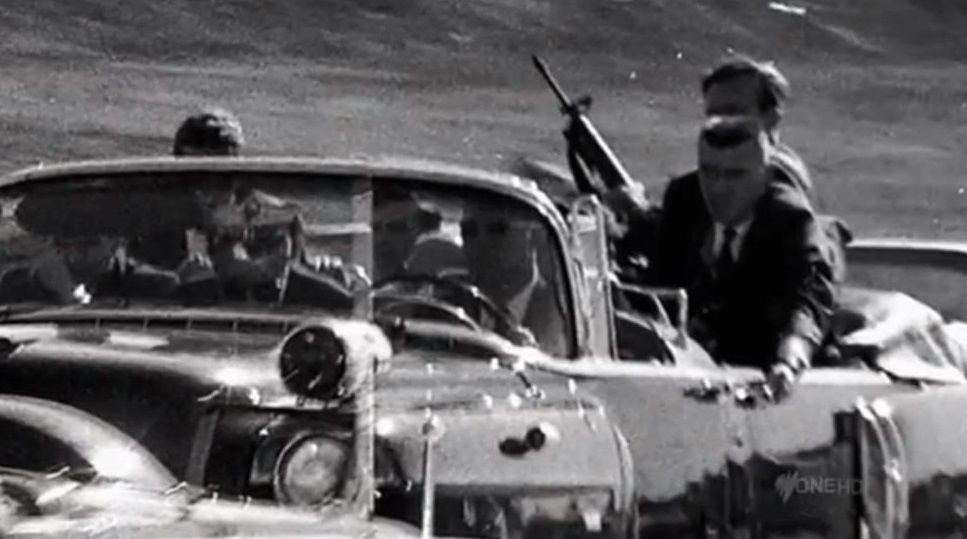
JFK’s Death, Hanlon’s Razor, And How Truth Gets Buried Forever

JFK Hickey

I am a student of Presidential assassinations (as you might guess by the posts on McKinley and Garfield), and have been most of my life, ever since I saw a TV special called “Web of Conspiracy” when I was 10, about the Lincoln murder. That led me to read the  best-selling book the special was based on, an 800 page, sensational analysis of the mysteries behind Lincoln’s death, by mystery writer Theodore Roscoe, who dabbled in history. The book’s theories and insinuating style are more convincing to a ten-year-old than an adult (I read the book many years later, and it drove me crazy), but the book still has a lot of fascinating tales and theories in it. I was hooked.

Oddly, the one Presidential assassination that has interested me least in recent years is the one I lived through, the assassination of President Kennedy. Blame Oliver Stone, Kevin Costner and Jim Garrison: “JFK” was the most dishonest movie I had ever watched (still is) and I walked out of it when its lies and distortions got too much for me about a third of the way through. Even before Stone’s brilliantly directed piece of crap. I was sick of the conspiracy theories, though Stone manufacturing a link to Lyndon Johnson was the final straw. Yes, the bitter Vietnam veteran really got back at LBJ; I hope it made him feel better. I, however, was soured on the whole topic.

I should have been paying more attention. Netflix is showing a documentary with the generic conspiracy theory title of “JFK: The Smoking Gun,” which was shown on cable two years ago. I missed it; if I had been aware of the film, the title and the subject matter—Oh, who’s behind it now? The Mafia? Nixon? Woody Harrelson’s father?—would have kept me away. But while I was on the road for a couple days doing ethics seminars for VACLE, my wife watched the documentary, and when I returned, sleep deprived, weak and submissive, she made me watch it.

Fascinating. And troubling. Continue reading

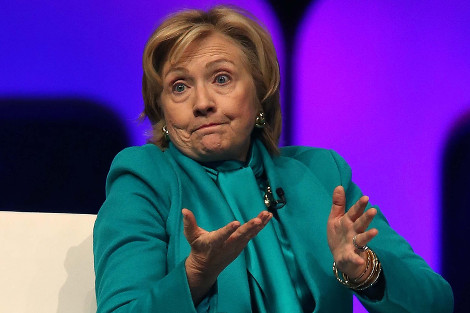
Translation: “OK, Lying And Denying Responsibility Haven’t Worked; Let’s Try Lying And Accepting SOME Responsibility.”

Said Candidate Hillary Clinton at a campaign stop in Iowa:

“I know people have raised questions about my email use as secretary of state, and I understand why. I get it. (1) So here’s what I want the American people to know: My use of personal email was allowed by the State Department. (2) It clearly wasn’t the best choice. (3) I should’ve used two emails: one personal, one for work. I take responsibility for that decision, and I want to be as transparent as possible, which is why I turned over 55,000 pages (4), why I’ve turned over my server (5), why I’ve agreed to — in fact, been asking to — and have finally gotten a date to testify before a congressional committee in October. (6) I’m confident that this process will prove that I never sent, nor received, any email that was marked classified. (7).

Notes: Continue reading

More E-Mail Deception From State: Does Anybody Care? Well, I Do. And You?

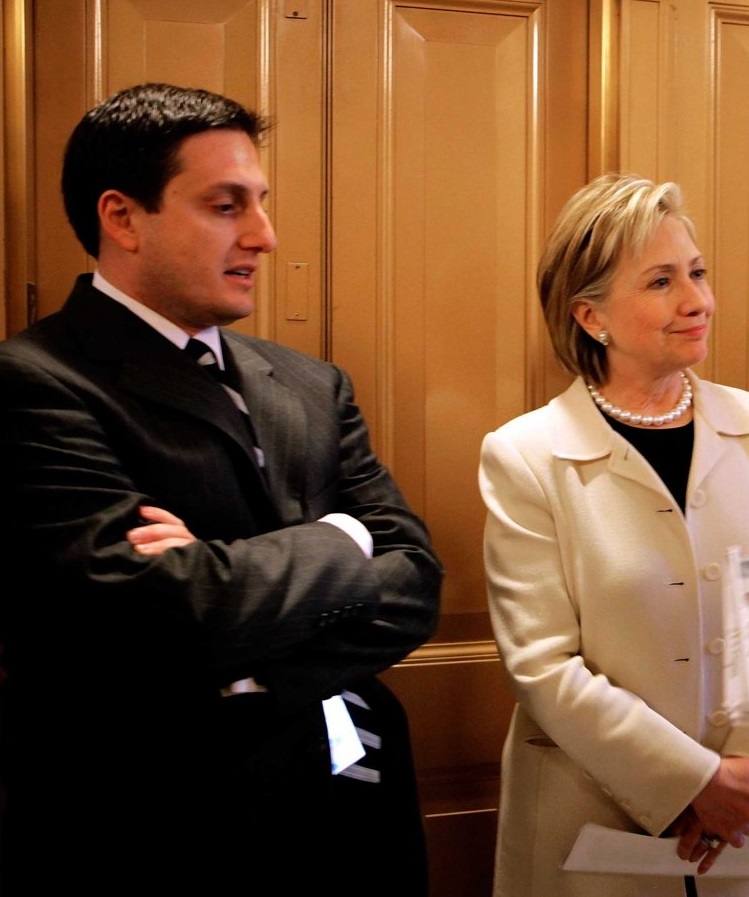
Another day, another Hillary advisor, another scandal...

Another day, another Hillary advisor, another scandal…

The private server of Hillary Clinton isn’t the only intrigue going on the should make us wonder just how corrupt our leaders and aspiring leaders are. There has been a new development involving another set of emails that should cause public outrage and alarm…if the news media had the integrity to report on it.

In 2012, Gawker filed a Freedom of Information Act (FOIA) request asking the State Department to produce e-mails related to Deputy Assistant Secretary of State Philippe Reines (now a top Hillary Clinton adviser) and his contacts with  thirty-three listed media outlets. Reines was involved in an intemperate email exchange with Gawker journalist Michael Hastings in which he told Hastings to “fuck off;” naturally Gawker, being Gawker, wanted to dig up dirt on him.

[It’s a side issue, but any high ranking government official  that tells any journalist to “fuck off” should be forced to apologize and be punished or sacked.  This just one more example of the Obama Administration’s aversion to accountability and management competence.]

The U.S. State Department officially stated in 2013 that there were no such emails, reporting that “After a thorough search . . . no records responsive to your request were located.”

Last week, after a federal judge demanded a“court-ordered status report,” Justice Department lawyers, reporting on behalf of the State Department, announced that the previous statement was a teeny bit off. The State Department had found of “5.5 gigabytes of data containing 81,159 emails of varying length” sent or received by Reines, of which about 17,855, or 22%, were relevant to the initial FOIA request.

Wait…what?? Continue reading

Baylor, The Rapist, And The King’s Pass

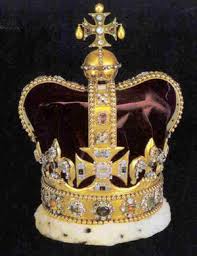
crownThe King’s Pass is among the most corrosive of the many unethical rationalizations. Also known as “The Star Syndrome,” this conduct and this sensibility rots organizations, large and small, public and private. It destroys trust and undermines loyalty and performance. The rationalization, which essentially holds that the enforcement of laws, rules and policies should be withheld against the most powerful, the most popular, the most accomplished and the most productive members of an organization on the theory that they are too valuable to lose, is essentially un-American, defying the national principle that all are created equal, and that the laws apply with equal force to everyone, large and small. The King’s Pass isn’t driven by ethics, but by non-ethical considerations overcoming ethics. An organization that jettisons a star will often suffer itself. Management may be criticized, and the sports team, the institution, company, government agency—or nation— that loses its star might suffer substantially with the removal of a significant asset. Yet not insisting on accountability from a misbehaving or even corrupt “star” will have far worse consequences over time.

Sam Ukwuachu, a former freshman All-American at Boise State University before transferring to play football at Baylor University, was convicted this week of sexually assaulting a former Baylor soccer player in 2013. Jurors in Waco’s 54th State District Court found the 22-year-old Baylor defensive end guilty of one count of sexual assault, but it was the revelation of Baylor’s cover-up that ought to resonate.
Continue reading

Victims, Victimizers, and Hypocrites: The Dennis Hastert Affair

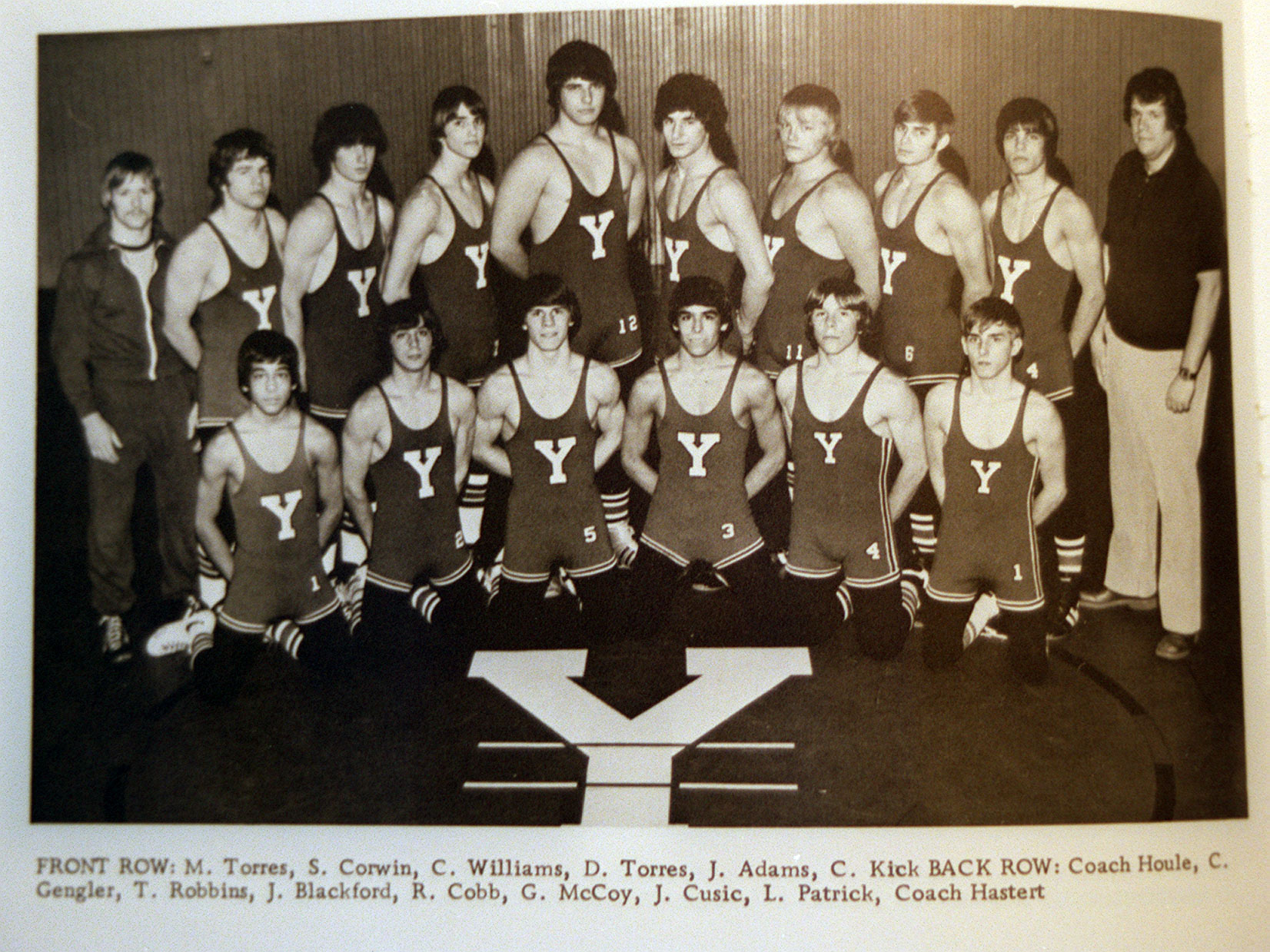
12-20-98 Copy photo from 1976 Yorkville Yearbook which shows Dennis Hastert who coached the 1976 state champion wrestling team...

Former Speaker of the House Dennis Hastert, the longest serving GOP Speaker in history, has been indicted for lying to the FBI and elaborately evading reporting requirements on large cash withdrawals for  payments he allegedly made to a male former student whom Hastert sexually abused while he was a high school wrestling coach over 30 years ago. If you want to read what is known about the unfolding Washington scandal s far, as well as partisan attempts at spin, you can try Politico, The Week, Talking Points Memo, OpenSecrets.orgWashington Post, Bloomberg Business, The National Memo, NBC News, Washington Monthly, Outside the Beltway, The Hill, Daily Mail, Patterico’s Pontifications and The Daily Kos.

Ethics observations:

1. This is a personal and professional tragedy, no matter what else may be true. Hastert has a family, and once had a career and a relatively solid reputation. The family is still there, though wounded; the rest is gone, presumably forever.

2. Assuming that what is coming out as the reason Hastert was paying millions in hush money is in fact true, he abused his position of trust as a teacher and committed a heinous crime. Nothing that he did subsequently as a public servant, or endured as a consequence of his actions, mitigates the seriousness of that misconduct. Continue reading

The Unethical Cosby Victim: Jewel Allison

accuser

The thirty or so declared victims of sexual assault by Bill Cosby (sorry: when we get into double figures, “alleged” is misleading) have given various reasons for not reporting the crimes against them: fear of Cosby’s power, fear of retribution from the entertainment industry, fear of publicity, fear of not being believed, fear of humiliation. A recent addition to the list, however, has given an unequivocally unethical explanation for her 20 year silence in a Washington Post op-ed that has been called “courageous.” Jewell Allison’s confession is not courageous. It is disturbing and ominous. It shows what the trauma of the black experience in the United States has done to some African Americans, causing them to place group identification above reason, decency, good citizenship, compassion and common sense.

She writes:

“When I first heard Andrea Constand and Tamara Green publicly tell their stories about being drugged and assaulted by Cosby, I wasn’t relieved; I was terrified. I knew these women weren’t fabricating stories and conspiring to destroy America’s favorite dad, but I did not want to see yet another African American man vilified in the media. As I debated whether to come forward, I struggled with where my allegiances should lie – with the women who were sexually victimized or with black America, which had been systemically victimized.”

This makes no ethical sense or rational sense. Continue reading